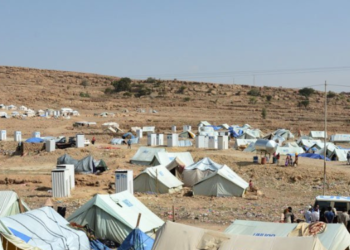
World Food Programme (WFP) has said that funding cuts will worsen a deepening hunger crisis around the world.
In its 2026 Global Outlook report released today, the UN agency noted that food insecurity is expected to “remain at alarming levels.”
The UN agency disclosed that an estimated 318 million people will face acute food insecurity in 2026, which equates to “crisis” level or worse, and is more than double the number in 2019.
Of these, around 41 million are estimated to be in the “emergency” phase or worse, which is the equivalent of an IPC 4 or higher classification on a globally accepted hunger monitoring system. The WFP anticipates being able to feed about 110 million people in 2026, leaving much of the global population in need of food help without its assistance.
The organisation said it estimates its operational requirement to stand at $13bn for 2026, with most going to crisis response and other expenses, including resilience building and addressing root causes. Current forecasts suggest that the WFP may receive only about half that amount.
WFP Executive Director, Cindy McCain said in a statement that the world is grappling with “simultaneous famines, in Gaza and parts of Sudan.” She added, “This is completely unacceptable in the 21st century.”

“Hunger is becoming more entrenched. We know early, effective solutions save lives, but we desperately need more support.”
Cindy McCain
In Gaza City and its surrounding areas, the IPC declared famine in August, months after the Israeli military imposed a monthslong total blockade on Gaza.
The hunger crisis across the Palestinian territory remains dire as Israel continues to impose restrictions on supplies of food, fuel, water and medicines.
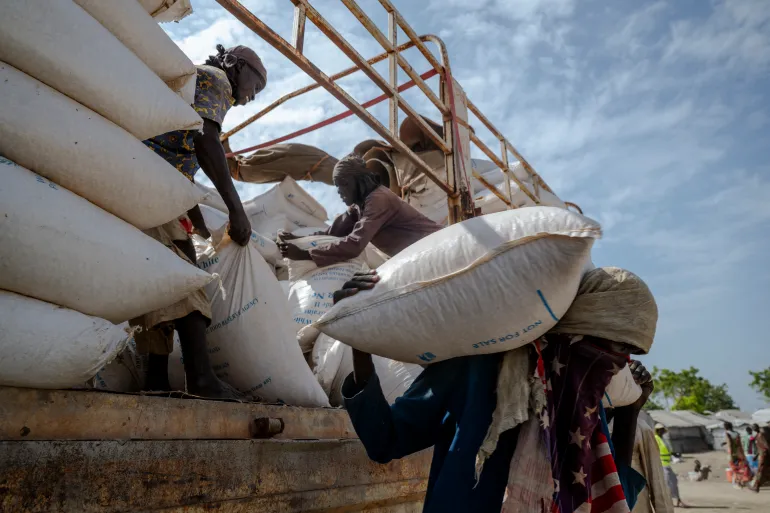
Famine conditions were confirmed in Sudan’s el-Fasher and Kadugli earlier this month, as well as 20 other areas in Darfur and Kordofan – battlegrounds between the paramilitary Rapid Support Forces and the Sudanese army – at risk of sliding into famine.
Afghanistan, Yemen, Syria, South Sudan, the Sahel region of East Africa, the Democratic Republic of the Congo, Haiti and Nigeria are some of the other hotspots of concern.
New expert findings project more than half South Sudan’s population, or about 7.56 million people, could face crisis or worse food insecurity during next year’s April-July lean season, between harvests.
More than two million children are expected to suffer from acute malnutrition. In some of the most conflict-torn areas, some 28,000 people could experience catastrophic food insecurity, or IPC 5, the highest hunger level set by the Integrated Food Security Classification, or IPC. Most alarmingly, the IPC predicts parts of Luakpiny/Nasir County could tip into full-blown famine.
WFP’s Director of Emergency Preparedness and Response, Ross Smith, said, “We’re working with a shrinking humanitarian budget across the board.” He added that in a country with fragile functioning markets and where social services have limited reach, the funding cuts are devastating.
WFP Points To Other Drivers Of Global Hunger
Conflict remains the dominant driver of hunger globally, with more than two-thirds of all acute food insecurity attributable to conflict-driven crises.
According to the WFP, climate shocks, economic instability, and food and energy price inflation further exacerbate the situation.
Yet the agency said last month that it expected to receive 40 percent less funding next year.
The United States has been the largest and wealthiest country to announce hugely impactful funding cuts for the WFP and other UN and international agencies following President Donald Trump’s “America-first” return to the White House earlier this year.
READ ALSO: Massive Investor Exodus Hits Treasury Bills; 2026 Budget Seen as Last Hope