
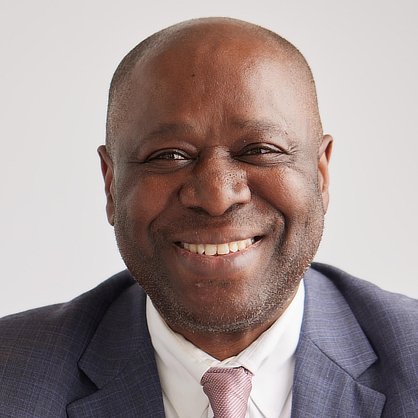
CDD-Ghana Fellow Dr. Ohene Aku Kwapong has issued a compelling call for sweeping reforms to Ghana’s public procurement system, insisting that the publication of all contracts and the abolition of discretionary sole sourcing are indispensable steps toward ending procurement rigging and restoring public trust.
Speaking with blunt conviction, the former Senior Vice President and Treasurer of the New York Economic Development Corporation argued that Ghana’s contracting environment has become the epicentre of corruption and mistrust, undermining national development and eroding confidence in state institutions.
For Dr. Kwapong, trust is the foundation of a functional society, and the manner in which government spends public funds plays a decisive role in either strengthening or destroying this trust.
“If trust is the lubricant of an orderly society, public contracting is the gearbox where that lubricant is either conserved or destroyed. In our case, it has been destroyed.
“You cannot build a high-trust society when the primary mechanism through which the state spends money is itself opaque, discretionary and structurally vulnerable to abuse”.
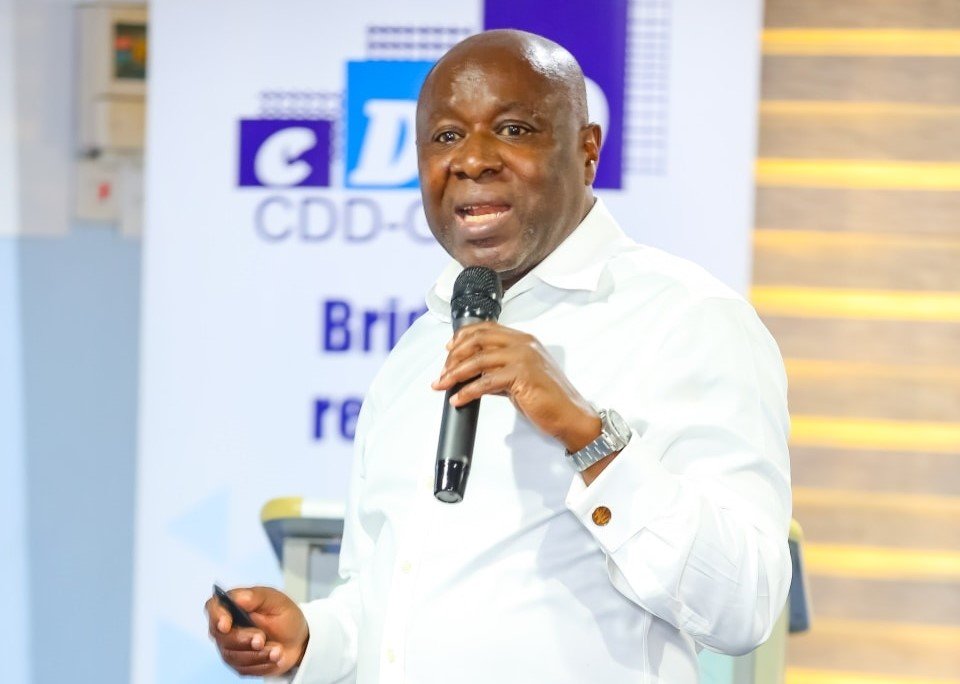
CDD-Ghana Fellow Dr. Ohene Aku Kwapong
He pointed to the countless abandoned projects and recurring procurement scandals as visible markers of a governance system that consistently fails its citizens. His frustration was unmistakable when he asked: “Are our politicians that stupid and careless with authority to allow this?”
Deliberate Design
To him, the answer lies not in the incompetence of individuals but in the deliberate design of a system that hides the interface between public funds and private interests.
Citing extensive research, Dr. Kwapong explained that corruption has become embedded in Ghana’s procurement processes. Studies in the construction and infrastructure sectors indicate that corruption inflates contract values by 20 to 30 percent.
The Ghana Anti-Corruption Coalition, he cited, estimates that procurement-related corruption drains nearly three billion dollars from the national economy annually.
With procurement accounting for between 15 and 18 percent of Ghana’s GDP, he argued that this level of leakage is not an irregularity but a structural defect in the country’s political economy. “When such sums evaporate through opaque deals,” he said, “the public learns the lesson that the state is not a trustworthy steward of collective resources.”
To demonstrate the systemic nature of these failures, Dr. Kwapong cited recent high-profile contracting controversies. The SML revenue assurance contract awarded by the Ghana Revenue Authority ran into the hundreds of millions of dollars without competitive tender, despite the contractor lacking a credible track record.
Conflicts of interest emerged, and claims of cost savings could not be independently verified. Similarly, Dr Kwapong indicated that the Ministry of Education’s free Wi-Fi project ballooned from an initial commitment of GH¢84 million to more than GH¢430 million paid, even as 97 percent of surveyed schools reported poor or nonexistent service.
“Sole sourcing drove both cases. Opaque contracting sustained them. The public paid the bill,” he stated. He added that the procurement problems extend deep into the defence sector.
Transparency International’s Defence Integrity Index scored Ghana 20 out of 100 in procurement risk—placing the country in a category described as highly vulnerable to secrecy, political interference, and procurement manipulation.
Supplier identities, contract values and beneficial ownership details are frequently concealed, creating fertile ground for suspicion and corruption. “When citizens cannot see what their money is buying,” he warned, “trust evaporates and the rumour economy takes over.”
Structural Reforms
To fix a system he describes as flawed “at the core,” Dr. Kwapong outlined a set of structural reforms that Ghana must adopt urgently. Central to his proposals is the publication of all contracting data.
He referenced high-trust countries such as Sweden, Norway, Finland, Estonia and Denmark, where all bids, bid amounts, evaluation reports, awarded contracts, renewals and contract amendments are posted publicly.
In these jurisdictions, he noted, transparency is not an ethical ideal but “the operating system.” Fraud, he argued, collapses under such scrutiny because inflated invoices, repeat claims and manipulated contract variations cannot survive nationwide public comparison.
Dr. Kwapong also called for the abolition of discretionary sole-sourcing, which he described as the single easiest gateway for procurement graft in low-trust countries. “Abolish sole-sourcing as a discretionary practice because that’s the global norm,” he urged.
In contrast, he said, high-trust jurisdictions like Denmark, Japan, Singapore, and New Zealand allow sole-sourcing only in strictly defined circumstances—such as genuine emergencies, national security concerns, or situations where no other supplier exists globally—and even then, justifications are published in full.
Further reforms, he explained, must include independent technical evaluation committees insulated from political influence, mandatory professional certification for procurement officers, and fully digitized procurement systems capable of preventing fraud before it occurs.

He highlighted systems such as South Korea’s KONEPS and Estonia’s X-Road, which integrate customs, tax, procurement, and business registry data to automatically flag duplicate invoices, prevent payment without verified delivery, and block contract ceiling overruns.
Dr. Kwapong concluded that the solution lies not in improving the moral character of individuals but in redesigning the structure of institutions.
“High-trust societies did not become high-trust by having better citizens. They built institutions that made transparency non-negotiable and concealment impossible. We can do the same unless we are not capable but incompetent bastards, as my white friend would say.”
CDD-Ghana Fellow Dr. Ohene Aku Kwapong
Trust, he emphasized, is engineered, and nowhere is that engineering more critical than in government contracting.
READ ALSO: ACEP Warns Against GNPC Takeover of Springfield Asset