
Ghana’s education system is facing what experts describe as one of its most troubling moments in recent years, following a steep decline in the 2025 West African Senior School Certificate Examination (WASSCE) results.
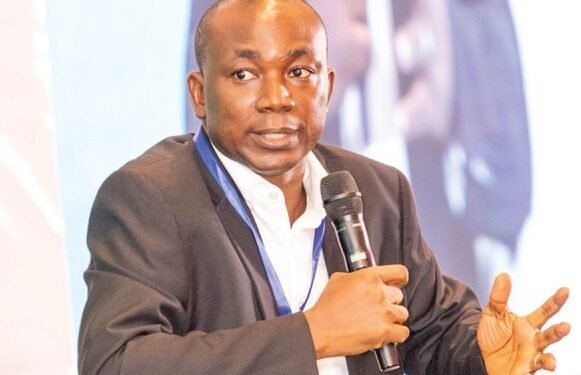
Professor Stephen Kwaku Asare, Democracy and Development Fellow at the Ghana Centre for Democratic Development (CDD-Ghana), has sounded an urgent alarm, insisting that the country must reset its entire educational approach or risk compounding failures in future generations. His critique, anchored in the newly released performance figures, paints a picture of deep systemic decay rather than isolated shortcomings.
The most dramatic slump is in Mathematics, where performance has taken what Professor Asare called a “catastrophic crash.” In 2024, 66.86 percent of candidates obtained between A1 and C6.
The 2025 results, however, show a drastic fall to 48.73 percent—a plunge of nearly 20 percentage points within just one year. More than 114,000 students scored F9, a development he said should not be dismissed as a dip but recognized as evidence of a collapse.
Mathematics, being foundational to critical thinking and STEM pathways, is at the heart of national development, and such a fall raises serious concerns about teaching quality, student comprehension, and classroom conditions across the country.
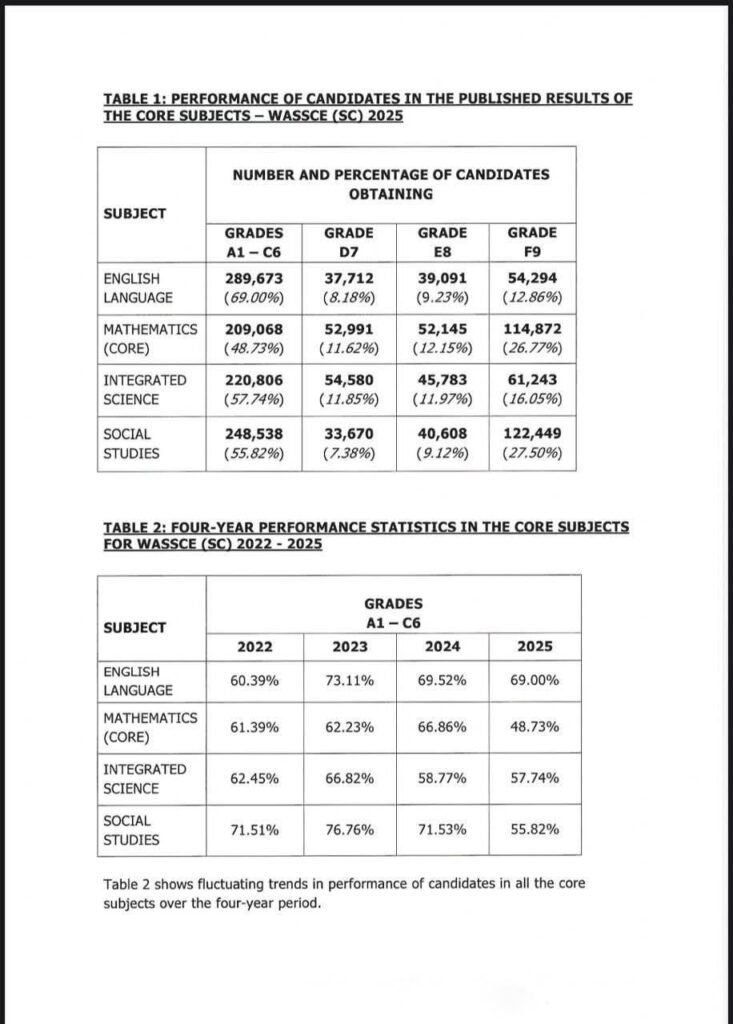
Integrated Science, another central pillar of STEM education, has also continued on a downward trajectory. From 66.82 percent in 2023, the pass rate dropped to 58.77 percent in 2024 and further to 57.74 percent in 2025.


Year after year, the subject shows a worrying backward slide, and Professor Asare argued that this reflects an eroding foundation in scientific reasoning and experimentation. Without correcting these weaknesses, he warned, Ghana cannot expect to produce students equipped for the technological challenges of the future.
The situation is equally bleak in Social Studies. Once one of the more stable subjects, it has now experienced a steep fall from 76.76 percent in 2023 to 71.53 percent in 2024, and now to 55.82 percent in 2025. This represents a striking 21-point decline in only two years. Over 122,000 candidates failed in 2025 alone.
For Professor Asare, this is not merely an academic concern but a civic one, as Social Studies is designed to cultivate responsible citizenship, national awareness, and analytical thinking. A sharp decline in this subject, he argued, points to a worrying deficit in the nation’s civic educational fabric.
Systemic Failure
English Language is the only core subject that remains relatively stable, but even there, progress has stagnated. In Professor Asare’s view, the overall picture presented by these figures exposes more than student difficulty.
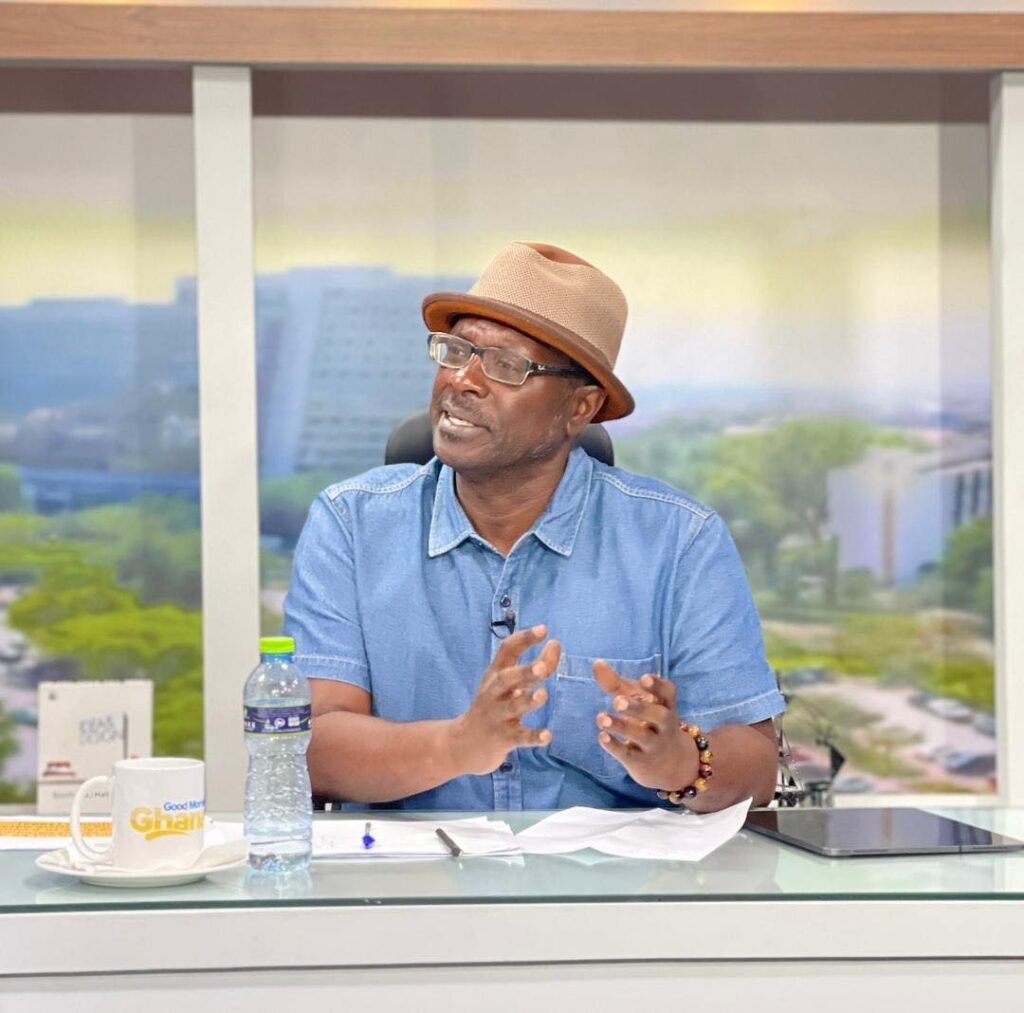
“These numbers suggest something fundamental is not working in the way we are educating our children. When Mathematics collapses by nearly 20 points in one year, when Science keeps sliding backward, and when Social Studies loses more than 20 points in two years, it is not the students who have failed — it is the system that is failing them.”
CDD-Ghana Fellow Professor Stephen Kwaku Asare
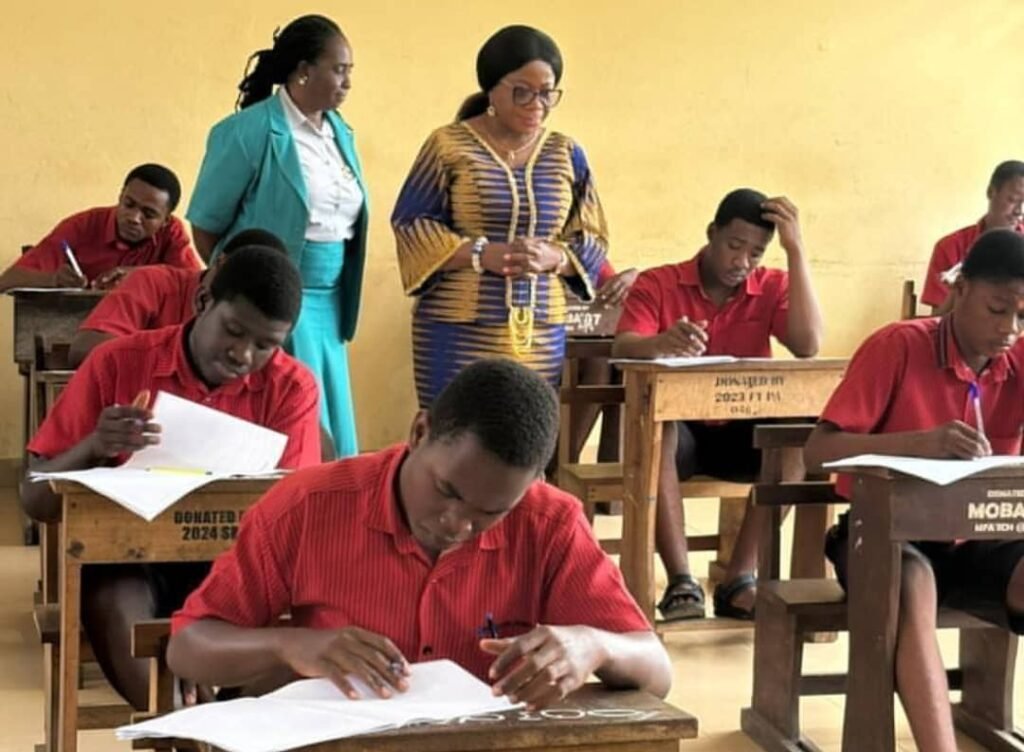
He argued that Ghana is grappling with deep-rooted problems that transcend typical debates about discipline or religious accommodation in schools. The failures, he noted, are likely tied to ineffective teaching methods, insufficient supervision, overcrowded classrooms, inadequate learning environments, poor resource allocation, and weaknesses in curriculum delivery. Until the nation confronts these challenges honestly, he warned, the crisis will worsen.
A Comprehensive National Learning Rescue Plan
To address the decline, Professor Asare called for a comprehensive national learning rescue plan. Central to this plan is improving teacher quality through targeted retraining in Mathematics, Science, and literacy instruction.
He proposed early diagnosis of learning gaps using nationwide baseline assessments instead of relying on WASSCE to reveal deficiencies at the end of the cycle.
Reducing overcrowded classrooms, restoring lost instructional time, and investing in essential teaching materials—including laboratories, textbooks, and teaching aids—are among his recommended steps. “You cannot teach science without equipment,” he emphasized, highlighting the practical limitations crippling many schools.
He also called for stronger supervision and accountability at every level of the education structure. Supporting students through remediation programmes, after-school tutoring, and digital learning tools is crucial, he added.
While technology has often been introduced superficially, Professor Asare argued that real transformation requires integrating digital tools into teaching effectively so teachers can use them to explain concepts, guide practice, and provide feedback.
Curriculum reform is another area he stressed, urging a shift from memorization-based learning to mastery of concepts. This, he says, will ensure students build lasting understanding rather than cramming and forgetting facts.
He also believes that the involvement of parents and communities is essential, urging a national culture of learning where educational responsibility is shared beyond the confines of classrooms.
Professor Asare warned that unless these structural issues are addressed, Ghana will continue to misinterpret the root causes of poor performance while students bear the blame for failures generated by systemic weaknesses.
“And year after year, the WASSCE tables will repeat the same painful story: a country more focused on uniforms than on understanding; more concerned about appearance than about achievement.”
CDD-Ghana Fellow Professor Stephen Kwaku Asare
For him, the verdict is clear: “The data is clear. We need an education reset — not another debate about religious accommodation.” His assessment signals a defining moment for educational policymakers, stakeholders, and citizens who must now confront the scale of the crisis and take decisive action to prevent further decline.
READ ALSO: Investors Rush Back: Ghana’s T-Bill Market Explodes With GH¢6bn Bids Amid Reduced Target