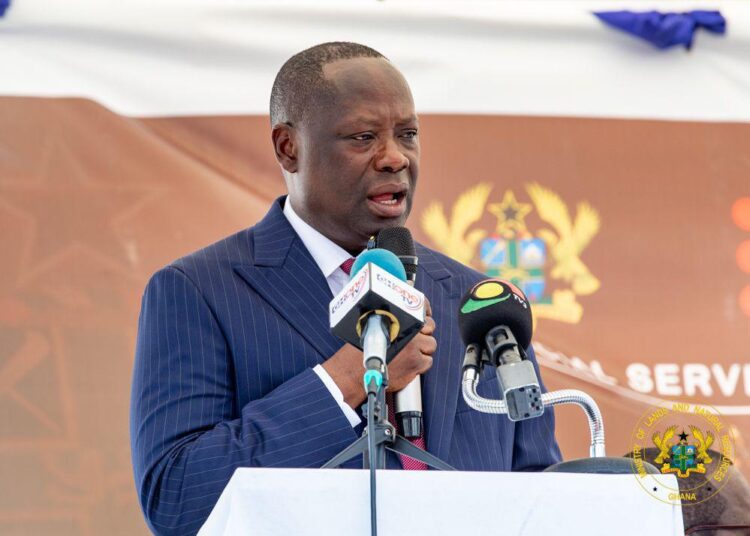
Minister for Lands and Natural Resources and Acting Minister for Environment, Science and Technology, Hon. Emmanuel Armah-Kofi Buah (MP), has issued a clarion call to the Ghanaian public and legal fraternity to stand as a bulwark against the destructive tide of illegal mining.
Speaking at the Chief Justice’s Mentorship Programme, the Minister underscored that the fight to eliminate the “galamsey” menace is no longer a mere administrative task but a foundational battle for the nation’s rule of law and the preservation of its natural legacy.
He emphasized that the survival of Ghana’s “lush forests, fertile farmlands, and blue waters” depends on a unified national front led by the next generation of legal minds.
“The fight against galamsey is not just an environmental campaign. It is the ultimate test of our rule of law, our national conscience, and our commitment to justice for posterity.”
Hon. Emmanuel Armah-Kofi Buah (MP)
Expanding on this urgent appeal, Hon. Armah-Kofi Buah highlighted the harrowing physical toll that unregulated extraction has taken on the landscape, describing the environmental damage as “gaping, bleeding holes in the earth” that threaten the health and dignity of local communities.
This rallying cry comes at a pivotal moment as the government intensifies its multi-sectoral approach to environmental defense, integrating technological surveillance with legal reform.
By framing the crisis as a “test of our national conscience,” the Minister is seeking to mobilize not just state security apparatuses, but the entire judicial and civic ecosystem to safeguard the birthright of future generations against the predatory interests of illegal miners.
Holistic Strategies and Technological Fortification
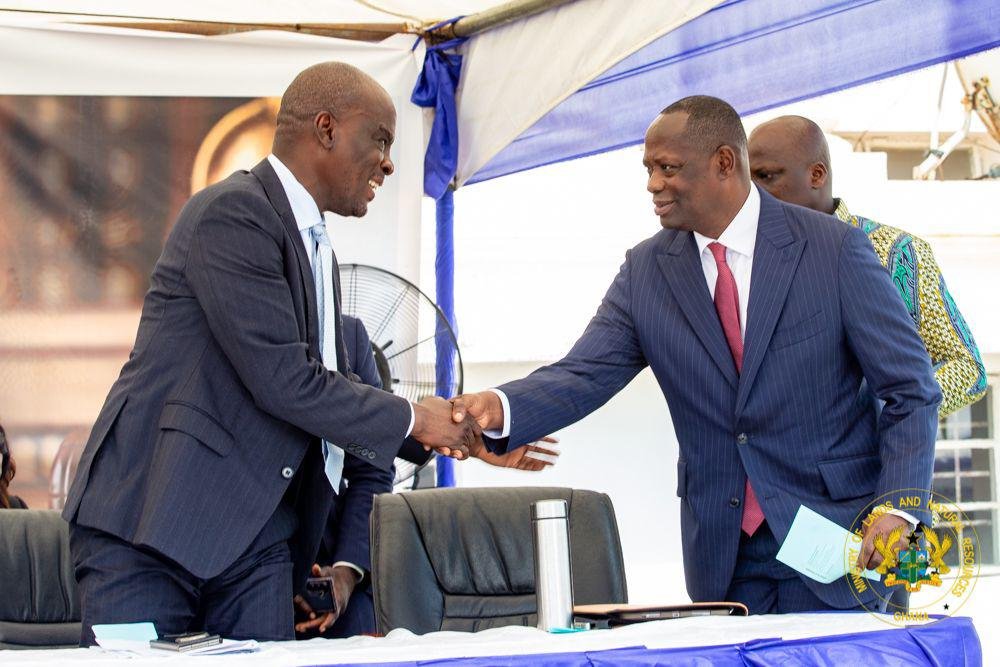
To move beyond rhetoric, the Ministry has deployed a comprehensive five-pronged strategy anchored in transparency, land reclamation, and strict law enforcement.
A cornerstone of this modern defense is the nationwide geofencing and tracking of heavy machinery, a move the Minister described as “one of the boldest interventions” in recent history.
Currently, over 1,200 excavators across the country are under 24-hour surveillance; any unit that deviates from its approved jurisdiction is immediately demobilised.
This digital “fence” is designed to eliminate the mobility of illegal operators, ensuring that “every excavator imported into Ghana is tracked” to prevent the further scarring of protected zones.
Furthermore, the government is overhauling the mining licensing regime to “eliminate corruption and opacity” that have historically plagued the sector. By decentralizing permit systems, the Ministry aims to make legality accessible to small-scale miners, effectively “sanitising” the industry.
These reforms are critical because the devastation caused by illegal mining is not merely aesthetic; it is an existential threat.
Scientific data reveals that turbidity levels in major rivers like the Pra and Birim have reached catastrophic levels, often exceeding 12,000 NTU far above the 5 NTU limit for safe water due to the reckless use of mercury and cyanide.
Judicial Commitment and the Environmental Rule of Law

The judiciary has signaled its full support for this environmental crusade, with Chief Justice Paul Baffoe-Bonnie asserting that “justice and environmental protection are inseparable.“
In a landmark move, three High Court judges have been specifically designated to adjudicate cases involving environmental crimes and state-related mining matters.
These dedicated courts are slated to become operational early next year, providing a specialized legal venue to fast-track the prosecution of “galamsey” kingpins.
The Chief Justice noted that for justice to be truly sustainable, the courts must “protect nature and safeguard the wellbeing of future generations” from the scourge of land degradation and water rights violations.
Legacy and the Call for Civic Stewardship
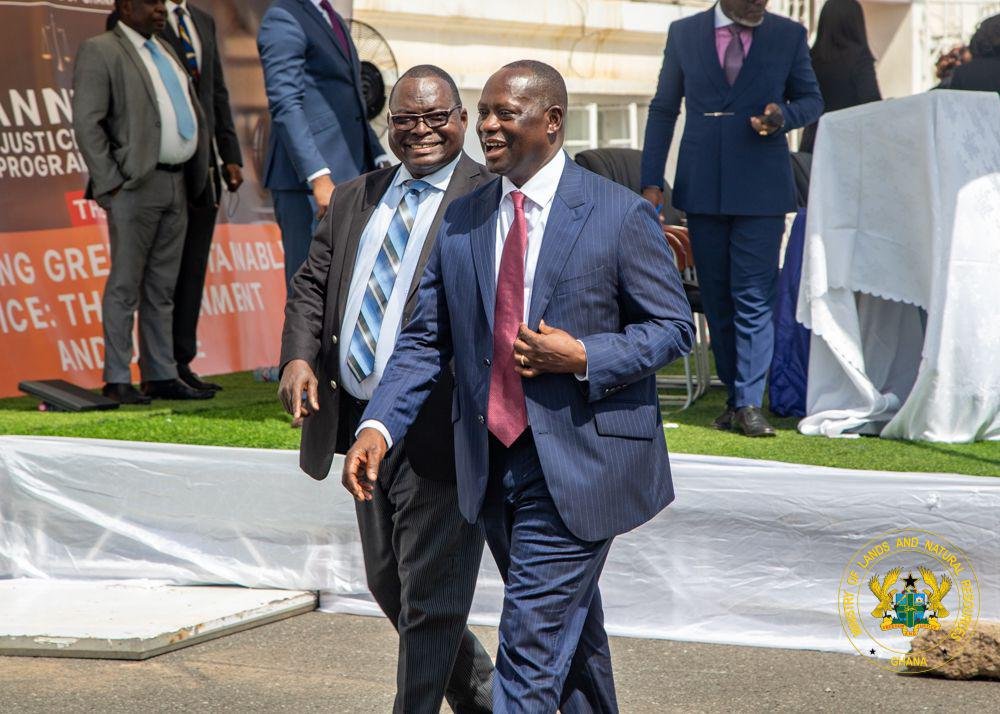
The campaign to defend Ghana’s environment is also being extended to the classroom, with a strong emphasis on “green schools” and early civic education.
Mrs. Efua Ghartey, President of the Ghana Bar Association, has advocated for the reintroduction of Civic Education into the national curriculum to ensure stewardship is “imbibed in children right from an early age.”
By fostering a generation of “innovators of these laws,” the state hopes to create a permanent cultural shift toward environmental accountability.
As the Minister concluded, the resolve to “turn our forests green again and our waters blue” is a moral obligation that requires every Ghanaian to act as a defender of environmental justice.
READ ALSO: Fameye Set to Share the Stage with Nana Amakye Dede at December 28 Legacy Night