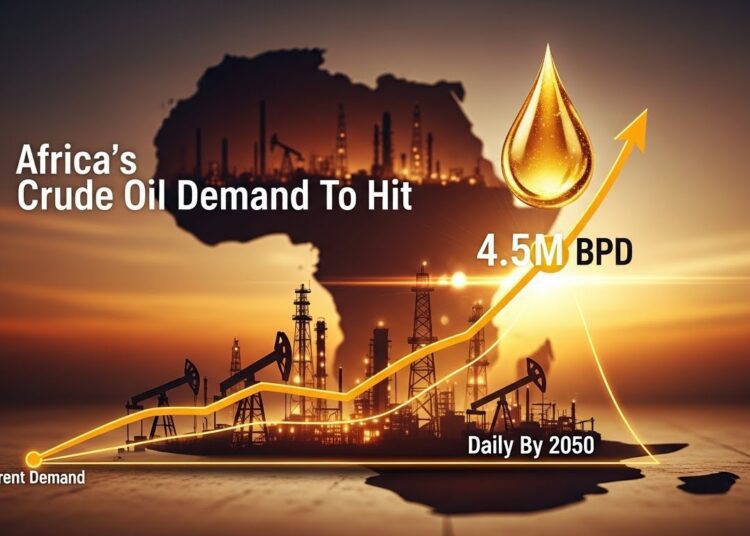
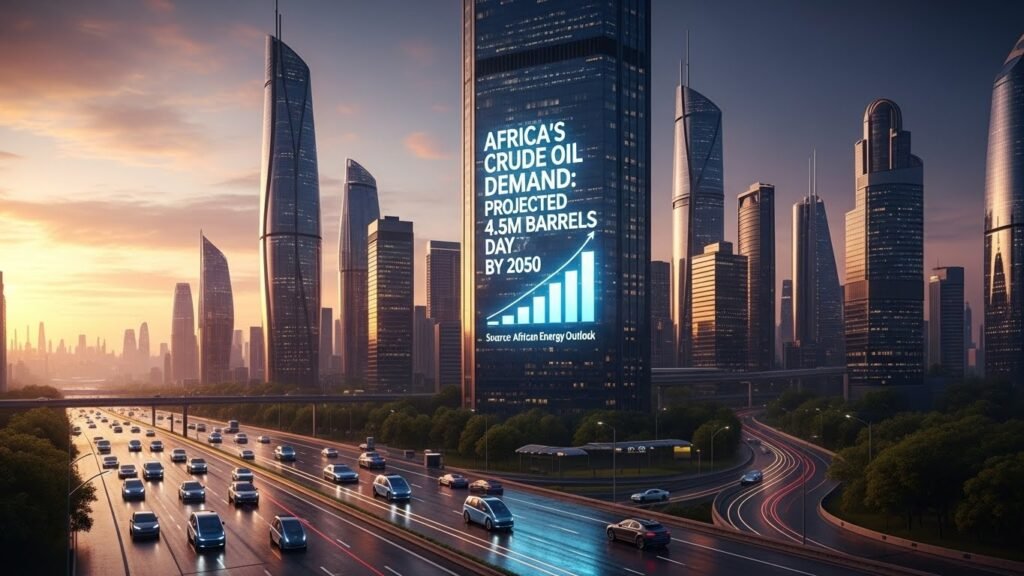
Africa’s crude oil demand is projected to more than double over the next 25 years, reaching as much as 4.5 million barrels per day (bpd) by 2050, according to the African Refiners and Distributors Association (ARDA). Meeting this surge in consumption will require over $100 billion in investment in refining infrastructure across the continent, the association has warned.
Despite being a major crude oil producer, Africa continues to rely heavily on imports of refined petroleum products, a structural imbalance that exposes many countries to volatile global prices, supply disruptions and sustained pressure on foreign exchange reserves.
ARDA’s Executive Secretary, Anibor Kragha, said Africa’s dependence on imported fuels remains one of the continent’s biggest economic vulnerabilities. While upstream oil production has expanded in several producing countries, investment in refining and downstream infrastructure has failed to keep pace.
“Downstream investment has stagnated even as upstream production grows, leaving Africa stuck in the costly paradox of exporting crude and importing refined products at a premium.”
Anibor Kragha, ARDA’s Executive Secretary
This imbalance, he explained, means African economies often pay more for fuels refined elsewhere, while losing value addition, jobs and industrial growth opportunities that could have been created locally.
Consumption Driven by Demographics and Growth

According to ARDA, Africa’s oil consumption is being driven by powerful structural factors, including rapid population growth, urbanization and expanding industrial activity. Crude oil demand is expected to rise sharply from about 1.8 million bpd in 2024 to as much as 4.5 million bpd by 2050.
Kragha, speaking in remarks carried by African media outlets including Arise News, noted that the scale of projected growth positions Africa as one of the most significant future demand centers globally.
“The expected surge in demand positions Africa’s refining industry as one of the world’s biggest untapped investment frontiers.”
Anibor Kragha, ARDA’s Executive Secretary
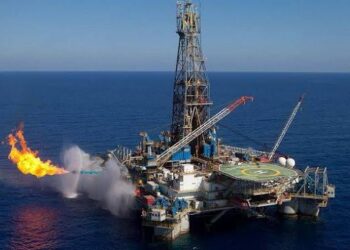
Despite this outlook, Africa’s refining capacity remains insufficient and, in many cases, outdated. Several refineries across the continent are either mothballed, operating far below capacity, or in need of major upgrades to meet modern efficiency and environmental standards.
“To boost domestic fuel supply, Africa will need more than $100 billion in upgrades of mothballed or dilapidated refineries, expansion of existing refining capacity, and new greenfield projects.”
Anibor Kragha, ARDA’s Executive Secretary
These investments, the association argues, are essential to meeting domestic fuel demand and reducing dependence on imports.
Fragmented Fuel Standards a Major Obstacle
Beyond financing constraints, Kragha highlighted regulatory fragmentation as a major hurdle to the development of a competitive Africa-made fuels market. He noted that fuel specifications vary widely across the continent, complicating cross-border trade and limiting economies of scale for refiners.
Out of Africa’s 54 countries, as many as 46 maintain different national fuel standards. This has resulted in a patchwork of fuel types, with at least 12 different gasoline grades and 11 diesel varieties sold across the continent.
“A key hurdle to Africa-made fuels is the lack of harmonized fuel specifications,” Kragha said, arguing that standardization would significantly improve efficiency, reduce costs and encourage regional trade in refined products.
ARDA believes that addressing Africa’s downstream challenges could unlock transformative economic benefits. Expanding refining capacity would not only enhance energy security but also help stabilize currencies by reducing fuel import bills, support industrialization and create skilled jobs.
Kragha described the downstream oil sector as a rare convergence of high growth potential and structural supply deficits. “Africa’s downstream sector is one of the world’s last large-scale, high-growth energy investment frontiers,” he said.
“The demand curve is defined by demographics. The supply deficit is structural. The capital requirement exceeds $100 billion. And the economic upside is transformative.”
Anibor Kragha, ARDA’s Executive Secretary
Call for Policy Reform and Investor Confidence
To unlock this potential, ARDA is calling on governments to implement policy reforms that encourage long-term investment in refining and downstream infrastructure.
These include transparent pricing frameworks, predictable regulation, regional fuel standard harmonization and incentives that de-risk large capital projects.
Private investors, development finance institutions and sovereign funds are expected to play a critical role, particularly as global energy markets transition and financing for fossil fuel projects becomes more selective.
As Africa’s energy demand continues to rise, the choices made today on refining investment, regulation and regional cooperation could shape the continent’s economic trajectory for decades. ARDA’s projections underscore both the scale of the challenge and the size of the opportunity.
If successfully addressed, Africa’s refining gap could evolve from a long-standing weakness into a cornerstone of industrial growth, economic resilience and energy security across the continent.
READ ALSO: Minerals Commission Rallies Public Support to Curb Galamsey