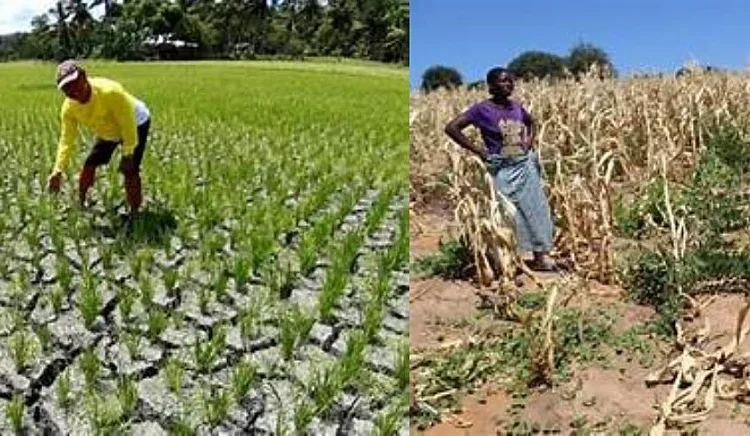
Ghana has activated its climate insurance safety net following a devastating drought that crippled food crop production across large parts of the country in 2024.
The prolonged dry spell, which severely affected farming activities in the middle and northern belts, forced many farmers to abandon their fields as crop yields collapsed and planting cycles were disrupted. In response, the National Disaster Management Organisation has received an insurance payout from the African Risk Capacity and Global Shell Solutions to provide targeted support to affected farming communities.
The insurance payout marks a significant step in Ghana’s evolving approach to climate risk management, shifting from reactive disaster relief to proactive risk reduction. With agriculture employing a large segment of the population and serving as a key pillar of food security, the impact of the drought raised concerns about livelihoods, nutrition, and rural economic stability.
Food Production Grinds to a Halt
According to NADMO, the drought brought food crop production almost to a standstill in several districts, particularly in the middle and northern regions where rain-fed agriculture dominates. Staple crops such as maize, millet, sorghum, and legumes were among the hardest hit, worsening food supply pressures and reducing household incomes.
Smallholder farmers, who often lack irrigation infrastructure and financial buffers, bore the brunt of the climate shock. Many were unable to replant or invest in alternative inputs, leaving communities vulnerable to prolonged economic hardship. The situation underscored the growing threat climate variability poses to Ghana’s agricultural systems.
The payout facilitated by ARC reflects Ghana’s participation in regional risk pooling mechanisms designed to provide rapid financial support during climate-related disasters. ARC’s insurance model enables member states to access funds once predefined climate triggers, such as rainfall deficits, are met. This approach allows governments to respond quickly, reducing delays that often accompany traditional emergency funding.
By activating the insurance policy, Ghana was able to secure resources to support farmers without diverting funds from other critical development priorities. The payout is being channeled through NADMO to ensure that assistance reaches affected communities efficiently and transparently.
Focus on Resilience, Not Just Relief
NADMO Director-General, Joseph Kuyon, has emphasised that the organisation’s strategy goes beyond short-term relief. “My leadership in NADMO will be focused on risk reduction, not disaster response,” he stated, highlighting a deliberate shift in policy direction.
Central to this approach is the recognition that climate shocks are becoming more frequent and intense. Rather than treating droughts as isolated events, NADMO is prioritising measures that help farmers adapt to changing climate conditions and reduce future vulnerabilities.
One of the key interventions under the insurance payout is the provision of drought-friendly seedlings to affected farmers. These improved seed varieties are designed to withstand dry conditions and mature within shorter rainfall windows, helping farmers maintain productivity even in challenging seasons.
In addition to input support, NADMO is working with agricultural stakeholders to educate farmers on climate-smart practices. These include soil moisture conservation techniques, diversified cropping systems, and better land management methods that enhance resilience. The goal is to equip farmers with practical tools and knowledge that allow them to adapt, rather than simply recover, after climate shocks.
Cash Grants and Input Support for Recovery
Beyond seeds and training, the insurance payout will also support farmers through cash grants and input assistance. These measures aim to stabilise household incomes, enable farmers to prepare for the next planting season, and reduce the risk of long-term poverty traps caused by climate disasters.
By combining financial support with productive inputs, NADMO hopes to accelerate recovery while laying the foundation for more resilient agricultural livelihoods. The integrated approach reflects lessons learned from past disasters, where relief alone proved insufficient to address underlying vulnerabilities.
Dr. Kuyon has been clear-eyed about the broader challenge facing Ghana and other climate-vulnerable countries. “We cannot stop climate change, but we can put ourselves in a position to withstand its effects,” he noted. This perspective is increasingly shaping national disaster management and agricultural policy discussions.
As climate risks intensify, Ghana’s use of insurance mechanisms like ARC highlights the growing importance of innovative financing tools in safeguarding development gains. The current payout not only provides immediate relief to drought-affected farmers but also signals a commitment to building long-term resilience in the food belt.
With climate insurance now activated, attention will turn to effective implementation and monitoring to ensure that support reaches those most in need. For farmers struggling to rebuild after a difficult season, the intervention offers a lifeline and a measure of hope in an era of increasing climate uncertainty.
READ ALSO: Women Dominate Economic Activities in Ghana Yet Remain Challenged