The International Monetary Fund (IMF) has projected a convergence growth for Ghana’s GDP components at 5 percent by 2029 due to the current growth trajectory.
According to the IMF, the extractive and non-extractive components of GDP will both eventually grow at the same rate in 2029 and 2030. Ghana’s three main sectors of the economy, Service, agriculture, and industry, can be regrouped under the extractive and non-extractive components of GDP.
The recent performance of the sectors in the Ghana Statistical Service (GSS) data for the first three quarters of 2025 makes the projection daring, implying some foreseen improvements in the performance of sub-sectors in the next five years.
The industry sector in the first half of 2025 grew at a rate of 3.2 percent, lagging behind the other sectors. According to the Finance Minister, Dr Cassiel Ato Forson, while reading the 2026 Budget, he noted that the “moderate performance of the industry sector is due to lower oil output.”
The industry sector includes both the extractive and the non-extractive components of GDP. Therefore, the IMF’s projection relates to foreseeable growth mainly in the extractive component, and specifically in the oil and gas sub-sector. Either the oil and gas sub-sector will expand, or the other extractive commodities will perform so well to overshadow the struggling oil and gas sector.
According to the IMF’s projection, the extractive GDP will grow by 1.7 percent at the end of 2025, 4.2 percent in 2026, 4.3 percent in 2027, 4.9 percent in 2028, and 5.0 percent in 2029 and 2030. Also, the non-extractive, which currently has a faster growth, is projected to grow at 5.3 percent by the end of 2025, 4.9 percent in 2026, and maintain a 5.0 percent growth rate from 2027 till 2030.
Therefore, the IMF’s convergence growth for both the extractive and the non-extractive sectors begins in 2029 and extends to 2030.
Non-Extractive Component of GDP
The non-extractive component of GDP constitutes the agriculture sector, the services sector, and part of the industry sector. Currently, the non-extractive sector is the dominating component of Ghana’s GDP.
In the recent past, the services sector was the largest sector, followed by industry and agriculture. As of 2025, though the services sector remains the largest in terms of growth rate and share of GDP, the agriculture sector is now the second largest, while the industry sector trails behind.
The non-extractive component of the industry sector comprises the manufacturing (production, agro-processing, and general manufacturing), construction (development of infrastructure, real estate, and oil fields’ development), and energy (power generation, transmission, and distribution, including the development of renewable energy sources like solar power).
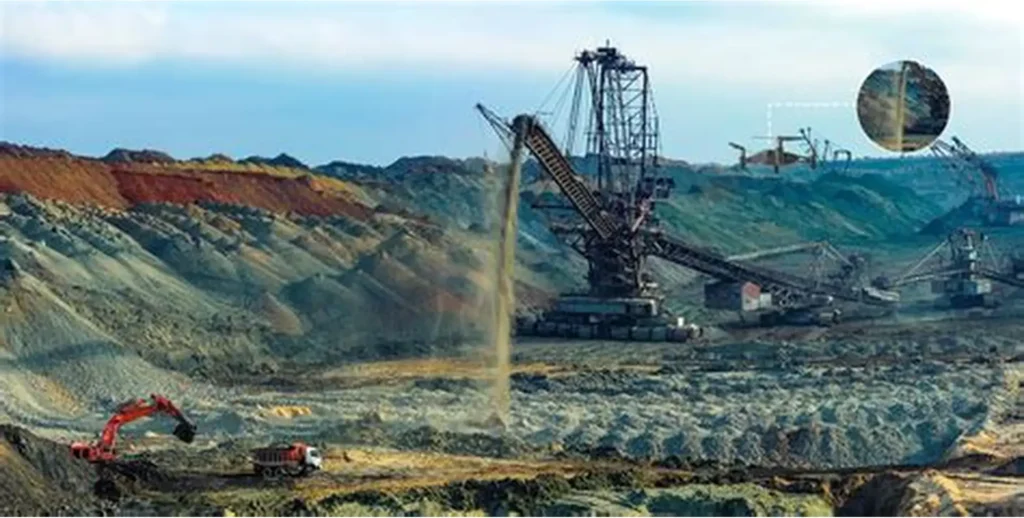
Extractive Component of GDP
According to the 2026 Budget, Ghana’s extractive sector experienced significant contractions, with Oil & Gas shrinking by 18.2 percent and Mining & Quarrying by 2.8 percent, in the third quarter of 2025.
The broader industrial sector, which includes these extractive industries, grew by only 0.8 percent, a sharp slowdown from the previous year, with the overall economy’s momentum coming from non-oil sectors.
According to the 2026 Budget, the “non-oil GDP surged to 7.8 percent, highlighting the growing role of domestic production and consumption in sustaining Ghana’s recovery. This performance reaffirms the structural shift underway, from dependence on extractive industries toward a more diversified, inclusive growth model anchored in local enterprise and productivity.”
Specifically, while the oil contribution declines, the other extractives, such as gold and other minerals, have increased their contribution significantly. With the prices of gold at its peak and the government’s regulation of gold mining and export in Ghana through the Ghana Gold Board, the extractive sector might move back to its glory days, where it contributes significantly to Ghana’s GDP.
IMF’s Possible Reasons for Optimism
The IMF’s positive outlook for Ghana’s GDP growth to 5 percent by 2029, despite current oil sector drag, hinges on the anticipation of successful macroeconomic stability, continued structural reforms, and strategic investments that foster balanced growth across the economy.
Furthermore, based on current fiscal reforms and enhanced governance, as well as ongoing robust non-oil sector expansion (such as services, agriculture, technology, and construction), restructuring of the tax administration from mobilization to collection, and potential future oil and gas project developments leading to diversified, resilient growth beyond resource volatility, leveraging the services sector’s dominance and manufacturing gains.
The rate of Ghana’s economic progress, according to the IMF, with consistency could reflect a sustainable medium-term growth potential for Ghana, supported by specific drivers in each sector.
Looking at recent performances of the global price of extractive commodities like gold, it comes as no surprise that the sector’s contribution to Ghana’s Gross Domestic Product (GDP) will improve.
With many projects going on in the energy and Oil & Gas sectors, along with the extractive commodities’ effective management and surging value, the IMF’s projection is attainable.
READ ALSO: CRC’s Recommendation Radical but Necessary – Mahama Signals Firm Action