Ghana’s energy sector is showing early signs of stabilisation, according to the International Monetary Fund (IMF), following a series of financial, regulatory and structural reforms aimed at restoring confidence and sustainability in the power value chain.
In its Fifth Review Under the Extended Credit Facility (ECF) Arrangement and Financing Assurances Review, the IMF highlighted improvements in payment discipline within the electricity sector, particularly between the Electricity Company of Ghana (ECG) and independent power producers (IPPs), even as legacy debts remain a significant burden.
“The Electricity Company of Ghana’s (ECG) payments to independent power producers (IPPs) through the cash waterfall mechanism have increased significantly, reaching US$308 million in 2025H1 compared with US$325 million for 2024 in total.”
International Monetary Fund (IMF)
This improvement suggests stronger revenue management and better prioritisation of payments within the sector, following years of chronic arrears that strained relationships with power producers and undermined investor confidence.
However, the IMF cautioned that while payment flows have improved, the overall stock of liabilities remains elevated.
The assessment comes at a critical time for Ghana, as the government continues to balance energy affordability, fiscal consolidation and the need to maintain reliable power supply to support economic recovery.
Legacy Debts Continue to Weigh on the Sector
As of end-June 2025, the IMF reported that “the stock of net payables to IPPs stood at US$1.2 billion, US$71 million higher than at the end of 2024.”
At the same time, ECG owed a further US$830 million to fuel suppliers, although this figure was US$124 million lower than at the end of the previous year.
The Fund explained that the rise in IPP payables during the first half of 2025 was not due to weaker ECG performance alone, but rather changes in government support patterns.
This highlights the delicate balance between improving utility discipline and the role of government support in managing sector-wide obligations.
Tariff Adjustments Central to Financial Recovery

The IMF also pointed to ongoing electricity tariff adjustments as a critical pillar of the reform programme. According to the review, “The authorities have continued to adjust electricity tariffs.”
The Public Utilities Regulatory Commission (PURC) announced a quarterly tariff adjustment of 1.14 percent on September 23, 2025, which took effect from October 1.
More significantly, the IMF referenced the introduction of a new Multi-Year Tariff Order (MYTO) framework. “The 2025–2030 Multi-Year Tariff Order (MYTO) adjustment of 9.86 percent was announced in December 2025, effective January 1st, 2026,” the Fund said.
The new MYTO is designed to provide greater predictability and transparency in tariff setting, helping utilities better plan their finances while offering consumers clearer insight into how prices are determined.
Beyond the headline tariff increases, the IMF welcomed reforms aimed at improving transparency and regulatory credibility. The report noted that “the new MYTO also introduced a more transparent quarterly tariff adjustment, including through the publication of detailed decision notes by PURC.”
Analysts say this shift could help rebuild public trust in tariff adjustments, which have often been controversial, by clearly linking price changes to identifiable cost drivers such as fuel prices, exchange rates and generation costs.
For investors, greater transparency is also expected to reduce regulatory risk, a long-standing concern in Ghana’s power sector.
Private Sector Participation in Distribution Takes Shape
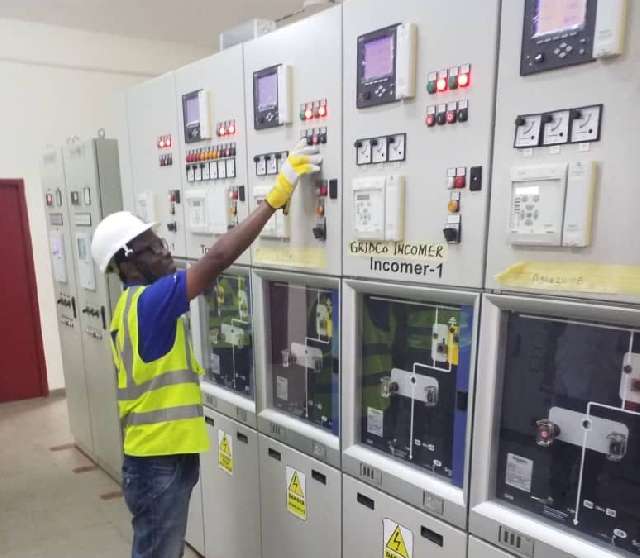
Looking ahead, the IMF highlighted progress toward deeper structural reforms, particularly in electricity distribution.
“By end-2025, a transaction advisor is expected to be hired to oversee the selection process for private sector concessionaires for electricity distribution.”
International Monetary Fund (IMF)
This move aligns with government plans to bring private-sector expertise into distribution operations, while keeping assets in public ownership, as part of efforts to reduce losses, improve service delivery and strengthen financial sustainability.
The IMF views this step as essential to addressing chronic inefficiencies in ECG and the Northern Electricity Distribution Company (NEDCo), which continue to record high technical and commercial losses.
While the IMF’s assessment points to stabilising trends, it also underscores that Ghana’s energy sector remains vulnerable. High legacy debts, exchange rate pressures and fuel price volatility continue to pose risks to long-term sustainability.
Nonetheless, the combination of improved payment discipline, regular tariff adjustments and advancing structural reforms suggests that the sector is gradually moving away from crisis management toward a more predictable and rules-based framework.
For Ghana’s broader economy, sustained stability in the power sector is critical. Reliable electricity underpins industrial activity, job creation and investment, making the success of these reforms central to the country’s medium-term growth prospects.
As the IMF review makes clear, progress has been made, but maintaining momentum will require continued policy discipline, transparency and coordination across government, regulators and industry players.
READ ALSO: Appiagyei-Atua Backs 5-Year Presidential Term, Urges Separation of Parliament from Ministries