Ghana marks another deepening of its macroeconomic stability as headline year-on-year inflation dropped to 5.4 percent in December 2025, reflecting a decline for 12 consecutive months and the lowest inflation rate since the CPI was rebased in 2021.
According to the data released by the Government Statistician, Dr Alhassan Iddrisu, on Wednesday, January 7, 2026, the December 2025 inflation figure is a consecutive easing from 6.4 percent in November 2025, which serves as a relief to households and consumers alike. The steady decline signals a sustained shift toward price stability and improving macroeconomic conditions.
The latest data complements the efforts of the economic managers, both on the fiscal and monetary side, that have complementarily stirred the financial and expenditure aspects of the economy through consistent discipline and transparency.
On a month-on-month basis, inflation in December 2025 was 0.9 percent, implying that prices increased by 0.9 percent between November and December 2025. Although short-term movements in prices persist, they are now occurring within a stable and downward long-term trend.
Food and Non-Food Inflation
The latest data from the Ghana Statistical Service (GSS) shows that inflation declined across most major components. Both food inflation and non-food inflation eased compared to November 2025 and December 2024. The components outlook aids policymakers in knowing where the relief is strongest and where pressures exist.
Food inflation, which accounts for about 43 percent of household spending, on a year-on-year basis fell to 4.9 percent in December 2025, down from 6.6 percent in November 2025 and 27.8 percent in December 2024, representing a 22.9 percentage point decline over the year. However, food prices increased by 1.1 percent between November and December 2025, showing that while long-term pressures have eased, short-term movements remain.


Non-food inflation dropped to 5.8 percent in December, down from 6.1 percent in November and 20.3 percent in the same period last year. Non-food inflation fell by 14.5 percentage points between December 2024 and December 2025, but rose by 0.6 percent month-on-month, indicating moderate short-term pressure.
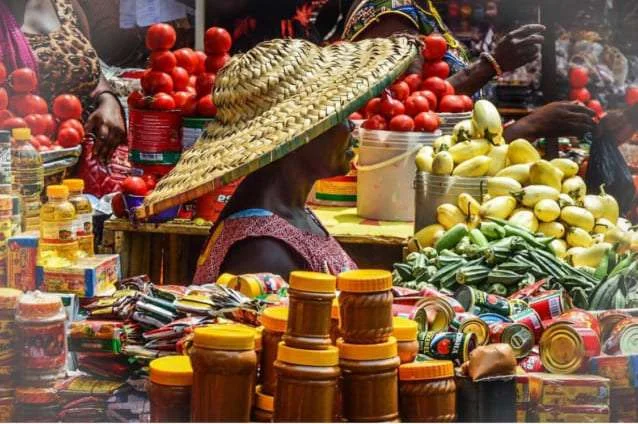
A broad-based disinflation trend is seen across both food and non-food categories. Thus, they reflect broad-based easing of price pressures, rather than improvements driven by a single category.
Goods and Services Inflation
Goods inflation slowed to 5.8 percent in December 2025, down from 7.3 percent in November and 23.1 percent in December 2024. Goods inflation fell by 17.3 percentage points between December 2024 and December 2025. The slowdown provides relief where it matters most to consumers, as goods account for nearly three-quarters of the CPI basket. Goods prices increased by 0.8 percent between November and December 2025.
Services inflation rose slightly to 4.5 percent in December, up from 3.8 percent in November, but still lower than its level of 15.4 percent in December 2024. Services inflation fell by 10.9 percentage points between December 2024 and December 2025 and by 0.9 percentage points between November 2025 and December 2025.
Locally Produced and Imported Items Inflation
Inflation for locally produced items declined to 5.9 percent in December 2025, from 6.8 percent in November 2025, and from 26.4 percent in December 2024. This reflects a 20.5 percent reduction over the year.
Imported items inflation also eased, falling to 4.3 percent in December 2025 from 5 percent in November 2025 and from 18 percent in December 2024, showing a 13.7 percentage point decline over the 12 months.
The data shows that easing price pressures comes from both domestic production and imported items.

Regional inflation
Inflation varies across the country, with the Eastern Region reporting the highest year-on-year inflation at 11.2 percent in December 2025, up slightly from the November rate of 10.8 percent but down from 16.8 percent in December 2024.
The Savannah region reported the lowest inflation of a decline of 1.2 percent in December 2025, implying that prices actually fell by 1.2 percent in the region between December 2024 and December 2025. This is an improvement from the near-zero inflation in November 2025 and the 33.8 percent recorded in December 2024.
The latest GSS data shows that three regions – Northern, Western North, and Upper East – actually experienced prices declining on a month-on-month basis, with the rest of the regions experiencing modest price rises. The differences reflect variations in supply conditions, transport costs, storage capacity, and market assets.
Top Inflation Items and Contributors
In December 2025, the top five contributors to inflation of items were charcoal, green plantain, smoked herrings, cinema, and cultural services, as well as ginger. If you pick these top five items together, they account for over 40 percent of the overall inflation in December 2025. These are regular households’ consumables, hence, changes in their prices have a strong impact on inflation.
The top high year-on-year inflation items – contributed about one third of the overall inflation – are ginger (76.7 percent), green plantain (69.4 percent), charcoal 66.8 percent), cinema and cultural services 49.3 percent), and avocado pear 42.8 percent).
The bottom low year-on-year inflation items – which pulled inflation down by 8 percent – are garden eggs (reduced by 56.7 percent), Nkontomire (reduced by 51.9 percent), fried fish (reduced by 44.5 percent), pawpaw (reduced by 43.6 percent), and cabbage (reduced by 43.2 percent). Without these price drops, inflation would have been higher.
Drivers of Inflation
Inflation pressures have declined, emanating from across the spending divisions. Food and non-alcoholic beverages recorded a sharp decline of 1.7 percent yet remained the single biggest contributor to inflation (weight of 42.7 and year-on-year inflation of 4.9 percent), followed by housing and utilities with 11.8 percent inflation in December 2025, a 1.4 percent decline from last year.
Other drivers of inflation include clothing and footwear (weight of 8.0 and year-on-year inflation of 9.9 percent), Recreation, sports, and culture (weight of 3.5 and year-on-year inflation of 12.7 percent), alcoholic beverages (weight of 3.9 and year-on-year inflation of 8.7 percent), restaurants and accommodation (weight of 4.3 and year-on-year inflation of 7.0 percent), and education services (weight of 6.6 and year-on-year inflation of 3.8 percent).
The Government Statistician recommends that businesses invest efficiently, expand local supply chains, reduce redundant costs, and translate savings to consumers. Households should plan with the current stability and confidence and efficiently track spending on household items to further strengthen finances.
The government is urged to remain fiscally disciplined, be committed to price stability efforts, and target investments in the real sectors.
READ ALSO: Deloitte Predicts More BoG Rate Cuts in 2026, Warns Against Overdoing Monetary Easing