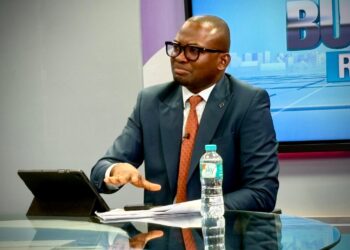
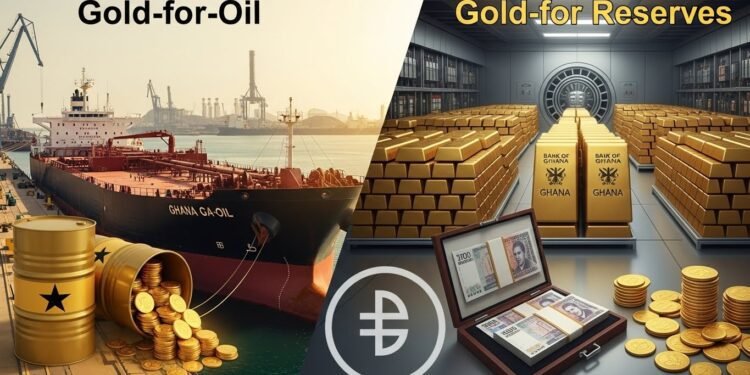
Governor of the Bank of Ghana (BoG), Dr. Johnson Asiama, has called for a comprehensive review of the trading model underpinning Ghana’s gold-for-oil and gold-for-reserves programmes, warning that the current cost structure is no longer sustainable for the central bank.
Appearing before Parliament’s Public Accounts Committee (PAC) on Monday, January 12, 2025, Dr. Asiama said while the initiatives serve the national interest by supporting foreign exchange reserves and broader macroeconomic stability, the financial burden has disproportionately fallen on the Bank of Ghana since the programmes began.
According to him, a reassessment of how the initiatives are funded is urgently needed, including the possibility of direct budgetary allocations from the Ministry of Finance to cover the costs associated with their implementation.
Dr. Asiama disclosed to the committee that all losses incurred under the gold-for-oil and gold-for-reserves programmes in 2024 were fully absorbed by the Bank of Ghana, further weakening an institution already under strain.
“The inherent costs are currently being borne by the Bank of Ghana, not just in 2025, but since the programme started,” he told lawmakers, stressing that the arrangement places significant pressure on the BoG’s balance sheet.
He explained that the central bank has faced persistent challenges since 2022, including balance sheet impairments, making it increasingly difficult to continue absorbing quasi-fiscal costs on behalf of the state.
In his view, maintaining the current structure without reforms could undermine the Bank’s ability to effectively perform its core mandate of ensuring price and financial stability.
Call for Government Budgetary Support
At the heart of Dr. Asiama’s appeal was the need to clearly define who should bear the costs of the programmes going forward. He argued that if the initiatives are deemed essential for national economic management, then their financing should be treated transparently within the government budget.
The Governor said, “The key question going forward is who takes charge of the costs incurred in that exercise,” adding that the programmes could be run more efficiently if government explicitly budgets for them as quasi-fiscal interventions.
He revealed that discussions are already underway with the Minister of Finance on possible reimbursement to the Bank of Ghana for costs absorbed since 2024, signaling a willingness on the part of both institutions to find a more sustainable arrangement.
Despite his concerns, Dr. Asiama was careful to emphasise that the Bank of Ghana considers the gold-for-oil and gold-for-reserves initiatives to have delivered tangible benefits to the economy.
He told the committee that the programmes have contributed meaningfully to reserve accumulation and helped stabilise the macroeconomic environment during a period of heightened external and domestic pressures.
He linked these gains to recent signs of price moderation across parts of the economy, noting that sustaining such progress depends on addressing the structural weaknesses in how the programmes are financed.
“We believe that the optimal way forward is to address the costs and determine who bears them so that we can sustain the progress made in the interest of Ghanaians.”
Dr. Johnson Asiama, Governor of the Bank of Ghana (BoG)
Appeal to Parliament for Reform Support
The BoG Governor appealed directly to Parliament to support efforts to reform the operational framework of the programmes, contain costs, and ensure a fairer sharing of the financial burden among key stakeholders.
He argued that legislative oversight and support would be critical in aligning the programmes with sound public financial management principles.
According to Dr. Asiama, clearer cost-sharing arrangements would not only protect the Bank of Ghana’s balance sheet but also enhance transparency and accountability in the implementation of the initiatives.
Looking ahead, Dr. Asiama assured the committee that the Bank of Ghana remains committed to working closely with government and other state agencies to refine and sustain the gold-for-oil and gold-for-reserves schemes.
He said continued engagement will focus on reducing operational costs, clarifying fiscal responsibilities, and preserving the macroeconomic benefits already achieved.
He reiterated that the central bank’s objective is not to abandon the programmes, but to ensure they are managed in a way that supports long-term economic stability without undermining institutional resilience.
“The Bank will continue engaging government and other stakeholders to ensure the programme is reformed and maintained in a manner that supports long-term economic stability.”
Dr. Johnson Asiama, Governor of the Bank of Ghana (BoG)
As debates continue over the future of the initiatives, Dr. Asiama’s testimony has placed renewed focus on the balance between innovative policy tools and the financial sustainability of the institutions tasked with implementing them.
READ ALSO: DGPP : BoG Boss Insists Scheme Was Introduced to Address National Problem, Urges for Reforms