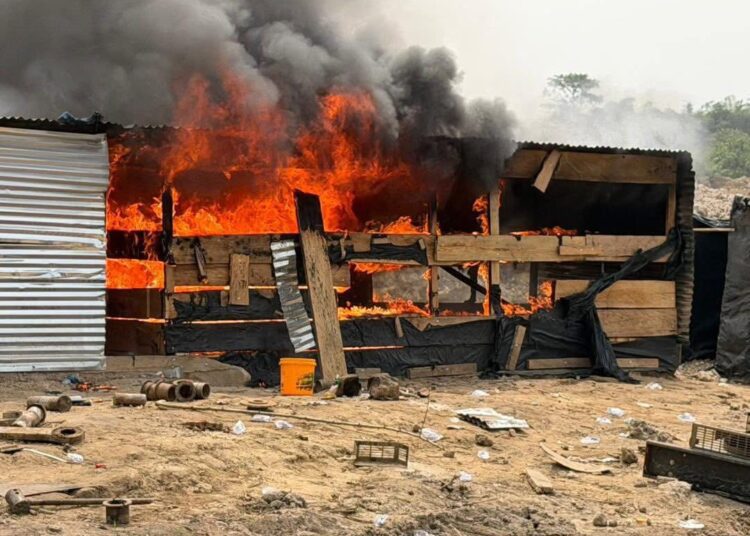
National Anti-Illegal Mining Operations Secretariat (NAIMOS) has executed an enforcement sweep across the Tano North District of the Ahafo Region, striking a blow against entrenched illegal mining networks.
This strategic intervention, targeted notorious galamsey hubs following weeks of intensive intelligence gathering on activities threatening the ecological integrity of the Tano River basin.
The operation marks a significant escalation in the state’s effort to reclaim vital farmlands and water bodies from the grip of unregulated mineral extraction.
“What unfolded at the communities in Tano North is not just a raid, it is a snapshot of a broader national challenge. Communities losing farmland. Rivers and Soils under and severe threatening livelihoods.”
environmental activist, Erastus Asare Donkor
Operations focused on the communities of Sukuumu, Subrisu No. 2, and Adrobaa, where the task force uncovered three expansive sites that had recently been active hubs of exploitation.
Although suspected miners, reportedly including foreign nationals, managed to evacuate heavy machinery like excavators just ahead of the raid due to suspected informational leaks, the task force moved to dismantle the remaining operational backbone.
Operatives systematically destroyed critical infrastructure, including heavy-duty water pumping machines, excavator batteries, and logistics facilities, to prevent any immediate reactivation of the sites.
Tactical Neutralization of Mining Infrastructure

The NAIMOS approach in Tano North represents a shift from mere arrests to the total tactical neutralization of mining logistics.
By setting ablaze makeshift shelters and crushing pumping infrastructure, the task force has significantly increased the “barrier to entry” for returning miners.
This strategy of denying miners the instruments of destruction ensures that even in the absence of immediate arrests, the financial and operational cost of restarting becomes prohibitive.
Seized items, ranging from new white drums to gold-trapping carpets, highlight the sophisticated nature of these sites, which were once productive rice and maize farms.
Protecting the Tano River Basin
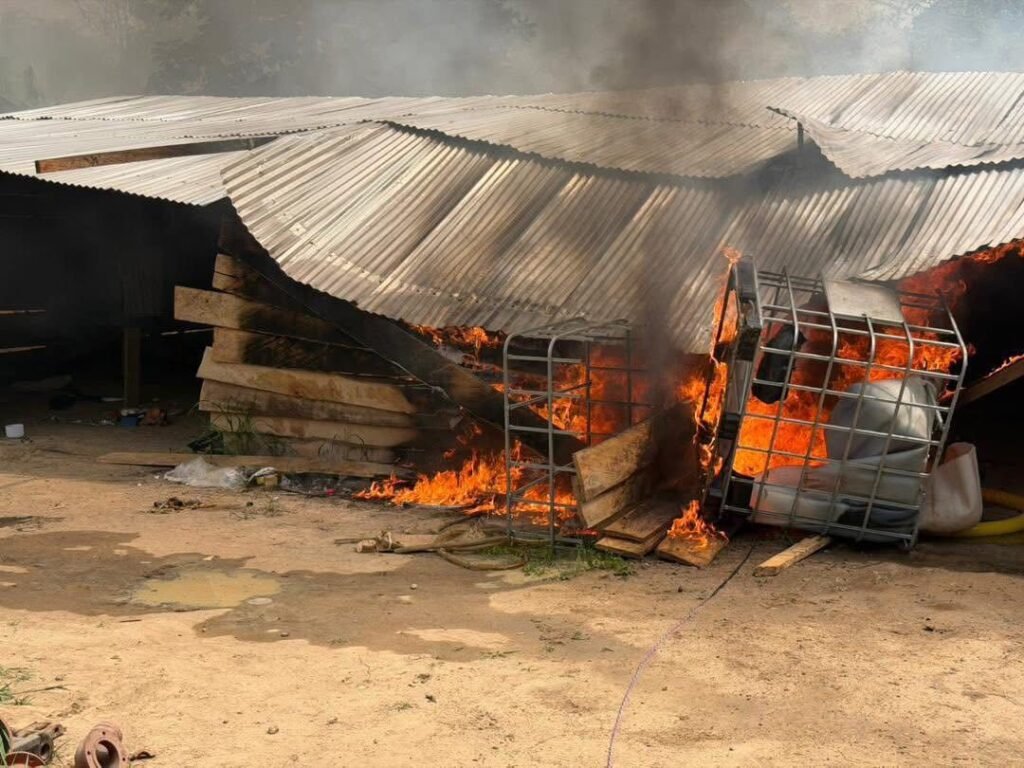
The Tano River serves as a primary water source for thousands, and the encroaching pits at Subrisu No. 2 posed a direct threat to its chemical and physical stability.
Industry experts note that the destruction of pumping machines is particularly effective, as these units are essential for the washing processes that discharge silt and heavy metals into the river.
This “hostile environment” policy is designed to break the cycle of temporary withdrawals followed by quiet returns, offering local ecosystems a much-needed window for natural recovery and state-led reclamation efforts.
Sustaining the Crackdown Through Intelligence
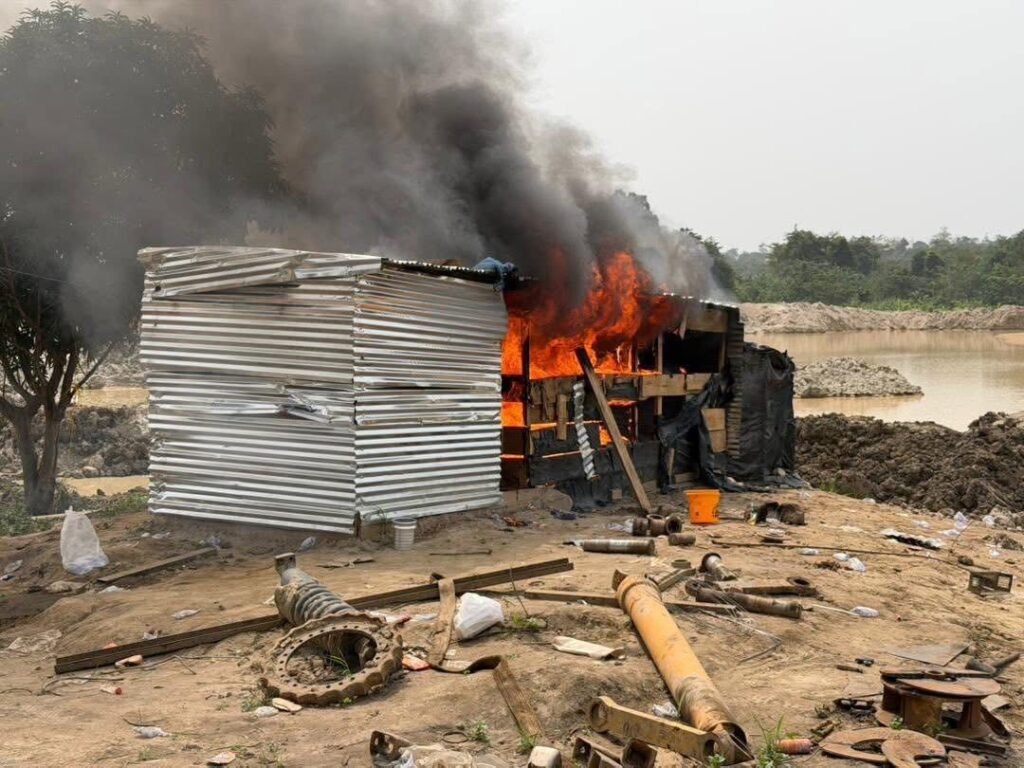
To ensure these gains are not transient, the extractive sector must transition toward a permanent, intelligence-led enforcement model rather than periodic raids.
Sustaining the fight against galamsey requires the deployment of “Blue Water Guards” and stationary NAIMOS units in hotspots to eliminate the warning leaks that often precede task force arrivals.
Furthermore, integrating community-led monitoring with modern satellite surveillance can provide the real-time data needed to suppress illegal activity before it scales. Only through sustained presence and the uncompromising protection of agricultural lands can Ghana truly secure its extractive future.
READ ALSO: Denmark Sends More Troops To Greenland