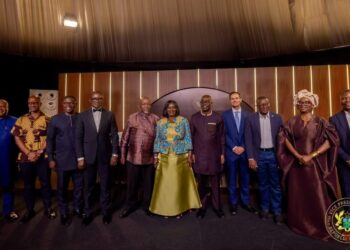
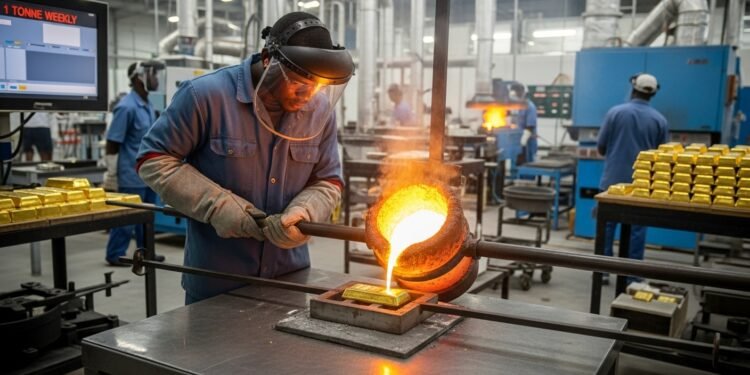
Ghana is set to refine one metric tonne of gold every week locally following a landmark agreement between the Ghana Gold Board (GoldBod), Gold Coast Refinery, and South Africa’s Rand Refinery.
The deal marks a significant shift in the country’s gold sector, strengthening efforts to move beyond raw gold exports toward deeper value addition and industrial development.
Under the agreement, GoldBod will supply one metric tonne of gold per week to the Gold Coast Refinery for processing.
This development is expected to enhance Ghana’s role in the global gold value chain, while ensuring that a greater share of the economic benefits from the country’s mineral resources is retained domestically.
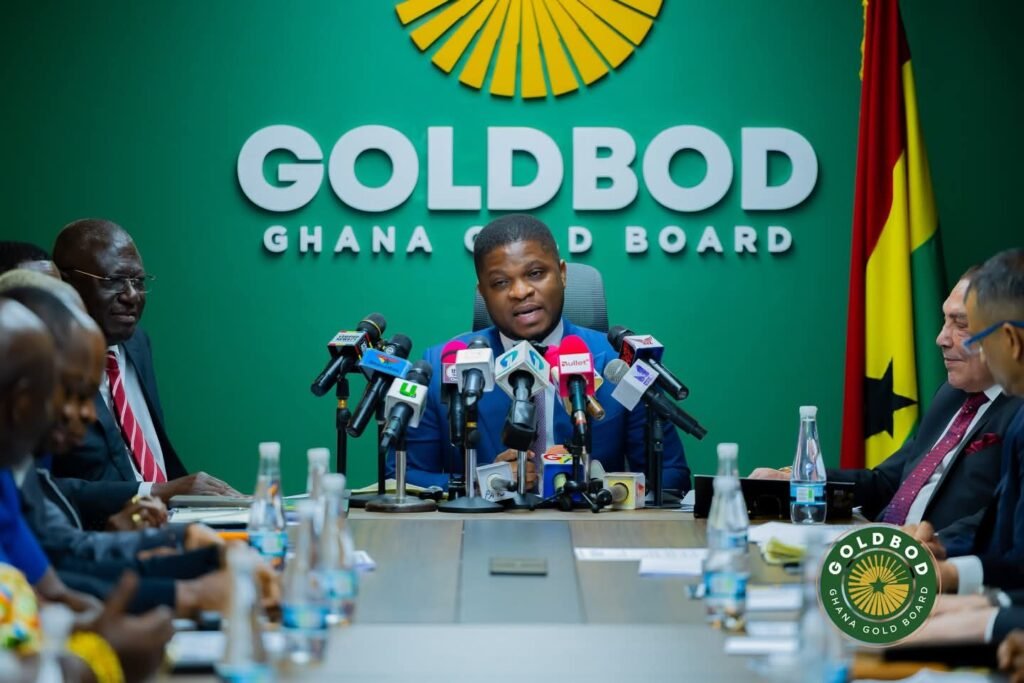
Speaking at the signing ceremony, Chief Executive Officer of GoldBod, Mr Sammy Gyamfi, said the partnership was driven by the need to fully harness the benefits of Ghana’s gold resources in line with President John Dramani Mahama’s vision of economic transformation through value addition.
“Before this agreement, we toured the Gold Coast Refinery and observed that it was significantly underutilised,” Mr Gyamfi said. According to him, the new arrangement allows Ghana to make strategic use of existing infrastructure rather than exporting raw gold and re-importing refined products at higher cost.
“This partnership allows Ghana to leverage existing capacity while ensuring that more value from our gold stays within the economy.”
Mr Sammy Gyamfi, Chief Executive Officer of GoldBod
Strategic Equity Stake for Ghana

As part of the agreement, Ghana, through GoldBod, has secured a 15 per cent equity stake in Gold Coast Refinery. This ownership interest gives the country a direct role in the refining process and strengthens national participation across the gold value chain.
The equity stake is a strategic move that goes beyond supply arrangements, positioning Ghana as an active player in gold refining rather than a passive supplier of raw materials.
The stake is also expected to improve transparency and accountability while aligning the refinery’s operations more closely with national development priorities.
The Deputy Minister for Lands and Natural Resources, Hon Alhaji Yusif Sulemana, assured stakeholders of the government’s full support for the initiative.
He said the ministry would work closely with relevant agencies to ensure a steady supply of sustainably mined gold to feed the refinery.
According to him, the success of local refining depends not only on infrastructure but also on responsible mining practices that protect the environment and local communities.
He noted that strengthening linkages between mining, refining, and manufacturing remains a key priority for the government.
Mining Chamber Backs Local Refining
The agreement has also received strong backing from the Ghana Chamber of Mines. Its Chief Executive Officer, Dr Kenneth Ashigbey, said the Chamber remains committed to supporting local refining, particularly for gold produced by large-scale mining companies.
“With GoldBod, Gold Coast Refinery and Rand Refinery working together, we are optimistic that Ghanaian refineries will soon achieve LBMA certification.”
Dr Kenneth Ashigbey, CEO of Ghana Chamber of Mines
Dr Ashigbey explained that certification by the London Bullion Market Association (LBMA) is critical to attracting gold from large-scale mining operations and accessing premium international markets.
Achieving LBMA certification would place Ghanaian refineries among a select group of globally recognised facilities, enhancing the country’s reputation and competitiveness in the international gold trade.
Board Chairman of GoldBod, Mr Kojo Fynn, described the agreement as transformative for Ghana’s gold sector. He said refining gold locally on a consistent scale would create new opportunities for skills development, employment, and technology transfer.
“As your operations grow, we expect the employment of more Ghanaians and the training of Ghanaian students in mining and refining disciplines so that our youth can fully benefit from this initiative.”
Board Chairman of GoldBod, Mr Kojo Fynn,
He stressed that value addition should translate into tangible benefits for Ghanaians, particularly young people seeking careers in mining, metallurgy, and related fields.
Boosting Economic and Industrial Growth
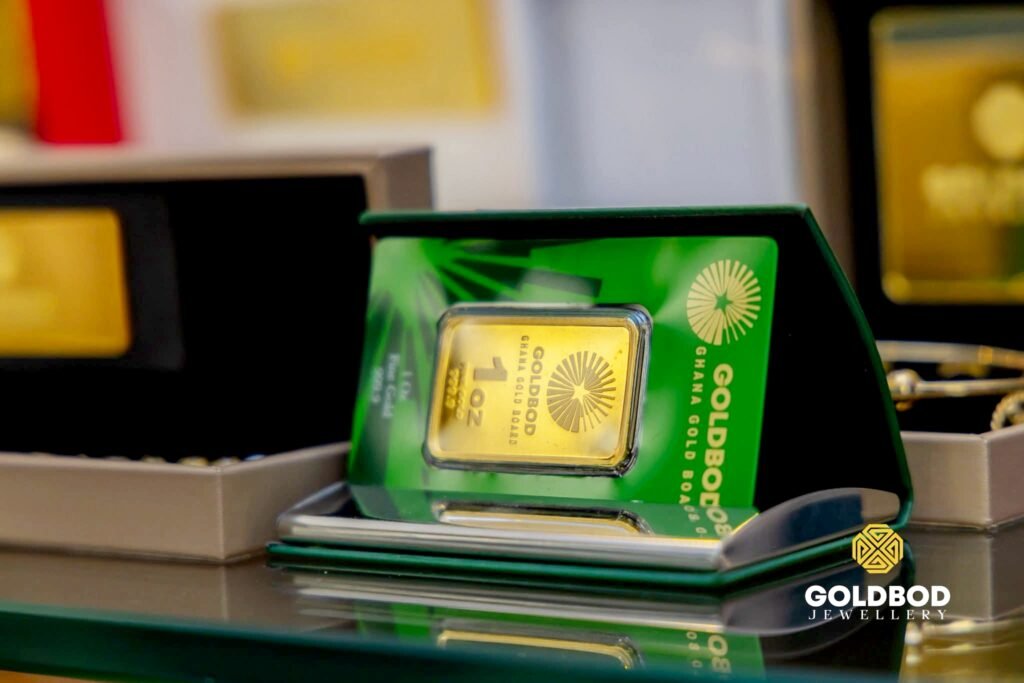
Ghana is Africa’s leading gold producer, yet for decades the bulk of its gold has been exported in raw form. The new refining arrangement represents a deliberate effort to reverse that trend by retaining more value within the country.
Refining gold locally is expected to reduce foreign exchange leakages, increase export earnings, and stimulate downstream industries such as jewellery manufacturing and bullion trading.
The partnership with Rand Refinery, one of the world’s most respected gold refineries, also brings technical expertise and international credibility to the initiative.
This collaboration is expected to strengthen operational standards and accelerate Ghana’s integration into high-value segments of the global gold market.
As Ghana prepares to refine one metric tonne of gold weekly, the agreement signals a broader shift in resource governance and industrial strategy.
By combining state leadership through GoldBod, private-sector capacity at Gold Coast Refinery, and international expertise from Rand Refinery, the country is positioning itself to capture greater value from its mineral wealth.
For policymakers and industry stakeholders alike, the deal represents more than a commercial arrangement; it is a milestone in Ghana’s quest to transform its natural resources into sustainable economic growth and shared prosperity.
READ ALSO: UK Defends Chagos Islands Deal Amid Trump Criticism