
Investigative journalist and author Manasseh Azure Awuni has sharply criticised the conduct and strategy of the New Patriotic Party minority caucus in Parliament, warning that its current approach risks turning it into what he described as a comic monument within Ghana’s democratic architecture.
His commentary questions the relevance and effectiveness of the caucus, urging its leadership to rethink how it deploys its limited parliamentary strength. Manasseh argued that the minority has increasingly become a nuisance in public discourse, largely because of what he sees as excessive and poorly focused media engagements.
According to him, unless there is a strategic shift, the caucus risks undermining its own constitutional role as an opposition force meant to hold government accountable. He suggested that the problem is not the act of speaking out, but how and why the caucus chooses to do so.
“Every honest Ghanaian will agree that our nation was run down in the eight years of the Akufo-Addo administration. Even some members of the NPP, including persons who served in that administration, are openly speaking up about it; some doing so to serve their parochial interests.”
Investigative journalist and author Manasseh Azure Awuni
Against this backdrop, Manasseh Awuni described the return of President John Dramani Mahama as having brought a degree of stability and calm to national life. He noted that the new administration appears receptive to public concerns and inclined toward corrective governance.
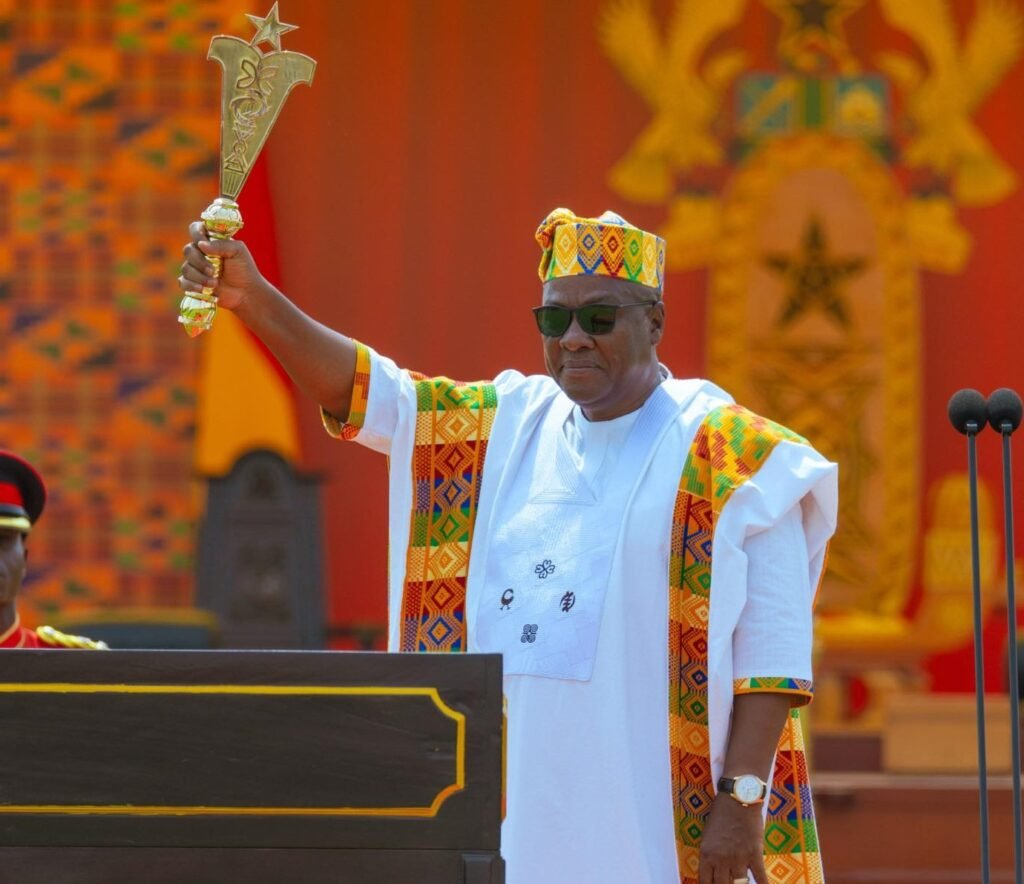
Although he acknowledged that the government has its own shortcomings, he argued that the general outlook remains positive, at least in the early stages, making it difficult for the opposition to convince voters that they made a worse choice in the last election.
It is within this political environment that Manasseh Awunu examined the role of the NPP minority in Parliament. He stressed that a reduced numerical strength does not require silence, noting that if the caucus lacks the votes, it still has the voice.
Exercising Voice Responsibly
However, he insisted that this voice must be exercised responsibly and strategically if it is to resonate with the public and influence national debate. Manasseh Awuni believes the minority could rebuild public confidence by focusing on tangible issues and by setting a clear agenda around accountability.
He suggested that speaking up on matters such as reported losses linked to the Goldbod arrangement, and explaining in clear terms what the government may be doing wrong, would be both useful and welcome. In his view, such an approach would position the caucus as serious and constructive rather than confrontational for its own sake.
Instead, he criticised what he described as the daily spectacle of press conferences marked by loud accusations and poorly articulated demands. Manasseh Awuni argued that constant appearances before cameras to make what he calls unintelligible calls invite ridicule and scorn, not respect.
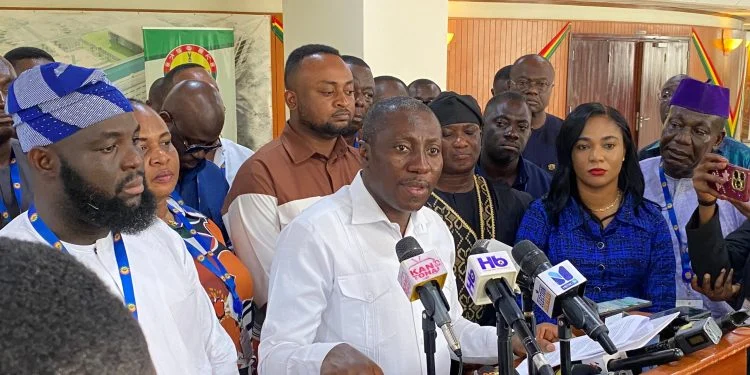
He also took aim at sections of the media, suggesting that journalists who report every utterance from the minority without discernment contribute to amplifying noise rather than substance.
Direr Consequences
He warned that this pattern has consequences for the minority itself. According to Manasseh Awuni, when the caucus eventually raises an issue of real importance, it may struggle to gain attention because many observers have already learned to scroll past what they perceive as nuisance news from the parliamentary minority.
In this sense, he argued, the caucus is weakening its own ability to be heard when it truly matters. As an example, Manasseh Awuni pointed to a recent instance in which the minority called for the dismissal of the Minister for Foreign Affairs following revisions to United States immigration policies that affected dozens of countries worldwide.
He argued that such a demand reflects a lack of seriousness and an unwillingness to engage with the global context of policy decisions, noting that the call ultimately indicts the minority more than the minister it targets.
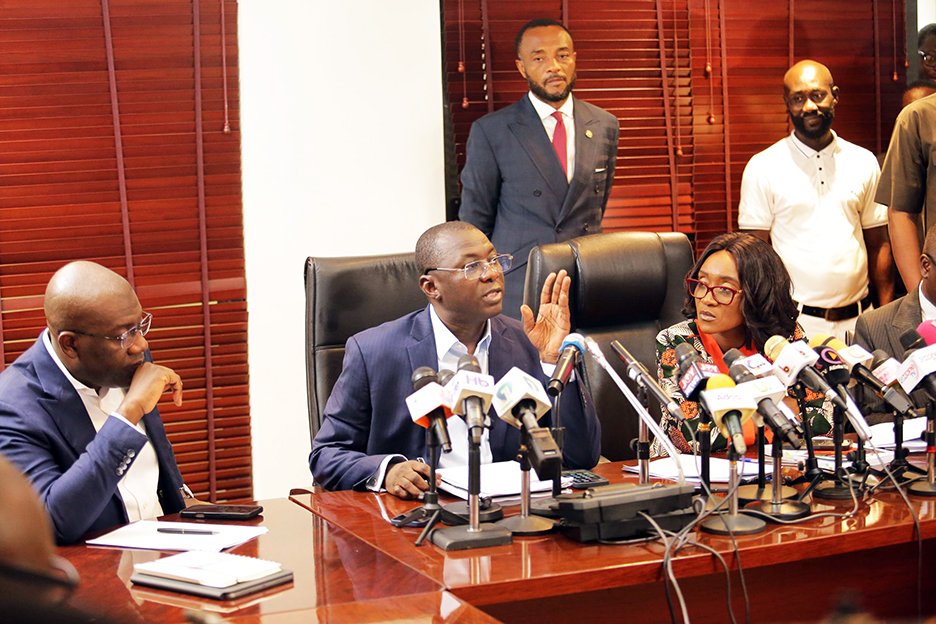
Manasseh Awuni further observes that the governing National Democratic Congress led President John Mahama continues to enjoy a measure of goodwill from the public.
He noted that each early achievement by the administration serves as a reminder of the scale of the challenges inherited from the previous government, making it harder for the minority to persuade Ghanaians that they opted for a worse alternative.
“A woman who left a man because he could not perform in bed will liken that man to a joker if her current man satisfies her and the previous one keeps reminding her of the asset she lost. So, NPP minority, rethink your strategy. Ghana needs your oversight, so don’t blow it up.”
Investigative journalist and author Manasseh Azure Awuni
He noted that members of Parliament have access to crucial documents and information from metropolitan, municipal, and district assemblies, giving them the tools needed to hold government to account.
He cautioned, however, that public memory remains sharp, and that positions defended by the minority in the past will continue to shape how its current criticisms are received. Ultimately, Manasseh Awuni’s message is a call for discipline, strategy, and credibility.

He argued that every administration eventually falters and that a focused and responsible minority will be best placed to expose those faults when they emerge. Turning opposition into daily spectacle, he warned, risks weakening both the caucus and the democratic oversight Ghanaians expect from Parliament.
READ ALSO: Analyst Projects Massive Economic Gains in Local Gold Refinery