
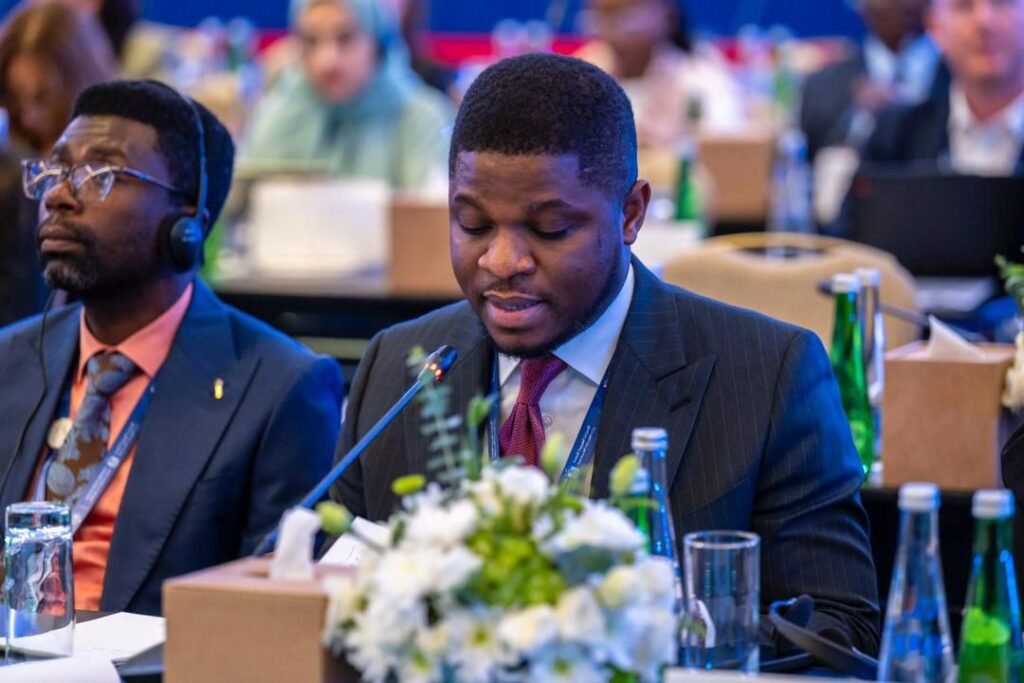
Board Chairman of the Ghana Gold Board (GoldBod), Mr. Kojo Fynn, has urged the transformative 52-tonne annual gold refining agreement with Gold Coast Refinery Limited to position youth employment as the primary metric of the partnership’s success.
The landmark deal mandates the local processing of approximately one metric tonne of gold every week, a strategic shift designed to move Ghana away from the perennial export of raw gold dore toward high-value refined bullion.
By anchoring the nation’s mineral wealth within domestic borders, the initiative seeks to create a sustainable industrial ecosystem where young Ghanaians are not merely spectators but the primary drivers of value addition, metallurgical innovation, and global traceability standards.
“Benefits will be enormous because the gold that would be exported is going to be refined over here by Ghanaians, there will be value addition, more employment and we plead with you to open the doors. Now that we are giving you the raw materials, open doors and employ more hands.”
Mr. Kojo Fynn

The arrangement, which officially commences on February 1, 2026, is projected to catalyze a significant surge in demand for specialized labor across the extractive value chain, ranging from plant operations and quality assurance to environmental management and logistics.
Beyond the immediate technical roles, the refinery’s commitment to 24-hour operations aligns with the government’s broader economic industrialization agenda, effectively doubling the workforce requirements and stimulating indirect job growth within the local supply chain.
Mr. Fynn emphasized that this agreement must serve as a “deliberate” vehicle for job creation, urging investors to prioritize the recruitment of Ghanaian youth to ensure that the “enormous” fiscal benefits of refining such as retained foreign exchange and increased export revenues are matched by tangible social impact and domestic skill acquisition.
Mitigating National Risks through Industrialization

The pervasive challenge of youth unemployment in Ghana, which has historically hovered at critical levels, represents a significant bottleneck to national stability and socio-economic progression.
Research suggests that for every direct job created in a high-tech refinery, up to five indirect roles are generated in ancillary services, providing a much-needed remedy to the 32% joblessness rate among the 15-24 age demographic.
By transitioning from a “dig-and-ship” model to a value-retention strategy, GoldBod is effectively mitigating the “brain drain” and the desperation that often leads youth toward unregulated artisanal mining or “galamsey.”
This 52-tonne agreement serves as a structural intervention, transforming gold from a finite raw resource into a perpetual engine for vocational dignity and professional career paths.
Bridging the Gap between Academia and Industry
To sustain this industrial shift, the GoldBod Chairman has called for a radical collaboration between the Gold Coast Refinery and the nation’s technical universities to bridge the existing gap between theoretical knowledge and practical metallurgical application.
This “open-door” policy for student orientation is intended to build a localized talent pool capable of managing complex fire assay processes and international hallmark standards, skills that were previously imported at high costs.
By integrating university students into the technical departments of the refinery, the partnership ensures a steady pipeline of experts who can maintain the integrity of Ghana’s gold through enhanced traceability and ethical sourcing protocols.
This academic-industry synergy is essential for positioning young Ghanaians at the forefront of the global gold market, ensuring they possess the long-term expertise required for the downstream processing of precious minerals.
Securing Economic Sovereignty and Future Livelihoods

As the extractive industry moves toward a more transparent and value-driven future, the involvement of the youth in refinery operations guarantees the longevity of Ghana’s mineral strategy.
The local refining of 52 tonnes of gold per year will not only save millions of dollars in foreign refining fees but will also strengthen the cedi by improving foreign exchange inflows through the sale of high-purity bullion.
More importantly, this agreement establishes a precedent for “resource nationalism” that prioritizes human capital over mere commodity extraction.
By ensuring that gold can be tracked from the source to the final export-ready bar, the youth-led workforce will be instrumental in upholding the international standards necessary for London Bullion Market Association (LBMA) certification.
Ultimately, the GoldBod-Gold Coast Refinery deal is a blueprint for transforming mineral wealth into a legacy of sustainable jobs, sophisticated skills, and lasting economic value for the next generation.
READ ALSO : Producer Price Inflation Drops 0.8% in December