

The Africa Center for Energy Policy (ACEP) has restated its firm opposition to the National Petroleum Authority’s (NPA) fuel price floor policy, warning that ongoing price wars among Oil Marketing Companies (OMCs) validate its earlier concerns about regulatory failure in Ghana’s downstream petroleum sector.
In a statement reacting to recent developments, ACEP said the NPA’s continued reliance on price floors as a regulatory tool reflects a disregard for fundamental market principles and statutory limits, with adverse consequences now becoming more apparent as competition among OMCs intensifies.
“The price wars currently unfolding across fuel retail outlets underscore the weaknesses of the price floor regime rather than justify its existence.”
Africa Center for Energy Policy (ACEP)
The debate over price floors dates back to April 2024, when ACEP strongly opposed the NPA’s directive introducing minimum pricing in the downstream petroleum market. At the time, the Authority argued that the measure was necessary to curb unhealthy competition and protect industry players.
ACEP, however, countered that the directive was inconsistent with the NPA Act, 2005 (Act 691), which was enacted under a regulated pricing regime that has since been dismantled. The think tank argued that maintaining such controls in a deregulated environment creates distortions and undermines efficiency.
“Several of NPA’s functions are outdated in a deregulated market and continue to impose unnecessary levies on consumers and industry players,” ACEP stated, stressing that policy inertia has resulted in regulatory overreach.
A Symptom of Deeper Regulatory Failure
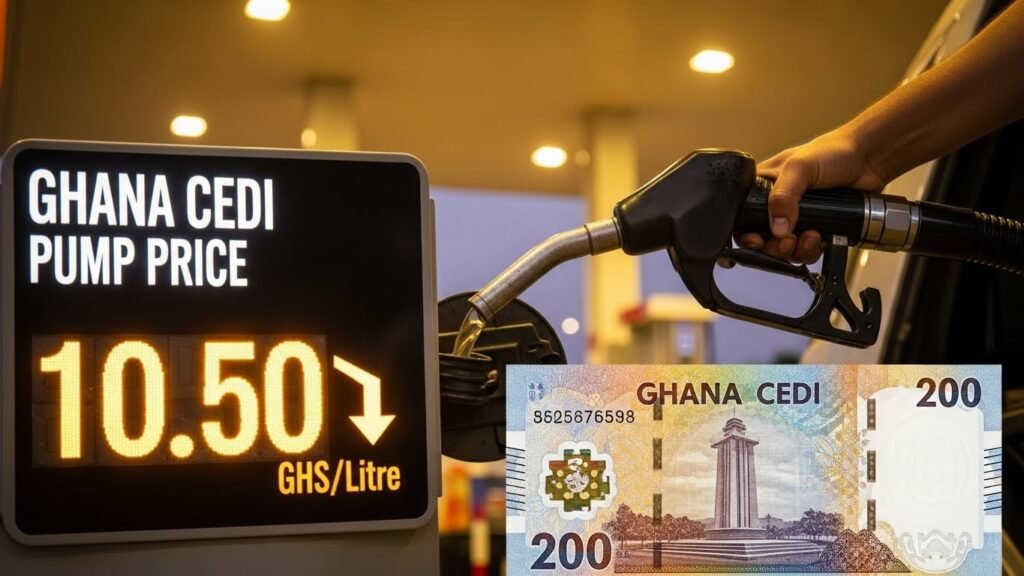
ACEP described the price floor policy not as a solution, but as a symptom of deeper structural and regulatory problems within the sector.
It warned that the policy fails to address the root causes of instability, including illicit fuel inflows, tax non-compliance, and weak enforcement of quality standards.
ACEP pointed to the persistence of substandard petroleum products and revenue leakages as evidence of ineffective oversight.
ACEP argued that instead of addressing these issues through targeted regulation and enforcement, the NPA has opted for a blanket policy that shields inefficiencies and transfers costs to consumers.
One of ACEP’s central criticisms is that price floors undermine competition by penalizing efficient operators while protecting weaker firms. The policy think tank warned that such an approach distorts market incentives and ultimately drives up fuel prices.
“Price floors reward inefficiency, discourage competition, and increase fuel costs for consumers,” ACEP said, adding that the policy disproportionately benefits struggling OMCs and Bulk Import, Distribution and Export Companies (BIDECs) that are unable to compete on cost and operational efficiency.
ACEP highlighted stark market realities, noting that approximately 15 percent of OMCs supply nearly 90 percent of petroleum products nationwide, while more than 160 OMCs collectively account for just 10 percent of the market.
Sustaining such an uneven structure through regulatory protection, the group warned, comes at the expense of consumers.
Enforcement Gaps and Missed Opportunities
The think tank also questioned the NPA’s enforcement strategy, citing the Authority’s own admissions regarding the presence of substandard products and unethical practices in the market.
“NPA’s own admission of substandard products and unethical practices suggests knowledge of offending players,” ACEP noted, criticizing the Authority for failing to apply sanctions against specific violators.
Instead, ACEP said, the NPA has resorted to broad protectionist measures such as price floors, which punish compliant and efficient firms alongside offenders, rather than isolating and correcting bad actors.
“ACEP calls for progressive, data-driven regulation focused on enforcing standards, sanctioning violators, and promoting fair competition without stifling innovation.”
Africa Center for Energy Policy (ACEP)
ACEP urged the NPA to focus on enforcing standards, sanctioning non-compliant firms, and eliminating illicit activities rather than manipulating prices.
Though fuel consumers continue to enjoy price reliefs and OMCs navigate intensifying competition, ACEP’s renewed warning adds urgency to the debate over how Ghana regulates its downstream petroleum sector, and whether current policies truly serve the public interest.