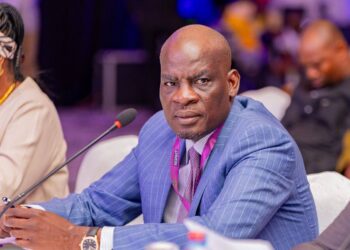
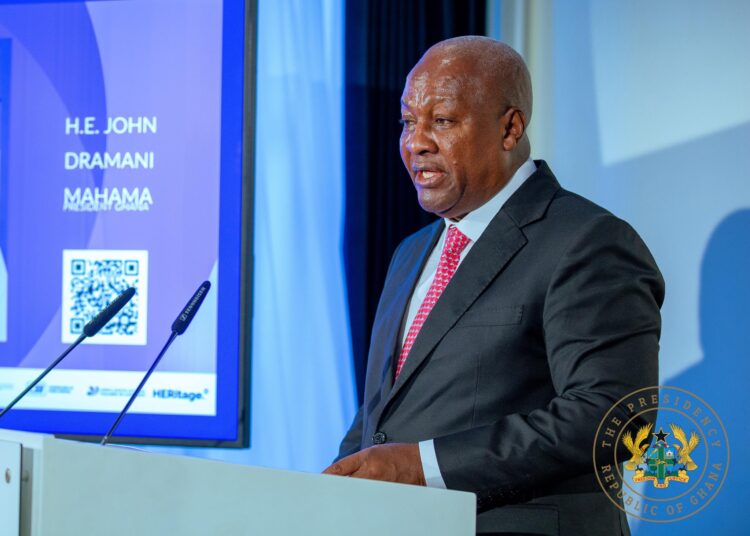
President John Dramani Mahama has positioned Ghana’s Accra Reset Initiative as a strategic response to Africa’s long standing development challenges, arguing that the continent must redefine its role in a changing global order.
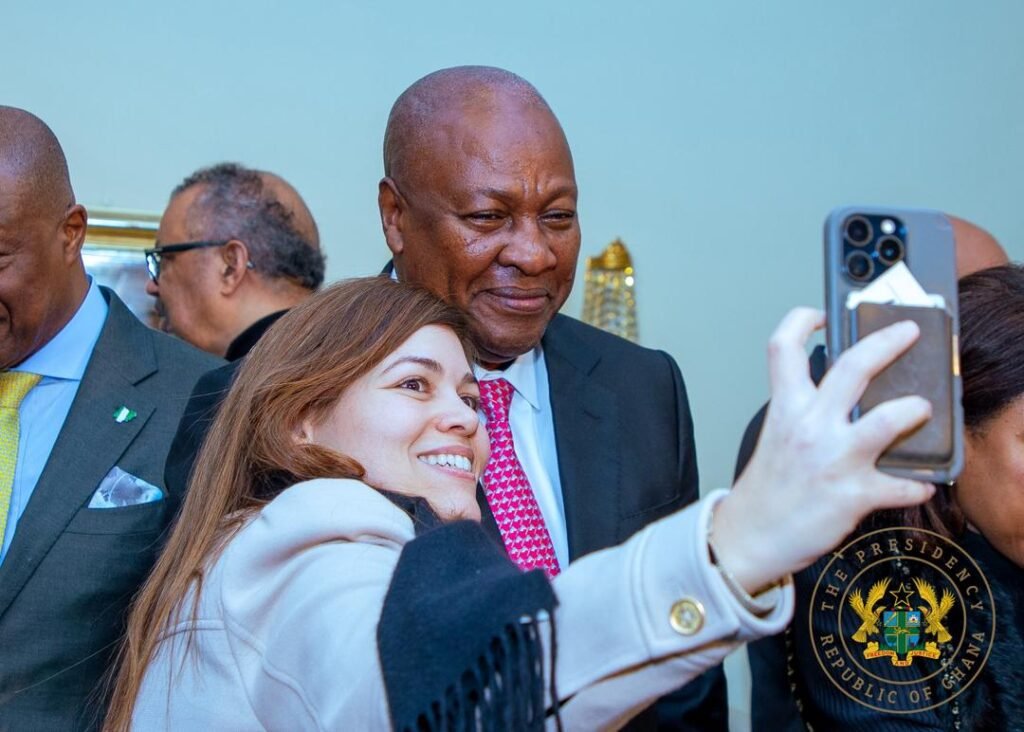
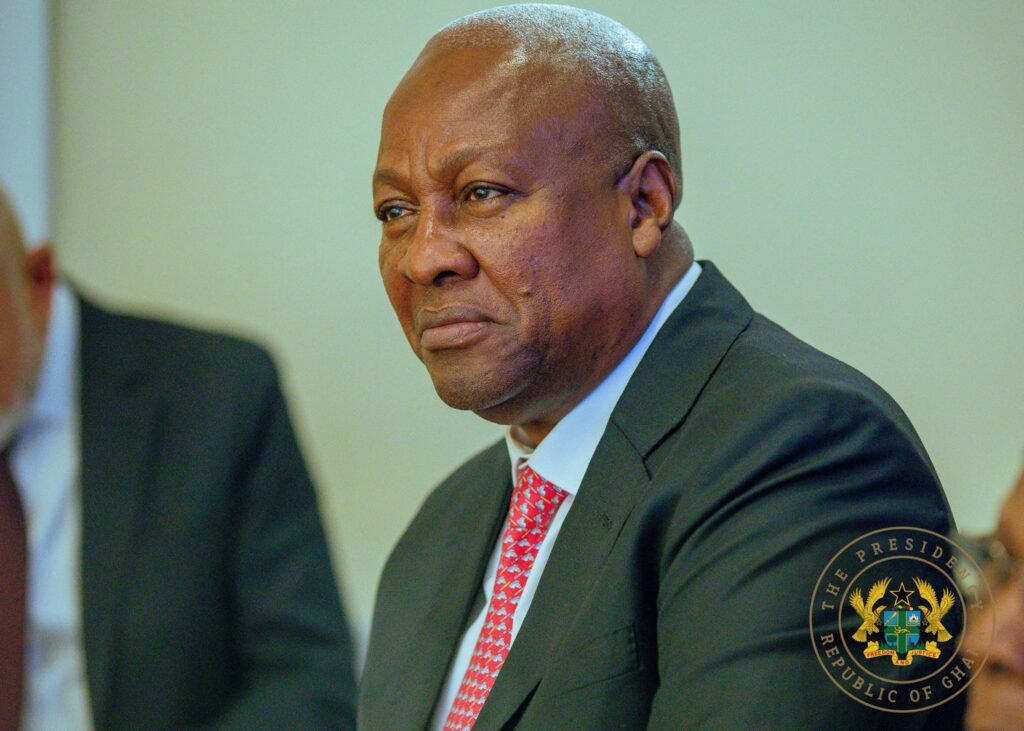
Speaking at a high level convening hosted by Ghana on the sidelines of the World Economic Forum in Davos, the President presented the reset agenda as a practical framework for moving Africa away from dependency and toward sustainable, self driven growth.
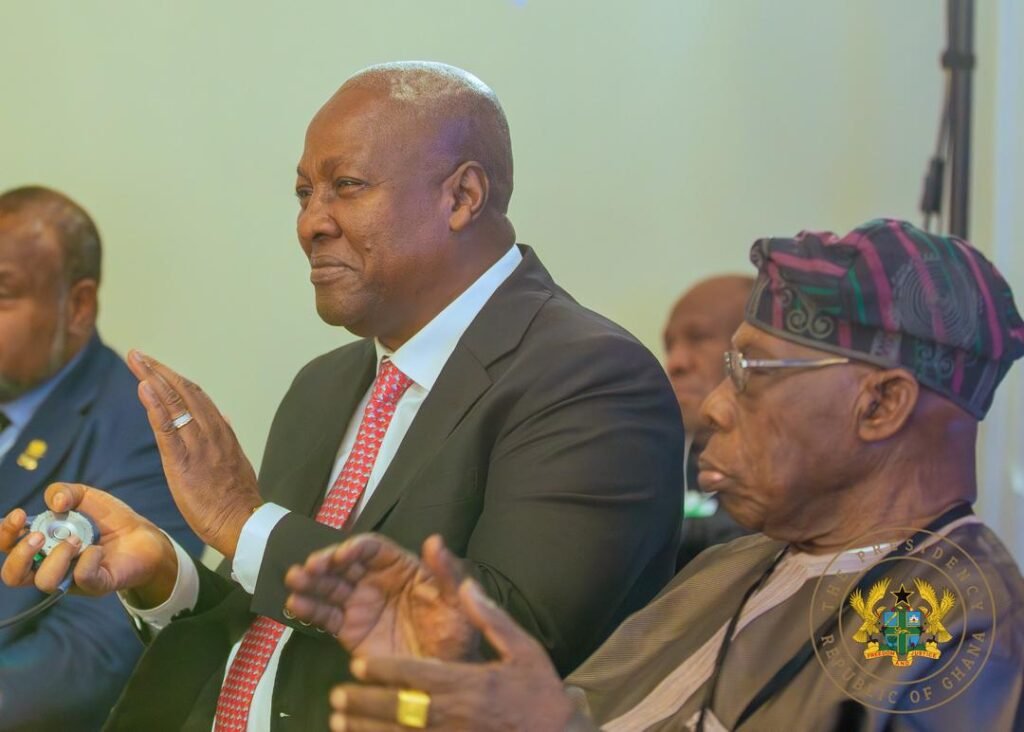
The Davos convening drew together political leaders, development partners, academics, and private sector stakeholders, with support from institutions including the African Development Bank, the Global Fund, Afrochampions, Georgetown University, and the Rockefeller Foundation.
President Mahama also acknowledged the contribution of the Guardian Circle of the Accra Research Initiative, led by former Nigerian President Olusegun Obasanjo, alongside the Alliance for African Multilateral Financial Institutions and the Confederation of Indian Industry.
” This afternoon, I stand before you as an African leader born in the heady days of post-independence Africa. Growing up, I could feel the excitement of my parents and their generation about the possibilities of our newly-worn freedom and the rights to manage our own affairs.
HE John Dramani Mahama, President of Ghana
Africa’s Optimism Independence
Ghana, will celebrate its 70th anniversary of independence from colonial rule in March 2027. President Mahama recalled the optimism that greeted independence across the continent and contrasted it with the complex realities that followed, including cycles of military rule, democratic governance, global ideological shifts, and economic volatility.
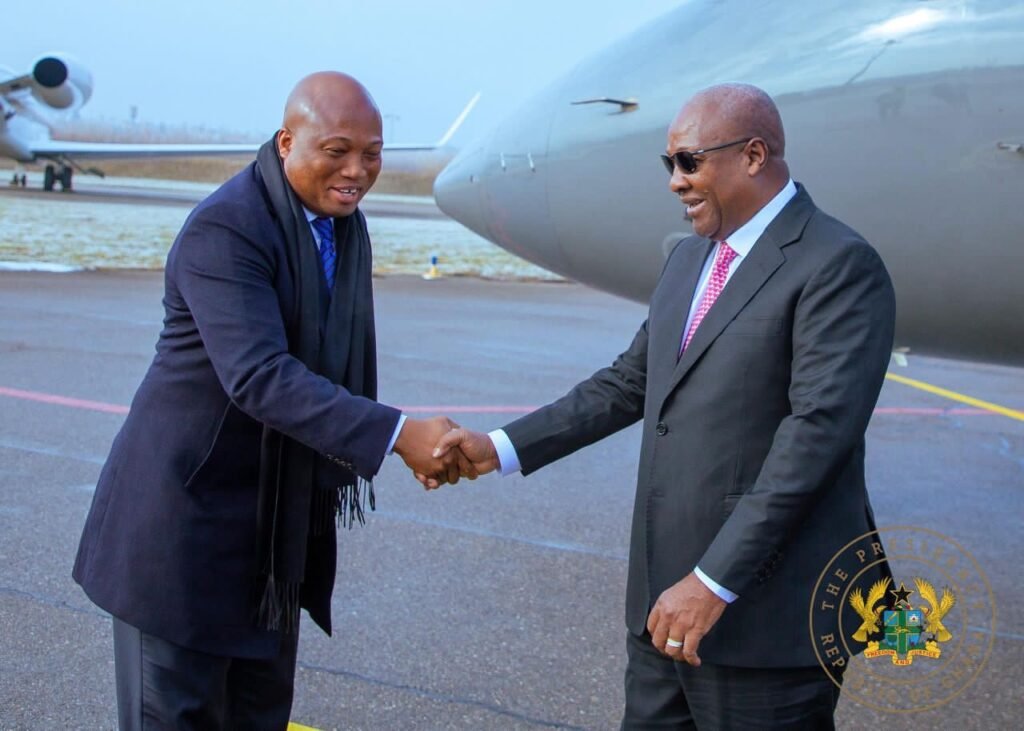
According to him, Africa has engaged fully with globalisation and international development frameworks, yet continues to face deep structural constraints. The President said the world has reached a critical turning point, with the multilateral governance system established after the Second World War increasingly under strain.
“Bilateral relations among nations are increasingly becoming transactional, and many state and non-state actors are acting unilaterally in pursuing their own national and parochial interests.
“Africa has lagged behind in the past decades following liberation from colonial rule and has been trapped in cycles of conflict and multidimensional poverty.”.
HE John Dramani Mahama, President of Ghana
The Ghanaian President pointed out that in such an environment, Africa cannot continue to rely on diminishing humanitarian assistance or remain excluded from shaping the new global order.
President Mahama cited the COVID pandemic as a defining episode that exposed Africa’s vulnerability. He recalled that African countries were among the last to access vaccines during a global crisis, despite having contributed little to its origins.
Building Internal Capacity and Resilience
In his view, the experience underscored the need for Africa to build internal capacity and resilience rather than depend on external benevolence. It was within this context that Ghana launched the Accra Reset Initiative at the United Nations General Assembly last September.
President Mahama described the initiative as a response to questions being asked by millions of young Africans about their future prospects. He said the reset agenda is focused on restoring confidence in governance, rebuilding economic systems, and demonstrating that accountable leadership can deliver tangible improvements in people’s lives.
Drawing on Ghana’s recent experience, the President said his administration has shown that reform is possible even under difficult conditions. He noted that Ghana emerged from a period of severe economic distress marked by debt pressures and instability.
Ghana’s Historic Turnaround
Since his assumption office, the country has achieved macroeconomic stabilisation, including lower inflation, a strengthened currency, and renewed business confidence. He stressed, however, that Ghana’s progress would mean little if it remained an isolated success within a struggling continent.
“Too many of our countries are caught in what I call the triple dependency. We depend on others for our security choices. We depend on donors for our health and educational systems. We supply the world’s critical minerals, but capture almost none of its value.”
HE John Dramani Mahama, President of Ghana
He said this pattern weakens sovereignty and perpetuates underdevelopment, calling for a decisive break from past approaches. He urged African leaders to work collectively to knit together success stories across the continent and scale them regionally.
He pointed to the global response to the HIV AIDS crisis as evidence that coordinated leadership can produce transformative outcomes. In contrast, he expressed concern that current global uncertainty and declining support for multilateral institutions threaten the ability to mount similar collective responses to today’s development challenges.
According to the President, Africa is now confronting a crisis of unfulfilled potential, marked by widespread youth unemployment, fragile health systems, and extractive economies that fail to generate lasting value.
He argued that if the world could mobilise to fight a disease, it should also be able to mobilise to confront poverty, dependency, and structural inequality. Outlining the practical elements of Ghana’s Reset Agenda, President Mahama said his government has prioritised execution over rhetoric.
He cited efforts to cut government spending, reduce the size of government, digitise public services to curb corruption, invest in skills training, and renegotiate debt obligations to create fiscal space for development. These measures, he said, show that transformation becomes real when leadership focuses on delivery.
“We have renegotiated our debts so we can invest in our people and not just service loans. This is a reset agenda in Ghana and it’s working because we stopped talking about the transformation and we started building that transformation. Now imagine the same approach across Africa and the entire global South”.
HE John Dramani Mahama, President of Ghana
Charting Progress Together
Looking ahead, President Mahama invited African leaders and global partners to imagine the impact of applying similar reforms across the continent and the wider global South.
He proposed deeper cooperation on critical minerals, regional manufacturing, vaccine production, and technology development as pathways to shared prosperity. He argued that pooling negotiating power and coordinating industrial strategies would enable African countries to move beyond raw material exports.
He emphasised that unity must translate into concrete action, particularly in trade negotiations, climate finance, and industrial policy. He also stressed the importance of producing key goods locally, warning that long term dependence on imports undermines resilience and economic sovereignty.
Accountability, President Mahama said, is central to the Accra Reset vision. He maintained that African leaders must confront corruption, waste, and ineffective systems if they expect sustained investment and public trust. Resetting, he explained, requires reform, and reform must deliver results that citizens can see.
In concluding, President Mahama said the Accra Reset is about partnership rather than charity and seeks to build a new model of cooperation between the global South and North based on mutual respect.
He expressed hope that the initiative would help create opportunities at home for Africa’s young people, reducing the desperation that fuels unsafe migration. As the initiative moves from Davos to future global platforms, he called on leaders to show the courage needed to build a more inclusive and balanced global future.
READ ALSO: Ghana-China Strengthens Ties Through 24H+ Mission