Nigeria’s downstream petroleum market is witnessing another major price adjustment as the Nigerian National Petroleum Company (NNPC) Limited has increased fuel prices across its retail outlets in Lagos and Abuja.
The latest revision reflects ongoing market-driven changes following subsidy removal and highlights the growing influence of competition and private-sector supply in shaping fuel prices nationwide.
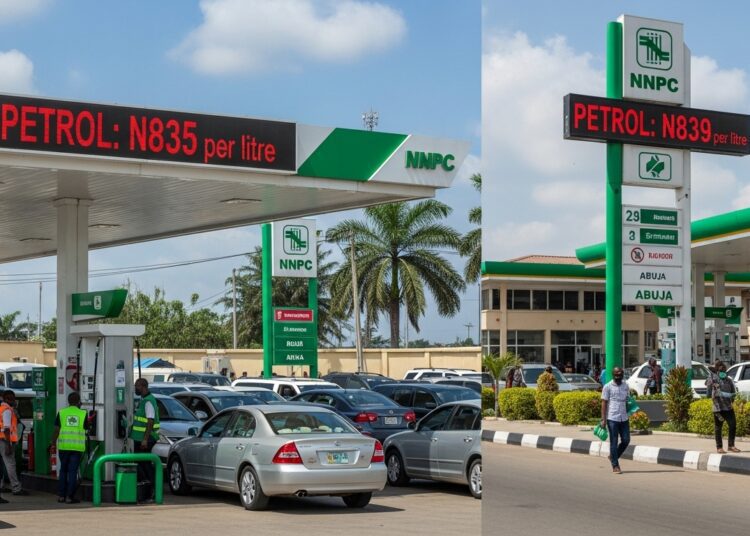
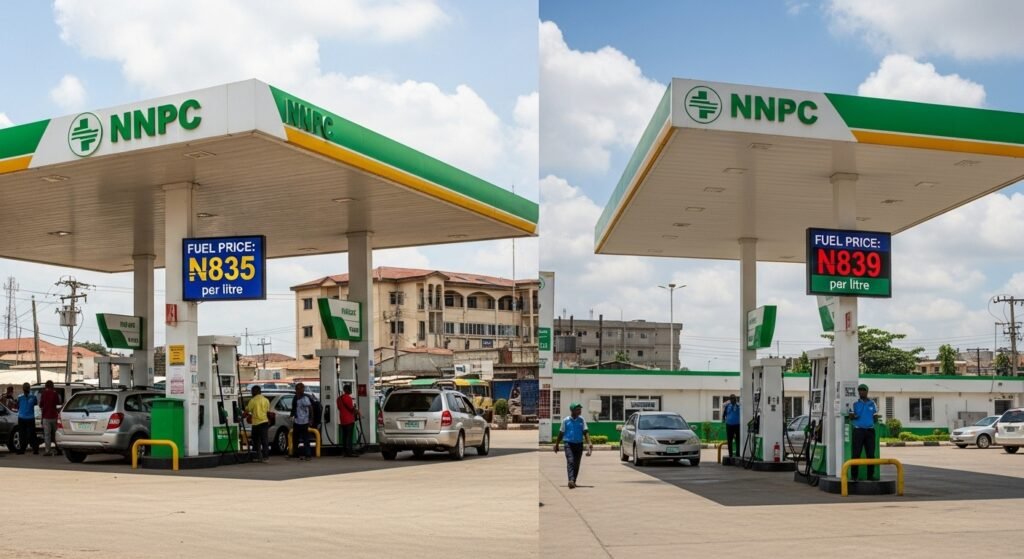
Checks conducted confirmed that petrol is now selling at N835 per litre in Lagos and N839 per litre in Abuja at NNPC filling stations. This represents an increase of N50 from the previous price of N785 per litre in Lagos and a N20 rise from N815 per litre in the federal capital.
David Bird, Chief Executive Officer of Dangote Petroleum Refinery, said the facility continues to supply the Nigerian market with about 50 million litres of petrol daily, adding that distribution across the country is proceeding without disruption.
“The refinery’s operational flexibility allows it to process a wide range of crude and intermediate feedstocks, ensuring uninterrupted PMS supply even during planned maintenance activities.”
David Bird, Chief Executive Officer of Dangote Petroleum Refinery
According to him, the refinery’s ability to sustain output supports nationwide evacuation and distribution, helping to stabilise supply even as prices adjust.
NNPC Implements New Pump Prices
The price increase by the national oil company marks a significant shift for consumers in Nigeria’s two largest fuel markets. Lagos, which serves as the country’s commercial hub, recorded the sharper adjustment, while Abuja saw a comparatively modest rise.
Industry observers say the differing increments reflect transportation costs, logistics, and regional supply dynamics rather than a uniform pricing template.
The adjustment also underscores the realities of a deregulated market, where prices are increasingly influenced by supply costs and competition rather than government controls.
NNPC has not issued a formal statement explaining the increase, but the move aligns with broader trends in the downstream sector following recent changes by private refiners and marketers.
The latest pump price increase follows a recent upward adjustment by Dangote Refinery, which raised its ex-gantry price of petrol to N799 per litre. The change has had a direct impact on retail prices at partner outlets.
The refinery disclosed that filling stations operated by its partners, including MRS outlets, would now sell petrol at N839 per litre, up from N739. This N100 jump at the retail level reflects higher production and logistics costs passed through the supply chain.
Market analysts note that the alignment between Dangote partner outlets and NNPC prices in Abuja suggests growing price convergence in the market, driven by similar cost structures rather than administrative pricing.
Regulators Emphasise Competition Over Subsidies
The Nigerian Midstream and Downstream Petroleum Regulatory Authority (NMDPRA) has reiterated that market forces, rather than subsidies, remain the most effective tool for ensuring long-term supply and affordability of petroleum products.
NMDPRA Chief Executive Officer Saidu Mohammed said sustained competition is key to guaranteeing adequate supply of petrol, diesel, and liquefied petroleum gas across the country.
“Sustained competition, rather than subsidies, will guarantee adequate supply of petrol and gas at affordable prices for Nigerians.”
NMDPRA Chief Executive Officer Saidu Mohammed
Mohammed explained that the removal of the petrol subsidy has allowed market forces to function more efficiently.
According to him, deregulation has improved transparency and operational efficiency throughout the downstream sector, while encouraging private investment and supporting price stability over time.
The latest developments highlight the ongoing transition of Nigeria’s downstream petroleum market toward a fully market-driven framework. With subsidy removal, prices now respond more directly to crude oil costs, refining margins, exchange rates, and distribution expenses.

The Dangote Refinery’s growing role as a major supplier is seen as a critical factor in reducing Nigeria’s reliance on imported fuel, improving supply security, and fostering competitive pricing dynamics.
As fuel prices continue to fluctuate in major cities, regulators and refiners maintain that a competitive market offers the best pathway to efficiency and sustainability. They argue that predictable supply, transparent pricing, and private-sector participation will ultimately benefit consumers, even if short-term adjustments prove challenging.
For now, motorists in Lagos and Abuja must contend with higher pump prices, while policymakers and industry leaders point to competition and market discipline as the foundations of Nigeria’s evolving downstream petroleum sector.
READ ALSO: Lebanon Presses UN Over Israel’s Ceasefire Breaches