
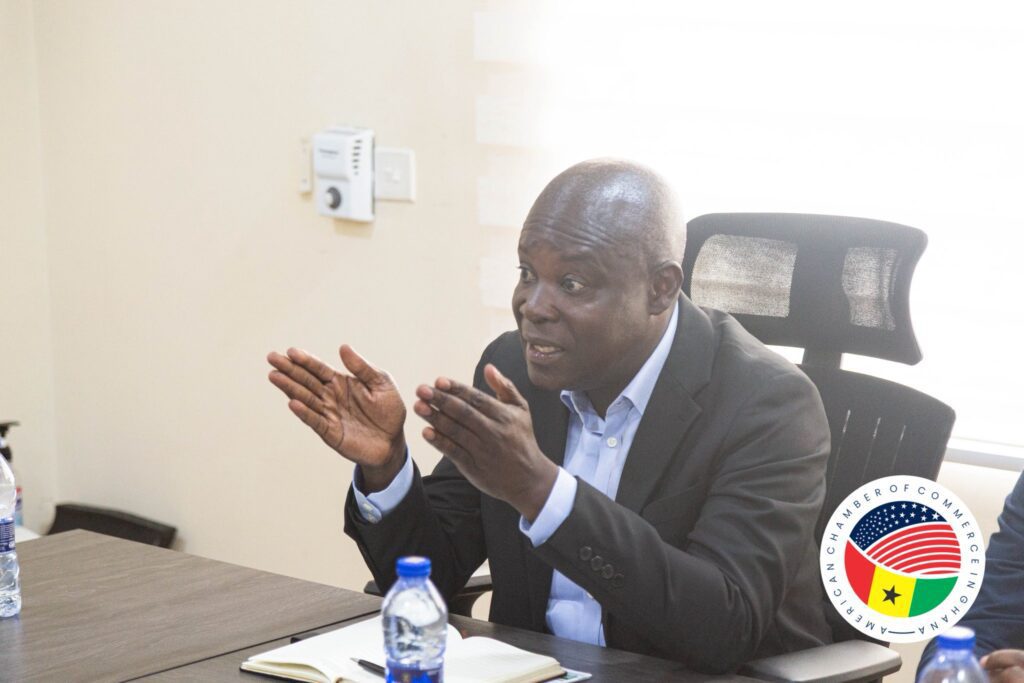
The business landscape for American investors in West Africa reached a critical inflection point as the American Chamber of Commerce (AmCham) Ghana hosted the Ghana Free Zones Authority (GFZA) for a high-stakes strategic dialogue.
Led by AmCham Chief Executive Officer Doris Afanyedey and the GFZA Director of Business Development and Research, Mr. Edward Adu-Ntiamoah, the session served as a forensic audit of Ghana’s current export-driven incentive framework and the operational bottlenecks that threaten to undermine it.
According to the GFZA, at the heart of the discussion was a singular objective: synchronizing the Authority’s aggressive fiscal incentives with the day-to-day logistical realities of major multi-national corporations.
“As Ghana positions itself as a manufacturing hub under the African Continental Free Trade Area (AfCFTA), the ability to protect existing investments while courting new capital has become the defining challenge of the 2026 fiscal year”
Ghana Free Zones Authority
One of the most significant revelations of the session was the clarification of the “enclave-independent” nature of the Free Zones Programme.
Mr. Edward Adu-Ntiamoah reiterated that the flagship incentive – a ten-year corporate tax exemption – is available to any company that exports at least 70% of its total production. Crucially, a company does not need to be physically located within a designated Free Zone enclave to qualify for these benefits.

This “Export-Oriented” status allows companies to operate anywhere in Ghana while enjoying a decade of tax relief, provided they maintain their export quotas. For AmCham members, many of whom have already sunk massive capital into infrastructure across various regions of Ghana, this flexibility is a powerful tool for expansion.
However, Ms. Afanyedey pointed out that the “paper” incentive often clashes with the practical difficulty of managing a high-export business outside the protective “bubble” of an industrial enclave.
The Aftercare Gap
A recurring theme during the engagement was the concept of the GFZA’s “aftercare support.” AmCham noted that while the Ghana Free Zones Authority is excellent at attracting new investors, long-standing members who have operated in Ghana for decades often feel a lack of structured support.
Companies located within designated enclaves typically enjoy streamlined customs processes and direct regulatory intervention – benefits that are often missing for export-oriented firms located outside those zones.
Ms. Afanyedey argued that for Ghana to remain competitive against other regional hubs like Côte d’Ivoire or Nigeria, the aftercare must be standardized. If a company is contributing to Ghana’s foreign exchange reserves by exporting 70% of its goods, it should receive the same level of administrative facilitation as a firm sitting inside a high-tech industrial park.
The GFZA also noted that the most urgent challenge raised by the AmCham leadership centered on the Port of Tema and the persistent delays in equipment clearance.
For a manufacturing firm, a piece of machinery stuck at the port is more than just an inconvenience – it is a halt in production that ripples through the entire global supply chain. These delays result in astronomical demurrage costs – charges that effectively act as a “hidden tax,” on investors.
The Chamber warned that these logistical frictions are “eroding investor confidence” at a time when Ghana is attempting to project an image of industrial readiness.
The Ghana Free Zones Authority was urged to take a more active role in customs clearance facilitation, ensuring that firms under their mandate are not penalized by the very systems designed to support them.
Structured Engagement Framework
To move beyond the diagnostic phase, AmCham Ghana called for a structured engagement framework between its members and the Ghana Free Zones Authority. This would involve a dedicated channel for exporters to resolve customs disputes, fast-track fiscal incentive deliveries, and secure expansion support.
For AmCham, the goal is to create a “concierge style of governance,” where the Ghana Free Zones Authority acts as a permanent advocate for the investor within the broader government machinery.
As the global economy remains volatile, the operational efficiency of a country’s ports and tax offices is often more important to a CEO than the tax rate itself. By aligning these two forces, Ghana can solidify its status as the preferred destination for American capital in Africa.
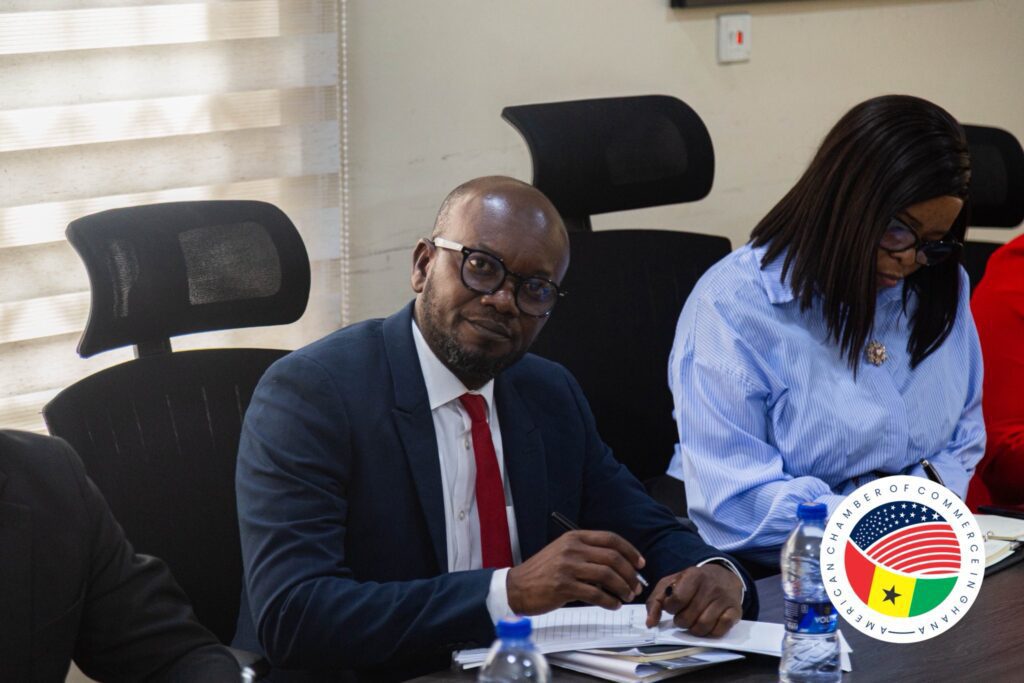
The engagement concluded with a shared resolve for flawless execution amidst the attractive incentives.
As the Ghana Free Zones Authority and AmCham Ghana move into the second quarter of 2026, the success of this partnership will be measured not by the number of licenses issued, but by the speed at which equipment clears the port and the consistency with which fiscal promises are kept.
READ ALSO: From Accra To Titao: Policy And Security Failures In Protecting Ghanaian Cross Border Traders