By Evans Senior Owu: Columnist, UG-Africa Climate Collaborative Fellow, and Circular Economy Professional
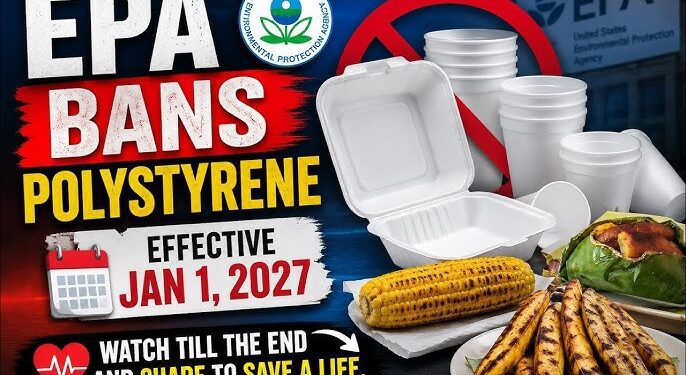
Ghana’s Environmental Protection Authority (EPA) has commenced something rare in public administration. It has acted with conviction. On May 25, 2026, the Authority announced a comprehensive ban on production, importation, distribution, sale, and use of polystyrene foam products, effective January 1, 2027.
For anyone who has watched our drains choke, our beaches blanket in foam waste, and our soils suffocate beneath layers of plastic, this announcement is not just welcome. It is long overdue. Yet overdue does not mean irrelevant. It means necessary. And it means now.
The Weight of Deliberate Action
There is a particular kind of courage required of regulatory institutions. It is not the courage of the battlefield. It is the quieter, more contested courage of acting in the public interest even when powerful interests push back. The EPA’s Styrofoam ban is an exercise of that courage.



The announcement follows a declaration by President John Dramani Mahama during the 2025 World Environment Day celebrations, where he signaled the government’s intent to prohibit Styrofoam products. The EPA has now given that declaration teeth.
The ban covers food packaging containers, takeaway packs, disposable cups and plates, foam used by restaurants and chop bars, insulation materials, foam mattresses, and packaging materials.
Only specialized products for medical, scientific, and diagnostic purposes will be exempted. This is not a partial measure. It is comprehensive, and that comprehensiveness matters.
Regulation as Culture
We often speak of regulation in narrow terms: rules, enforcement, penalties. But regulation does something deeper. It shapes behaviors. It shifts norms. Over time, it changes culture.
When the FDA banned the advertisement of alcoholic beverages on radio and television between the hours of 6 am and 8 pm, there was immediate and vocal resistance.
Media houses feared revenue losses. Alcoholic beverage companies feared losing visibility with their core audiences. The pushback was real. The concerns were not entirely unreasonable.
But Ghana complied. Remarkably so. Today, that regulation is largely respected, and its public health rationale has been broadly accepted. The sky did not fall. Business adapted. And a small but meaningful cultural shift occurred in how alcohol is marketed in this country.
The EPA’s Styrofoam ban carries the same potential. There will be resistance from manufacturers, importers, food vendors, and hospitality operators who have built their operations around the convenience and low cost of polystyrene foam.
That resistance must be anticipated, respected, and engaged, not dismissed. But it cannot be allowed to derail a decision that serves the common good.
The Transition Window Is Not a Formality
The EPA has built a transition period into this policy. From now until December 2026, businesses and consumers have time to adjust. The Authority has committed to nationwide stakeholder engagements, technical consultations, and public education campaigns during this period.
This window must not be treated as a formality; instead, it should be treated as the most critical phase of this entire policy. The EPA must use these months to engage the entire value chain: manufacturers, importers, distributors, retailers, food vendors, chop bar operators, market women, and consumers.
The goal is not just compliance but a collective buy-in. It is ensuring that every actor in this ecosystem understands why the ban is necessary, what alternatives are available, and how the transition will be supported. Small food vendors and chop bar operators deserve particular attention. Many of them depend on Styrofoam precisely because it is cheap and accessible.
The policy must be accompanied by practical guidance on affordable, eco-friendly alternatives, and, where necessary, support in accessing them. A ban that disproportionately burdens the informal economy without adequate preparation will generate justified grievances and undermine compliance.
The EPA has also indicated plans to collaborate with Metropolitan, Municipal, and District Assemblies, port authorities, customs officials, and industry regulators on enforcement. That inter-agency coordination must begin now, not in December 2026.
Convenience Is Not Justification
At the heart of Ghana’s Styrofoam culture is convenience. The lightweight foam container keeps food warm. It is cheap. It is ubiquitous. From waakye joints in Accra to chop bars in Kumasi, it has become the default vessel for food consumed outside the home.
But convenience has a cost that does not appear on the price tag. Polystyrene foam does not biodegrade in any meaningful timeframe. It breaks down into microplastics that enter our water systems, our soils, and eventually our food chain.
It clogs our drains and contributes to flooding. It litters our streets and beaches. The environmental damage is diffuse, cumulative, and long-lasting. We are, quite literally, poisoning our environment for the sake of a takeaway pack.
Convenience cannot be a sufficient justification for that cost. The alternatives exist. Clay pots and calabashes have served Ghanaian communities for centuries. Biodegradable packaging, eco-friendly plant leaves locally called ‘ahaban’ in the Twi dialect, is increasingly available.
Reusable plates, bowls, and containers are practical options for regular outside dining. These are not exotic innovations. They are returns to more sustainable practices that our own culture already knows.
A Call to Shared Responsibility
Regulatory action, however bold, cannot succeed alone. The EPA can set the rule, enforce it, and monitor compliance. But the transformation of everyday consumption habits requires something that regulation cannot mandate: a shift in public attitude.
Pro-environmental advocates and civil society must amplify this message. Community leaders, faith institutions, and schools have a role to play in normalizing eco-friendly habits. The media, which has its own role in shaping public discourse, must cover this transition with the seriousness it deserves.
And every Ghanaian who chooses a plantain leaf wrap over a Styrofoam container, who brings a reusable bowl to their favorite waakye seller, who nudges a friend or colleague to do the same, each of those choices is a small act of environmental stewardship. Multiplied across a population, they become a movement.
The Environment Cannot Wait.
Ghana has a tendency to announce good policies and falter on implementation. The Styrofoam ban must not follow that pattern. The EPA has shown courage in making the announcement. That courage must be sustained through the transition period and beyond.
The ban will face resistance. It will face logistical challenges. It may face legal challenges. None of that should be surprising. What would be surprising and deeply disappointing is if the pressure of those challenges caused a retreat.
Our environment cannot afford retreat. Our drains, our oceans, our soils, and the health of generations yet unborn are depending on Ghana getting this right. The EPA has made its move.
Now it is time for all of us – government agencies, businesses, civil society, and every citizen to move with the action it deserves. Let us support this ban. Let us prepare for it. And let us build the culture of sustainability that Ghana’s future requires.
READ ALSO: GAF Clears 51km of Accra-Kumasi Expressway, Compensation Payments Set for June