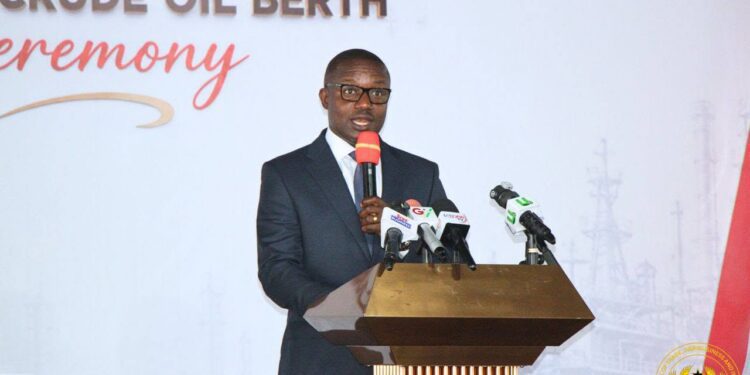
Minister for Energy and Green Transition, Hon. John Abdulai Jinapor, has declared that localized crude processing has moved from a mere long-term developmental vision to an urgent, immediate prerequisite for stabilizing Ghana’s economic landscape.
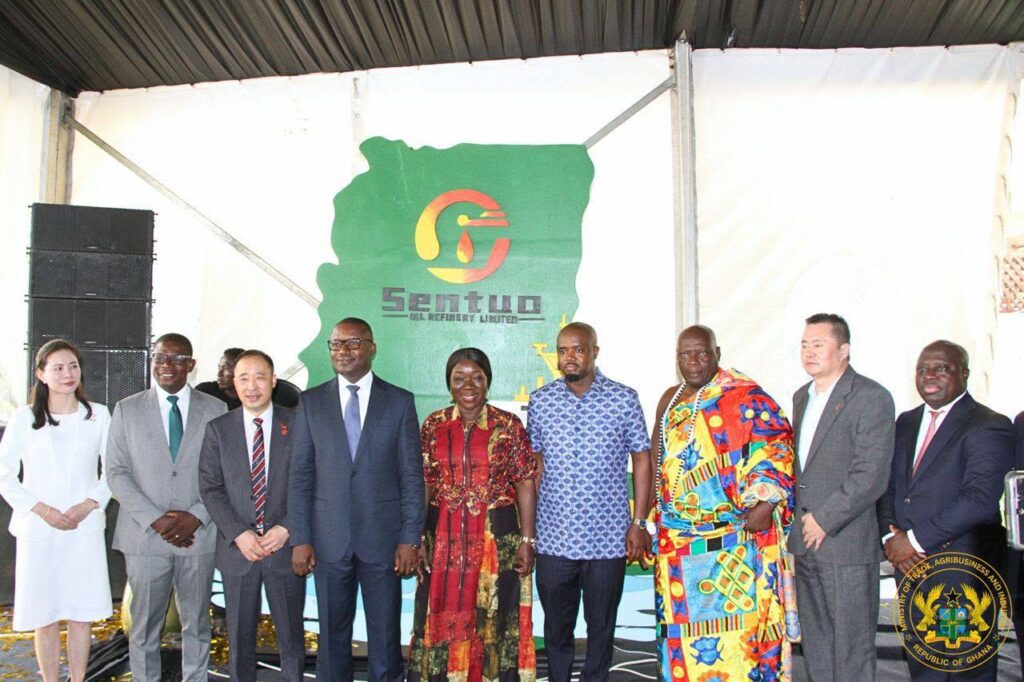
Speaking at the high-profile Jubilee Crude Oil Berth Ceremony at the Sentuo Oil Refinery, Jinapor highlighted that establishing a resilient domestic refining network provides an essential cushion against systemic external shocks.
His address laid out a multi-layered strategic response to the shifting global marketplace, highlighting the administration’s policy shift toward domestic crude value addition as a shield against soaring fuel markets.
“The domestic refinery is not only an energy security imperative, but also a critical component of our industrial transformation agenda. Following the President’s directive, the Ministry engaged with various stakeholders to ensure that we develop a roadmap to achieve the President’s vision.”
Minister for Energy and Green Transition, Hon. John Abdulai Jinapor
Expanding on this tactical paradigm, Hon. Jinapor provided insight into the intense administrative interventions deployed over the past several months as international raw material values fluctuated wildly.



He revealed that a high-powered, special cabinet session was specifically convened by the presidency to analyze vulnerabilities and construct actionable mitigation strategies to guard the domestic market against rampant hyperinflation.
To alleviate immediate economic pressure on citizens, the state actively partnered with the National Petroleum Authority (NPA) to roll out direct financial safety nets, absorbing two Ghana Cedis per liter on diesel for an initial month, a interventions program that continues with a current subsidy of one Ghana Cedi per liter.
Operationalizing the Value-Addition Roadmap
Following direct executive orders from the presidency, the Ministry of Energy and Green Transition immediately mobilized a comprehensive inter-agency coalition to transition Ghana away from its historical stance as a raw resource exporter.
This initiative triggered intensive stakeholder negotiations to establish robust commercial, legal, and structural pathways required to supply local processing facilities with domestic product.
To convert this policy into an operational reality, the Ministry initiated continuous dialogue with key institutional pillars, including the Ghana National Petroleum Corporation (GNPC), the National Petroleum Authority (NPA), and the Bulk Energy Storage and Transportation Limited (BOST).
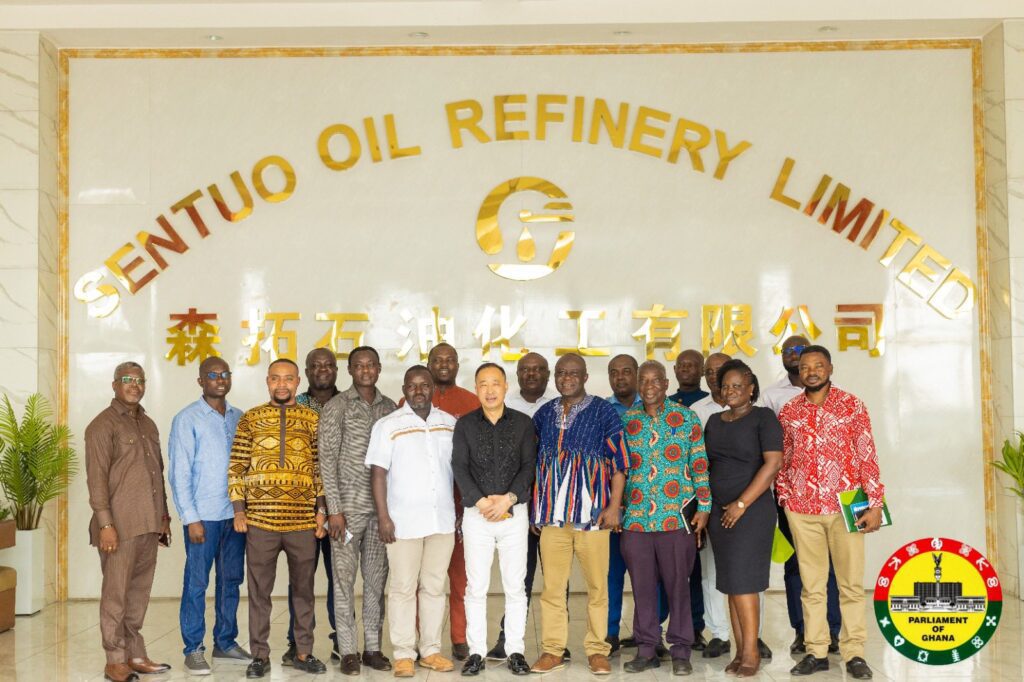
Achieving this processing milestone also required harmonizing commercial interests with major international upstream operators, leading to intense collaborative frameworks with the Jubilee Partners, the Sankofa Partners, Vitol, Tullow, Kosmos Energy, and the management of the Sentuo Oil Refinery.
“This achievement certainly demonstrates the power of collaboration and what can be accomplished when government and industry work together in pursuit of a common goal,” Hon. Jinapor noted, commending the Ministry of Trade and industry players for their sleepless efforts in securing the maiden crude oil delivery berth.
Strategic Advantages Within the Petroleum Value Chain
From an analytical perspective, anchoring the economy on localized refining fundamentally alters Ghana’s macro-financial position by neutralizing several persistent systemic vulnerabilities.
Retaining raw crude within national borders for processing significantly minimizes the heavy balance-of-payment pressures caused by the continuous importation of finished petroleum products.

Furthermore, this structural transition serves as a powerful macroeconomic stabilizer.
By reducing the frequent demand for foreign exchange reserves to fund bulk fuel imports, the domestic market can better protect the local currency from rapid depreciation while creating a more predictable retail pricing environment for commercial transport and manufacturing sectors.
Catalyzing Sub-Regional Industrial Growth
Beyond stabilizing domestic fuel prices, the operationalization of localized refining assets acts as a core driver for broad industrial transformation across the West African sub-region.

By shifting away from exporting raw commodities, Ghana is establishing the foundational infrastructure required to support a modern petrochemical industry, unlocking secondary manufacturing markets in plastics, synthetic materials, and specialized agricultural inputs.
This strategic expansion positions the nation to maximize the benefits of the African Continental Free Trade Area (AfCFTA) by exporting high-value, refined petroleum products to landlocked neighbors.
This long-term industrial evolution not only secures national energy independence but also establishes a reliable economic corridor that generates skilled technical employment, drives regional industrial integration, and fosters sustainable economic self-reliance.
READ ALSO: Refrain from Private-Sponsored Awards Schemes, Mahama Bars Ministers and CEOs