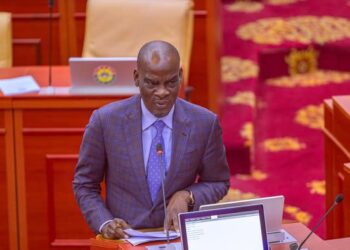
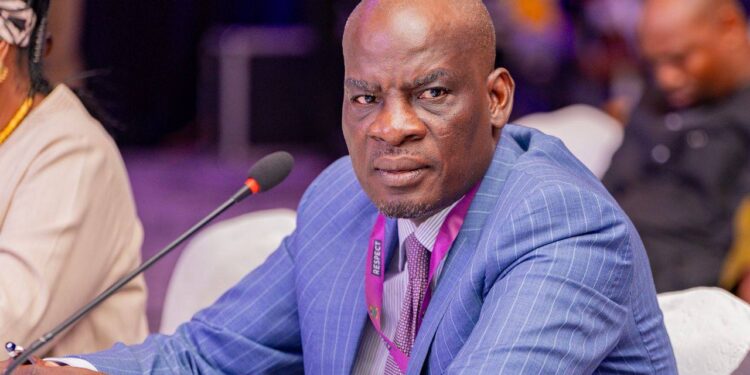
Education Minister and Member of Parliament for Tamale South, Hon Haruna Iddrisu, has announced a package of new incentives designed to attract, motivate, and retain teachers willing to serve in deprived and underserved communities across Ghana.
He made the announcement during a session in Parliament, outlining several measures the government intends to roll out to address longstanding challenges in rural teacher deployment.
Hon. Iddrisu told Parliament that the government recognises the difficulty of keeping qualified teachers in rural and deprived areas, and that the new incentives form part of a broader effort to make such postings more attractive.
Among the incentives announced, Iddrisu highlighted a reduction in the number of years teachers must serve in deprived areas before qualifying for study leave with pay.
Previously, teachers posted to such areas needed to complete three years of service before becoming eligible. Under the new arrangement, that requirement drops to two years.
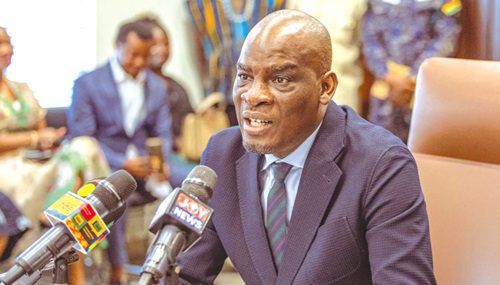
Hon. Iddrisu explained that any teacher who volunteers to serve in a rural deprived area can now apply for study leave with pay after completing just two years of service, rather than the three years previously required.
He framed the change as a direct response to concerns that the longer waiting period discouraged teachers from accepting postings to hard to reach communities.
Twenty Percent Salary Allowance Planned
Beyond the study leave adjustment, the Minister announced that government is committed to rolling out a 20 percent salary allowance for teachers serving in rural and deprived areas.
He said the Ministry of Finance and the Ministry of Education are currently working together to implement the allowance, signalling that discussions between the two ministries are already underway to determine how the policy will take effect.
The allowance is intended to provide direct financial motivation for teachers who accept postings in communities that typically struggle to attract and retain qualified staff, addressing one of the persistent barriers to equitable education delivery across the country.
Teacher Dabre Initiative to Tackle Housing Challenges
Hon. Iddrisu also used his address to discuss ongoing engagement around the Teacher Dabre Initiative, a policy commitment that formed part of President Mahama’s NDC manifesto.
The initiative aims to provide accommodation for teachers in rural areas, directly targeting the housing challenges that often discourage teachers from accepting or remaining in rural postings.
Under the initiative, the Minister said deliberate measures are being taken to ensure that the construction of new school facilities comes paired with accommodation for teachers.
He explained that pairing infrastructure development with housing provision is meant to address deployment and retention challenges simultaneously, rather than treating them as separate problems.
Hon. Iddrisu noted that the Teacher Dabre Initiative will be led by the Administrator of the District Assembly Common Fund, with the government aiming to keep implementation as decentralised as possible.
He said this decentralised approach is intended to ensure that decisions around teacher accommodation reflect the specific needs and circumstances of individual districts rather than following a uniform, centrally imposed model.
GSOF Pension Fund to Provide Collateral
Explaining how the Teacher Dabre Initiative would be financed, Iddrisu said the Ministry of Education would provide the Ghana Education Service pension fund, referred to as GSOF, as collateral for the programme.

He told Parliament that the fund currently stands at approximately GH₵12 billion and can be used to help roll out the initiative.
The Minister said the government still requires a joint cabinet memo involving the Minister for Finance, the Minister for Education, and the Minister for Works and Housing and Local Government to finalise the roadmap for implementing the Teacher Dabre Initiative.
He indicated that this collaborative process between multiple ministries reflects the scope of the initiative, which touches on finance, education policy, housing construction, and local governance simultaneously.
Addressing a Longstanding Deployment Challenge
Taken together, the measures Iddrisu outlined represent a multi pronged approach to a challenge that has affected Ghana’s education system for years.
Deprived and rural communities have historically struggled to attract and retain qualified teachers, often citing inadequate housing, limited career development opportunities, and insufficient financial incentives as key barriers.
By shortening the study leave qualification period, introducing a salary allowance, and advancing the Teacher Dabre housing initiative, the government appears to be targeting each of these barriers directly rather than relying on a single policy intervention.
With the study leave policy already announced as a reduction from three years to two, attention now turns to how quickly the Ministry of Finance and Ministry of Education finalise the 20 percent salary allowance for rural teachers.
The Teacher Dabre Initiative, meanwhile, awaits the joint cabinet memo needed to establish its implementation roadmap, a step that will determine how soon rural teachers begin to see accommodation paired with new school construction in their communities.
For teachers currently serving or considering postings in deprived areas, the coming months will show whether these parliamentary announcements translate into the tangible support the government has promised.
READ ALSO: Current Account Surplus Masks Rising Services Payment Burden