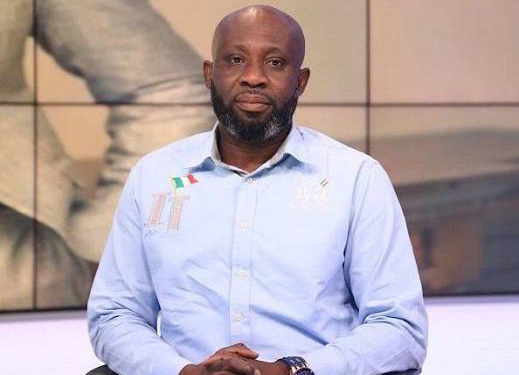
Former Ghana Football Association (GFA) Vice President George Afriyie has renewed his criticism of the Kurt Okraku-led GFA administration, accusing the current leadership of creating an environment where too much power is concentrated in the hands of the president.
Afriyie, who served as vice president under former GFA president Kwasi Nyantakyi, has remained one of Okraku’s most consistent critics since losing the 2019 GFA presidential election.
His latest comments comes as Okraku approaches the final year of his second four-year term, with the debate over whether he should seek another mandate gathering momentum.
The GFA’s presidential term limit was amended in 2025 to allow a president to serve a maximum of three terms instead of two, making Okraku eligible to seek a third term in 2027. Kurt Okraku has, however, maintained that it is premature to discuss whether he will contest again.
Afriyie has taken a firm position against that possibility, insisting that Ghana football needs a change in leadership. He has previously declared that he would do everything within his power to ensure a new person emerges as GFA president.
His latest assessment is particularly scathing, with Afriyie questioning whether the GFA’s Executive Council is playing its intended role in providing checks and balances within the Association.
“I sometimes think that what we have is a one-man GFA with no functional Executive Council,” Afriyie said, arguing that the concentration of authority around one individual could ultimately undermine the administration of Ghana football.
A Rivalry Born From Ghana Football’s Crisis
George Afriyie’s history with the GFA gives his criticism added weight.
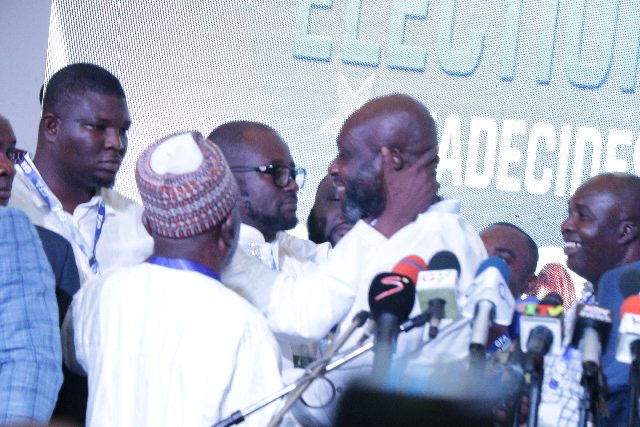
He was appointed vice president by Nyantakyi in 2015, having previously held several positions within Ghana football, including chairman of the Black Stars Management Committee.
His relationship with Nyantakyi later deteriorated as Afriyie prepared to challenge for the GFA presidency. He was removed as vice president in 2018, shortly before the crisis that eventually brought an end to Nyantakyi’s long tenure.
Nyantakyi resigned as GFA president in June 2018 after the explosive Number 12 investigation by journalist Anas Aremeyaw Anas brought allegations of corruption and bribery involving football officials into the public domain.
FIFA subsequently imposed a lifetime ban on Nyantakyi from all football-related activities.
The collapse of the Kwasi Nyantakyi administration triggered a period of unprecedented intervention in Ghana football. FIFA, with the backing of the Ghanaian government, established a Normalisation Committee to administer the GFA, review its statutes and oversee the process of returning the Association to an elected administration.
The Normalisation Committee period eventually paved the way for the 2019 elections, in which Afriyie and Okraku emerged as the two leading contenders. Okraku eventually secured the presidency and was sworn in as GFA president in October 2019.
Afriyie’s defeat did little to end the rivalry. He challenged Okraku’s administration again during the 2023 election cycle but was disqualified from the presidential race, leaving Okraku to secure a second term unopposed.
Okraku’s Record Under Scrutiny
Afriyie also believes the growing personal acclaim surrounding Okraku could become dangerous for Ghana football if it discourages scrutiny of his administration.
“People are beginning to create a certain god. Kurt Okraku is being hailed in a certain manner and Ghana football will suffer for it.”
George Afriyie, Ex-vice President of the GFA
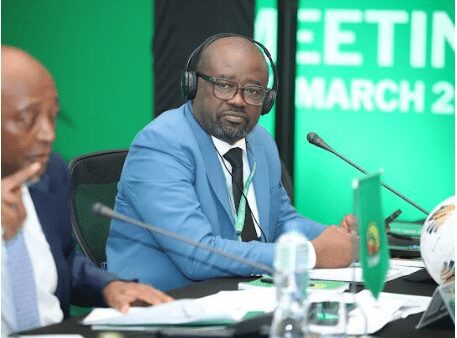
Okraku’s tenure has produced a mixed competitive record. The Black Stars qualified for the 2022 and 2026 FIFA World Cups but have struggled at the Africa Cup of Nations, failing to progress beyond the Round of 16 during his tenure and missing the 2025 tournament in Morocco.
The women’s national team has provided stronger grounds for optimism. The Black Queens won bronze at the 2024 WAFCON and reached the quarter-finals of the 2026 tournament. They are also pushing to qualify for the FIFA Women’s World Cup for the first time since 2007, though qualification will have to achieved on a longer route after failing to secure an automatic berth.
Beyond the pitch, Okraku has also strengthened his position within African football. He currently serves as CAF’s second vice president, an indication of the influence he has accumulated beyond Ghana’s domestic game.
But for Afriyie, continental influence should not shield the GFA leadership from scrutiny. His comments point to a broader argument over institutional checks, succession and whether the reforms introduced after the Nyantakyi era are being preserved.
With Okraku now constitutionally eligible for a third term, that argument is likely to intensify. The president may yet decide not to run, but Afriyie’s opposition has already made clear that if Okraku enters the 2027 race, the battle for the future direction of Ghana football will be fiercely contested.
READ ALSO: 89% of New HIV/AIDS Infections Occur Among Working-Age Ghanaians