Ghana’s push to accelerate industrialisation will depend increasingly on whether the country can deliver electricity that is not only available, but reliable, predictable and affordable for businesses, Energy and Green Transition Minister Dr John Abdulai Jinapor has said.
Dr Jinapor argued that Ghana’s industrial ambitions cannot be separated from the performance of the electricity sector, warning that high power costs, unreliable supply and poor power quality could undermine the competitiveness of local industries even as electricity access expands.
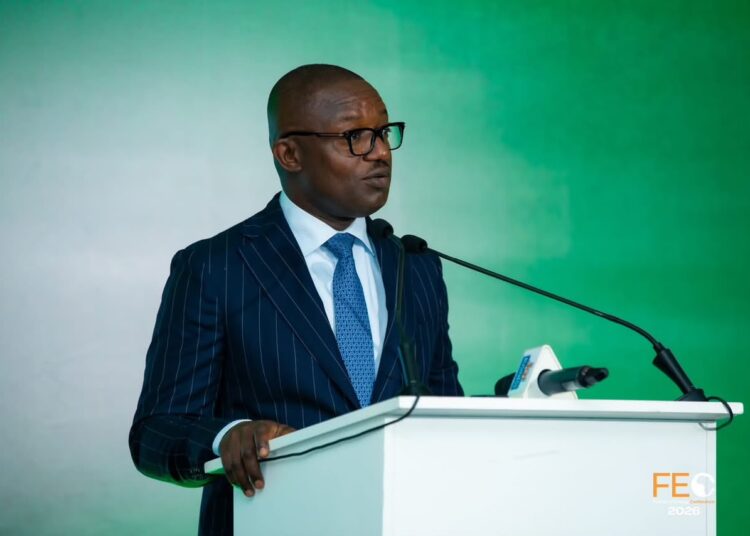
He made the remarks on Tuesday, August 25, 2026, as guest speaker at the Future of Energy Conference (FEC 2026) in Accra, held under the theme, “Powering Africa’s Industrial Transformation: Energy Systems for Value Addition and Competitiveness.”
The two-day conference, organised by the Africa Centre for Energy Policy (ACEP), is focused on the relationship between energy systems, industrialisation, infrastructure readiness and the cost of productive activity.
The Minister said the central question for Ghana and the continent should no longer be limited to how many people have access to electricity, but whether the electricity being supplied can support productive economic activity.
“Industrialisation requires electricity at scale. Not just electricity, but reliable electricity, predictable prices that industries can plan, and good power quality.”
Dr John Abdulai Jinapor, Minister for Energy and Green Transition
The distinction is important for Ghana because expanding electricity access does not automatically translate into an energy system capable of supporting large industrial loads.
A manufacturer can have access to the grid but still face significant competitiveness problems if electricity prices are high, supply is interrupted frequently or voltage quality affects production.
For energy-intensive industries, those challenges can directly influence operating costs, investment decisions and the viability of domestic production.
Ghana Faces A Rising Power Demand
Dr Jinapor said Ghana must begin planning more deliberately for the electricity requirements of industries, mines, data centres, businesses and other productive sectors as demand continues to increase.
He cited projected electricity consumption for 2025 at about 25,836 kilowatts, representing approximately a 5% increase over the previous year, while stressing that Ghana must anticipate future demand rather than respond only after pressure emerges on the system.

The Minister also linked the emerging electric-vehicle market to this planning challenge.
Ghana has seen increasing adoption of electric vehicles, creating a new category of electricity demand that did not previously exist at significant scale.
Dr Jinapor said the economic attraction of EVs is partly driven by lower running costs, but warned that uncontrolled expansion of charging infrastructure could place additional stress on local distribution networks.
“People set up EV charging stations and immediately the transformer goes boom. So what we are saying is that you need permission to set up that EV charging station from the Energy Commission.”
Dr John Abdulai Jinapor, Minister for Energy and Green Transition
The proposed regulatory approach, he explained, is intended not to obstruct e-mobility but to ensure that charging infrastructure is matched with the capacity of the electricity network.
This could become increasingly relevant as Ghana seeks to expand electric mobility.
A rapid increase in EV charging without corresponding investment in transformers, feeders and distribution infrastructure could create localised reliability problems even if national generation capacity remains adequate.
Power Sector Finances Remain A Structural Constraint
Beyond physical infrastructure, Dr Jinapor placed Ghana’s electricity affordability problem within the financial structure of the power sector.
He identified high fuel costs, expensive financing, system losses, inefficient procurement and poorly structured agreements as factors that ultimately feed into the cost of electricity.
The implication is that Ghana cannot solve the affordability problem simply by building more generation capacity.
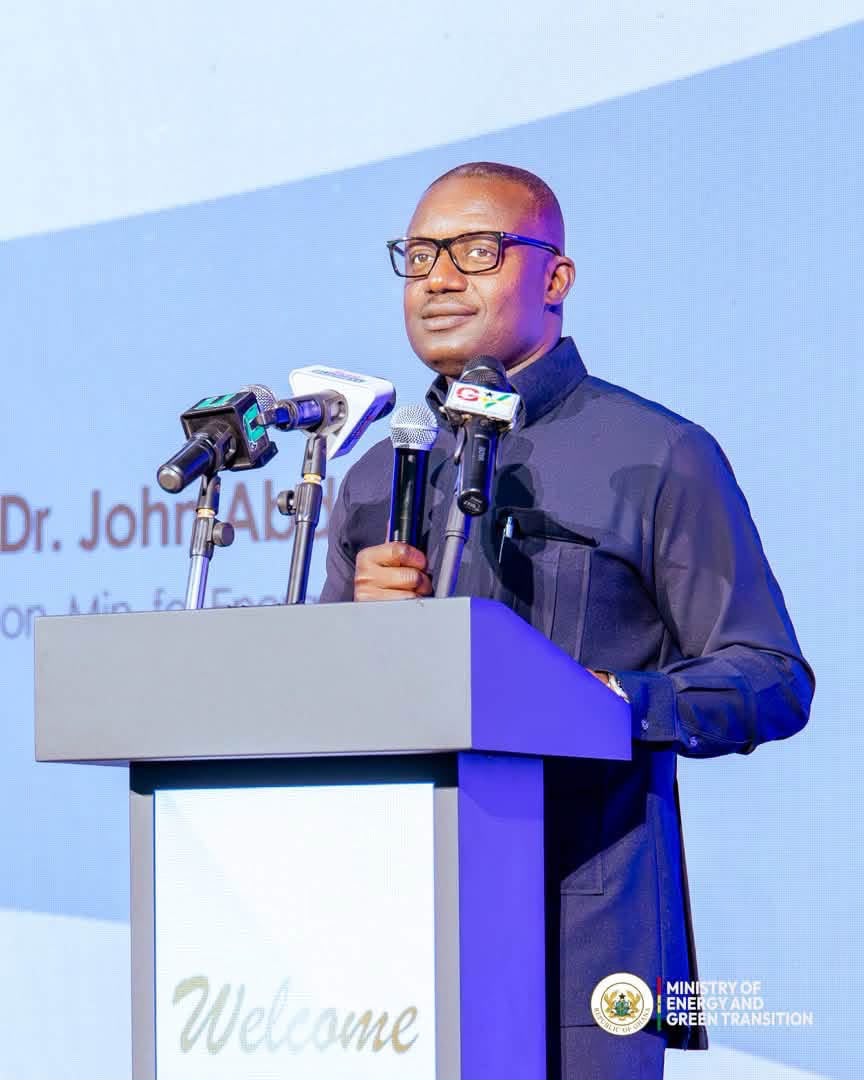
“There can be no affordable or reliable power without a financially sustainable power sector. A sector laden with debts, arrears, and unsustainable contracts cannot deliver competitive electricity.”
Dr John Abdulai Jinapor, Minister for Energy and Green Transition
That assessment is particularly significant because Ghana has historically faced a mismatch between contracted generation capacity, actual demand and the state’s ability to meet payment obligations under power-sector agreements.
The government is therefore pursuing reforms intended to reduce legacy liabilities and improve the financial sustainability of the sector.
Dr Jinapor said government had so far paid about US$1.7 billion in debts owed to independent power producers.
The scale of that payment illustrates the extent to which electricity-sector financial obligations have competed with other public spending priorities.
The Minister argued that Ghana must therefore become more disciplined about future commitments, insisting that new energy-sector investments should pass a more rigorous test.
“Every new commitment must answer four basic questions: Is it necessary and do we need it? Can we afford it? Does it improve competitiveness? And does it deliver value for money?”
Dr John Abdulai Jinapor, Minister for Energy and Green Transition
Government Targets A More Balanced Energy Mix
Ghana’s response is also expected to involve diversification of the generation mix.
Dr Jinapor said Ghana would continue to rely on its hydroelectric potential and thermal generation while expanding renewable energy.
He disclosed that government had already conducted its first solar procurement exercise, but was examining ways to reduce the resulting cost further.
The Minister attributed part of Ghana’s relatively high solar costs to financing conditions, noting that projects in markets with access to cheaper capital can offer electricity at substantially lower prices.
This reinforces one of the central issues running through FEC 2026: Africa’s energy problem is not simply a shortage of resources.
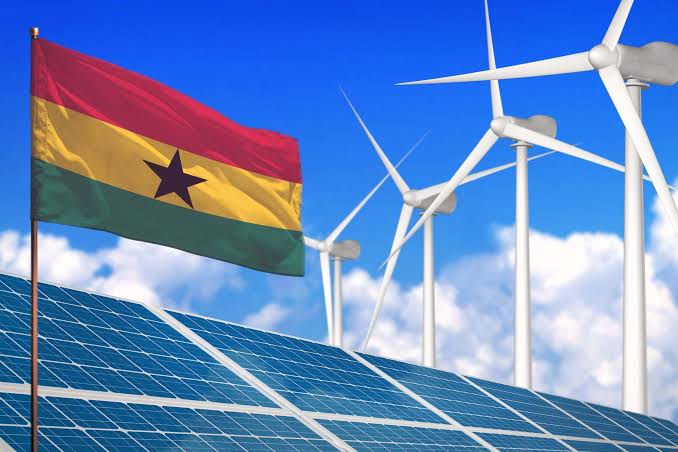
It is also a shortage of affordable capital capable of converting those resources into competitive energy infrastructure.
The conference itself identifies financing costs, generation mix, tariffs and system inefficiencies as major drivers of industrial energy costs.
Ghana’s stated renewable-energy direction is also consistent with its broader medium-term energy policy, which places emphasis on increasing solar, wind, hydro and bioenergy integration while strengthening energy security.
The Real Test Is Industrial Power
For Ghana, the significance of the Minister’s argument is that electricity policy is increasingly being treated as industrial policy.
The country can attract factories, promote mineral processing and pursue value addition, but those ambitions will remain vulnerable if industries cannot secure electricity at a cost that allows them to compete domestically and internationally.
Dr Jinapor said Ghana is targeting universal electricity access by 2030, but the next stage of the challenge is ensuring that access translates into productive capacity.
The government is also pursuing 1,200MW of thermal capacity, which the Minister said it expects to have completed by 2029.
At the same time, Ghana is investing in storage, transmission strengthening and renewable generation.

The policy challenge will be to ensure that these investments do not recreate the very financial pressures the government is attempting to resolve.
Ultimately, Ghana’s energy transition will not be judged solely by the volume of renewable capacity added to the grid.
It will also be measured by whether the country can build an electricity system that gives manufacturers, mines, businesses and emerging industries the confidence to invest.
That makes the question of cost, reliability and power quality just as important as the question of access.
READ ALSO: BoG Freezes GH¢13.46bn From Banking System