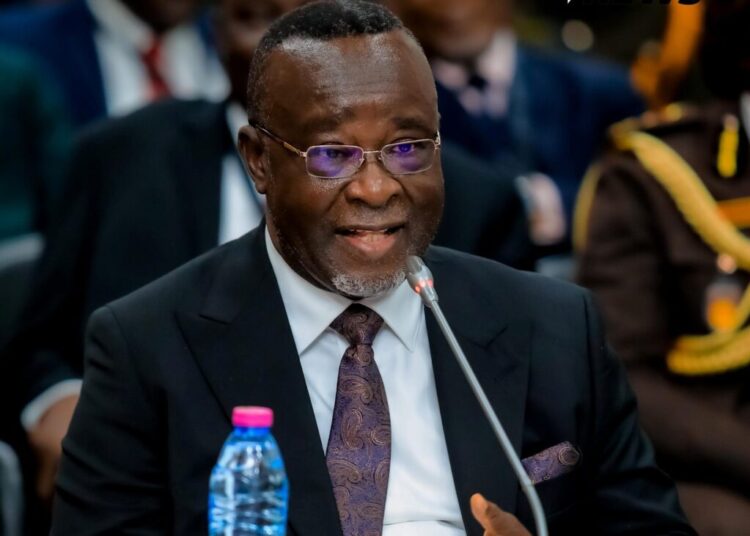
The Member of Parliament for Yendi, Abdul Fatawu Alhassan has defended Chief Justice Paul Baffoe-Bonnie’s public comments on state institutions, arguing that his position as a Ghanaian gives him civic responsibilities beyond his judicial duties. The Yendi MP described the criticism of the Chief Justice as unfortunate, saying Ghana must develop institutions capable of operating independently from partisan political structures.
Honourable Alhassan explained that Ghana’s political environment have created a situation where public institutions were often associated with the political party in government. He argued that such an approach undermines institutional development because an institution should be capable of receiving praise or criticism without its actions automatically being linked to the political interests of the government in power.

The MP referred to former United States President Barack Obama’s visit to Ghana, recalling his call for the country to concentrate on building strong institutions instead of strong individuals. He noted that advanced democracies allowed institutions to develop their own identity and operate without being excessively tied to political structures.
According to Honourable Alhassan, the current constitutional review process also recognises the need to strengthen Ghana’s institutions and give them greater independence. He explained that the priorities behind the 1992 Constitution were largely shaped by the country’s history of coups and the need to give citizens the power to choose their leaders through elections.
The Yendi MP noted that the constitutional reform conversation had now expanded towards institutional development, with greater emphasis being placed on creating structures that could function independently. He therefore rejected the suggestion that every public comment by the Chief Justice should automatically be interpreted through a partisan political lens.
“Remember, the Chief Justice is first of all a Ghanaian. He was a Ghanaian before he became Chief Justice, before he even became a judge, and he will be a Ghanaian after he has left that office.”
Abdul Fatawu Alhassan
Honourable Alhassan argued that the influence attached to the office could even make the Chief Justice’s interventions more valuable when discussing the performance of national institutions. He contrasted the situation with the Speaker of Parliament, whose previous political affiliation could cause public commentary from that office to be viewed through a partisan prism.
The Yendi MP suggested that the Chief Justice, who occupies one of the highest constitutional offices, could provide an important perspective when engaging institutions and observing their operations. He added that such engagements could also deepen the understanding of judicial officers about how state institutions function when cases involving those institutions eventually come before the courts.
The comment follows calls by the New Patriotic Party for the Chief Justice to step down over his recent remarks about state institutions and government performance. However, Honourable Alhassan urged Ghanaians to assess the substance and context of the Chief Justice’s remarks instead of immediately attaching partisan motives to them.
Judicial Independence Does Not Mean Vow To Silence
The Member of Parliament for Yendi, Abdul Fatawu Alhassan also argued that judicial independence does not prevent judges from expressing views on national issues when those comments fall outside their core adjudicative responsibilities. The Yendi MP said the crucial question should be whether political considerations are influencing the Chief Justice’s performance of his judicial functions, rather than whether he has made public comments about the country’s institutions.
Honourable Alhassan explained that judicial independence principally protects the Judiciary from interference while judges perform their constitutional and legal duties. He therefore challenged critics of the Chief Justice to establish whether his recent comments had affected the manner in which he performs his judicial responsibilities.
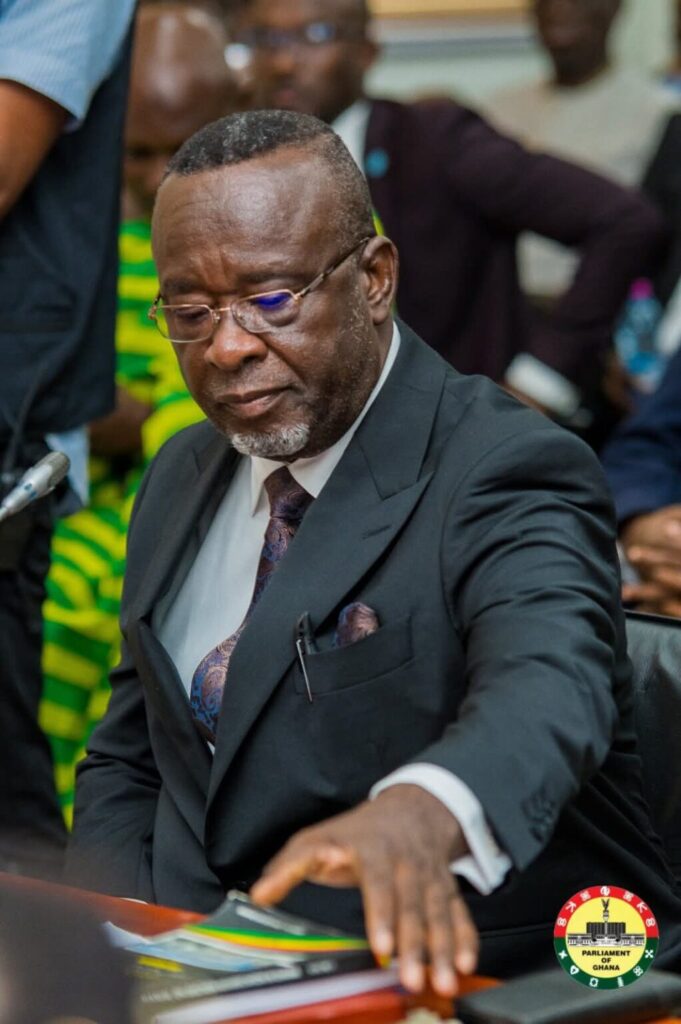
“Judicial independence is not a vow to silence. If you take an oath to be impartial, it is not a vow to be silent on matters.”
Abdul Fatawu Alhassan
The MP emphasised that the Chief Justice’s comments during his engagements with state institutions did not constitute an adjudicative act because no judicial matter was being determined at the time. He described the engagements as non-adjudicative activities undertaken by a citizen who also happens to occupy one of the country’s most important constitutional offices.
Furthermore, Honourable Alhassan pointed to former Chief Justice Sophia Akuffo’s public support for the Free Senior High School policy as an earlier example of a serving Chief Justice commenting positively on a government initiative. He questioned why such public commentary should automatically be regarded as a violation of judicial neutrality when the individual is not exercising judicial power.
The Yendi MP also distinguished between impartiality in adjudication and silence on public affairs, arguing that the two principles should not be treated as identical. He noted that judicial officers must determine cases without fear, favour or political influence, but that requirement does not necessarily prevent them from offering observations about developments outside the courtroom.
READ ALSO: Fuel Costs Consuming Daily Earnings Of Drivers — GPRTU Deputy PRO