Chief Executive Officer of the Minerals Commission, Isaac Tandoh, has signaled a decisive shift in Ghana’s extractive policy, warning that upcoming structural reforms will soon choke off local and international market access for illegal gold operators.
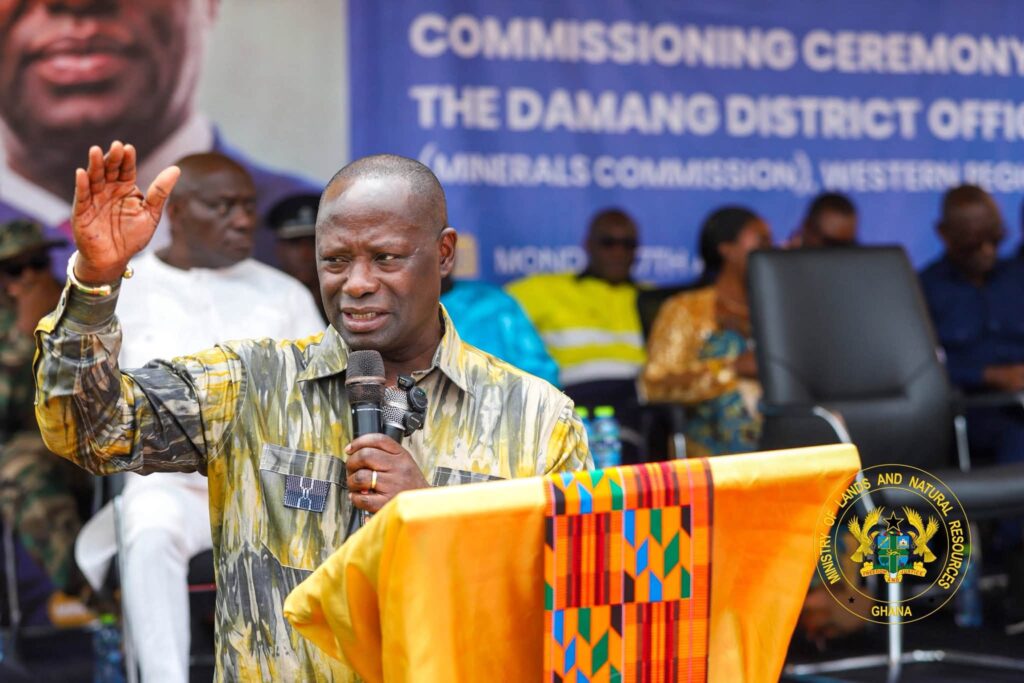
Speaking at the recently concluded Future Mining Forum in Saudi Arabia, Mr. Tandoh disclosed that state interventions are actively converging to disrupt supply chains, ensuring that illicitly mined gold can no longer be integrated into legitimate commerce.
“A time will come, if you go and do the wrong thing, you may not be able to sell the gold. We are not there yet, but that is where we are getting to.”
Isaac Tandoh,

While Expanding on the government’s multi-layered strategy, the Minerals Commission head explained that Ghana is aggressively deploying a comprehensive four-pronged operational model to dismantle the illegal mining ecosystem.
This framework pairs strict regulatory overhauls with real-time tracking of heavy earth-moving equipment, alongside the accelerated formalization of small-scale miners and targeted field enforcement.
Regulatory Framework and Sourcing Controls
Central to this market-disruption strategy is the Ghana Gold Board (GoldBod), a statutory body created by an Act of Parliament to regulate small-scale gold trading.
Under current rules, all artisanal and small-scale miners are mandated to sell and export their output through GoldBod, establishing a single centralized clearinghouse for domestic gold transactions.
The economic footprint of this system is already evident, with GoldBod purchasing over 100 tonnes of small-scale gold last year and injecting approximately US$13 billion into the Ghanaian economy.
Complementing these trading regulations, the government is introducing robust traceability measures under the Responsible Cooperative and Skills-Development Programme.
Miners operating in eligible areas are being grouped into formal cooperatives, supported by smaller, modernized processing plants built in partnership with the World Gold Council. This setup provides an unbroken chain of custody, enabling regulators to trace individual consignments directly back to their point of origin.
Social Transition and Security Enforcement
Recognizing that strict enforcement must be balanced with alternative livelihoods, the policy offers alternative pathways for illegal miners operating in environmentally fragile zones that cannot be formalised.
For these operators, state agencies are rolling out skill-acquisition initiatives focused on agribusiness and small and medium-sized enterprise (SME) development, facilitating a transition away from illegal extraction.

On the security front, the National Anti-Illegal Mining Operations Secretariat (NAIMOS) serves as the primary enforcement arm.
Tasked with intelligence-led field actions, NAIMOS carries out targeted raids to ensure that uncooperative illegal miners face swift arrest, prosecution, and statutory penalties.
Driving the Push for Sourcing Accountability
The urgent push to lock illegal gold out of commercial channels is driven by critical economic, environmental, and international factors.
Unregulated small-scale extraction locally known as galamsey has caused widespread deforestation, heavily polluted critical river bodies with toxic heavy metals, and destroyed vast tracts of fertile agricultural land.
Furthermore, illegal trade channels deprive the central government of essential tax revenues and foreign exchange earnings, while threatening Ghana’s standing in international financial markets.

As international bullion markets demand stricter Environmental, Social, and Governance (ESG) compliance, global refiners and buyers are increasingly shunning unverified gold inputs.
By enforcing full traceability through GoldBod, deploying tracking tech on heavy machinery, and leveraging NAIMOS enforcement, Ghana aims to shield its legal gold exports from international sanctions while restoring environmental sustainability to its rich extractive landscape.
READ ALSO: Ablakwa: VIP Lounge at Accra Airport Nears Completion, No Public Funds Used