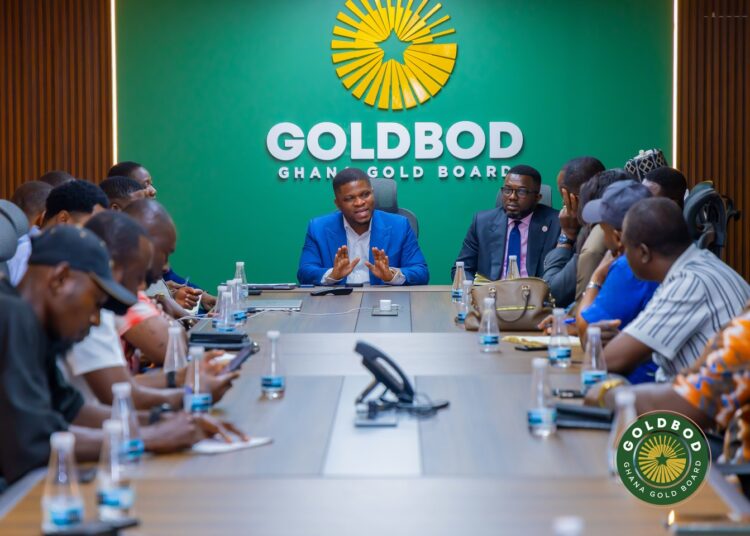
Ghana Gold Board (GoldBod), operating under Section 2(b) of ACT 1140, has announced US$1.871 billion in foreign exchange from its artisanal and small-scale mining (ASM) gold trade operations during September 2026.
This performance exceeded the agency’s announced monthly projection target of US$1.4 billion. The earnings represent a critical milestone in Ghana’s effort to leverage its indigenous extractive capacity to secure national macroeconomic stability and bolster international reserves.
“In September 2026, the Ghana Gold Board (GoldBod) in accordance with its mandate under section 2(b) of ACT 1140, generated from its ASM gold trade operations, foreign exchange totaling US$1.871 billion against the announced monthly target of US$1.4 billion.”
Ghana Gold Board (GoldBod)

Expanding on the performance, GoldBod allocated US$701.3 million of the total sum to authorized commercial banks against a set target of US$700 million to strengthen liquidity and FX market stability.
Concurrently, US$1.170 billion was channeled directly to the Bank of Ghana surpassing its US$700 million benchmark to drive reserve accumulation.
Looking forward to October 2026, GoldBod projects generating an additional US$1.5 billion in foreign currency, committing US$1 billion to commercial banks and up to US$500 million to the central bank in line with the Gold-for-Reserves and National Recovery Plan (GANRAP).
Institutionalizing FX Stability through Formalized Extractive Channels
Historically, Ghana’s informal gold sector suffered from rampant smuggling, revenue leakages, and uncoordinated local trading that stripped the state of foreign exchange revenues.
The imperative for establishing a centralized buyer and regulator like GoldBod emerged from a pressing need to stabilize the local currency, build robust central bank balance sheets, and ensure that wealth generated from artisanal mining flows directly into the sovereign financial infrastructure.

By shifting small-scale gold exports into a single statutory pipeline under ACT 1140, the government has created a repeatable, transparent mechanism for foreign currency generation.
Rather than relying strictly on foreign loans or traditional extraction, channeling ASM outputs through the Ghana Gold Board ensures that domestic resources directly supply commercial banks and defend local monetary stability.
The Spot FX Intermediation Framework and Market Integrity
To sustain these financial inflows, GoldBod introduced its Spot FX Sales/Intermediation Framework to ensure transparent valuation, equitable access for commercial lenders, and full legal compliance across all trade tiers.
By formalizing trading channels with licensed aggregators and off-takers, the framework prevents price distortions and eliminates illegal gold arbitrage in sub-Saharan Africa.

The institutional framework provides clear market visibility and ensures every transaction meets stringent Know Your Customer (KYC) standards executed alongside the Bank of Ghana and Financial Intelligence Centre.
GoldBod noted that strict adherence to the new policy will remain non-negotiable as market participation grows, ensuring that liquidity flows smoothly into commercial banking operations without regulatory friction.
Macroeconomic Outlook and National Reserve Growth
With continuous reserve building aligned under GANRAP, the state-backed gold purchasing model is rapidly transforming Ghana’s monetary policy trajectory.
Providing significant, predictable foreign currency injections directly to the Bank of Ghana buffers the country against external trade shocks, bolsters the national currency, and enhances overall balance-of-payments credibility.
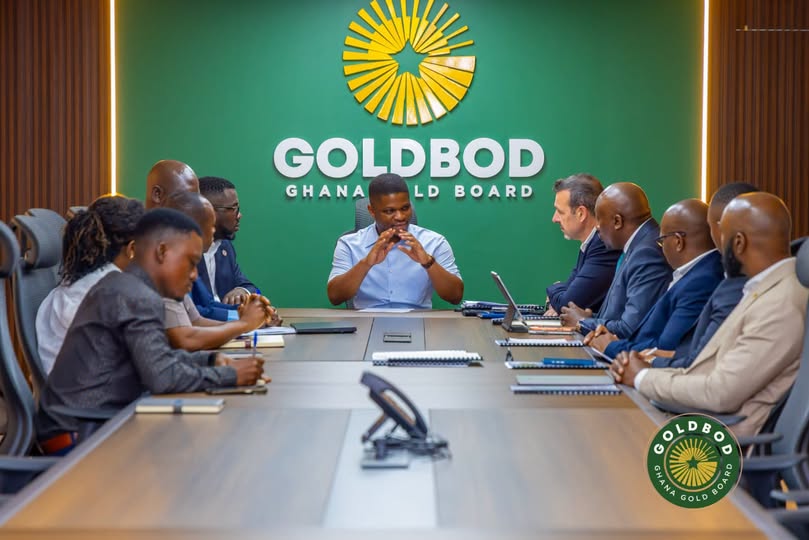
As GoldBod prepares to deliver its projected US$1.5 billion in foreign currency for October, the agency’s structured intervention in artisanal and small-scale gold trade establishes a sustainable blueprint for mineral resource management across West Africa.
Continued collaboration between GoldBod, commercial banking entities, and mining stakeholders will be instrumental in maintaining long-term financial resilience and resource-led economic growth.
READ ALSO: Enterprise Life Marks 25 Years of Insurance Excellence