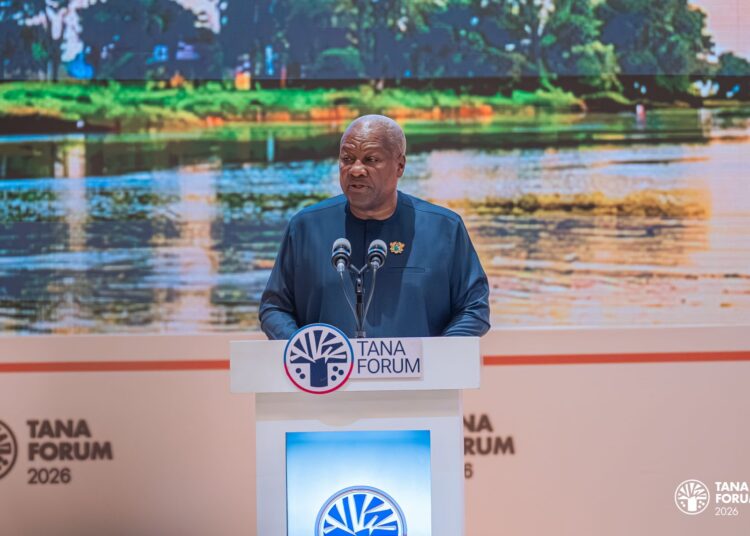
President John Dramani Mahama has identified the control and exploitation of natural resources as central drivers of Africa’s persistent security crises, urging African leaders to confront the political and economic interests and sustain conflicts across the continent.
Speaking at the 12th TANA High-Level Forum on Security in Africa, he presented the State of Peace and Security in Africa report covering January 2025 to June 2026, challenging leaders to examine the interests behind armed violence.
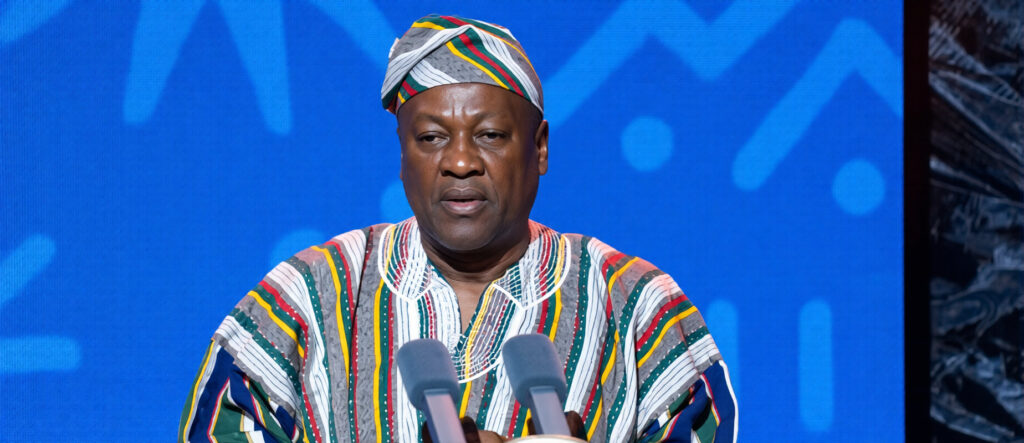
His Excellency stressed that discussions about weapons proliferation, military deficiencies and extremist groups often overlook the economic structures that enable instability to persist.
“In every single theater of conflict across the continent today, if you want to understand why the guns are firing, do not start by counting the number of rifles, ask three basic questions: one, who controls the resources; two, who cashes the check from its extraction; and three, whose political and financial fortunes are better served by the perpetual chaos that exists than by scribbled peace?”
His Excellency John Dramani Mahama
President Mahama illustrated his position through conflicts in Sudan, the Democratic Republic of the Congo, Somalia and Mozambique, where competition over resources intersects with political grievances and weak governance. In Sudan, he pointed to the fragmentation of authority and the significance of gold extraction sites, while linking the resurgence of M23 in eastern DRC to the struggle over coltan, cobalt and other minerals required for the global green transition.
Turning to Mozambique’s Cabo Delgado region, the President observed that substantial gas wealth has not translated into an equivalent sense of inclusion among local young people. He also highlighted governance vacuums in Somalia that allow Al-Shabaab to operate, demonstrating how insecurity can thrive where state institutions fail to meet communities’ needs.
These cases expose a contradiction in Africa’s position within the global economy. Although the continent possesses minerals essential to digital technologies and renewable energy, the communities surrounding these resources can become targets of violence instead of beneficiaries of their wealth.
He called this predicament “a threat to genuine sovereignty” which, in his assessment, must extend beyond diplomatic recognition and membership of international institutions. African governments, he posited, need the administrative, legal and economic capacity to govern strategic assets, negotiate equitable agreements and ensure that resource revenues improve citizens’ lives.
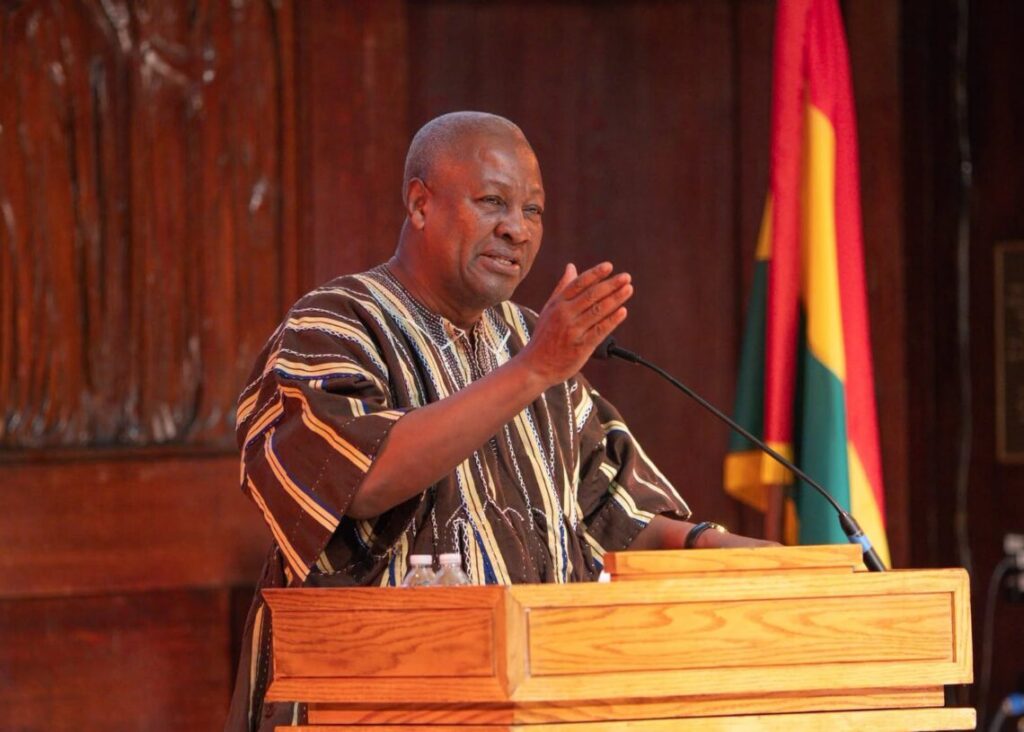
The President also cautioned against allowing external powers to determine Africa’s security priorities through competition for influence and access to resources. He asserted that African countries must take responsibility for shaping their own future, warning that failure to exercise this agency would leave the continent vulnerable to decisions made elsewhere.
President Mahama Calls for Urgent Action on Africa’s Security Challenges
Challenging African governments and regional institutions to translate their peace and security commitments into concrete action, President John Dramani Mahama warned that inadequate funding and weak political resolve continue to undermine continental responses to conflict.
His Excellency identified institutional shortcomings, digital threats and fragmented regional cooperation as critical obstacles to lasting stability.
“Africa does not lack brilliant frameworks. We have Agenda 2063. We have the African Peace and Security Architecture. We have silenced the guns. Our problem is not the ink on the paper; it is the courage of execution.”
His Excellency John Dramani Mahama
President Mahama illustrated the funding challenge through the transition from ATMIS to AUSSOM in Somalia, which he indicated requires approximately US$150 million annually. By contrast, he noted that the African Union Peace Fund could barely mobilise US$20 million, leaving a substantial financing gap that increases dependence on external partners.
He warned that when foreign governments reduce funding for peacekeeping support missions, African countries bear the consequences of decisions over which they may have limited influence. For the President, this dependence contradicts the principle of African solutions to African problems and reinforces the need for governments to finance their own peace initiatives.
In addition to institutional financing, President Mahama highlighted the growing role of digital platforms in shaping security outcomes. He observed that disinformation campaigns exploit local grievances, while extremist organisations use platforms such as TikTok, WhatsApp and Telegram to communicate with and recruit frustrated young people.
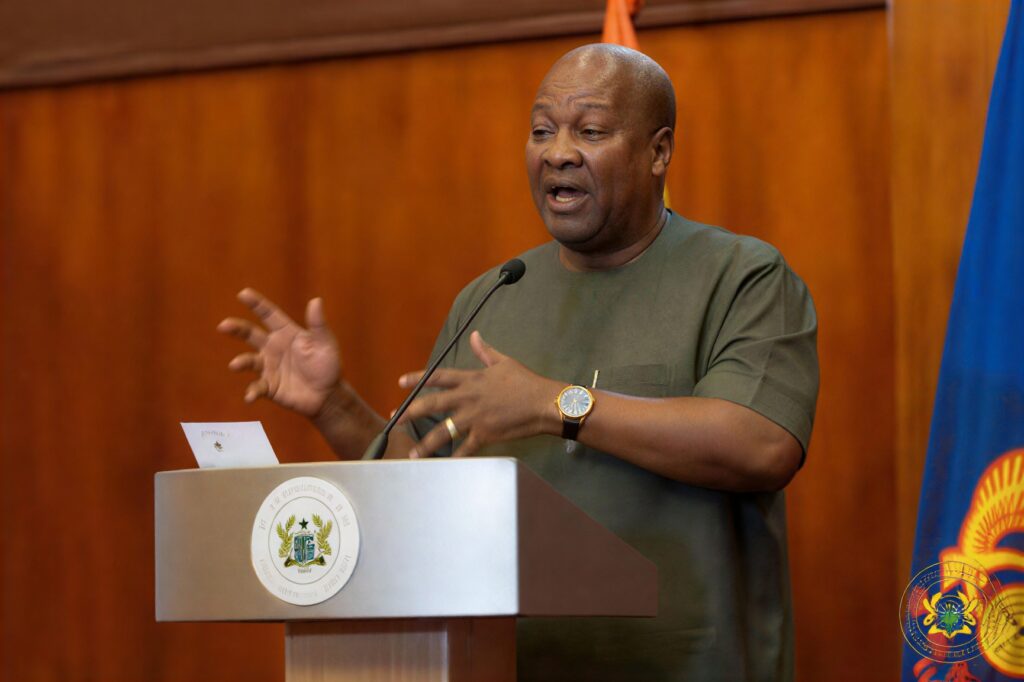
He criticised the slow responses of intergovernmental institutions, arguing that lengthy communiqués issued after events have unfolded cannot adequately counter rapidly evolving digital threats. African institutions, he proposed, must improve their capacity to communicate and respond at the pace demanded by contemporary security challenges.
The President also advanced regional integration as a practical instrument for conflict prevention. He explained that the African Continental Free Trade Area should be understood as a means of making peaceful cooperation more economically valuable than confrontation.
Integrated markets and traceable value chains, he suggested, can weaken illicit economies associated with smuggled minerals, illegal taxation and warlordism. He further commended Ethiopia for joining the Pan-African Payment and Settlement System, encouraging other countries to follow suit to reduce exposure to external financial shocks.
President Mahama acknowledged that trade alone cannot resolve political disputes. Nevertheless, he emphasised that economic exclusion and friction between neighbouring countries can aggravate instability, making stronger integration, institutional accountability and dependable security financing essential components of Africa’s peace agenda.
READ ALSO: Endorsement of Unlicensed Mining Irresponsible, Retrogressive – CSOs to Sammy Gyamfi