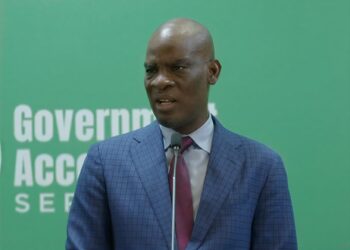
Senior Associate of Klynveld Peat Marwick Goerdeler (KPMG) Advisory, Mr. Evans Asare says seven of the Sustainable Development Goals (SDGs) are stagnated and Ghana is also making moderate progress in the implementation of nine out of the 17 SDG goals.
Speaking at the third Virtual Accra SDGs Investment Fair on the theme: “Regaining Momentum in SDGs Implementation during and post COVID-19” he mentioned that, gender equality, clean water and sanitation, affordable and clean energy, good health and well-being, zero hunger, industry, innovation and infrastructure, partnership for the goals and life on land as the eight goals that the country was making moderate progress in and added that, there was lack of data to measure the progress of goal one.
He said with President Nana Addo Dankwa Akufo-Addo as the Co-Chair of the United Nations Secretary General’s Group of Eminent SDGs advocates, there was a strong commitment to ensuring that goals were met by 2030 adding that there was a special advisory group set up to assist the President with advocacy to drive awareness and interest in the SDGs.
He noted that, the country had also set up a diverse structure for SDGs implementation, which involved both the public, private and civil society organizations, and had an inter-ministerial committee with supervisory coordinating and implementing bodies.
He said the multi-stakeholder approach allowed for transparency and inclusion in the implementation of the goals.
On SDGs financing, Mr Asare said, Ghana had fused the SDGs budgeting and financing into its national budgeting process, which involved a bottom up approach, where local authorities also actively participated.
“This facilitates tracking of budget allocation to each goal.”
Mr Asare said from the baseline assessment done, there was the absence of the public-private partnership law, absence of budgeted SDGs programme and initiatives, low domestic tax and funding and ineffective prioritization of public funds.
He said there should be a PPP law to provide investor comfort and need for government to prepare a feasibility study for projects in priority sectors to attract private partners.
Mr Asare said for private capital and private equity, domestic fund managers and financiers should take the first layer of risk and make it attractive for external capital to flow into the country.
Dr Eugene Owusu, the Special Advisor to the President on SDGs addressing the fair said, traditional sources of funding for the implementation of the SDGs would always be woefully inadequate, adding that the COVID-19 had caused investors to withdraw about 700 billion dollars from emerging and development markets.
He revealed that, the pandemic had changed the financing landscape in the implementation of the SDGs and called for innovative financing.
He said, some works had started in the area of the Country Financing Road Map to address the financing gap space adding that, government was fully committed to addressing the financing challenges in the implementation of the SDGs and pledged that government would continue to engage the private sector in the implementation of the SDGs.
He called on stakeholders, especially private sector players to collaborate with government to actualize the implementation of the goals of SDGs and commended the organizers of the SDG investment fair, saying, it was helping to address implementation challenges.
In 2018, the Ministry of Finance in collaboration with the Ghana Investment Promotions Centre and the SDGs Advisory Unit, launched the annual SDGs Investment Fair to encourage private financing of the SDGs.
The fair aims at facilitating collaborations between investors and sustainable public and private sector project and businesses.