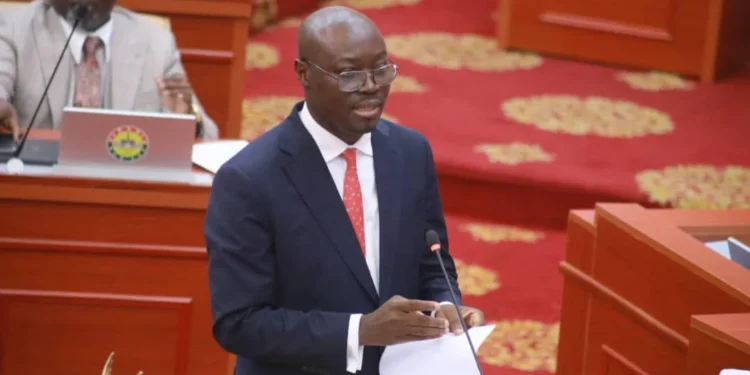

The Executive Director for the Global InfoAnalytics, Musa Danquah has commended the National Identification Authority (NIA) and the National Health Insurance Authority (NHIA) partnership aimed at registering children under 15 years old.
Mr Danquah, began his remarks by providing an insightful analysis of the significant development, stating that the project despite being four years behind schedule, marks a crucial step in improving national identification systems and enhancing electoral integrity in Ghana.
According to him, the timing is opportune, as it would minimizes the risk of political manipulation, such as inflating or falsifying ages for electoral gains by political parties and candidates.
“Now that the EC registration is over, NIA will not be criticized for starting kids under 15, so it is good timing. For this exercise, no politician will mobilize the kids to register and get their ages inflated or falsified for election purposes. It will be less chaotic and more smoother. Let’s hope that NIA is able to complete it successfully.
Musa Danquah, Executive Director of Global InfoAnalytics
The renowned pollster, with expertise across Africa, Europe and North America strongly asserted that the exercise when completed would offer long-term benefits to the country, particularly its electoral system.
He emphasized that the initiative, once completed could significantly reduce illegal vote transfers and disputes over registering minors by 2027, thereby underscoring the importance of sincerity and honesty in implementing these measures to achieve the desired outcomes.
Importance of Ghana Card
Furthermore, the Executive Director of Global InfoAnalytics pointed out the significant importance of the Ghana Card to the country, adding that once widely available, it could eliminate the need for the Electoral Commission to open voter registration centres.


Mr Daquah advocated the need for the country to amend some relevant laws to enable the country’s Electoral Commission to use voters’ addresses registered with the National Identification Authority to allocate polling stations to voters who live in the various constituencies across the country.

This streamlined process, he noted would involve voters notifying the National Identification Authority of address changes through update forms, allowing the Electoral Commission to assign polling stations accordingly.
“If you change your address, you should first notify the NIA through the use of update forms. EC should just pick voters and assign a polling station to them based on the GPS addresses they have registered with NIA, SIMPLE. If you want to transfer your vote, first inform NIA”.
Musa Danquah, Executive Director of Global InfoAnalytics
Moreover, Mr Danquah proposed a simplified system where the Electoral Commission would only require voters to bring their Ghana Cards for registration, thereby eliminating the need for party agents and reducing associated costs and conflicts.
This approach, he expressed optimism could lead to significant cost savings by reducing the need for new registration equipment and minimizing wastage.
Mr Danquah, thus urged the Electoral Commission and all stakeholders in the country’s electoral system to adopt what he describes as the most efficient and best-practice-oriented approach to truly benefit the country and its citizens.
In addition, the Executive Director for Global InfoAnalytics strongly criticized the tendency of political leaders in the country focusing on procurement rather than efficiency and best practices in the discharge of their responsibilities.
He called for a shift in mindset to prioritize the country’s interests, highlighting that effective implementation of the Ghana Card project could result in substantial financial savings, which could then be redirected to improve the lives of Ghanaians.
The National Identification Authority and the National Health Insurance Authority through a joint cooperative agreement, are to commence the registration of children scheduled to kick off on June 10, 2024.
The initiative specifically aims at registering children aged 6 to 14 years nationwide, with the goal of issuing Ghana cards.
READ ALSO: Ghanaian Youth Urged To Be Resolute To Hold Politicians Accountable