Tag: Beirut

  • Israel Strikes Beirut For First Time Since Hezbollah Ceasefire

    Israel Strikes Beirut For First Time Since Hezbollah Ceasefire

    For the first time since a ceasefire was agreed in November to end the Israel-Hezbollah war, Israel has bombed Beirut.

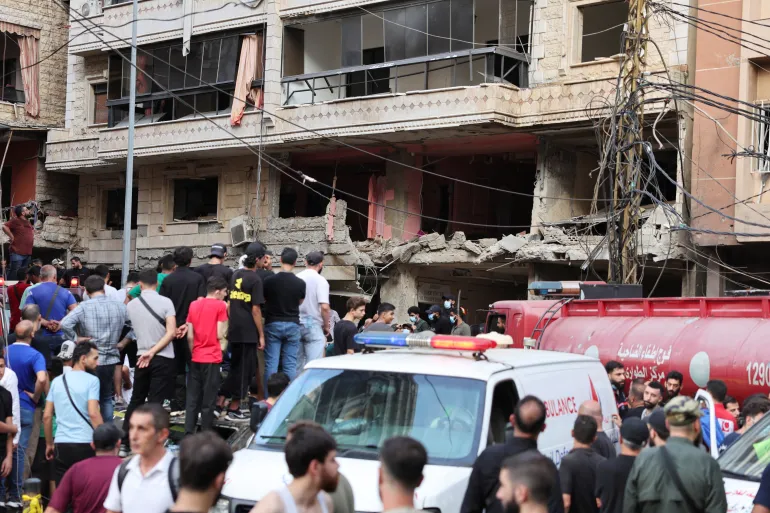
    Huge smoke plumes rose from the site of the attack in the southern suburb of Dahiyeh and residents reported hearing the explosion from the mountains surrounding the Lebanese capital.

    The strike threatens to upset the fragile truce in place between Hezbollah and Israel since a ceasefire was signed on November 27 last year.

    The ceasefire brought an end to more than 13 months of fighting between Hezbollah and Israel, which killed more than 3,900 people and displaced about 1 million in Lebanon.

    Lebanon’s Prime Minister, Nawaf Salam, has stressed his commitment to the ceasefire deal and reiterated that the decision for Lebanon to go to war lay with the state, not with Hezbollah.

    Before the bombing, Israeli’s military issued an evacuation order and warned it would attack a building in Dahiyeh.

    A spokesperson posted a map on X, with a building marked in red and warned residents to flee more than 300 metres away, reminiscent of the daily maps the Israeli military would issue before bombings during its war with Hezbollah.

    The spokesperson warned, “You are present near facilities belonging to Hezbollah,” pointing to a building near two schools in Dahiyeh.

    The warning was followed by two “roof knocking” drone strikes.

    The warning caused residents of Dahiyeh to flee, with people shooting in the air to warn those who had not seen the announcement on social media.

    Earlier in the morning, Israel announced it had intercepted two rockets coming from Lebanon, the second time in a week that rocket fire was directed towards it.

    No one claimed responsibility for Friday’s rocket fire, and Hezbollah issued no statement.

    Israel conducted several airstrikes in southern Lebanon before the evacuation warning in Beirut on Friday. Lebanon announced the closure of schools in the south in fear of further strikes.

    The Israeli Defence Minister, Israel Katz, said, “If calm does not prevail in the Galilee towns, there will be no calm in Beirut … We will not allow a return to the situation before October 7.”

    It is unclear how Hezbollah will respond to a strike on Dahiyeh, where the group enjoys large public support.

    Hezbollah claims its role is to protect Lebanon from the Israeli military, so a strike near the country’s capital could form a challenge to the basis of its legitimacy.

    Ceasefire Violation

    The Lebanese President, Joseph Aoun said that Israel’s attacks on Beirut are a “continuation of Israel’s violation of the agreement sponsored by France and the United States.”

    In a statement on X, Aoun said that the international community must put an end to these attacks and force Israel to abide by the agreement, just as Lebanon is committed to it.

    Also, French President, Emmanuel Macron said that Israeli attacks on Beirut were “unacceptable” and a violation of the ceasefire and that such attacks “play into the hands of Hezbollah.”

    Speaking alongside Lebanese President, Joseph Aoun, Macron added, “That’s why France will continue to stand by you to ensure and maintain your sovereignty and security.”

    The two leaders met at the Elysee palace in Paris to discuss economic reforms and efforts to stabilise the country as a fragile truce with Israel increasingly comes under pressure.

     “We also would like to reiterate that there should be no unilateral actions by Hezbollah to violate the ceasefire.

    “The parties must honour and respect their obligations in order not to undermine the achievements made, and the Israeli forces must pull out from the five points [they occupy] in the south of Lebanon and residents must be allowed to return to their homes.”

    Emmanuel Macron

    Macron said that the Lebanese army had been deployed throughout most of southern Lebanon and had ensured there was no Hezbollah presence there.

  • Israel Strikes Beirut

    Israel Strikes Beirut

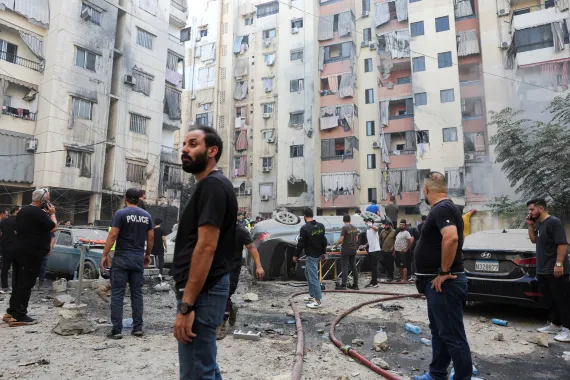
    At least nine people have been killed and nearly 60 others injured in an Israeli attack on a southern suburb of Beirut.

    This is the first such Israeli attack on Lebanon’s capital in months.

    The Israeli strike on Beirut’s crowded southern suburbs hit during rush hour, as people headed home from work and children left school.

    Local networks broadcast footage showed that at least two buildings completely flattened and the main street ravaged in Dahiyeh, just kilometers from downtown Beirut where Lebanon’s Hezbollah militant group holds sway.

    The Israeli military confirmed the attack, saying that it hit near key Hezbollah facilities in Dahiyeh, a neighbourhood of southern Beirut.

    “The [Israeli military] conducted a targeted strike in Beirut. At this moment, there are no changes in the Home Front Command defensive guidelines,” it said, providing no further details.

    Israeli army Arabic spokesperson, Avichai Adraee said that several other Hezbollah commanders have been killed alongside senior military official Ibrahim Aqil in the attack in Beirut.

    The Lebanese group has not commented on the air strikes.

    Lebanon’s National News Agency said that five children are among the victims of the attack on a building in the Lebanese capital.

    Lebanon’s Civil Defence called on residents to evacuate area.

    The agency urged people to avoid the area around the building that was destroyed by the Israeli air raids “for their own safety and to facilitate” the work of rescuers looking for survivors in the rubble.

    People inspect the site of an Israeli strike in the southern suburbs of Beirut, Lebanon, on September 20, 2024.

    It was also reported that Interior Minister Bassam Mawlawi ordered a security perimeter to be set up around the site.

    White House spokesman, John Kirby said that he was not aware of any effort by Israel to notify the US before carrying out the strike in Beirut.

    Kirby told reporters that the US strongly urges its citizens to avoid travel to Lebanon.

    “President Joe Biden’s administration does not want to see further escalation in the region,” he added.

    Iran’s Embassy In Lebanon Condemns “Israeli Madness And Arrogance”

    Iran’s embassy in Lebanon condemned Israel’s recent attacks on Beirut.

    In a post on X, the Iranian embassy wrote, “In the strongest terms the Israeli madness and arrogance that crossed all limits by targeting residential areas in the southern suburbs of Beirut.”

    “We reaffirm once again that such terrorist crimes will not undermine the determination and faith of the Lebanese. Our sincere condolences to the families of the martyrs and our wishes for a speedy recovery for the wounded.”

    Iran’s embassy in Lebanon

    According to Rami Khoury, a Professor at the American University of Beirut, the latest Israeli attack on the southern Beirut suburbs demonstrates how Israel’s army feels emboldened by the unwavering support of the United States.

    “Israel [is] on a rampage,” Khoury told a news agency, adding that while he does not believe an all-out regional war is imminent, an escalation in the conflict between Israel and Hezbollah appears inevitable.

    Israel has long sought to defeat Hezbollah, which is better equipped than Hamas and has closer ties to Iran.

    “The problem is it has tried this many times without success,” Khoury added.

  • Iconic Sursock Museum Opens Again

    Iconic Sursock Museum Opens Again

    The Sursock Museum in Lebanon has reopened to tourists three years after a fatal disaster in Beirut harbor, caused by tons of wrongfully stored chemicals, that destroyed most of its prized artworks and artifacts.

    The reopening was a rare shining light in a country recovering from an economic downturn, that has left nearly three-quarters of Lebanon’s 6 million people in misery.

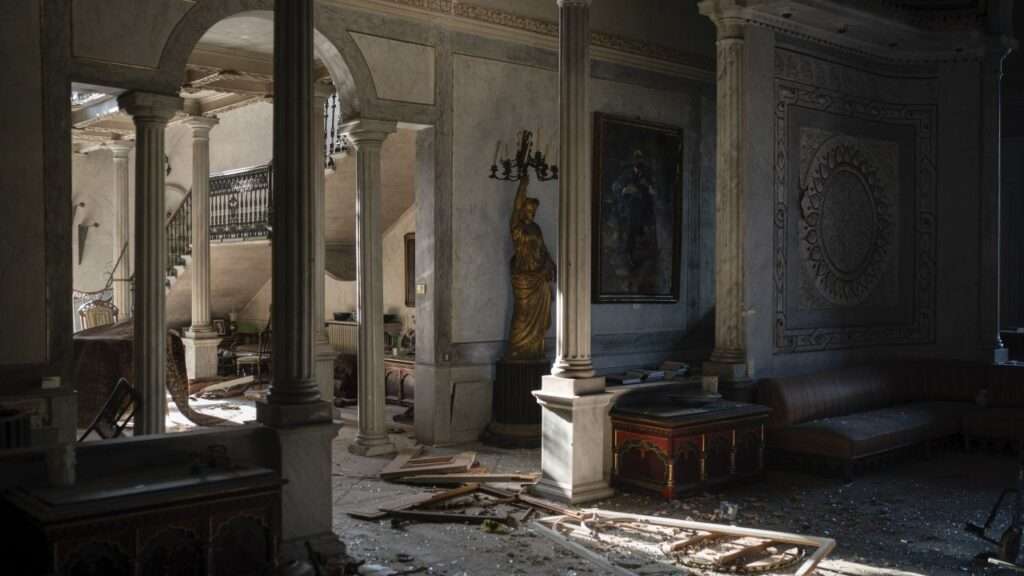
    Sursock Museum destruction after the Beirut Explosion.

    The sumptuous mansion, erected in 1912 as a private villa on a hilltop above the city’s Achrafieh quarter, combined Venetian and Ottoman designs. When its owner, the famous Lebanese art dealer Nicolas Ibrahim Sursock, died in 1952, he left his cherished mansion to his people to be converted into a modern art museum.

    The museum showcased Lebanese art from the late 1800s, featuring the paintings of renowned painter, Georges Corm and Fouad Debbas’ library of 30,000 images, which is one of the greatest private photo library in the world.

    The photographs date from 1830 to the 1960s, and are from the Levant, an area spanning nations along the eastern Mediterranean from Turkey to Egypt. A seven-year effort began in 2008 to refurbish and enhance the museum, which reopened in 2015.

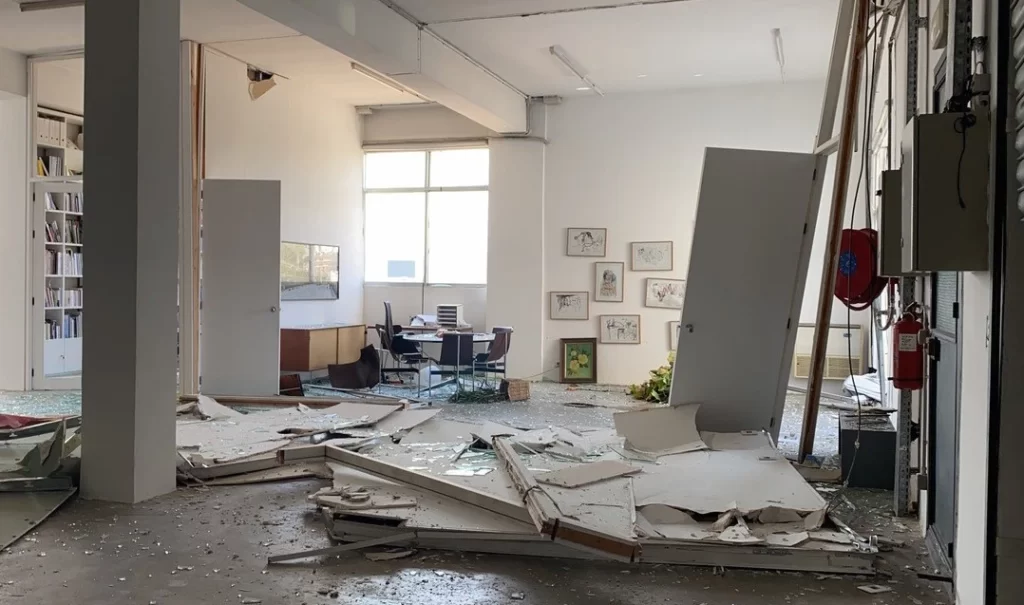
    However, the Aug. 4, 2020 explosion in Beirut, which was barely about 800 meters distant, hurled the museum. The glass windows shattered, the doors collapsed, and over half of the artwork on exhibit was destroyed. The blast swept over much of Beirut, taken over 200 lives and wounding over 6,000 others.

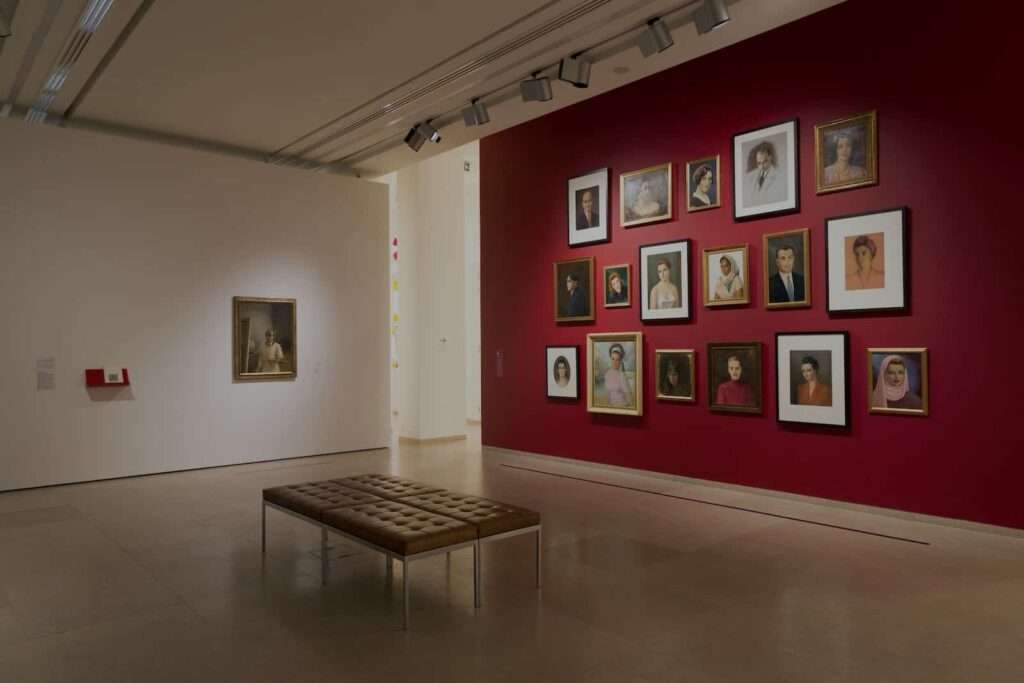
    Sursock Museum Collection.

    According to museum director, Karina El Helou, the extent of damage was unimaginable. According to her, 70% of the structure was severely damaged, as were 66 of the 132 art works on exhibition. The portrait of Nicolas Sursock by Dutch artist Kees Von Dongen, was shattered by fragments of glass.

    Two months after the disaster, then-museum head Zeina Arida began a fundraising campaign, anticipating damages to be roughly $3 million. With help from Italy, France, UNESCO, and different private entities, the museum ultimately gathered more than $2 million to repair the structure and the artwork.

    Sursock Museum destruction after the Beirut explosion in 2020.

    The restoration was an exhausting and lengthy process. Sursock’s portrait, together with two other works of art, was transported to Paris and repaired there. Specialists from Lebanon and elsewhere went to the museum to reassemble shattered clay sculptures and repair cracks and scratches on artworks. The explosion’s dust and debris were meticulously cleaned to restore the shine of many things.

    “White powder from the blast that we saw everywhere in Beirut even reached our storage room four stories underground,” El Helou said. She hopes the reopening would encourage the morale of many Lebanese amid the country’s economic meltdown, and offer a “safe space” for free expression.

    She went on to say that art is now more vital than ever. “In the face of darkness, artists fought through art and culture,” she explained.

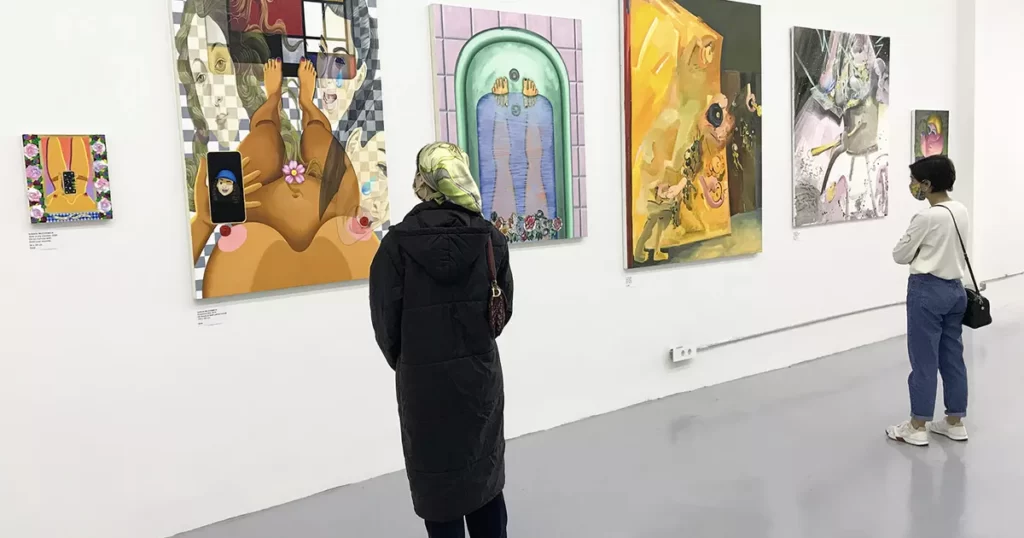
    Moreover, Dozens of people assembled in Sursock’s spacious tree-lined courtyard, to celebrate its reopening, greeted with choir and a band playing on the entry stairs. Sighs of relief were heard as the museum seemed exactly as it had before the explosion. Others recalled the way Beirut has deteriorated since then, and how many artists have fled the country.

    “I now hope all the friends of the Sursock who may have left Lebanon in recent years at least come back to visit us,” the museum’s chairman, Tarek Mitri said.

    Sursock Museum wasn’t the only art site devastated in the port blast and afterwards repaired. The gallery Marfa Projects, located near one of the port’s entrances, was finally renovated and reopened.

    The Sursock Museum was not the only art site devastated in the port blast and afterwards repaired. The gallery Marfa Projects, located near one of the port’s entrances, was finally renovated and reopened. Others, such as the Saifi Urban Gardens, a family-run hostel that had evolved into a bustling cultural center with art studios and an exhibition space, were damaged and permanently shuttered.

    Many historic structures, notably Ottoman-era houses constructed in the nineteenth century and destroyed in the blast, could be auctioned to investors if funding is not provided. The impoverished government of Lebanon has been struggling to afford large rehabilitation initiatives.

    READ ALSO:Lebanon Gets $300 Million Aid From World Bank