Tag: COVID-19 Private Sector Fund

  • Public and private sectors are not competitors- Senyo Hosi

    Public and private sectors are not competitors- Senyo Hosi

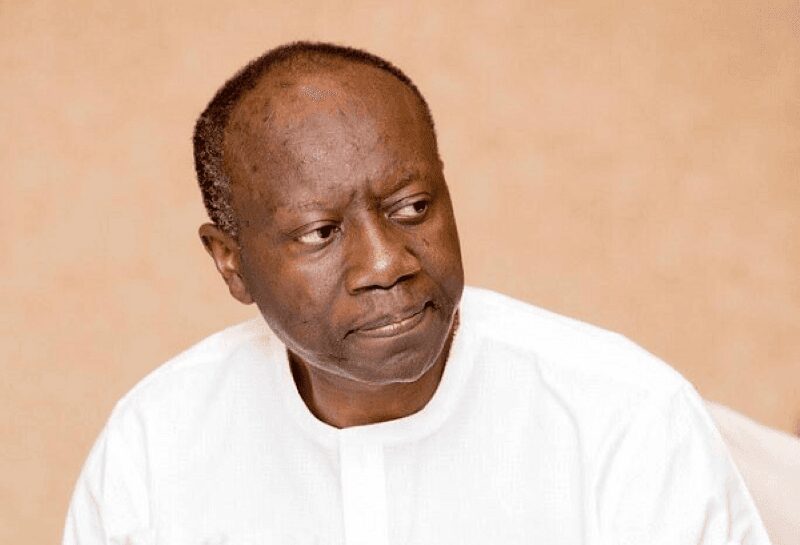
    Managing Trustee of the Ghana COVID-19 Private Sector Fund, Senyo Hosi, has intimated that the country’s private and public sectors should not see each other as competitors.

    According to him, both sectors when engaged in a healthy collaboration will bring massive development than either could achieve independently.

    “Some lousy thinking goes on in our policy making in our country, where people tend to identify and think that the private sector is in competition with the public sector, and the public sector must look at ways to outdo the private sector. It is just ridiculous.”

    “What we did with the Ghana Infectious Disease Center (GIDC) shows the results of healthy collaboration and cooperation between the private and public sector.”

    Senyo Hosi

    He also asserted that the project was evidence of the efficiency the private sector can bring to bear on the public sector. He then admonished Ghanaians to not see these sectors as two different worlds.

    “Ultimately who is the government? It is us the people. Ultimately, who empowers the public sector operatives to run affairs? It is us the people. Who are the drivers and founders of our GDP? It us the people.

    “Ghanaians cannot continue to see the private and public sector as two different worlds. No! they are one world in shared spaces. They have varied functions but very possible shared functionality.”

    Senyo Hosi
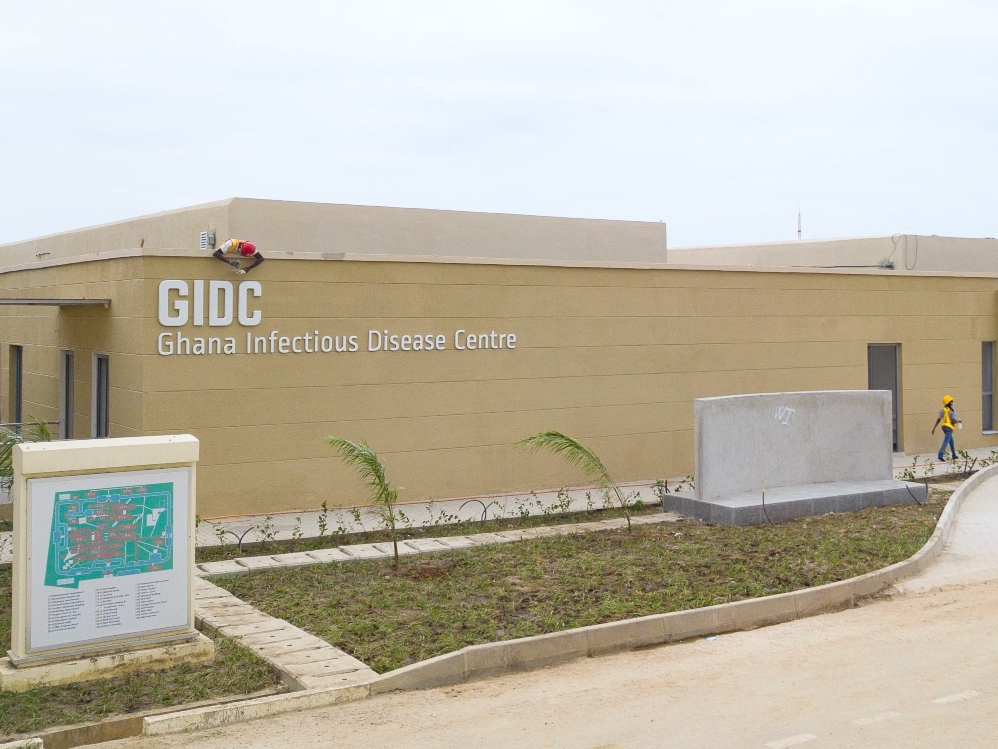
    Ghana Infectious Disease Centre

    Also, he charged Government to learn from the Ghana Infectious Disease Centre (GIDC) project. According to him, the Government can learn a thing or two about project management and cost management.

    Government projects could be less costly

    Mr. Hosi bemoaned that usually, Government projects which are not even sophisticated are constructed using huge sums of money when such projects could have been less costly.

    “Government can learn about project management and cost management with projects from what happened with us building the GIDC.

    “I mean for a project to have been delivered that way, it tells you something. We have similar projects going for as much as fifteen, twenty or thirty-two million dollars. It tells you how many more of these we can actually deliver;if we actually cut down on the waste and the inefficiencies in our procurement system and corruption.”

    Senyo Hosi

    Additionally, he said that when he heard of Government’s decision to build 88 district hospitals, he was happy about it. However, he is quite disappointed that till now, Government has not engaged the private sector,;after the successful building of GIDC, on how these 88 hospitals can be constructed with less cost.

    He also deduced that Ghanaians are more focused on the procurement aspect of things than the delivery of social services that sustain and impact the nation.

    According to him, a lot of people are suffering in the country. And it is very painful to see people focus on procuring things for themselves than delivering these services that are meant to ease the suffering of these people.

    His disappointment, he explained, is with the government as a machinery, not seeking to understand what has been achieved and how they can take learnings from it.

    According to him, “people want to make plans for 32million dollar hospitals so that they can take out their share of the money, hence they are not interested in hearing about how someone else has been able to build an equally efficient 6million dollar hospital.”

    Read Also: Minority Owes An Explanation For Unanimous Approval Of Finance Minister
  • Prof. Quartey backs govt’s decision to tax the gaming sector

    Prof. Quartey backs govt’s decision to tax the gaming sector

    Professor Peter Quartey has backed the government’s decision to tax the gaming sector. According to him, a lot of people are now moving from lotteries to the online gaming activities. This, he noted, makes the sector very juicy for government to tax.

    The Economist and Director of the Institute of Statistical, Social and Economic Research (ISSER) told The Vaultz News that government’s decision is justified.  He noted that the National Lotteries Authority (NLA) generates a lot of revenue for the government.  However, the influx of online gaming, he believes, may affect revenue generation by the NLA.  

    “So, what you do is that, when people earn money [from online gaming], you tax the earnings. Any person that earns income through a genuine means must be taxed. I have no problem with taxing that sector at all”.

    It is estimated that Ghana loses over GH¢300 million annually in revenue due to leakages in the gaming sector. Gaming has become a major income earner all across the globe and a significant source of government revenue. As such, the government has identified gaming as one of the main sources of revenue mobilization for the country. As a result, the government is set to formulate a comprehensive policy to improve revenue mobilization from this sector.

    Despite its potency of raising substantial revenues for the state, the ISSER Boss noted that it may have some repercussions on the country. According to him, the gaming sector is already encouraging a lot of the youth in the country to go into betting instead of looking for gainful employment. He also cited the likelihood of an increase in fraud and other similar social vices.

    Current proposed taxes

    Regarding the government’s proposed taxes, Prof. Quartey opined that government has no choice than to impose the taxes. According to him, if Ghana was an advanced economy, it would have had enough resources to fall on without imposing taxes. 

    He indicated that he expects the Ghana Revenue Authority to be more innovative in its approach to raise more revenues for the country.  He also calls for automation of the processes of revenue collection by the GRA.

    “Revenue collection mechanisms should be automated; there should be less human interface”. 

    COVID-19 Funds and COVID-19 Levies

    A section of Ghanaians suggest that the government should have appealed for resources to re-fund the COVID-19 Funds. They believe this is a better way to raise revenues rather than imposing taxes. However, Prof. Quartey disagrees. He noted that taxation will be a more effective approach to mobilize revenues within the shortest period to aid the recovery process.

    “Taxing citizens will respond appropriately over the needed resources”. 

     He then recalled that the COVID-19   Funds called for assistance because the government was running out of resources. 

    Thus, the finance ministry has indicated that the COVID-19 National Trust Fund used about 79% of its resources in 2020. Similarly, the COVID-19 Private Sector Fund utilized approximately 91 percent of resources it had mobilized from its Fund.

    According to him, it is however not appropriate to rely on only one or a few sources of raising revenues.  He cited taxation, donations and grants, cut back on investments as some of the means available for the government to explore.  But, he believes the best option now is to look inwards, thus, raise money domestically. He noted that external borrowing is not appropriate due its high interest components.  He also revealed that the government is spending close to 49.5% of projected revenues on interest payments alone. 

    “So, borrowing is not the best option now. Raising more tax revenues will have been good. And also, making our tax systems more efficient than we are seeing now. There are so many revenue leakages in the system”.

    Other revenue sources

    Professor Quartey, therefore, called on the government to explore other non-tax revenue avenues so as to reduce the burden on individuals and companies.  He indicated that there are a lot of revenues that the government can generate from property taxes. This is an area he thinks the government has not really explored.

    Also, he noted that the government should try and make some of the state owned enterprises more efficient as they may also raise some revenues for the government. The ISSER Boss also called for the taxing of ideal lands, as a way of mobilizing revenues for the state. 

    READ ALSO: COVID Levy not for ‘free water and electricity’ – Oppong Nkrumah

  • Gov’t mobilizes a total of GH¢101.5m from COVID-19 Funds in 2020

    Gov’t mobilizes a total of GH¢101.5m from COVID-19 Funds in 2020

    The government of Ghana mobilized a total amount of GH¢101,473,232.60 from the COVID-19 National Trust and the COVID-19 Private Sector Funds. The total amount raised came from GH¢ 57,134,093.58 from the COVID-19 National Trust Fund and GH₵44,339,138.98 from the COVID-19 Private Sector Fund. The Finance Ministry revealed this in the 2021 Budget Statement.

    The Funds represent two special initiatives to mobilize resources to fight the pandemic. The money raised from the two Funds were used to undertake different activities in the country’s quest to limit the spread of the disease.

    COVID-19 National Trust Fund

    In April 2020, the government passed the COVID-19 National Trust Fund Act, (2020), Act 1013. This ACT established the COVID-19 National Trust Fund.  The aim is to leverage other resources to fight the pandemic, as the government overstretched its fiscal space.  The Fund has since mobilized some amount of money that aided the fight against the pandemic.

    Luckily, the government provided a breakdown of the current state of the Fund in the 2021 Budget Statement as a way of demonstrating accountability to its citizens.  The finance ministry revealed in the 2021 Budget Statement that as at 31st December, 2020, the Fund had mobilized GH¢ 57,134,093.58. It noted that the government had utilized a total of GH¢45,218,313.23 last year. This shows that government expended 79 percent of the money raised from this FUND in 2020. Therefore, it presupposes that the government started 2021 with an amount of GH¢11,915,780.35 in the COVID-19 National Trust Fund.

    Muslim community donating to the Fund

     Meanwhile, these resources, according to the Finance Ministry, complemented Government efforts in providing PPEs and medical supplies to COVID-19 selected institutions. The Funds were also used to distribute food items to the aged, vulnerable, and needy persons. The government also used part of the money raised to provide vehicles to selected Treatment Centres. Also, it funded the National Public Health & Reference Laboratories, and Testing Centres.  Furthermore, the government also utilized the funds to support COVID-19 Central Care Management Team and the construction of the National Infectious Disease Centre.

    The COVID-19 Private Sector Fund

    The private sector played a significant role in the fight against the pandemic in the country. Despite the devastating effect of the pandemic on Ghanaian businesses, the sector provided resources to support the government’s efforts.

     The Private Sector swiftly organized and complemented Government’s effort towards fighting the pandemic. Figures from the Finance Ministry shows that as of December, 2020, the Fund had mobilized GH₵44,339,138.98. Out of this amount, the government invested GH¢40,203,404.70 in various activities. Prominent amongst them was the construction of a 100-bed National Infectious Disease Centre in Accra. Therefore, it can be inferred that the Fund begun this year with a total amount of GH₵4,135,734.28. This means the government utilized approximately 91 percent of resources it had mobilized from the Fund.

    COVID-19 Support in 2020

    As part of measures to mitigate the impact of the pandemic on businesses and households, the government rolled out several programs in 2020.  Some of them include free water supply, free electricity supply, and the provision of food to vulnerable persons.

    The government launched a GH¢750 million Coronavirus Alleviation Program – Business Support Scheme (CAP-BuSS) to support MSMEs. The government said it had spent about GH¢412.88 million as at End-December 2020 to support 277,511 businesses. About 69% of which were female-owned. The Finance Ministry revealed that scheme has saved over 650,000 MSME jobs. The government continues to implement programs to revitalize the economy.  One of such programs is the GH₵ 100 billion Ghana CARES program.

    Meanwhile, the government is still on the search for more resources to address the challenges inflicted by the pandemic on the Ghanaian economy.  As a result, the government has proposed taxes such as the COVID-19 Health Levy, and the Sanitation and Pollution Levy (SPL). Others include the financial sector clean-up levy of 5% on profit-before-tax of banks and an increment in Road Tolls.

    READ ALSO: Country on right trajectory via COVID-19 induced taxes- Charles Adu-Boahen