Tag: Cronyism

  • Starmer Faces Scrutiny Over Labour Donor’s No 10 Access

    Starmer Faces Scrutiny Over Labour Donor’s No 10 Access

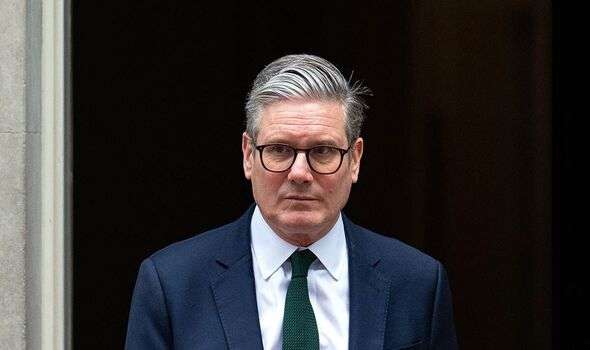
    Sir Keir Starmer is under mounting pressure to clarify the authorization process behind a Downing Street security pass issued to Labour donor Waheed Alli. The controversy comes as questions swirl around the government’s integrity amid growing allegations of cronyism.

    The Conservative Party has called on Cabinet Secretary Simon Case to reveal who approved the security pass, which granted Lord Alli unrestricted access to Number 10, despite his lack of a formal role within the government. 

    Lord Alli, a television executive and longtime Labour supporter, has contributed more than £500,000 to the party over the past two decades.

    Typically, access to such a secure location is reserved for civil servants, special advisers, and those with direct governmental roles. 

    Shadow Paymaster General John Glen emphasized that security passes should be a “privilege” limited to individuals requiring regular access for their official duties. “Those requiring occasional access can use the normal visitor system,” Glen stated.

    Privilege Limited To Essential Personnel

    In a letter addressed to Mr. Case, Glen expressed concern over the pass granted to Lord Alli, pointing out the potential implications of his donations. “All governments should uphold the very highest standards,” Glen wrote. “As such, I ask that you urgently clarify: Who authorized the pass for Lord Alli? Was it the Prime Minister or his chief of staff, Sue Gray?”

    Glen also questioned whether other donors had received similar security passes or if any temporary passes had been issued without formal employment ties.

    Cabinet Minister Pat McFadden responded to the mounting criticism by confirming that Lord Alli no longer has access to Downing Street. 

    “I don’t think he’s got a pass anymore,” McFadden said, explaining that the pass might have been necessary for a brief period following the election. He was quick to add that Alli was not involved in government or policy-making decisions during this time.

    Pat McFadden, the cabinet office minister, said Kier Starmer and Rachel Reeves could make further unpopular in the months to come.

    The controversy surrounding Lord Alli’s pass adds fuel to ongoing criticisms over recent appointments within the Labour Party. The appointment of individuals linked to the party or its supportive think tanks into civil service roles has prompted further questions about the political impartiality of these positions.

    Last month, Ian Corfield, who has donated £20,000 to Labour politicians over the past decade, was appointed as a temporary director of investment at the Treasury after serving as the party’s senior business adviser. Corfield reportedly resigned from his official role to become an unpaid adviser to the Chancellor instead.

    Similarly, eyebrows were raised over the appointment of Emily Middleton, a businesswoman whose firm donated more than £65,000 to Labour, who was made a director general in the Department for Science and Technology. 

    Furthermore, Jess Sargeant, a former staffer at a Labour-aligned think tank, was appointed deputy director in the government’s Propriety and Constitution Group (PCG), a department tasked with maintaining ethical standards across Whitehall. 

    Sargeant’s role, according to government sources, is focused primarily on House of Lords reform.

    The Cabinet Office has been approached for further comments on these appointments, but a government spokesperson has reiterated their stance, stating, “We don’t comment on individual appointments and staffing.”

    As such, the scrutiny over Lord Alli’s pass and other Labour-linked appointments raises significant concerns about transparency and the influence of political donations on government access and decision-making.

  • Ghana’s Political Elites Profit at the Expense of the Vulnerable

    Ghana’s Political Elites Profit at the Expense of the Vulnerable

    There is a growing public sentiment against what several Ghanaians describe as the institutionalization of nepotism and cronyism over meritocracy by the political elite in Ghana.

    This resentment has been heightened following a report that reveal and uncovers instances where state scholarships designated for the poor and needy but brilliant students were allegedly awarded to the relatives of very successful politicians in the country.

    According to the report, notable political figures including relatives belonging to leading members of the ruling New Patriotic Party as well as relatives of some key public officers were given state scholarships under questionable circumstances.

    While some groups of people have called for legal reforms to overhaul the country’s existing scholarship regime to prevent instances where such scholarships become susceptible to political interference, others have expressed the need for political leaders to demonstrate ethical leadership.

    For most Ghanaians, who have expressed disappointment over the existing regime, their major concern is that in today’s Ghana, someone gets access to benefit from public resources or any state schemes particularly based on their connection to the political class or based on the amount of money one has in his or her pocket.

    Frustration Mounts over Ghana Scholarship Secretariat’s Alleged Nepotism  

    A graduate from the University of Education, Winneba, sharing his personal experience on scholarship in the country, raised serious concerns over the opaque and seemingly biased operations of the Ghana Scholarship Secretariat.

    According to him, despite fulfilling the outlined criteria of being a “brilliant but needy” student, he was on two occasions denied government scholarships for the 2019/2020 and 2020/2021 academic years.

    “Yet in all two instances, I was denied the scholarship; as a matter of fact in the 2019 application, I received an awardee letter from my DA however the amount was never credited to my school account. I made several follow-ups including meeting the DCE at the time who suggested that perhaps the non-payment of my scholarship may have occasioned by an error in the paperwork. 

    “By all means, I am not saying I was the most preferred candidate for the scholarship however if the basic criteria is what is generally referred to as a brilliant but needy student, then I’m pretty sure I did deserve it. At both times of application, I had a CGPA of more than 3.5 /4.00  and as a son of a rural peasant farmer,  I clearly met the criteria of needy”

    A Graduate of University of Education, Winneba

    Expressing dissatisfaction with the current state of affairs of the country’s existing scholarship schemes, the graduate emphasized the urgent need for reforms within the scholarship framework.

    He particularly called for the depoliticization of the scholarship process and urged political leaders to prioritize ethical leadership and social justice.

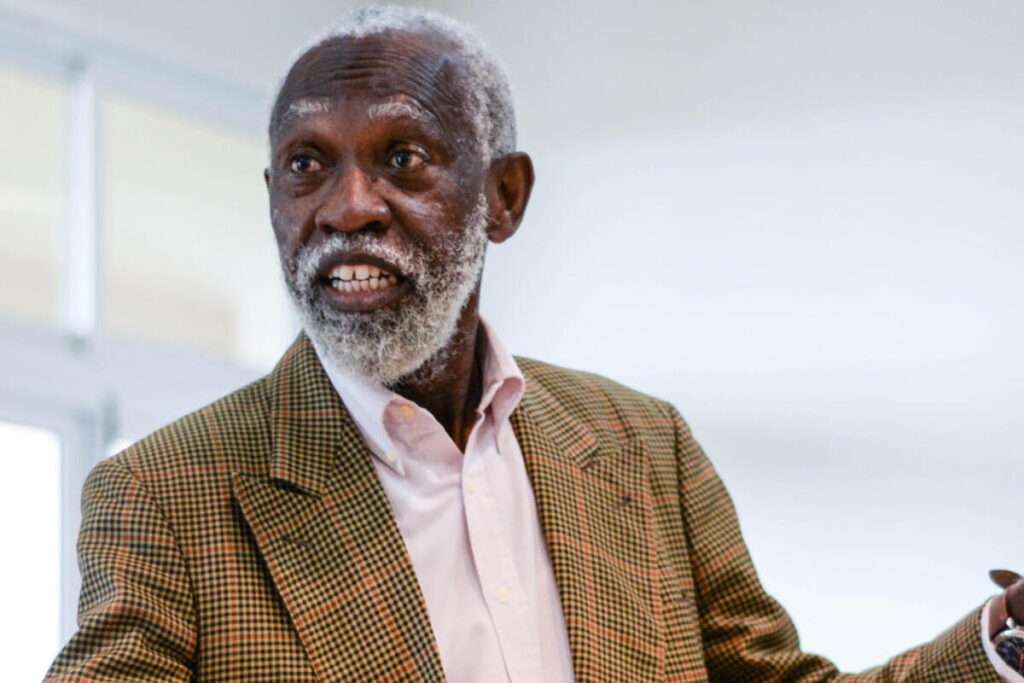
    Moreover, a former Rector of the Ghana Institute of Management and Public Administration (GIMPA), Professor Stephen Adei, reacting to the worrying situation called for the need for political leaders to enhance transparency in the scholarship allocation process.

    The renowned academic and seasoned good governance advocate further stressed the importance of making all scholarship applications and recipients public.

    He called on the media to play a pivotal role in holding the government accountable to this transparency standard which seems to be missing in the country’s governance system.

    Professor Adei insisted on the importance of continued vigilance from both the media and the public in holding the government accountable, underscoring that this issue is fundamentally about social justice.

    “For example, you won’t believe that my son went to KNUST, and my friend was the vice-chancellor. I was then rector of GIMPA, but I said I would like to pay for it, and I paid for my son, and he was even entitled to a government scholarship. So, it is a moral issue.

    “I am wondering whether, on a moral issue, you can punish or take the people to court. I think that when the list is published, there are some who, if they knew the list was published, would not go for it in the future”

    Professor Stephen Adei

    Professor Adei quickly added that while it may not be illegal for children of affluent and influential individuals to obtain scholarships earmarked for the financially disadvantaged, it is undeniably unethical to engage in actions such as the ones exposed by the recent report.

    He also posited that while there might be limited legal recourse in such cases, there is an urgent need for political and public leaders in the country to acknowledge the moral implications of such actions.  

    Professor Stephen Adei

    The magnitude of the situation as earlier intimated by the graduate of the University of Education Winneba and Professor Stephen Adei cannot be overstated as it not only deprives deserving students of opportunities for advancement but also perpetuates a vicious cycle of inequality and disenchantment among the populace.

    The poignant testimony of the former particularly serves as a stark reminder of the importance of ensuring equity and fairness in distributing educational opportunities to Ghana’s most vulnerable populations.

    While it may be tempting to dismiss these incidents as mere lapses in judgment, they speak to a larger systemic problem that requires urgent attention.

    The moral imperative to prioritize the needs of the vulnerable over the interests of the elite cannot be understated.

    As Professor Adei aptly noted, the issue at hand is fundamentally about social justice and ensuring equal opportunities for all.

    It is without doubt that the blatant disregard for meritocracy in favour of cronyism undermines the very fabric of any democratic and just society as it erodes trust in state institutions, thereby fostering a culture of entitlement among the privileged few.

    Upholding the principles of integrity and ethical leadership is not just a matter of legality but a moral imperative.

    Regardless of the structural reforms put in place, it ultimately falls upon the shoulders of those in power to lead by example and restore faith in the promise of a brighter, more equitable future for all Ghanaians.

    It is only through collective action and unwavering commitment to the common good that can help Ghana hope to overcome the scourge of corruption and pave the way for a more just and prosperous society.