In an age where social media and instant fame dominate the landscape of artistic expression, many Ghanaian artists find themselves at a crossroads.
The rapid rise of platforms like Instagram and TikTok has created a culture where visibility often trumps skill, leading to a concerning trend: prioritizing fame and financial gain over the integrity of artistic craft.
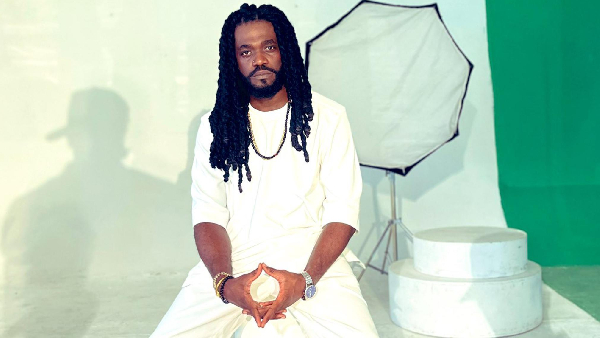
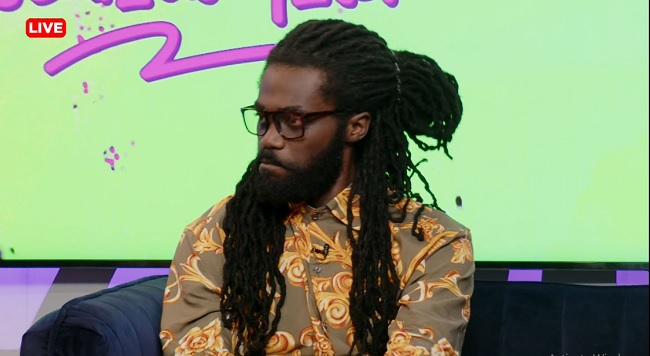
Ghanaian musician, Emmanuel Kwadwo Oware, popularly known as Ayisi, has advised fellow artists to prioritise honing their craft over chasing fame or money.
The ‘Grind’ hutmaker emphasized the importance of focusing on artistic growth rather than being driven solely by the desire to produce hit songs or gain quick popularity.
“Artists should just focus on making and getting better at what they do; that’s a better goal for everybody. Instead of making a banger, putting some money in your pocket, and getting famous.”
Ayisi
Ayisi
The modern entertainment industry is rife with stories of artists who succeed overnight, often through viral hits or sensational performances.
In Ghana, the music scene has seen a surge of artists who, driven by the desire for fame and financial reward, sometimes prioritize catchy hooks and trendy aesthetics over meaningful content and craftsmanship.
While this approach leads to short-term success, it often sacrifices artistic integrity and the potential for long-lasting impact. For many aspiring artists, the dream of fame overshadows the foundational work necessary to create art that resonates deeply with audiences.
Art is a reflection of culture, identity, and personal expression. For Ghanaian artists, focusing on the craft means delving into the rich traditions, stories, and experiences that shape their work.
By honing their skills—whether in music, visual arts, or performance—artists create pieces that not only entertain but also educate and inspire.
Craftsmanship involves dedication, practice, and a willingness to learn from both successes and failures. It is this commitment to excellence that will ultimately elevate an artist’s work and ensure its relevance in a rapidly changing world.
Ghanaian Artists’ Promoting Cultural Enrichment, Legacy
Ayisi
When artists prioritize their craft, they contribute to the cultural tapestry of Ghana. Each piece of art carries the potential to tell a story, provoke thought, and foster connections among individuals.
The rich heritage of Ghanaian art—ranging from traditional drumming and dance to contemporary visual arts—offers a wealth of inspiration that can be mined for new creations.
By focusing on their craft, artists draw from this heritage, infusing their work with authenticity and depth that resonates with both local and global audiences. This not only enriches the cultural landscape but also helps preserve Ghanaian traditions for future generations.
Fame and fortune are often fleeting; trends change, and audiences’ tastes evolve. However, a solid foundation built on craftsmanship leads to a sustainable career in the arts.
Artists who invest time in refining their skills are more likely to cultivate a loyal following that appreciates the depth and quality of their work.
Moreover, a commitment to craft opens doors to collaborations, grants, and opportunities that are not solely based on social media popularity but rather on artistic merit and innovation.
While the pursuit of fame and financial success is a natural aspiration for many Ghanaian artists, it is crucial to remember that true artistry lies in the dedication to one’s craft.
By prioritizing skill development, cultural storytelling, and artistic integrity, Ghanaian artists create works that not only achieve acclaim but also contribute meaningfully to the cultural heritage of their nation.
As the art world evolves, fans must encourage artists to focus on their craft, ensuring that their legacies are built on a foundation of passion, skill, and authenticity.
In doing so, they will not only enrich their own lives but also inspire future generations of artists to follow in their footsteps.
Ghanaian actress, Auntie Bee has revealed that she has gained nothing from acting except being popular.
According to the hit TV series ‘Effiewura’ star, since her childhood, she loved to acting and working in film so much that she didn’t have to learn any trade or craft.
The actress disclosed the inconvenience of being unemployed in film because of pregnancy and its childrearing.
“I couldn’t even concentrate and have children for the same reason. I was totally in love with acting. I learned to do nothing else. I’ve now come to understand the proverb: ‘Nothing is permanent’.”
Auntie Bee
Auntie Bee noted her years and experience have taught her so much so that “if I were back to my younger years, I would learn to do 10 different things or get involved in so many things so it’d profit me.”
She said before film, they all started with [Key Soap] Concert Party, a comic theatre show which toured the country and appeared on TV.
She highlighted the Concert Party train “took us to many towns and villages” where it was common to stay and work for many days, adding this would make it difficult to save sometimes.
“Acting could take us to a place and while there, we would be hit by economic hardships. You’d come home with little or empty handed and find yourself depending on the little at home. The only pleasure for us and even those before us was the opportunity to travel about and work for a little to feed.
“When the industry became lucrative, we are not as popular as before to be booked. At first, theatre offered an abundance of work but not much money. And then came film. Even then, those who made money, and acquired properties, per my observation, were those who advanced swiftly through the favour of producers.”
Aunty Bee
“There are those who inherited family properties, came from well-to-do homes or were combining acting with other businesses, also,” she added.
Auntie Bee
Auntie Bee seemed to struggle to mention what she gained from acting when asked.
“It was even football that took me abroad. Often, for movies, I was sidelined for international opportunities even though my name was on the list,” she said.
“It’s only fame that I got out of acting. I am recognised wherever I go. Acting did not give me marriage. Acting gave me nothing except a little money to spend with my children. Nothing. Well, the car I use up to today is what Rev. Obofour or Nii Adotey Gyata gave me for my acting when I went to visit him.”
Auntie Bee
Auntie Bee expressed her openness to welcoming acts of kindness towards her, not limited to, but such as: Land to build a convenience store on or a house for her contribution and service to the country through acting.
Auntie Bee has acted on stage and on screen for close to 40 years.
Actress Warns Against Political Monopoly
Auntie Bee
Auntie Bee noted how “tough and expensive” life has become lately.
She bemoaned how the nation, “given where we are coming from,” could not move forward to another level, noting, however, “were it not for God, who stands behind us, we would have perhaps retrogressed”.
“It’s so bad those of us who usually don’t talk are talking and that should tell you something. It’s tough!” the Effiewura star exclaimed.
Reacting to if Ghana should, therefore, carry on at the same pace or seek a change, the comic answered by noting how “successive chieftaincy stools are”.
Eulogizing the late Auntie Muni, whose waakye was celebrity, she stated her (Auntie Muni’s) food was nice.
“And so many people came from far and wide to eat. If it was not nice, people would have stopped eating it. If food is not good, you don’t keep going for it. In fact, the moment you notice it’s not tasty, you throw it into the bin.”
Auntie Bee
Moving from the proverbial to plain language, she categorically said: “Let’s seek [political] change and see how that will help our lives. Let’s give another leader a chance to also do his part.”
Auntie Bee cautioned that if there is no change in leadership, it’d be like a clan monopolising the chieftaincy even when they are terrible at managing affairs.
The actress further noted that there might be someone who could do better but has been sidelined for family interests.
Calling to mind biblical wisdom, the Key Soap Concert party star added: “It’s when we test all the spirits that we find out which one is good.”
The ruling New Patriotic Party (NPP) led by Vice President Mahamudu Bawumia seeks to maintain power after two terms or eight years of President Nana Akufo-Addo at the helm.
The campaign is called Breaking the Eight. Former President John Mahama is the main challenger, on the ticket of the National Democratic Congress (NDC).
Learn How to Embrace Failure and Make Your Startup Thrive
In the start-up world we often hear phrases like ‘fail fast,’ ‘celebrate failure’ and that failing can be the best thing that ever happened. But let’s be honest: failure sucks.
At the very moment “the failure” hits you, often the last thing you’re thinking about are the positive takeaways, let alone documenting the failure – your heart is pumping faster, your face and ears getting hotter, your legs going so weak you momentarily question if they can even support your weight.
Failure can be a wrenching feeling. Thoughts and memories of everything you have risked on this venture, and all the promises you have made on the hope of its success come flooding through your mind, bringing with them intense feelings of pain, hurt, loss, anger, vengefulness, embarrassment…anything but logic or rationality.
However, time does heal, and reflection will heighten your perspective. That’s not to say the pain ever fully goes away, but that the value of the lessons learned because of that pain increasingly outweighs that initial emotion over time. This value becomes apparent in the new found clarity and focus – plus a touch of the confidence that experience brings – with which you take on another approach or venture in the future.
While the initial high of success and winning may be euphoric, there is little long-term learning that comes from it. The emotional reaction to a loss, however, with perspective and hindsight, are far more instructive. You want to understand why you failed, and successful entrepreneurs will doggedly delve as deeply as it takes to understand “why” to ensure their next steps add way beyond the value of a win.
“If, one day, you look in the mirror and see only success, know that you have in fact learned nothing, any humility has evaporated, and greater failure is on the way.”
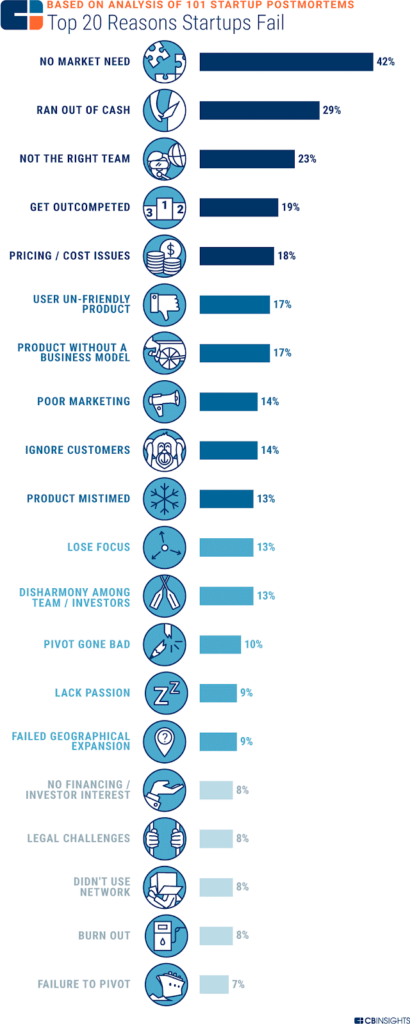
A lot has been written on the topic of failure, and several studies (e.g., CBI Insights) have pinpointed the top three root causes of startup failure being product-market-fit, running out of cash and disharmony in the team.
When we look at ‘failure’ from a distance, it is easy to romanticise and sugarcoat it with inspiring quotes about the struggles entrepreneurs and scientists, such as Walt Disney or Thomas Edison, who had to go through several failures before reaching success. But what does failure actually feel like for entrepreneurs, especially in an African context? How did they manage it, and how did they bounce back?
To look at this with an African lens, FI Ghana held a virtual event with seasoned and serial entrepreneurs who have experienced successes and failures firsthand, with ventures spanning Ghana, Kenya, USA, UK, Nigeria and Côte d’Ivoire We dived deep into failure as a potential fast track for finding purpose and success while providing some practical advice on how to manage failure, especially when it comes to losing people’s trust and money.
Accept failure as part of the entrepreneurial journey
FI Ghana Mentors and panelists invited us to challenge the way in which we think about failure. It is not something we can control, but is part of the process of becoming a successful entrepreneur, not a deviation from what you’re supposed to be doing.
“By default, you’re meant to fail to get where you need to be and, by default, it allows you to reprogram your mindset and get ready for it. Don’t shy away or avoid it but get through that as quickly as possible.”
To build resilience in the face of failure, an important learning and mindset shift required is the decoupling of your own personal success from the success of your startup. That means the failure of a startup or project does not equate to personal failure, but might, in fact, be propelling you to your next personal growth phase. The “Founder First” principle, ie “Great companies start with great people, not great ideas,” is what makes a great entrepreneur, not just your successes but also your expertise built over years of trial, error, success and many failures.
This is the reason why Silicon Valley entrepreneurs and venture capitalists are increasingly talking about ‘celebrating failure’, because it is inherently linked with expertise. This is true in business as much as in any other discipline. Like physicist Niels Bohr once said, while studying the structure of atoms: “An expert is a man who has made all the mistakes which can be made, in a narrow field.”
Failure is part of any journey, and is arguably what makes it worthwhile, exciting and interesting, just like a Titanic movie without an iceberg would be as boring as watching a cruise ship cross the Atlantic (Sam). A mindset shift around failure is an essential starting point, but how can we prepare ourselves for the time when we hit that iceberg and the cruise ship starts to sink?
Marco Rovagnati, Innovation Consultant and Founder of Poa Poa Soaps talked about the importance of setting up guardrails and intentionally designing functions in your organisation that allow you to experiment with failure, shifting the narrative from failure to prototyping. “After launching several businesses and at least half a dozen pivots,” he said, “I think about failure in two buckets: “avoid it at all cost” and “actively embrace it”.”
The bucket of things to “avoid at all cost” are those that have been tried and tested, and that you can teach yourself online (which can be immensely time-consuming) or with fast-track, sprint programmes like Founder Institute. admin, operations, customer support, digital marketing – those are “basic hygiene” factors in business that are (relatively) easy to get right because they deal with the tangible management of the present. How to go about this is down to you, your team, and company culture.
In the second bucket are all the future-focused activities, such as new product development, prototyping and testing new features, finding your next expansion opportunity or underserved niche, launching Minimal Viable Products (MVPs) and finding product market fit. This is, by nature, a process of trial and error and it is essential that the ‘error’ or ‘failure’ part of the process is not interpreted as ‘defeat’. Make sure you have the right language and frameworks in your organisation to track and manage those processes and make sure you extract all the lessons from each test that you run. See what I did here? I’m shifting the narrative from ‘failing’ to ‘testing’. Words matter.
Josiah Kwesi Eyison, CEO and Co-Founder of the iSpace Foundation encapsulated this concept well when he said:
“Failure is not static, it’s an opportunity to learn, build and map out the way forward.
It’s a set of data that you collect as you go on.”
African culture can often be less experimental and unforgiving, but that shouldn’t make you operate from a place of fear.
Nana Prempeh from GrowForMe reminded us that yes, mindset matters, but failing in Africa often hits you even harder. Resources (cash, support, trusted partners) are scarce, and Ghanaian culture, for example, tends to be majorly conservative and less open to taking risks. That is one of the reasons why you’d usually find multiple chain stores selling the same products, barely a few feet away from each other. “If it worked for Kofi, it would work for me,” goes the logic behind this approach. Startups, however, require innovation, dogged determination, brutally honest feedback, risk-taking and enough faith to put it all on the line, as well as a systemic shift from being a trader (lower risk traditional business models) to being an entrepreneur (new frontier businesses). FI ‘keeps it real, all the time” Nana went on to say.
It’s no secret that entrepreneurship is not for everyone, and that opportunities are not distributed equally across the world, but it is imperative that we don’t allow ourselves to operate from a place of fear, especially when looking at the extremal obstacles linked to our operating environment. For example, African startups are less served by outsourcing infrastructure, and tend to have a culture less open and tolerant of failure, especially when capital from friends and family is involved.
Fear of failing kills more businesses than failure itself
Abandon fear and embrace knowledge, read the theory and case studies around your industry, reach out to experts and mentors and critically assess how everything you learn applies to your specific circumstance. Critical thinking is probably one of the most underrated skills of an entrepreneur. This is the ability to read an article, attend an event or have a conversation, yet remain aware that what you hear or read is the experience of an individual at a specific point in time – which may or may not apply to your circumstance – and being selective about what you take on and apply.
The reality on the continent is different. You should read the mainstream narrative (e.g. Techcrunch, Entrepreneur, Forbes, etc.) but take it with a pinch of salt. You have to analyse it in context. This is not a quick fix but if you’re driven by passion, you will have (or find) the time. Read a lot and study the environment. Don’t go in with fear but don’t go in blind as well. This is learned from experience, which is again a reminder and a great way to sum things up, that “If your failure is not a lesson, it’s indeed a failure.” (Ogwo David Emenike, The Fortune in Failing: Decoding the Message of Failure).
The global pandemic has clearly shown that pain happens when you’re not expecting it, whether you deserve it or not, whether you’re a kind or unfriendly person. We can overcome things, we can learn, we can be resilient, and ultimately we can live to fight another day.
Maxwell Ampong is an Agro-Commodities Trader and the CEO of Maxwell Investments Group. He is also the Official Business Advisor to Ghana’s General Agricultural Workers Union (GAWU) of TUC Ghana, the largest agricultural trade union in Ghana. He writes about trending and relevant economic topics, and general perspective pieces.