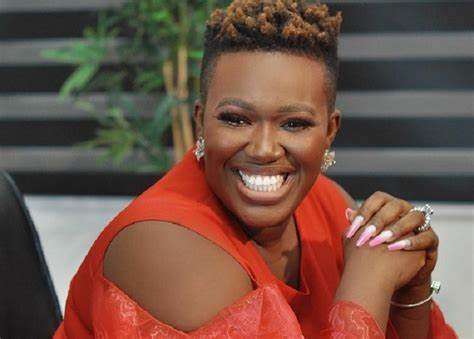
Tag: Foster Romanus

  • Lekzy Decomic Urges Promoters To Pay Right

    Lekzy Decomic Urges Promoters To Pay Right

    Ghana’s comedy industry has witnessed remarkable growth in recent years, with comedians now headlining their own shows and filling major auditoriums in Accra.

    Venues such as the National Theatre, UPSA Auditorium, and Bukom Arena have consistently sold out— a far cry from the days when comedians struggled to secure stage time at events. Today, patrons happily pay to watch stand-up comedy.

    Yet, behind the laughter lies a pressing concern: fair compensation. Popular comedian Lekzy Decomic believes comedians have worked tirelessly to elevate the craft and deserve to be rewarded accordingly by event organisers.

    He advocated better payment for comedians, suggesting that their hard work and popularity warrant it.

    “The industry should see stand-up comedy as a big force, and promoters must put respect on the craft and pay for its worth. I know event organisers who pay foreign comedians higher than Ghanaian ones, even when we consistently perform better.”

    Lekzy Decomic

    Lekzy further urged the government to recognise comedy as a powerful cultural tool. “We have proven to be a force to be reckoned with in the entertainment industry, and it’s about time the government also sees comedy as an art that can promote culture and tourism,” she said.

    Even as they fight for better pay, comedians also contend with public criticism when their jokes step on sensitive toes.

    Lekzy Decomic Urges Promoters To Pay Right
    Lekzy Decomic

    Last December, comedian OB Amponsah faced backlash from members of the New Patriotic Party (NPP) for a distasteful joke about the party’s vice-presidential candidate, Dr Matthew Opoku Prempeh. Lekzy himself has also been targeted online, sometimes unfairly, he argued.

    “Sometimes, jokes can be polarising, and not everyone will find them funny. But people need to take jokes lightly and not blow them out of proportion. When people overreact, it only amplifies the joke unnecessarily.”

    Lekzy Decomic

    He added that constructive criticism was welcome, but comedians should not be condemned for one bad day.

    “As a comedian, I understand my jokes may have a ‘victim’ or a character who might not be too pleased with how the joke lands. Constructive criticism is welcome, but it’s unfair to judge a comedian based on one mistake or one bad day. We all have ups and downs. One mistake shouldn’t reduce a comedian’s entire career to nothing.”

    Lekzy Decomic

    To cope with backlash, the Takoradi Technical University graduate adopts a mix of patience and accountability.

     “In Ghana, issues often blow over within three days. If I’ve genuinely offended someone, I’ll apologise. But if it’s just a matter of oversensitivity, I let it fade away.”

    Lekzy Decomic

    Since 2021, Lekzy Decomic has been hosting his own comedy shows, steadily carving a niche in the industry. He thrilled fans with Too Cute to Be Mute 1K in 2021, followed by Too Cute to Be Mute Amplified in 2022. In 2023, he staged CanPAIN MESSage, and in 2024, The New False.

    Now, he is gearing up for his next show, The Funny Boy In It (FBI), scheduled for September 27. “It’s always a different experience at my shows because I don’t just sell jokes; I sell an experience people can’t find anywhere else. That’s the motive for this show,” he emphasised.

    Lekzy DeComic, Foster Romanus, Visit Sam George

    Lekzy DeComic, Foster Romanus, Visit Sam George
    Lekzy DeComic, Foster Romanus, and Sam George

    Two of Ghana’s top comedians, Lekzy DeComic and Foster Romanus, paid a visit to the Minister for Communication, Digital Technology, and Innovations, Sam Nartey George (MP).

    The engagement highlighted the role of the arts in promoting cultural identity and national development.

    At the meeting, Lekzy and Foster shared their perspectives on how comedy and performance can be used to spark dialogue on social and cultural issues.

    Also in attendance was Albert Bondah, a dedicated publicist and culture promoter.

    Lekzy DeComic, Foster Romanus, Visit Sam George
    Albert Bondah and Sam George

    In his speech, Sam George highlighted the importance of prioritising local languages in education, particularly in the Greater Accra Region. 

    He noted that cultural identity is best strengthened through practical measures such as language teaching in schools rather than symbolic gestures.

    The creative personalities expressed appreciation for the opportunity to engage with the Minister and extended an invitation to their upcoming comedy special, FBI, slated for 27th September 2025.

    The Minister pledged his support and encouraged them to continue using their platforms to inspire and entertain while promoting national values.

  • Comedy, A Challenging Craft

    Comedy, A Challenging Craft

    Comedy can indeed be a demanding craft. It requires a unique combination of creativity, timing, delivery, and the ability to connect with an audience.

    Crafting jokes and humorous material that resonate with people is no easy task.

    Comedians often spend years honing their skills, learning from experience, and experimenting with different techniques to find what works best for them.

    It’s a constant process of trial and error, and even seasoned comedians face the possibility of their jokes falling flat.

    However, the reward of making people laugh and bringing joy to others makes all the hard work worth it.

    Popular Nigerian comedian and actress, Real Warri Pikin thinks comedy is the world’s hardest craft.

    According to her, the craft is not edited but always live, hence when a comedian messes up then it’s a mess.

    “Comedy is the hardest craft, quote me anywhere. Comedy is live, you don’t edit it, if you mess up you mess up live. It’s the hardest craft, quote me anywhere. I used to do all of them, hosting, I used to sing, dance, I do comedy too.” 

    Real Warri Pikin

    Comedy has historically been perceived as a male-dominated industry, with men often dominating the stage and screen. However, it is important to recognize that this perception is changing, and the comedy landscape is evolving to become more inclusive and diverse.

    In the past, societal expectations and stereotypes have contributed to the underrepresentation of women in comedy. Women’s voices and perspectives were often marginalized or ignored, and they faced numerous barriers when trying to break into the industry. This has created a perception that comedy is primarily a male domain.

    However, in recent years, there has been a significant shift. More and more women are entering the comedy scene, challenging stereotypes, and making their mark. Female comedians are gaining recognition for their unique perspectives, wit, and talent. Organizations and initiatives are also emerging to support and promote women in comedy.

    “Comedy again is a male-dominated industry, it’s not easy to be a woman, you have to be strong. If I hold the mic, I hold it like a penis. If you are a woman you are made to work twice as hard to prove yourself and it’s not fair.”

    Real Warri Pikin

    It is important to note that comedy should be inclusive and representative of all genders, backgrounds, and experiences. A diverse comedy industry not only benefits comedians but also provides a richer and more inclusive entertainment experience for audiences.

    As the industry continues to evolve, it is crucial to prioritize inclusivity and support artists from all backgrounds.

    Comedy Industry Needs Beyond Support

    Foster Romanus

    The comedy industry is an integral part of Ghanaian culture, providing entertainment and social commentary.

    The industry should actively promote diversity and inclusion, both on and off stage. Encouraging comedians from different backgrounds and perspectives will result in a wider range of comedic styles and content, making the industry more inclusive and relatable to a broader audience.

    Providing accessible mental health resources and support systems within the industry helps comedians cope with these challenges and maintain their well-being. Promoting a healthy work-life balance and creating safe spaces for comedians to discuss their experiences can make a significant difference.

    The industry should encourage creativity and originality, allowing comedians to take risks and explore new comedic territories. This leads to fresh and innovative content that keeps the industry dynamic and exciting.

    Ensuring fair compensation for their work, especially for gigs and performances, is essential. This is achieved through industry-wide standards, transparent payment practices, and fair contracts.

    Experienced comedians can guide and support emerging talents, sharing their knowledge and helping them navigate the industry. Encouraging collaboration between comedians of different levels fosters growth and creates a sense of community.

    Popular Ghanaian comedian, Foster Romanus stated that the comedy industry would greatly benefit from the establishment of more venues in the country.

    He suggested that more such structures would benefit not only comedians by increasing their audience base but also the country’s economic and cultural landscape.

    “We need venues, a lot of venues. Elsewhere, when a comedian is done with a special, he tours to other parts of the country because people must know him. But here, outside Accra, which has the National Theatre, you don’t really make much because you don’t have halls to put your shows. But if we have such venues outside Accra, you can tour the whole country and get the numbers.” 

    Foster Romanus

    By focusing on these areas and providing support, the comedy industry can create a more inclusive, supportive, and thriving environment for comedians to flourish.