Tag: GNI

  • UK NGOs Warn of Crisis Amid Budget Cuts

    UK NGOs Warn of Crisis Amid Budget Cuts

    UK aid spending is facing its most drastic reduction since 2007 unless immediate changes are implemented in the autumn budget, a coalition of over 100 NGOs warned on Wednesday. 

    According to these organizations, the aid budget for overseas assistance is expected to drop to just 0.36% of gross national income (GNI) in 2024, with significant portions being rerouted to fund asylum-seeker programs in the UK.

    The coalition’s statement reads: “If these plans are not urgently revised, the prime minister and his government will be withdrawing vital services and humanitarian support from millions of marginalized people globally and turning up empty-handed to global forums over the coming months.”

    This is the first major challenge to Labour on aid spending since the election. The group fears that the Treasury will fail to supplement the aid budget to account for the significant resources being absorbed by housing refugees in the UK, leaving fewer funds for overseas humanitarian work.

    Humanitarian Aid Diverted to Asylum Costs

    The UK’s official development assistance (ODA) budget allocated to supporting refugees in the UK has ballooned from £500m in 2019 to £4.3bn in 2023, largely due to the growing backlog of asylum cases. The £4.3bn — almost entirely overseen by the Home Office — represented 29% of the total ODA budget last year.

    This massive rise in refugee costs has reduced the amount of aid available for overseas projects, with housing expenses alone expected to consume approximately £3.8bn in the current 2024-25 fiscal year.

    Without a new cash injection, the ODA budget not spent on UK refugee support will fall to just 3.6% of GNI — its lowest proportion in 17 years.

    In response to previous crises, the Conservative government provided an extra £2.5bn over two years (2022-23 and 2023-24) to help absorb the Home Office’s escalating refugee expenses. However, this funding ceased in April, raising fears that the Treasury’s upcoming “tough choices budget” will not include similar relief.

    In a private letter addressed to Prime Minister Keir Starmer, NGO leaders warned that the UK risks showing up empty-handed to major global summits, including Cop29 and the upcoming UN General Assembly. 

    To maintain the UK’s international credibility, the letter argues that the government must, at minimum, maintain aid spending at its current 0.58% of GNI. This, according to the letter, would require an additional £2.2bn. The NGOs also stressed the importance of outlining a path to restoring aid levels to the target of 0.7% of GNI.

    The letter has been endorsed by several of the UK’s largest NGOs, including ActionAid UK, Oxfam GB, Care International UK, International Rescue Committee UK, and Save the Children UK.

    Widespread Political Support for Aid Increase

    The NGOs’ plea has gained significant political backing. Sarah Champion, chair of the select committee for international development, expressed concern over the current management of the UK’s aid budget. 

    “It is right that we support refugees and asylum seekers, but the reckless spending of the UK aid budget to pay for extortionate hotel bills for this vulnerable group in the UK not only mismanages taxpayer money but also deprives millions of marginalized people around the world of the vital humanitarian support they need to stay safe in their own countries.”

    Sarah Champion

    Champion added that the UK aid budget, traditionally aimed at alleviating global poverty, should not be used to prop up what she called a “broken asylum system” at home. She called for a government top-up to prevent further program cuts.

  • GDP per capita of the world’s poorest countries to contract by 2.6% in 2020

    GDP per capita of the world’s poorest countries to contract by 2.6% in 2020

    With global cases of the COVID-19 infection rate increasing in most developed economies in Europe, UK and the Americas, least developed countries (LDC’s) have so far remained the least scathed by the health consequences of the pandemic

    As at late November 2020, LDCs had suffered 17 COVID-19 deaths per million inhabitants, well below 138 deaths per million inhabitants reported in developing countries, and corresponding to just 3% of the 536 deaths per million people recorded in developed economies.

    This notwithstanding, the pandemic has on the other hand, wreaked a devastating effect on the economic progress of these countries, especially eroding some of the progress made towards sustainable development and possibly prolonging long-term damages.

    This has led to a contraction of 2.6 percent in 2020, being the worst performance in three decades, according to a report by UNCTAD.

    According to the Secretary-General of UNCTAD, Mukhisa Kituyi, “the least developed countries have deployed their limited means to counter the recession, but they find themselves the worst hit by a crisis for which they are not responsible, similar to their situation vis-à-vis climate change.”

    To him, this is an injustice which needs urgent redress, and for that matter, the international community needs to show its resolve to assist the weakest members, he added.

    Currently, there are 47 countries that are designated by the United Nations as least developing countries (LDCs). 33 of which are found in Africa with the inclusion of Haiti, 8 are in Asia and 7 are Islands.

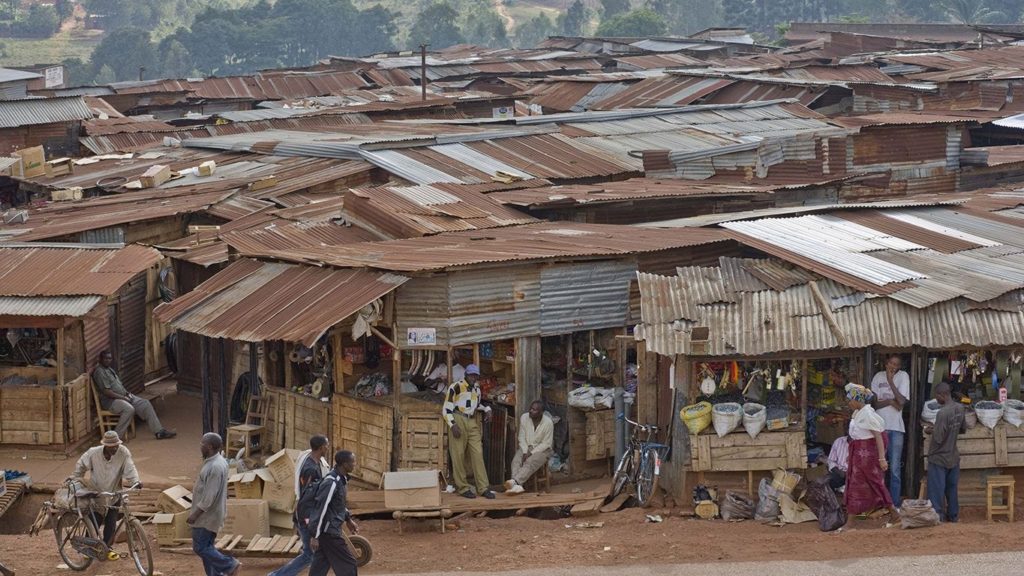
    A slum in Malawi

    The new classification of countries was reached after a comprehensive review was undertaken by the Committee for Development Policy between 2017 and 2020. The committee established three criteria; Per capita income criterion; human assets index and the economic and environmental vulnerability index.          

    First, the percapita income criterion is based on a three-year average estimate of GNI percapita, with a lower bound of $1,018 for identifying countries to be listed as LDCs and an upper bound of $1,222 for consideration of countries to be graduated.

    Second, the human assets index is based on health and education indices. The health sub-index contains three indicators including under-five mortality rate; maternal mortality ratio; and the prevalence of stunting.

    Whereas that of education includes another three indicators; gross secondary school enrolment ratio; adult literacy rate; gender parity index for gross secondary school enrolment.

    Third, the economic and environmental vulnerability index also involved an economic vulnerability index and an environmental vulnerability index. The economic vulnerability entails the share of agriculture, hunting, forest and fishing in GDP; remoteness and landlockedness; merchandise export concentration; and instability of goods and services.

    On the environmental vulnerability side, the indicators include; share of population in low level coastal zones; share of the population living in drylands; instability of agricultural production; and victims of disaster.

    According to the report, 43 out of the 47 LDCs are likely to experience a fall in their average income. From already high prevalence of extreme poverty in the LDCs, current projections are that extreme poverty is set to expand by 32 million in 2020, to reach 377 million people.

    Moreover, poverty rate is expected to rise from 32.5 percent to as high as 35.7 percent in 2020, due to the COVID-19 induced economic crisis. Again, although LDCs account for just 14 percent of the world’s population, they comprise of more than 50 percent of the world’s extremely poor (i.e. those living on less than $1.9 per day). While, their economies account for just 1.3 percent of the world total.

    On the basis of the criteria, the report highlights that LDCs are the world’s most vulnerable group of countries, as they are 27% more vulnerable than other (non-LDC) developing countries.

    Considering the above, the time to act is now in order to avoid further deepening the woes of these very poor countries. The Secretary-General of UNCTAD says that, “in order to treat the pre-existing conditions that have left them disproportionately vulnerable to the effects of the global pandemic, the least developed countries deserve a plan of action.”

    “A plan that is focused on developing productive capacities for their successful structural transformation. This is the only way to ensure sustainable development and overcome the long-term development challenges of the least developed countries.”

    READ ALSO: COVID-19 to worsen poverty in Least Developed Countries