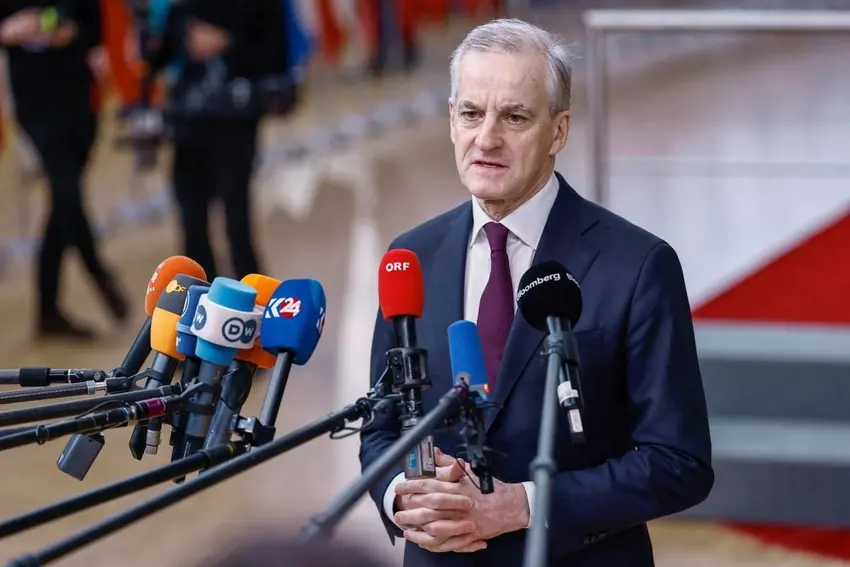
Tag: Jonas Gahr Støre

  • Stoltenberg Returns To Politics As Norway’s Finance Minister

    Stoltenberg Returns To Politics As Norway’s Finance Minister

    Former NATO Secretary-General, Jens Stoltenberg has returned to politics as he has accepted the post of Norway’s Finance Minister.

    Norwegian media reported that he has taken an indefinite leave of absence from his other position as chair of the Munich Security Conference to take the new role.

    Stoltenberg was previously Prime Minister of Norway in 2000-2001 and 2005-2013.

    Stoltenberg led NATO from 2014, until he handed over to current Secretary-General Mark Rutte at the beginning of October, 2024.

    His term at NATO was repeatedly extended to keep a steady hand at the helm after Russian launched its full-scale invasion of Ukraine in 2022, thwarting plans for Stoltenberg to take over as head of Norway’s central bank.

    Stoltenberg’s news post came as part of a cabinet reshuffle after last week’s collapse of the Labour Party’s coalition with the Eurosceptic Centre Party.

    Norway’s governing coalition split last week with the junior partner, the Center Party, announcing its departure, in a dispute over European Union energy market regulations.

    That left current Prime Minister Jonas Gahr Støre, the leader of Stoltenberg’s center-left Labor Party, with several Cabinet posts to fill, among them that of outgoing Finance Minister Trygve Slagsvold Vedum, the leader of the Center Party.

    According to Norwegian broadcaster NRK, Gahr Støre said that Stoltenberg has done most things in Norwegian and international politics. “And for me, he is also a good friend,” he added.

    In a statement released by the Munich Security Conference in Germany, which Stoltenberg was due to take over as Chairman after its annual meeting later this month, Stoltenberg said that he was “deeply honored to have been asked to help my country at this critical stage.”

    “Having carefully considered the current challenges we face, I have decided to accept Prime Minister Støre’s request to serve as his Minister of Finance.

    “I will return to the Munich Security Conference and to my other responsibilities when my tenure is over. I am grateful for the decision to temporarily release me from my duties while I serve my country once again. I will remain engaged with the MSC and its many activities as much as my new office allows in the meantime.”

    Jens Stoltenberg

    Stoltenberg previously served as Norwegian Finance Minister from 1996 to 1997.

    Stoltenberg’s Competence Hailed
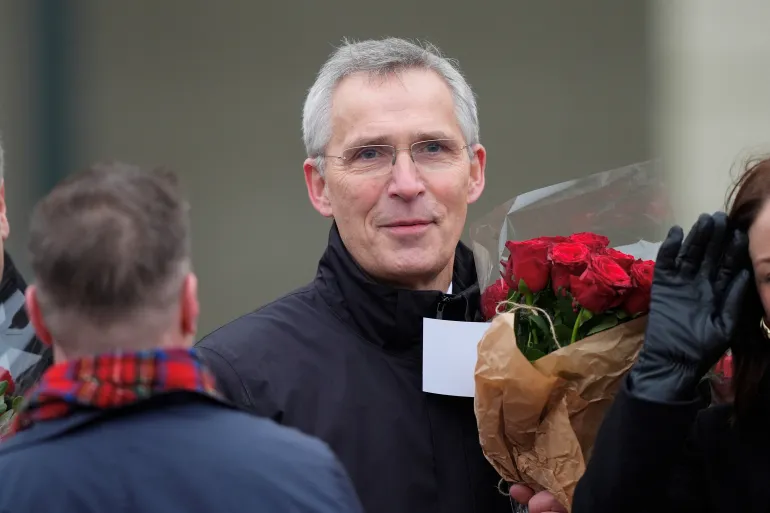
    Jens Stoltenberg, Norway’s new finance minister
    Jens Stoltenberg, Norway’s new finance minister, looks on at the Palace Square in Oslo, Norway on February 4, 2025.

    The leaders of the country’s two main right-wing parties, Sylvi Listhaug of the Progress Party and Erna Solberg of the Conservative Party, both praised Stoltenberg’s competence and criticised Labour’s economic policies.

    “It’s nice to welcome Jens Stoltenberg back to Norwegian politics. After three and a half years, Norway finally gets a competent Finance Minister, but unfortunately, the policy remains the same.”

    Sylvi Listhaug

    Meanwhile, Prime Minister Jonas Gahr Støre told reporters outside the Royal Palace after the new government met with King Harald, “This team is ready to lead Norway in difficult times.”

    “We will implement policies that mean something to people on a daily basis and (we) are aware of the instability in the world that affects Norway as a small country.”

    Jonas Gahr Støre

    Norway, which is not a member of the European Union (EU) and is home to 5.5 million people, fears that a trade war could damage its economy if Trump imposes tariffs on EU goods.

    Norway mainly exports oil, gas and fish.

    Appointing the widely popular and well-respected Stoltenberg could give the struggling Labour government a boost in opinion polls ahead of September’s parliamentary elections.

    Norway is due to hold a parliamentary election on September 8, 2025.

    The Labor Party has been trailing in recent polls.

  • Norway Plans To Increase Defence Spending

    Norway Plans To Increase Defence Spending

    The Norwegian government has announced a plan to increase defense spending by 600 billion kroner ($56 billion) over the next 12 years to bolster its defence against Russia and other security challenges.

    “This plan represents a historic boost in defence spending and involves a significant strengthening of all branches of the armed forces,” Prime Minister of Norway, Jonas Gahr Støre told a press conference.

    “We need a defense that is fit for purpose in the emerging security environment,” Prime Minister Jonas Gahr Støre said.

    “As our security environment is deteriorating, we need to spend more on and pay more attention to defense and preparedness,” Gahr Støre said, adding that his two-party government wants to spend a total of 1.624 trillion kroner ($152 billion) between now and 2036.

    “A stronger defence system here will act as a deterrent to those who seek to threaten our security and our allies,” Støre said as he presented the government’s defence white paper.

    He stated that NATO-member Norway wants to, among other things, buy at least five new frigates and submarines, plus the Scandinavian nation’s first long-range air defense system, and expand the army from one to three brigades.

    The Norwegian Prime Minister revealed that due to its rainy-day sovereign wealth fund, the world’s largest with assets of 17 trillion crowns, Norway has access to the cash it needs to fund the increased defence spending without cutting down on hospitals or schools.

    Nonetheless, annual government spending from the wealth fund will remain restricted as before to 3% of the overall assets, the government said.

    Finance Minister of Norway, Trygve Slagsvold Vedum said that the increase would be made “without a cut in people’s public services” and the proposed spending would create jobs and investments in Norway.

    According to the Finance Minister, the planned annual defence spending in 2036 will, on a comparable, inflation adjusted basis, be around 83% higher than the current level.

    He said that the defence budget would rise from 91 billion kronor this year to 166 billion in 2036.

    It represents three percent of Norway’s gross domestic product (GDP), up from this year’s two percent, which is NATO’s minimum threshold.

    The coalition government that includes the social democratic Labor party and the left-leaning Center Party is expected to win support for the proposal in the 169-seat Storting assembly.

    No date for a vote was set.

    The main opposition, the Conservative Party, already sent out a positive signal and said that the white paper constitutes “a good basis for negotiations.”

    Norway recently announced plans to ramp up defence spending in 2024 to 2% of its gross domestic product, making it the latest NATO member nation to officially adopt a target set by the military alliance.

    Norway Not A Threat

    Moreover, Norway’s Prime Minister, Jonas Gahr Støre asserted that his country “is no threat to anyone, nor is NATO.”

    Nonetheless, he stressed that Norway must have the capability to defend itself if crisis and war occur.

    The war in Ukraine has significantly shifted Norway’s discussion on military spending, triggering a debate on how to guard against potential Russian aggression.

    The Nordic country shares a border with Russia in the Arctic but has never been at war with its neighbour.

    “Norway is a nation with considerable maritime interests,” the government said.

    It added, “Combined with our immediate proximity to Russia’s nuclear submarine force, maintaining situational awareness in the High North and in the North Atlantic is paramount.”

    “We must expect that Norway will live with a more dangerous and unpredictable Russia for many years,” the government said in a paper delivered to parliament on Friday.

    “The relationship with Russia will for a long time to come be demanding, and in many ways defining for Norwegian security and defence policy,” it added.

    Earlier this month, oil-rich Norway said it wants to increase the number of conscripted soldiers from the present 9,000 to 13,500 by 2036.