Tag: Judges

  • Democracy Has Not Failed Africa; Africa Has Abused Democracy – Prof. Aryeetey

    Democracy Has Not Failed Africa; Africa Has Abused Democracy – Prof. Aryeetey

    Emeritus professor of economics and former vice chancellor of the University of Ghana, Professor Ernest Aryeetey, has asserted the inaccuracy of the widely held view that democracy has failed African states. Instead, he argued that it is the Africans who have not used democracy in the right way.

    He admitted that democracy has not yielded the results as expected of it by Africans. However, he made the point that it is not democracy by itself that will produce the results so expected; rather, it is the human resource spearheading the democratic processes.

    “Democracy has not delivered what it should for Africa. That is true, but it has not failed Africa. Africa has not used democracy properly. Africa has abused democracy, not taken advantage of the opportunities that could come from democracy.”

    Professor Ernest Aryeetey, Emeritus Professor of Economics and Former Vice Chancellor of the University of Ghana

    Prof. Aryeetey cited the 1992 constitution of Ghana to emphasize his argument, noting that the many challenges Ghana is faced with, are not to be blamed on the constitution.

    He argued that the actual problem lies in the bosom of the human resource in charge of implementing and enforcing the dictates of the constitution.

    “So, if I think about the constitution of Ghana, the problem we have in Ghana is not the constitution. The problem is the people responsible for implementing or enforcing the constitution.

    “The problem is the new culture, a political culture that we created riding on the back of democracy or hiding behind democracy.”

    Professor Ernest Aryeetey, Emeritus Professor of Economics and Former Vice Chancellor of the University of Ghana

    Prof. Aryeetey noted that the constitution that supposedly should build independent institutions capable of checking and regulating executive power has now been turned into a constitution that empowers the executive president to the extent of undermining the powers of independent institutions.
    Professor Ernest Aryeetey, Emeritus Professor of Economics and Former Vice Chanselor of the University of Ghana

    He further stated that over the years the institutions that ought to regulate and place a limitation on the powers of political leadership have now been destroyed and made irrelevant.

    “We created, using the Constitution, a presidency that should theoretically be constrained in the exercise of its power by a judiciary, by a legislature, and so on.

    “We have watched over the years as politicians from both major parties destroy the institutions that are supposed to be keeping an eye on what they do. You know, we have destroyed the judiciary.”

    Professor Ernest Aryeetey, Emeritus Professor of Economics and Former Vice Chancellor of the University of Ghana

    He also underscored the point of political manipulation of the public service whereby politicians determine the actions of public servants.

    “We have destroyed the public service completely. Today, there is hardly a civil servant that can tell any politician, This is the right thing to do. Everybody is afraid. We have turned every civil servant into a politician.”

    Professor Ernest Aryeetey, Emeritus Professor of Economics and Former Vice Chancellor of the University of Ghana

    He made the point that everyone, including the parliamentarians, judges, and even university lecturers are often concerned about the political implications of their utterances.

    He argued that a situation has been created whereby everyone appears to render their stewardship to one person, the executive president.

    “We have allowed people to entrench themselves in positions where everybody is beholden to one person, where even judges are afraid of what the president’s office will say.”

    “I am not talking about the current situation, but it is something that we have allowed. Judges giving judgments in court are thinking about what the government will say.”

    Professor Ernest Aryeetey, Emeritus Professor of Economics and Former Vice Chancellor of the University of Ghana

    He emphasized that the president is in a position to lead a process of change whereby he brings his vision to bear with the aspirations of the country and directs his subordinates to carry out the said vision.
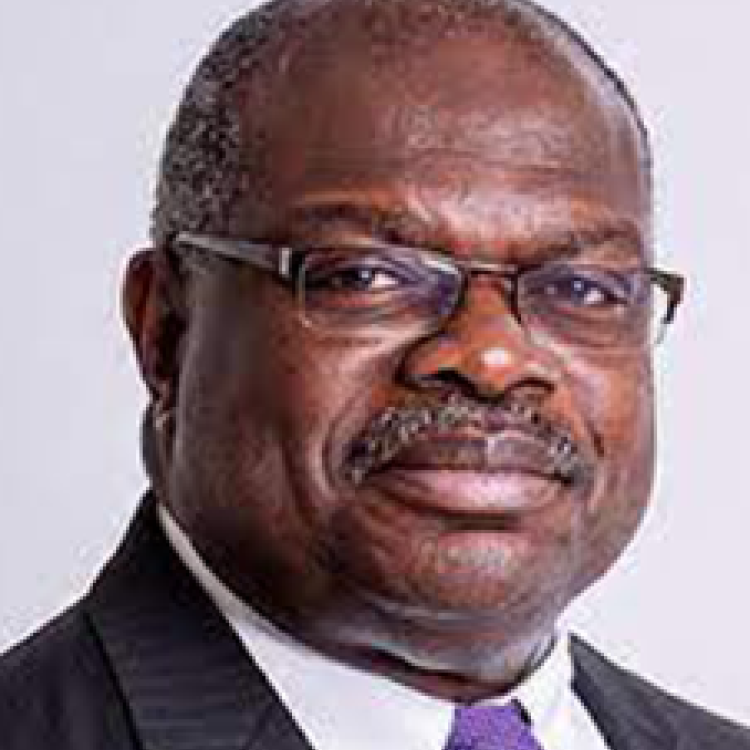
    Professor Ernest Aryeetey, Emeritus Professor of Economics and Former Vice Chanselor of the University of Ghana

    However, he noted that such has not always worked as a result of where the interest of leadership lies. That is “when our interests move from nation building to survival as a political party, when our interests move to how do we ensure that our party remains in power beyond eight years.”

    Prof. Aryeetey emphasized that a certain culture has been created whereby everyone’s focus is on how to hang on to power for as long as possible. He noted that this culture is not only a thing of the political class; it extends to the civil servants as well.

    “All our attention is on how to remain in power, whether we are ministers, whether we are parliamentarians, whether we are civil servants, even today, whether we are soldiers or policemen, it’s all about how we, in our group, remain in power. Because being in power brings us many, many benefits.”

    Professor Ernest Aryeetey, Emeritus Professor of Economics and Former Vice Chancellor of the University of Ghana

    For him, these issues are not the result of a proper implementation and enforcement of the constitution, so one cannot make the argument that democracy has failed Africa. Rather, Africans have decided to hide behind democracy to pursue personal gains.

  • Grounds for Petitioning a Judge’s Removal Explained

    Grounds for Petitioning a Judge’s Removal Explained

    The constitutional right of Ghanaians to question the fitness of judges in the superior courts has been clearly reaffirmed by former Member of Parliament and legal expert Hon. Inusah Fuseini, as conversations on judicial accountability and integrity rise over the suspension of Chief Justice Gertrude Torkornoo.

    With growing public interest in the checks on judicial power, Fuseini’s analysis of Article 146 of Ghana’s 1992 Constitution draws attention to the legal thresholds that must be satisfied before a Supreme Court justice or a judge of the superior court of judicature can be removed.

    “If the people are dissatisfied with the conduct, competence, or mental state of a judge, they can petition the Head of State for their removal”

    Hon. Inusah Fuseini, Former Member of Parliament and Legal Expert

    He emphasized that such an act must be based on clear constitutional grounds, not mere dissatisfaction.

    The foundation of the judiciary’s authority lies in the people, a point enshrined in Article 125. This principle, according to Fuseini, provides the constitutional grounding for citizens to seek the removal of judges whose “behavior, competence, or mental health raises concerns.”

    Hon. Inusah Fuseini, Former Member of Parliament and Legal Expert

    Legal Triggers

    Article 146 provides the formal procedure for removing a justice of the superior court of judicature or the chairman of a regional tribunal.

    Fuseini highlighted that any petition submitted under this provision must disclose specific allegations – namely “misbehavior, misconduct, incompetence, or infirmity of body or mind.”

    He explained that stated misconduct may involve acts such as political partisanship, which violates the expected neutrality of judges. “Is it that you saw the chief justice or justice of the superior court of judicature mounting a political platform to campaign for a political party?”

    Such conduct would constitute a clear breach of judicial ethics and neutrality. He continued: 

    “Or is it that you have evidence of the chief justice trying to procure judgment for a party in a case by maybe directing a justice of a lower court or even a higher court to give a judgment in a certain way? That is stated misconduct”

    Hon. Inusah Fuseini, Former Member of Parliament and Legal Expert

    Standalone accusations without evidence or grounding in constitutional provisions will not be entertained, as Article 146 requires that any petition must contain specific and provable allegations.

    Proven Incompetence

    Another avenue for seeking removal is the judge’s competence, particularly in the delivery of justice. Fuseini noted that judges are legally bound to deliver judgment within six months after a case is concluded. A judge who delays without justification may be deemed incompetent.

    Hon. Inusah Fuseini, Former Member of Parliament and Legal Expert

    “Is the judge a sitting duck?” he questioned, pointing to instances where no clear reason exists for such delay. “That might speak to incompetence.”

    He went further to raise the quality of judgments themselves as a possible concern. Where a judge’s written decision “defies all legal precedence, principles and precepts,” the petitioner may reasonably wonder whether there is an issue of mental fitness or legal incompetence.

    This, he clarified, would need to be clearly articulated in the petition. Fuseini also addressed mental and physical conditions that may hinder a judge’s capacity to serve. These conditions must be observable and serious enough to impair judgment or function.

    “Is there an infirmity of body and mind? Is it that once upon a time, that judge was involved in an accident and the effects… are beginning to manifest in terms of forgetfulness or challenge in thinking?”

    Hon. Inusah Fuseini, Former Member of Parliament and Legal Expert

    He cautioned, however, that mere suspicion or personal biases are not enough. A successful petition must show clearly that the judge can no longer carry out their duties effectively. 

    Whether through sustained health complications or cognitive decline, the evidence must meet the standard outlined in Article 146. “There’s a distance, a wide distance between the intention to remove a judge and the facts upon which a judge can be removed,” Fuseini concluded.

    His remarks reinforce the integrity of Ghana’s constitutional framework, which gives the public power to challenge judicial authority – but only within the strict confines of law and evidence.

  • MP Defends Proposed Amendment Allowing Sirens and Speed Limit Exemptions

    MP Defends Proposed Amendment Allowing Sirens and Speed Limit Exemptions

    Hon. Andy Appiah-Kubi, the Member of Parliament for Asante Akim North Constituency in the Ashanti Region, has staunchly defended a proposed amendment to the Road Traffic Regulations. This amendment would permit MPs to use sirens and be exempt from speed limits while performing their official duties.

    Addressing concerns raised by the public, Hon. Appiah-Kubi labeled the criticism as unjust during an interview with journalists. He elaborated on the rationale behind the amendment, emphasizing its purpose to boost productivity and ensure punctuality among MPs, especially considering the challenging traffic conditions prevalent in Accra.

    “We have seen instances where Members of Parliament, State Ministers, and even judges have been delayed or arrested on the road while trying to meet their schedules. Law enforcement officials are simply enforcing existing laws, which sometimes hinder our ability to perform our duties efficiently.”

    Hon. Andy Appiah-Kubi, the Member of Parliament for Asante Akim North Constituency

    Hon. Appiah-Kubi underscored the necessity of this exemption solely during peak traffic times to facilitate the smooth discharge of constitutional responsibilities, rather than conferring unwarranted privileges.

    The MP expressed his disappointment over the public’s adverse reaction, suggesting it stems from envy, distrust, and animosity.

    “It’s unfair to target MPs specifically when the amendment encompasses various institutions. It appears the opposition is fueled more by negativity than a balanced evaluation of the circumstances.”

    Hon. Andy Appiah-Kubi, the Member of Parliament for Asante Akim North Constituency

    Despite these criticisms, Mr. Appiah-Kubi remains resolute in his stance. He believes that the amendment is a necessary step to ensure the smooth functioning of the government.

    Public Reaction and Criticism

    The proposal has sparked a significant public outcry, with many Ghanaians taking to social media and other platforms to express their dissatisfaction. Critics argued that the amendment would grant undue privileges to politicians and create a class of citizens above the law. They also contend that the measure does not address the root causes of traffic congestion and could lead to abuse of power.

    “You came begging to lead and solve our problem, and we voted for you. Instead of solving our traffic problem, you are rather selfishly interested in negotiating your way out of it.”

    Mr. Kofi Asare, Executive Director, Africa Education Watch

    The proposed amendment also has significant implications for law enforcement in Ghana. By allowing MPs to use sirens and exceed speed limits, police officers would need to adjust their enforcement strategies and ensure that the exemption is not misused. There are concerns about how this amendment will be implemented and monitored to prevent potential abuses.

    Mr. Appiah-Kubi addressed these concerns by highlighting the importance of clear guidelines and strict oversight.

    “We are not advocating for blanket immunity from traffic laws. There must be clear guidelines on when and how the exemption can be applied, and there should be strict oversight to ensure it is not abused.”

    Hon. Andy Appiah-Kubi, the Member of Parliament for Asante Akim North Constituency

    The amendment has also sparked a broader debate on traffic management in Accra and other major cities in Ghana. Many citizens are calling for more comprehensive solutions to address traffic congestion, such as improving public transportation, expanding road networks, and implementing better traffic management systems.

    In response, Mr. Appiah-Kubi acknowledged the need for long-term solutions but reiterated that the proposed amendment is a necessary immediate measure.

    “We are committed to finding long-term solutions to traffic congestion. However, we must also address the immediate challenges that hinder our ability to perform our duties effectively.”

    Hon. Andy Appiah-Kubi, the Member of Parliament for Asante Akim North Constituency

    Mr. Andy Appiah-Kubi’s defense of the measure underscores the ongoing challenges faced by MPs and other public officials in navigating heavy traffic while performing their duties. The proposed changes highlight the delicate balance between ensuring efficient governance and addressing public concerns about fairness and the rule of law.

  • Parliament’s LI Allowing MPs and Judges to Bypass Traffic Sparks Criticisms

    Parliament’s LI Allowing MPs and Judges to Bypass Traffic Sparks Criticisms

    A proposed Legislative Instrument (LI) that aims to grant Members of Parliament (MPs) and judges the ability to bypass road traffic has sparked widespread criticisms, with prominent voices from civil society and media calling for its immediate withdrawal.

    This controversial move, framed as a measure of efficiency, is being described by many as a blatant display of political privilege and detachment from the daily struggles of ordinary Ghanaians.

    Musa Danquah, Executive Director of Global InfoAnalytics, strongly criticized the move, arguing that the LI redefines emergency services to unjustifiably include politicians and judges.

     “This is twisted logic or symptoms of a failed state”, Mr Danquah asserted, further stating that the solution lies not in granting special privileges but in better journey planning and time management.

    He suggested that MPs should receive training on using modern tools like Google Maps to navigate traffic effectively.

    “Maybe we need to call the MPs out and demand each MP to show his/her position on the proposed amendment. They should vote it down or withdraw it. Any MP who supports this LI should be targeted for removal. We are tired of them.  If a judge is late to a court, no one will die. If a politician is late to work, no one will die”.

    Musa Danquah, Executive Director of Global InfoAnalytics

    Furthermore, Mr Danquah pointed out that one of the few things ordinary citizens share in common with the politicians are road traffic and bad roads, arguing that if political leaders succeed in passing such legislation, they will not make the effort to fix the problem because it will not affect them.

    Musa Danquah, Executive Director of Global InfoAnalytics

    Mr Danquah highlighted a key concern that such privileges would further diminish the impetus for infrastructural improvements.

    LI Missess Priorities

    Moreover, Saddick Adams, a renowned sports journalist and activist, echoed similar sentiments and criticized the ineffectiveness of past transport ministers and the persistent reliance on outdated infrastructure designs.

    Mr Adams highlighted the hypocrisy of MPs who are entrusted with policy-making yet choose to escape the very issues they are supposed to address.

    “Our cities are so choked. We’ve had Railway ministers for over a decade but only exhibition trains we see.  We have largely relied on Guggisberg transport design without any significant improvement in the area. 

    “People spend two hours commuting to jobs just 10km away. But the men & women paid to think of policies & clothed with power to create alternative transport are rather passing laws that will allow them to escape the traffic situation”.

    Saddick Adams, renowned Sports Journalist and Activist

    Mr Adams also pointed out the numerous advantages already enjoyed by MPs, such as free fuel coupons and immunity from rising transport costs, which further distance them from the realities faced by ordinary citizens.

    Saddick Adams, renowned Sports Journalist and Activist

    He compared the significant disparities in privileges public officials in Ghana enjoy to other public officials in different countries including Members of Parliaments and judges, adding that “Elsewhere your colleagues are joining public trains to parliament”.

    “When the whole nation was grappling with a financial crisis, it was a new comfortable chamber you wanted to build,” Mr Adams stated, drawing a stark contrast between Ghanaian MPs and their counterparts in other countries.

    The renowned Sports Journalist warned that MPs should not play the victim when the public’s patience runs out, questioning whether political leaders in the country are in leadership positions to serve themselves or the citizens.

    “You have tested our patience for far too long. Don’t play victim on that day because none will be spared”, Mr Adams concluded.

  • Chief Justice’s Move Sparks Controversy

    Chief Justice’s Move Sparks Controversy

    Private legal practitioner, Francisca Serwaa Boateng Esq., has expressed disapproval of Chief Justice Gertrude Torkornoo’s decision to reconstitute a five-member Supreme Court panel without providing any justification or explanation for the move.

    Ms. Boateng denounced the Chief Justice’s actions as “unlawful” and a threat to the principles of constitutional democracy, expressing grave concern over the alarming concentration of power in the Chief Justice’s hands, which she deemed detrimental to the integrity of the judiciary.

    “The withdrawal was against the express constitutional position in Article 157(3). The Chief Justice also has no power to shove off the presiding Justice and install herself as president of the panel when she took no part in the proceedings leading up to the judgment. Such an attitude is beyond impunity. It is unconstitutional. It is unlawful. It is an affront to constitutional democracy”.

    Francisca Serwaa Boateng Esq.

    Furthermore, Ms. Boateng contended that the Chief Justice’s assertion that the case was premature for hearing is baseless and unsustainable, and she vehemently disputed the legitimacy of this reasoning.

    As such, she clarified that in criminal appeals, the filing of statements of case marks the culmination of legal arguments, leaving only the delivery of the judgment as the final step in the process.

    “Therefore, the reconstitution of the panel was against the express constitutional provisions”. – Francisca Serwaa Boateng Esq.

    Ms. Boateng also expressed disappointment and concern over the Ghana Bar Association’s conspicuous silence and inaction on the matter, urging the organization to take a stance and address the issue with the gravity it deserves.

    Moreover, Ms. Boateng rebutted the Attorney General’s defense of the Chief Justice, pointing out that his argument is legally unsound and flawed.

    She also raised concerns about the propriety of his dual role as both the Chief Justice’s advocate and an interested party in the appeal, which she deemed a clear conflict of interest.

    Accordingly, Ms. Boateng advocated for the independence of the judiciary as an institution, rather than merely individual judges, cautioning that unchecked concentration of power in the Chief Justice’s hands could lead to judicial chaos and undermine the integrity of the entire judicial system.

    Meanwhile, civil society organizations and legal experts, including LINSOD, ASEPA, and Prof. Kweku Asare of CDD-Ghana, have voiced their opposition to the move, joining a chorus of dissent.

    They argue that the Chief Justice’s actions violate constitutional provisions and undermine judicial independence.

    AG Slams Media Distortion

    However, the Attorney General came to the Chief Justice’s defense, accusing some media outlets of colluding to distort the court’s efforts in prosecuting the former CEO of the Ghana Cocoa Board, and alleged that they were attempting to undermine the judicial process.

    Furthermore, the Attorney General observed that the majority of publications regarding the case in question are, in fact, orchestrated by the accused individuals themselves, exceeding the bounds of acceptable free speech.

    These publications, he noted, are deliberately designed to obstruct the justice system or prejudice the impartial hearing of the case, thereby constituting a gross abuse of the freedom of expression.

    “Nonetheless, the Republic remains focused on adducing cogent evidence in substantiation of the charges against all the accused persons in the case mentioned above and will not be overawed in that process”.

    Godfred Dame, Attorney General

    Moreover, the Attorney General asserted that no litigant has the right to dictate which court or panel of judges hears their case, emphasizing that parties to a court proceeding do not have the authority to insist on a specific forum or judicial panel to preside over their matter.

    As such, he pointed out that, as stipulated in the Constitution and the Courts Act, 1993 (Act 459), the Chief Justice has the authority to constitute every court and determine its composition to hear any matter.

     “A deliberate disregard of these basic principles is inimical to the sound adjudication of cases and portends danger for the entire society”. – Attorney General

  • Ghanaian Celebrities Moved To Tears By Dancers’ BGT Performance

    Ghanaian Celebrities Moved To Tears By Dancers’ BGT Performance

    Ghanaian celebrities have taken to social media to express their emotions after watching Afronitaaa and Abigail’s captivating performance on the popular television show “Britain’s Got Talent” (BGT).

    The duo’s performance impressed and touched viewers’ hearts worldwide.

    The performance of Afronitaaa and Abigail received high praise from the judges, who commended them for their creativity, passion, and undeniable talent. Simon Cowell, one of the judges on the show, described their performance as “absolutely sensational” and praised them for their commitment to their craft.

    Their ability to blend traditional African dance styles with modern flair impressed both the judges and viewers alike, earning them praise and admiration.

    As they danced across the stage with grace and precision, Afronitaaa and Abigail brought a piece of Ghana to the hearts of everyone watching

    Their journey on the show has showcased their incredible talent and served as a platform to celebrate Ghanaian culture and heritage on an international stage.

    Okyeame Kwame, a music industry veteran, shared his emotional response.

    “I have cried this morning with uncontrollable tears as I watched the video. In my whole 26-year career, judging Abigail to win Talented Kids is one of the most rewarding experiences I have had. Awwwwww such a visible victory. Go Abi.”

    Okyeame Kwame

    Similarly, Sister Derby expressed her overwhelming emotions.

    “I watched it without knowing about the deaf part and cried a river, and now I’m crying an ocean. So lovely 😫😍 @afronitaaa 👏🏽👏🏽👏🏽 well done.”

    Sister Derby

    Nadia Buari, Beverly Afaglo, Selly Galley, and Ceccy Twum couldn’t hold back their tears.

    “I cried too. So beautiful ❤️.” 

    Nadia Buari

    “Why can’t I stop crying 😭😭😭😭😭😭😭 well done Afronita, God bless you.”

    Beverly Afaglo

    “I’m crying too 😭 true black stars ⭐️ ❤️.”

    Selly Galley

    “Soo beautiful ❤️❤️❤️❤️❤️ crying watching this.”

    Ceccy Twum

    Sam George Celebrates Dancers

    Sam Nartey George, Abigail, and Afronitaaa

    Member of Parliament for Ningo-Prampram, Sam Nartey George, took to social media to celebrate Ghanaian dancers, Afronitaaa and Abigail of Talented Kids fame over their recent captivating performance at Britain’s Got Talent.

    The MP expressed gratitude to God for swiftly raising Abigail and Afronitaaa to prominence on the global stage.

    He reflected on his support for Abigail during her victorious Talented Kidz run in 2023 and her diligent efforts to ascend to such international acclaim.

    “Watching the journey of my little lioness ‘Abigail’, I am super excited but grateful to God for the blessings He has brought her way. From my first post asking you to support her to the grand finale and sending her off to Britain’s Got Talent, her journey has been incredible and nothing short of a series of miracles.

    “God bless her parents and Afronitaaa for walking this journey with her. This is just the beginning! From Ningo-Prampram to the world!”

    Sam Nartey George

    Adorned in vibrant yellow shirts and black pants with Kente accents, Afronitaaa took the stage, proudly holding the Ghana flag. She introduced the duo, sharing an inspiring story of Abigail, a hearing-impaired girl with an intense love for dance, captivating the judges and audience.

    Upon the judge’s request, the pair began their act with Fuse ODG’s “Azonto” song and its remix.

    The crowd’s excitement intensified as they performed Fuse’s “Dangerous Love”, featuring Jamaican dancehall artist Sean Paul.

    At the end of the nearly three-minute act, the entire auditorium, including judges and audience, stood in ovation, with the loudest applause coming from Afronitaaa’s aunt and Abigail’s mother.

    Afronitaaa and Abigail’s impact on “Britain’s Got Talent” has been undeniable. They have inspired countless individuals with their passion, determination, and unwavering dedication to their craft.

    With their talent and creativity, they are destined for greatness, and their journey on “Britain’s Got Talent” is just the beginning of what promises to be a bright and successful career in dance.

  • Let’s Speak Out Against Mahama’s Demonstrated Danger To Judiciary- Owusu Bempah

    Let’s Speak Out Against Mahama’s Demonstrated Danger To Judiciary- Owusu Bempah

    Deputy communications director of the New Patriotic Party (NPP), Ernest Owusu Bempah, has expressed the need for Ghanaians to speak out against what he described as former President, John Dramani Mahama’s demonstrated danger to the judiciary and democracy.

    According to him, when Mr Mahama stood at a forum organized by NDC sympathetic lawyers and called on his “partisan falcons” to balance the judiciary by taking up opportunities to join the bench, he was actually making a mockery of the bench and to a large extent allowing excessive partisanship to take better part of his politics.

    He revealed that it was a call for “blind unquestioning loyalty” to the NDC over nationhood.

    Mr Bempah indicated that essentially, Mr Mahama was unleashing a “disproportionately NDC group of ideologues, many of whom are manifestly unqualified” to practice as lifelong lawyers and to uphold the principle of equal justice under law onto the judiciary.

    “Let’s speak out against Mahama’s demonstrated danger to the judiciary and democracy. It is truly beyond comprehension that the NDC is so poorly led that Mahama is able to get away with such loose talks and disrespect for our institutions of democracy.”

    Ernest Owusu Bempah

    Furthermore, Mr Bempah stated that there is the need to stop these group of “ideologues” who obviously have nothing to offer the country. To this end, he cautioned Ghanaians to be weary of Mr Mahama and his “silly little idealistic weirdos” who want to turn the country into 21st Century Communist State.

    “Mahama who once served as President and want another shot at the job is now serving notice to all and sundry, that given the opportunity, he will outsource the work of judges to extremist special interest groups like NDC Lawyers.”

    Ernest Owusu Bempah

    Packing judiciary with partisan ideologues

    Moreover, the NPP deputy communication director noted that the former President wants to sabotage the state by packing the judiciary with partisan ideologues. He highlighted that Mr Mahama is simply telling Ghanaians that if he wins the presidency, he will supervise yet another dose of NDC’s state-sanctioned violence against the Judiciary.

    “All of this so Mahama can rush his cruel agenda through the courts by installing extreme and biased judges. When Mahama and others talk about balancing the judiciary with lawyers, know that this is what they’re really talking about. Mahama, and his enablers have not changed one bit. Given the chance, they’ll roll back decades of progress made on diversity in our judicial system — and it’s reflective of the kinds of limited perspectives and experiences they welcome on everyday public conversations.”

    Ernest Owusu Bempah

    Condemning the statement made by the former President, Mr Bempah explained that Mr Mahama may be oblivious of the matter, but it might interest him to know that, Ghana does not have “Rawlings judges or Kufuor judges, Mills judges or Akufo-Addo judges”. However, he stated that the country is replete with an extraordin­ary group of dedic­ated judges doing their level best to do equal right to those appear­ing before them.

    “Let Mahama get it that, if you are always carping incessantly about everything, you lose even more relevance than if you had focused on the real key issues. We have fought far too long and far too hard for our civil and human rights.”

    Ernest Owusu Bempah

    Meanwhile, Mr Bempah expressed the need to make sure the country’s courts reflect the people they are supposed to serve – not Mahama or the NDC, but justice for all of Ghanaians.

    READ ALSO: Security Analyst Urges Committee To Probe Critical Matters Raised During Leaked Audio Sittings

  • Nothing Wrong With Comments By Mahama On Current State Of Judiciary- Apaak

    Nothing Wrong With Comments By Mahama On Current State Of Judiciary- Apaak

    Member of Parliament for Builsa South and Deputy Ranking Member on the Education Committee, Dr Clement Apaak, has stated that there is absolutely nothing wrong with the former President and flagbearer of the National Democratic Congress, John Dramani Mahama’s comment that NDC lawyers must be prepared to go to the bench to balance the current situation.

    According to him, there is no doubt that President Akufo-Addo has appointed to the judiciary, especially the supreme Court, pro-NPP judges including card-bearing members of the New Patriotic Party.

    He said this in reaction to calls by the former General Secretary of the party, Koku Anyidoho, for the party to disassociate itself from the former President’s comment.

    “Nothing wrong with the comments made by JM regarding the current state of our judiciary. Is it not a fact that NADAA has packed the bench; and appointed card-carrying NPP members as judges?”

    Dr Clement Apaak

    Dr. Apaak further lamented that until political actors do away with hypocrisy, Ghana’s democracy will continue to be on the brink of collapse.

    “FACT. When NADAA was packing you saw nothing wrong, right? JM is the leader of the party NOT the Chairman and his executive and you know it.”

    Dr Clement Apaak

    CDD-Ghana Reacts to Mahama’s Remarks

    Meanwhile, the Centre for Democratic Governance (CDD), has revealed that former President, John Mahama’s statement which called on NDC lawyers to be appointed to the bench is a detriment to Ghana’s democracy.

    Speaking on the issue, Senior Programs Officer of CDD-Ghana, Paul Aborampah Mensah, said the former President’s remarks could jeopardize Ghana’s constitutional order.

    “It is a dim to Ghana’s democracy; it is a dim for our fight for equality of law under our constitutional regime. It is dim for justice for all. If I hear politicians and especially people who have held the highest position on our land saying this, then probably they are trying to tell us the experiences they’ve had and probably the kind of structures they had when they were in office.”

    Paul Aborampah Mensah

    In his address to the 3rd Annual Lawyers Conference of the National Democratic Congress (NDC) on Saturday, September 2nd, former President and NDC flagbearer, John Dramani Mahama, criticized President Akuffo Addo and the ruling New Patriotic Party for purposefully packing the judiciary, particularly the Supreme Courts, to avoid accountability when it is out of power.

    He claimed that the NPP administration had a systematic strategy for appointing its supporters to the bench, which has resulted in a judiciary full of justices who are sympathetic to the NPP. In his speech on Saturday, the former President urged the NDC attorneys to start considering a career on the Bench to equalize the issue.

    Prior to this, Mr Mahama made similar remarks about the judiciary on August 28th, 2022, at the 2nd Annual Lawyers Conference. He indicated that it would take a new Chief Justice to restore the “battered image” of the Ghanaian judiciary.

    READ ALSO: Security Analyst Urges Committee To Probe Critical Matters Raised During Leaked Audio Sittings

  • I Can’t Support A Dangerous Mindset That Portends Only Catastrophe For Our Nation- Anyidoho To Mahama

    I Can’t Support A Dangerous Mindset That Portends Only Catastrophe For Our Nation- Anyidoho To Mahama

    A former Deputy General Secretary of the National Democratic Congress (NDC), Koku Anyidoho, has jabbed former President, John Dramani Mahama, revealing that he cannot support a dangerous mindset that portends catastrophe for the country.

    Reacting to Mr Mahama’s comments in which the former President indicated that members of the NDC who are lawyers should get ready for appointment to the bench if he returns to power, Mr Anyidoho described the situation as “very scary”.

    He stated that the “Leader of JJ Rawlings’ NDC” is not telling the country how he intends to build a Better Ghana but is “gleefully shouting about balancing equation on the Bench”.

    “I am really scared!!! I fear for the future of this country if this is the way forward. This is the former President openly telling us how he will implement a destructive partisan agenda within our justice system if given another chance. I have said it already that I can’t support such a dangerous mindset that portends only catastrophe for our nation. Torfiakwa!”

    Koku Anyidoho

    Mr Anyidoho further pleaded with the National Chairman of NDC and his elected, “not appointed”, National Executives to tell the nation if it is the party’s position that the courts will be packed with pro-NDC judges, or it is only the flagbearer who is “desirous of such a dangerous act”.

    “As fate has it, the history of our beloved NDC does not sit us well with the Justice System (3 High Court Judges murder), and after President Mills did extraordinarily well to bridge the gap, look at what JM is saying – to take us back into our dark past. I weep for my NDC.”

    Koku Anyidoho

    NDC calls out Ghana Bar Association

    Meanwhile, Director of Legal Affairs of the National Democratic Congress (NDC), Abraham Amaliba, has insisted that the Ghana Bar Association (GBA) discriminates against the opposition National Democratic Congress (NDC) and favors the governing New Patriotic Party (NPP).

    Mr Amaliba criticized the Bar for neglecting some group of Ghanaians, emphasizing that the association is now a “toothless bulldog”.

    “We need the Bar to be protective of the voiceless, the marginalized and the downtrodden, Ghana Bar has abandoned all of these. The Bar, in my view, has become a toothless bulldog. The President of the Bar [Yaw Acheampong Boafo] said the last time that they don’t discriminate against NDC lawyers, but I think that they discriminate in favor of NPP lawyers.”

    Abraham Amaliba

    Mr Amaliba emphasized the importance of lawyers reaching out to the vulnerable in society, citing the invasion of the military in Ashaiman. To this end, he called on NDC lawyers to step up by becoming voices for the voiceless.

    “The next step is to begin to make statements in support of these people in society. For instance, the brutalization at Ashaiman, the legal team should have filled the void in those areas, and I think that is the next step we should all look at.”

    Abraham Amaliba

    It will be recalled that former President, John Dramani Mahama, accused the New Patriotic Party (NPP) government of appointing cronies to the judiciary.

    Mr Mahama claimed that President Nana Addo Dankwa Akufo-Addo has deliberately appointed the most judges to the bench in order to have people who will do his bidding when he is out of office.

    He explained that the move by the President is an attempt to avoid being held accountable when he leaves office.

    READ ALSO: Develop 10-Year Transformational Plan- Deputy Lands Minister Charges GGSA Management

  • No Superior Court Judge Has Ever Been Paid Ex-gratia- AMJG

    No Superior Court Judge Has Ever Been Paid Ex-gratia- AMJG

    The Association of Magistrate and Judges Ghana (AMJG) has denied claims of superior court judges and magistrates being paid ex gratia every four years by government.

    According to the Association, it has followed the discussions on the payment of ex-gratia to some Article 71 office holders and has observed with “dismay the false and malicious allegation” that judges of the Superior Courts are paid ex-gratia at the end of every four (4) years. It revealed that the claims that judges are paid ex gratia are wrong and should be ignored.

    Contained in a statement signed by the President of the Association, Justice Henry Kwofie,  dated June 21, 2022, it stated that the salaries of Superior Court Judges which comprises of Supreme Court Judges, Court of Appeal Judges and High Court Judges are determined once every four years by the President. It emphasized that this is further based on the recommendation of a Committee appointed by the President under Article 71(1) of the 1992 Constitution.

    “The Association would like to state categorically that no Superior Court Judge is or has ever been paid ex-gratia every four years as being wrongly stated in the media.”

    Association of Magistrate and Judges Ghana

    Describing the allegation as “false and baseless”, it highlighted that it is only when increases are effected in the salary as a result of the recommendations of the Committee, that the judges are “then paid arrears of salary commonly called back pay arising from the back-dating of the salary increase”.

    The AMJG emphasized that the arrears of salary or back pay are accordingly paid in a lump sum or instalment, as it has been the situation since 1996.

    “It is this arrears of salary or back pay which is mischievously being described as ex-gratia in the press particularly on radio, television and on social media platforms by some seasoned journalist and so-called social commentators who never attempted to look for the truth.”

    Association of Magistrate and Judges Ghana

    Controversy surrounding ex-gratia payment to Article 71 holders

    The subject of payment of ex-gratia resurfaced after a former Council of State member, Togbe Afede XIV, decided to reject over GHS 300,000 paid to him for serving on the Council for the period between 2017 and 2020.

    Commenting on this, a former Rector of the Ghana Institute of Public Administration (GIMPA) Professor Stephen Adei, commended the Agbogbomefia of the Asogli State, Togbe Afede XIV, for refunding the ex-gratia. He stated that the revered traditional ruler did the right thing by returning the money.

    “Togbe, congratulations, he is one of my best loved people, so, I must be very careful not to sing your praises too much. I think that he has done right. He didn’t say he is not entitled to it, he says that he feels, for what he has done, he doesn’t need it.”

    Professor Stephen Adei

    Prior to this, former Member of Parliament for Tamale Central, Inusah Fuseini, revealed that there is no such thing as ex-gratia in the constitution of Ghana. He indicated that what is often referred to as ex-gratia by the general public is the retirement benefits Members of Parliament and other Article 71 officeholders are entitled to after serving their term of office.

    Mr Fuseini argued that calls for the scrapping of the retirement benefits of Article 71 officeholders are misplaced due to the fact that MPs and other Article 71 officeholders are contract workers and as such must receive their retirement benefits at the end of their tenure.

    READ ALSO: Akufo-Addo’s Cathedral Continues To Drown In A Sea Of Naked Lies- Okudzeto Ablakwa