Tag: Kwame Pianim

  • Golden Jubilee Glory: Vanguard Assurance Promises Faster Claims, Better Value for Ghanaians

    Golden Jubilee Glory: Vanguard Assurance Promises Faster Claims, Better Value for Ghanaians

    Vanguard Assurance Company Limited, Ghana’s pioneering private insurance company, has reached a remarkable milestone—50 years of dedicated service to Ghanaians.

    Established in October 1974, the company has evolved into one of Ghana’s most trusted and respected insurance providers, renowned for its reliability, innovation, and customer-first philosophy.

    Over the past five decades, Vanguard Assurance has built an impressive reputation anchored on its commitment to excellence and integrity. With more than 15 branches nationwide, a network of 700 licensed agents, and a growing portfolio of loyal clients, the company has maintained its mission of delivering cost-effective insurance solutions without compromising quality service or customer satisfaction.

    As part of its Golden Jubilee celebration, Vanguard Assurance held a commemorative lecture at the Kempinski Hotel in Accra, reflecting on its legacy, achievements, and the road ahead. The event drew distinguished guests from across Ghana’s corporate, traditional, and political spheres, underscoring the company’s significant role in the nation’s financial ecosystem.

    Customer First, Always

    In his remarks at the celebration, Mr. Frederick Adotey Saka, Chief Executive Officer of Vanguard Assurance, reaffirmed the company’s unwavering commitment to prioritizing customers.

    He noted that for Vanguard, insurance is not just about policies and premiums—it’s about people and compassion. “When a claim crystallizes, it’s about the speed of processing the claim,” he emphasized. “That is not the moment to ask for too many documents. We empathize with our clients by making sure that their needs are met on time.”

    His words reflect Vanguard Assurance’s operational philosophy of speed, empathy, and value, which has sustained the company through Ghana’s evolving economy. The insurer’s goal, he said, is to ensure that every customer who entrusts their protection to Vanguard feels secure, respected, and valued.

    As the company celebrates five decades of resilience and growth, Vanguard Assurance is also looking ahead with renewed determination. According to Mr. Saka, the Golden Jubilee is not just a celebration of the past but also a declaration of the company’s commitment to the future.

    “This occasion is to show gratitude to our customers for their support and for believing in us as their insurer of choice. Just as we have been here because of our clients, we want to remain here for the next 50 years and beyond. It’s all about offering value to clients.”

    Mr. Frederick Adotey Saka

    The company’s leadership has pledged to continue leveraging technology, innovation, and customer insights to make insurance more accessible and efficient for all Ghanaians. This vision, according to management, will keep Vanguard Assurance at the forefront of Ghana’s insurance industry well into the future.

    Honouring a Legacy of Indigenous Excellence

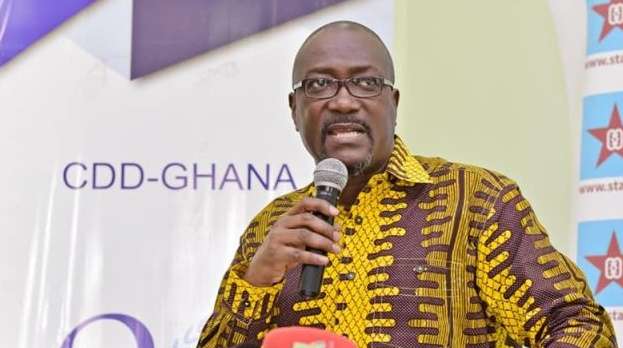
    The commemorative lecture featured an insightful address by Mr. Kwame Pianim, an eminent statesman and economist, who was the guest speaker for the event. Speaking on the theme “What I Saw in the Chief’s Palace,” Mr. Pianim highlighted Ghana’s economic trajectory and the challenges of managing indigenous businesses in a rapidly changing environment.

    He commended the enduring legacy of Vanguard Assurance’s founder, Nana Awuah Darko Ampem I, whose vision and entrepreneurial spirit laid the foundation for Ghana’s private insurance sector. Mr. Pianim underscored the need to protect and support indigenous companies like Vanguard that continue to create jobs, promote financial inclusion, and contribute to national development.

    The celebratory event attracted some of Ghana’s most respected personalities and industry leaders. Notable attendees included Daasebre Otuo Siriboe II, the traditional ruler of Juaben; Kwame Awuah-Darko; Daniel Awuah Darko, Board Chair of Vanguard Assurance; Shaibu Ali, CEO of KEK Insurance Brokers and President of the Insurance Brokers Association of Ghana; and other distinguished figures from the insurance and business sectors.

    Their presence was a testament to the impact Vanguard Assurance has had over the past 50 years—not just as an insurer, but as a pillar of Ghanaian enterprise and resilience.

    As Vanguard Assurance enters its next chapter, it vows to continue being a trusted partner in protection for individuals and businesses across Ghana. The company’s Golden Jubilee is both a celebration of its achievements and a reaffirmation of its core values—trust, integrity, reliability, and customer care.

    The management’s renewed focus on fast claims processing, value-driven services, and empathetic engagement is expected to further strengthen Vanguard’s leadership position in Ghana’s insurance industry. For five decades, Vanguard Assurance has proven that when a company places the customer at the heart of its operations, it not only survives but thrives.

  • Anti- LGBTQ Bill, Government Cannot Be Excused – CDD Boss

    Anti- LGBTQ Bill, Government Cannot Be Excused – CDD Boss

    The Executive Director of the Centre for Democratic Development, Professor H Kwasi Prempeh has faulted government over the recent passage of the anti-gay bill by Parliament .  

    He chided government, particularly the executive for not taken proactive steps to engage with the backers of the bill and leadership of parliament over the matter despite knowing its dire implications.

    His comments was an intervention made on a facebook post related to Kwame Pianim’s attempt to shield the government and Nana Addo from  blame pertaining to the issue. 

    Early on, the President while speaking on the matter, had  hinted that pending the resolution  of a Supreme Court suit on the matter, he will not assent to the bill. The renowned Ghanaian economist and elder statesman, Pianim made a case of exemption from blame for the government.

    He laid the fault squarely at the door step of the legislature and its members for passing the bill. He also frowned at the speaker of Parliament; Right Honourable Alban Bagbin for his role in the process. 

    He further pleaded with Ghana’s donor partners not to sanction the country over the issue as that would amount to collective punishment of the citizens.  Pianim contended that,

    This is not a referendum that has been passed by the people of Ghana, we are already suffering, so don’t add any sanctions to it, sanction the people who are doing this and if these people make our problems worse, all of us Ghanaians should consider seriously,  this 8th parliament of the fourth republic, the administration none of them should receive  their ex gratia.”

    Although his submission did not suggest any form of  disdain for LGBTQ activities, it showed no support for the bill either. He appeared to be bothered by economic considerations and the potential  impact of funding cuts by donor countries as alluded to by the finance ministry.

    Kwame Pianism

     Déjà vu

    For Prof. Prempeh, this appears more like a tryst fate. He is of the view that, government had not been proactive enough and that has occasioned this current gridlock with so much at stake for the country and its people. Responding to a facebook post that argues that, the government should not be blamed for problem that emanated from a private member’s bill, he opined that,

    “All the more reason the executive should have taken exceptional interest in it from the beginning and made serious engagements with all key stakeholders. Knowing its severe implications for the economy and the country’s various international interests and obligations,  you don’t just sit and watch a bill like this go through the parliamentary processes for over two years without having any serious engagement with its sponsors and backers. Who does that!!”

    An indifferent public

    Despite all the fuss about the economic blowbacks of the bill in its current form, Ghanaian public have remained indifferent. For them, it is not about the economy or any other international obligation but a matter of sovereignty, faith and values. Hence there is no room for compromise.

    Many people are rather baffled at the President’s approach which they see as a form of “ delay tactics” and stalling. Meanwhile, the opposition National Democratic Congress (NDC) and its leader and contender in the up coming elections has declared his support for the bill and vehement opposition to LGBTQ activities in the country.

    There are reasons to believe that some within the ruling New Patriotic Party (NPP) are concerned that NDC may capitalise on the government’s approach to gain political support. Already, the private member bill that initiated the legislation emanated from the party’s member of Parliament.

    Others have also pointed that for the NDC,  it is not about politics. They reference to the fact that during the Atta Mills led administration, the government was very emphatic on its position when similar threat of economic consequence were raised as leverage.

    Crucially, the economy was probably in better shape than it is now. That accounted for the firmness exhibited by that government. As it stands, most economic analysts think Ghana cannot withstand any dire consequences without unwarranted hardship. 

     READ ALSO: At 67, Ghana’s Dilemma of Identity

  • Gyakye Quayson’s Daily Trial: Justice Delayed Is Justice Denied- Law Professor

    Gyakye Quayson’s Daily Trial: Justice Delayed Is Justice Denied- Law Professor

    Associate Professor Kwadwo Appiagyei-Atuah of the University of Ghana School of Law, has stated that even though justice delayed is justice denied, justice hurried is also justice buried, in reference to the daily trial of the Assin North Member of Parliament; James Gyakye Quayson.

    Prof. Appiagyei-Atuah averred that the legislator’s ability to perform his parliamentary duties is being hampered by the daily trial.

    According to him, this calls into doubt the trial’s fairness. His remarks follow Alfred Tuah-Yeboah, the deputy Attorney General, who indicated that Gyakye Quayson’s trial is not being rushed by the prosecution or the judge.

    According to Tuah-Yebuah, the trial judge has discretion over how this matter should be handled. He asserted that he did not perceive any urgency in this particular subject and that because it is before a court of law, each judge is free to decide how to proceed.

    “In this particular case, the judge made an order that she is going to hear the matter today. In the subsequent proceedings, she made it clear that even if it is daily, it doesn’t mean that every day he should be in court. There may times where the court may not even sit, there may times where the counsel for either the accused or the state may be absent or the accused himself may be out. For example, on the very day that he was sworn in, because of that the court could not go on.

    “We were in court and the matter has been adjourned to next week Wednesday. So this noise about day-to-day hearing and making comments as if the judge is trying to hound the accused person, is something that I cannot understand. If you go to the other courts in Accra, in some of the courts, they go to court three times or sometimes four times a week. And so, I do see any difference between those accused persons and this accused person.”

    Deputy AG Alfred Tuah-Yeboah

    On the same program, Prof. Appiagyei-Atuah responded to him by claiming that the daily trial is “certainly going to affect him and so on that basis, fairness is not in there.”

    Withhold Salary Of MPs Who Boycott To Support Gyakye Quayson

    According to renowned economist, Kwame Pianim, MPs should not receive their allowances if they refuse to do their legislative duties in order to criticize circumstances they find favorable.

    He claimed that a legislator has no business abstaining from parliament.

    “A parliamentarian has no business to boycott parliament. If they boycott parliament, their allowances should be taken off. Parliament is young, there is a tendency now to put a lot of burden on the fledgling judiciary which is not fair.

    “Political parties and the EC should make sure that elections are won at the ballot box and not in the court. If you put politics in front of the courts, you are weakening them and you are making them become partisan. Let them be free because once we lose the independence of the judiciary, there is no justice in this country.”

    Kwame Pianim

    He was responding to the Minority’s decision to boycott Parliamentary sessions in order to voice their opposition to Assin North MP, James Gyakye Quayson’s trial.

    The Minority declared that they had made the decision to respond in kind to the government’s intensification of what they refer to as Mr. Quayson’s “persecution.”

    READ ALSO: No One Should Expect Cooperation From Us- Minority

  • NPP Presidential Candidates To Perform Better Than NDC Candidate– Kwame Pianim

    NPP Presidential Candidates To Perform Better Than NDC Candidate– Kwame Pianim

    Kwame Pianim, a renowned economist, has suggested that any of the 10 aspiring flagbearers from the New Patriotic Party (NPP) will lead Ghana better than any Presidential candidate of the National Democratic Congress (NDC).

    He argued that if they are chosen to lead the party, the candidates will all be willing to make sacrifices and might significantly alter the course of the nation. He however, cautioned the candidates against disparaging one another only to get cheap political points.

    “We encourage all of them to sell themselves, and not to talk about other people. The party is not for personal aggrandizement of one person. Any of the NPP candidates, as far as we [elders] are concerned, will perform better in terms of our philosophy and our outlook of life than anybody from the other side [NDC].”

    Kwame Pianim

    He pleaded with his peers not to choose sides, stressing the need of the elders supporting each of the 10 contenders to prevent further escalation of internal strife.

    Kwame Pianim, who was present at one of the candidates’ campaign launches, Kwabena Agyei Agyepong, promised to be present at the launches of the other candidates, referring to them all as his children.

    “I hope the founding members of the party and all the elders will support all the 10 people who are offering themselves as flagbearers. I was there to encourage Kwabena Agyei Agyepong, just like I’m encouraging all the others to come out and sacrifice to lead the nation. It’s not easy to be a flagbearer, these young people will go round the country and spread the message.

    “They are the ones who are going to energize the people at the party base. Hopefully, to give them confidence not to lose hope in the political system. It’s the only thing we have, to go and fight and preserve the democratic dispensation, free press, civil liberties that we want at a hard cost to a lot of people.”

    Kwame Pianim

    NPP To Face Campaign Challenges

    According to the renowned economist, the New Patriotic Party (NPP), however, would encounter substantial difficulties during the campaign for the general elections in 2024, as a result of the nation’s current economic challenges.

    He advised the administration to be cautious and deliberate in its activities because he believes the NPP will have difficulty when the party tries to win over people to end the eight-year cycle of government.

    Mr. Pianim when asked if the NPP’s campaign process would be easy, answered that it was going to be difficult in 2024 and commended the young people who are courageous enough and willing to accept this challenge, to make a sacrifice for the country because he believes the NPP had failed to deliver on its economic pledges.

    “It’s going to be difficult to get the economy back, and to make sure we put in place processes that make it difficult to go back to where we are. Madness will be defined as repeating the same processes and expecting to get the same results. If we don’t change drastically how we develop and as the Romans will say make haste slowly, we have to cut our coats according to our clothes.”

    Kwame Pianim

    The eminent economist further recommended that value-for-money audits and procurement agencies must be abolished since they allow for corruption.

    “We have to make sure the monies we get, we will get value for money. And that all the procurement agencies, value for money audit, we scrap all of them. Because they provide avenues for people to just take monies and we need to get it off. Incompetence and corruption, those two are important. The management of the economy is not too difficult if there’s no corruption.”

    Kwame Pianim

    READ ALSO: Ambrose Dery Advising Ghanaians To Ignore Audio Is Regrettable- Security Analyst

  • Due To Frimpong-Boateng’s Standing, Self-Recognizance Bail Should Have Been Granted Instead– Pianim

    Due To Frimpong-Boateng’s Standing, Self-Recognizance Bail Should Have Been Granted Instead– Pianim

    According to famous economist, Kwame Pianim, Professor Kwabena Frimpong-Boateng, a former Minister of Environment, Science, Technology, and Innovation, should have received a self-recognizance bail, following his detention by the Office of the Special Prosecutor (OSP).

    However, it was the friend of Prof. Frimpong-Boateng who had posted the bail for him.

    “They did not even suggest self-recognizance bail. I needed somebody to bail me…So, a friend of mine was down there and he came up and bailed me and so I left and they went with my friend to his house.”

    Prof. Frimpong Boateng

    The famous cardiac surgeon was subject to an investigation, after accepting an invitation from the OSP a few weeks prior. He was invited for his report on the disbanded Inter-Ministerial Committee on Illegal Mining (IMCIM), which focused on corruption and actions related to it.

    He was also detained in connection with the disappearance of 500 excavators and the illicit mining activities of Symphony Limited, his son’s business, for which he was promptly released on bail for GHC 2 million.

    In response to this development, Mr. Kwame Pianim stated, “If Prof Frimpong-Boateng is in any way connected to galamsey or promotes galamsey or stops it from being eradicated, I will be the first person to take him to the Police.”

    “What I am saying is that in the investigation people are deemed innocent until proven guilty and somebody of his stature, anywhere in the world would have been given self-recognition.”

    Kwame Pianim

    Let The OSP State Frimpong-Boateng’s Offense To Us

    Renowned economist, Kwame Pianim stated that there are now questions about what Kwabena Frimpong-Boateng may have done wrong because the Office of the Special Prosecutor (OSP) did not file charges against the former Minister of Environment, Science, Technology, and Innovation after his arrest.

    “I don’t know the information that the Special Prosecutor has that he might run away outside the country and because of that he needs to be prevented, he could have taken his passport.

    “We should know the charges. Are we made to infer that he is part of a criminal gang that is promoting galamsey or is he related to defamation or the leaking of the report that he made to the President at the request of the President?”

    Kwame Pianim

    Additionally, after being detained by the Office of the Special Prosecutor (OSP), Former Minister of Environment, Science, Technology, and Innovation, Professor Kwabena Frimpong-Boateng was advised by Builsa South Member of Parliament, Dr. Clement Apaak to take his personal security seriously, as he would not know what might happen the next time.

    Commenting on this in a tweet, Dr Apaak said “If this move is a plot to cow or intimidate Prof. Boateng for exposing the involvement of NPP officials, gov’t officials, including some in the Presidency, in illegal mining/galamsey, it has failed on arrival. Prof. must take his personal security into his own hands though!”

    READ ALSO: Owusu Bempah Slams Sammy Gyamfi

  • Reissue Licenses To Banks That Failed Due To Political Pressure – Pianim

    Reissue Licenses To Banks That Failed Due To Political Pressure – Pianim

    Kwame Pianim, a renowned economist, has demanded that the licenses of banks that failed for political reasons be reinstated.

    Mr. Pianim stated that he thought licensed banks whose revocations had been established to have been motivated by political factors should have them overturned.

    “Licensed Banks which are proven to have been revoked for political reasons should be reversed,” he stated.

    His declaration comes after the former President John Dramani Mahama promised to reinstate the licenses of banks that he believes were unfairly shut down during the Bank of Ghana’s (BoG) recapitalization program.

    As the candidate for the National Democratic Congress (NDC), Mahama pledged not only to reinstate the licenses but also to ensure that skilled workers who had been laid off during the banking sector cleanup, would be given new jobs.

    Following his victory in the NDC primaries, Mahama stressed the party’s commitment to reviving indigenous investment as well as the banking and investment industry in his acceptance speech.

    “We will restore indigenous investment and the banking and investment sector. We will create a tiered banking system that will serve the various segments of the market. We will give an opportunity for experienced banking hands who were laid off to secure their careers once more and move away from the menial jobs that they were forced into. As far as practicable, the banking licenses that were unjustly canceled by this government will be restored.”

    John Dramani Mahama

    Declare State Of Emergency Due To Economic Crisis

    According to Mr. Kwame Pianim, President Nana Addo Dankwa Akufo-Addo urgently has to declare a state of emergency due to the ongoing financial crisis.

    He believes that this will be a crucial step in resolving the problem.

    He remarked, “Now we have to put all our cards on the table and tell Ghanaians we are in a deep crisis,” in reference to the $ 3 billion deal agreed by the International Monetary Fund (IMF).

    “Those are the words that the IMF uses, we are in a deep crisis and to solve the deep crisis and get out we have to be serious, declare a state of emergency and tell every Ghanaian we all have to tighten our belts, we are in economic crisis.

    “Some of the symbolic cutting will show that we are reducing the size of government to make it lean and smart and that expenditures that are not going to yield output they are going to suspend them.”

    Kwame Pianim

    Ghanaians were already warned by President Akufo-Addo not to count on the IMF program to solve their country’s problems.

    In his speech to the country on May 28, President Akufo-Addo remarked, “Access to the IMF facility will not spell the immediate end of the difficulties we are in presently.”

    “But the fact that we’ve been able to negotiate such a deal sends a positive message to our creditors and investors. It should lead to the restoration of confidence and the reopening of avenues that have been closed to us this past year and a half.”

    Nana Addo Dankwa Akufo-Addo

    Finance Minister Ken Ofori-Atta recently warned that the approval of Ghana’s bailout request would not provide a quick fix to the current economic crisis in a statement that was similar to this one.

    “Ghana’s IMF Board approval is far from a magic solution. What it is, however, is that it is a crucial first step on the necessary journey of strong reforms, inclusive growth and relentless pursuit of a growth agenda geared towards restoring our economy to a place of strength, prosperity and resilience.”

    Ken Ofori-Atta

    READ ALSO: Assin North By-Election: Gyakye Quayson Is A Risk Worth Taking– Amaliba

  • Kwame Pianim Calls For Collective Efforts To Address Economic Challenges

    Kwame Pianim Calls For Collective Efforts To Address Economic Challenges

    Mr Kwame Pianim, a seasoned economist and investment consultant, has called for a collective effort from various stakeholders to help address the country’s economic challenges. 

    The Economist said the economic issues are so broad that it requires various stakeholders from industry, academia and the international community to speak about them and to offer different perspectives for consideration by policymakers.

     Mr. Pianim contended that as it stands now, the Ghanaian economy is not resilient because it’s not generating enough reserves.  He questioned the excessive focus of the government on the revenue side of the economic equation relative to the expenditure side. He said that the main area of focus for policymakers going forward, should be the expenditure side. The Economist recommended that government should use quality predictive models and analysis in its economic decision-making.

    Economy not in good condition

    Speaking at the IMANI-GIZ Reform Dialogue Series, Mr Kwame Pianim said “where the [Ghanaian] economy is now, is not pretty” and the environment cannot be described as enabling but highlighted that some of the problems are attributed to external shocks.

      “On the plus side, Ghana is a member of the IMF, a paid member which means that when you get into these shocks, and you need to make sacrifices to be able to get out of them, you can go to the IMF and get money if you are serious about getting out of your problems.  Which means you are going to inflict pains, sacrifices on your people. When you do a home-grown one, you don’t have any resources but when you are ready to inflict the pain and you talk to the IMF, and the pains come, they also provide resources; balance of payment foreign exchange to cushion your currency and support for your recurrent expenditures”.

    Kwame Pianim

    Speaking on the need to scale up investment efforts, Mr Kwame Pianim said “For Ghana, if we are to grow maybe 6 to 8%, which we need to make steady progress, you need to invest about 18-24% of GDP as investment. If we have a saving rate of less than 15%, the rest has to come from outside and therefore, you need to have a macroeconomic environment that is attractive to investors”.

    Mr. Kwame Pianim said “we should not waste the [current] crisis” but instead use it to create a better and sustainable macroeconomic environment. He recommended that the government should follow a cost-cutting approach, coupled with the need for the Fiscal Council to be involved by giving a nihil obstat over all the big-ticket expenditure of the government.

    Comments and recommendations by other panelists  

    Dr. Priscilla Twumasi-Baffour, Senior Lecturer at the Department of Economics, University of Ghana, also a panelist on the program, suggested that the cost of borrowing should be reduced as it feeds into the cost of credit. She also called on the Bank of Ghana to take a critical look at the spread of the exchange rate because it’s currently too high.

    Dr. Priscilla Twumasi Baffour

    Moreover, she noted that there should be infrastructure that supports investment covering land title issues, legal rights, concerns for transparency, and reduction in corruption. She also recommended the diversification of the economy and the reduction of social expenditure.

    Dr. Sam Mensah, Founder and Executive Chairman of SEM Group, another panelist on the program, admonished the government to maintain a stable fiscal environment to encourage investors to come into Ghana.  

    Meanwhile, Hon. Dr.  John Ampontuah Kumah, Member of Parliament for Ejisu and Deputy Minister of Finance, noted that the macroeconomic environment is meant to be an enabler, but the Ghanaian economy is not yet there but on the path. He noted that the government is reducing the deficit, revising expenditure targets by 30% for discretionary expenses, and has placed a moratorium on the importation of vehicles, among others.

    READ ALSO: KambangCooperative Started as an FBO: 2021 National Best Farmer