Tag: peace talks

  • Tension in Northeast Colombia Leaves 80 Dead

    Tension in Northeast Colombia Leaves 80 Dead

    Northeastern Colombia witnessed a devastating surge in violence, resulting in more than 80 fatalities. The attacks, which have forced thousands to flee, occurred in the Catatumbo region near the Venezuelan border. 

    The National Liberation Army (ELN) and former members of the Revolutionary Armed Forces of Colombia (FARC) are reportedly clashing over control of this strategic area, rich in coca leaf plantations.

    According to North Santander Governor William Villamizar, among the dead are community leader Carmelo Guerrero and seven individuals who were engaged in peace negotiations. The violence also left 20 people injured, with many seeking refuge in government shelters or hiding in the surrounding mountains.

    “We were caught in the crossfire,” said Juan Gutiérrez, a resident who fled with his family to a temporary shelter in Tibú. 

    “We had no time to grab our things… I hope the government remembers us. We are helpless here.”

    Juan Gutiérrez

    Colombia’s military has stepped up its response, rescuing dozens, including a family with their pet dog. The animal’s owner was seen pressing a cold water pack against its chest during their evacuation by helicopter.

    Government Scrambles to Aid Displaced Residents

    Defense Minister Iván Velásquez visited Cúcuta on Sunday, holding security meetings and calling on armed groups to demobilize. “The priority is to save lives and guarantee the security of communities,” he asserted. 

    Troops have been deployed across the region, and preparations are underway to distribute 10 tons of food and hygiene kits to approximately 5,000 displaced individuals in Ocaña and Tibú. Governor Villamizar, in a public address, emphasized the dire situation.

    “Boys, girls, young people, teenagers, entire families are showing up with nothing, riding trucks, dump trucks, motorcycles, whatever they can, on foot, to avoid being victims of this confrontation.”

    Governor Villamizar
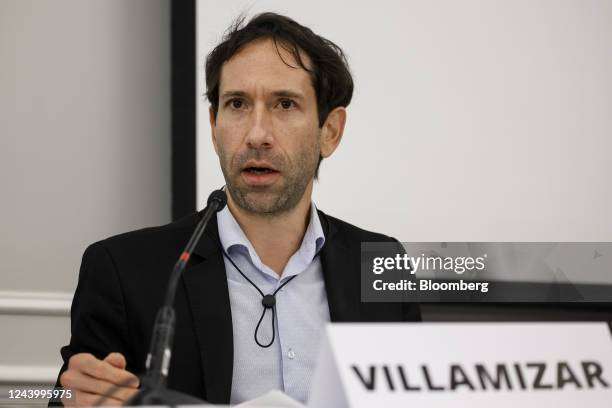
    Governor Villamizar

    This outbreak of violence follows the Colombian government’s suspension of peace talks with the ELN, marking the second such breakdown in less than a year. The government has insisted that the ELN halt all attacks and permit the provision of humanitarian aid in the region.

    José Trinidad, a municipal official from Convención, expressed concern about the escalating crisis. “Displacement is killing us here in the region,” he said. “We’re afraid the crisis will worsen.” He urged the insurgent groups to reach a new agreement to spare civilians from further suffering.

    The ELN has been embroiled in a territorial dispute with ex-FARC members, who disbanded after a 2016 peace deal with the Colombian government. Both factions are vying for dominance in Catatumbo, a critical area for the coca trade.

    In a statement, the ELN accused former FARC rebels of instigating the conflict and committing multiple killings, including the murder of a couple and their 9-month-old baby earlier this month. They warned that continued attacks on the population would leave them no choice but armed confrontation.

    Meanwhile, Army Commander Gen. Luis Emilio Cardozo Santamaría announced the reinforcement of a humanitarian corridor between Tibú and Cúcuta to ensure the safe passage of those displaced. Special urban troops have also been deployed to high-risk municipal areas.

    Efforts to negotiate peace between the ELN and President Gustavo Petro’s administration have repeatedly failed, with violence derailing talks. The ELN’s demands to be recognized as a political rebel organization have sparked significant debate and criticism.

    This latest outbreak of violence underscores the fragile state of peace in Colombia and the urgent need for a resolution to prevent further loss of life.

  • Peace Talks Collapse Amid Escalating Tensions in Eastern DRC

    Peace Talks Collapse Amid Escalating Tensions in Eastern DRC

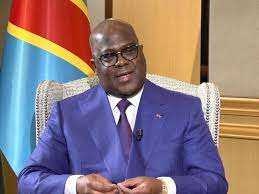
    Efforts to broker peace between the Democratic Republic of the Congo (DRC) and Rwanda have hit a major roadblock, with a planned summit between their leaders abruptly canceled, according to Angola’s presidency, which has been mediating the talks.

    “Contrary to what we expected, the summit will no longer be held today,” Mario Jorge, a spokesperson for Angolan President João Lourenço, said on Sunday, December 15. Jorge did not elaborate on why the meeting was called off but confirmed that Lourenço held a solo meeting with DRC President Félix Tshisekedi.

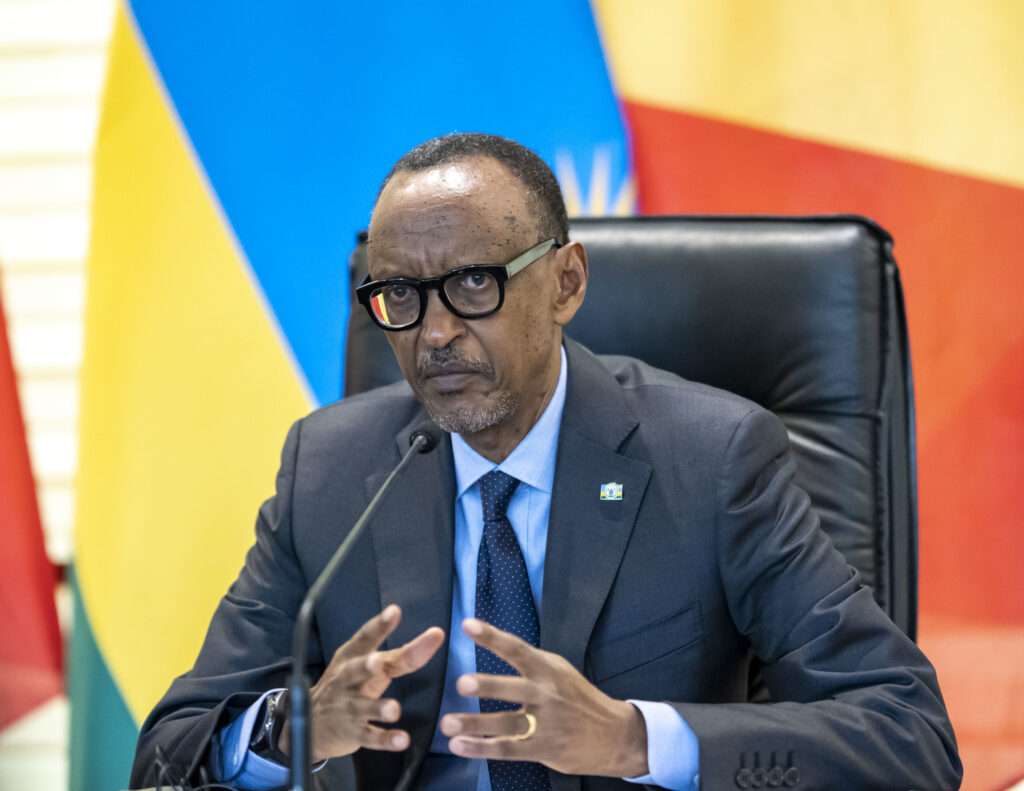
    Rwandan President Paul Kagame, who was expected to participate in the talks, was notably absent. It remains unclear whether he had even traveled to Angola.

    President Paul Kagame

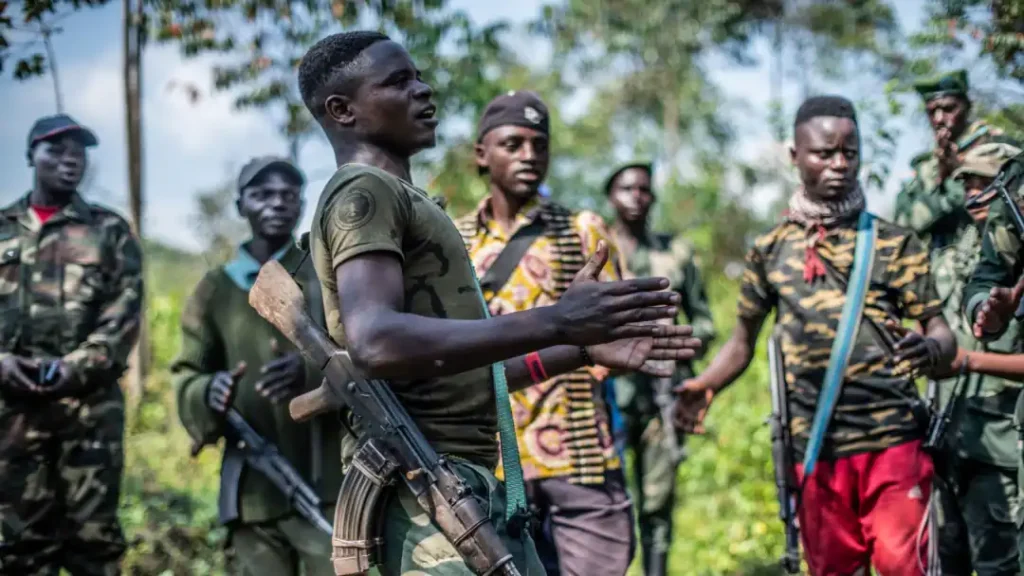
    The talks were seen as a potential turning point in the ongoing conflict in eastern DRC, where the M23 rebel group — allegedly backed by Rwanda, according to the DRC and the United Nations — has seized significant territory, displacing thousands and fueling a dire humanitarian crisis.

    The DRC presidency revealed that the talks stalled over Rwanda’s demand for direct negotiations between the DRC and M23 rebels. The impasse comes as fighting intensifies on the ground.

    On Friday, clashes between the DRC army and M23 fighters escalated, with the DRC accusing the rebel group of killing 12 civilians in North Kivu’s Lubero territory earlier in the week. An M23 spokesperson denied the allegations, dismissing them as “propaganda” by the DRC government.

    The M23 is one of roughly 100 armed groups vying for control in the mineral-rich eastern DRC. The ongoing conflict has displaced over seven million people, creating one of the world’s largest humanitarian crises.

    M23 Rebels

    Rwanda has consistently denied supporting the M23 but acknowledged in February that it had deployed troops and missile systems in eastern DRC. It cited security concerns over a buildup of DRC forces near the border.

    In July, the DRC signed a ceasefire agreement with M23, which briefly came into effect in August. However, fighting resumed soon after, raising questions about the durability of peace efforts.

    Last month, the foreign ministers of Rwanda and the DRC reached an agreement on the conditions for withdrawing Rwandan forces from the eastern DRC. Yet, violence persists, undermining the fragile truce.

    The United States recently expressed alarm over the situation, stating it was “gravely concerned” about M23’s repeated violations of the ceasefire.

    Meanwhile, a United Nations expert group report estimated that 3,000 to 4,000 Rwandan Defense Force (RDF) troops are actively fighting alongside the M23 in the DRC.

    Civilians Call for Urgent Peace

    For those caught in the crossfire, the failure of the peace talks is a devastating blow. Aline Kasereka, a mother of six from the town of Lubero, about 50 kilometers from the recent fighting, voiced the desperation felt by many displaced residents.

    “We are tired of the war. Every day we move, we do not know in which country we are anymore,” Kasereka said.

    The humanitarian crisis continues to worsen as fighting forces more people to flee their homes. Aid organizations warn that the lack of a peaceful resolution could lead to further destabilization in the region.

    Despite the setbacks, Angola’s President Lourenço, acting as the African Union mediator, has vowed to continue his efforts to facilitate dialogue between the DRC and Rwanda. 

    However, the absence of Kagame and the widening gulf between the two nations suggest that a resolution remains out of reach. Without a sustained effort to end hostilities, millions in the eastern DRC will continue to suffer the devastating consequences of the conflict.

  • Lukashenko Warns Against Total Militarization Of The World

    Lukashenko Warns Against Total Militarization Of The World

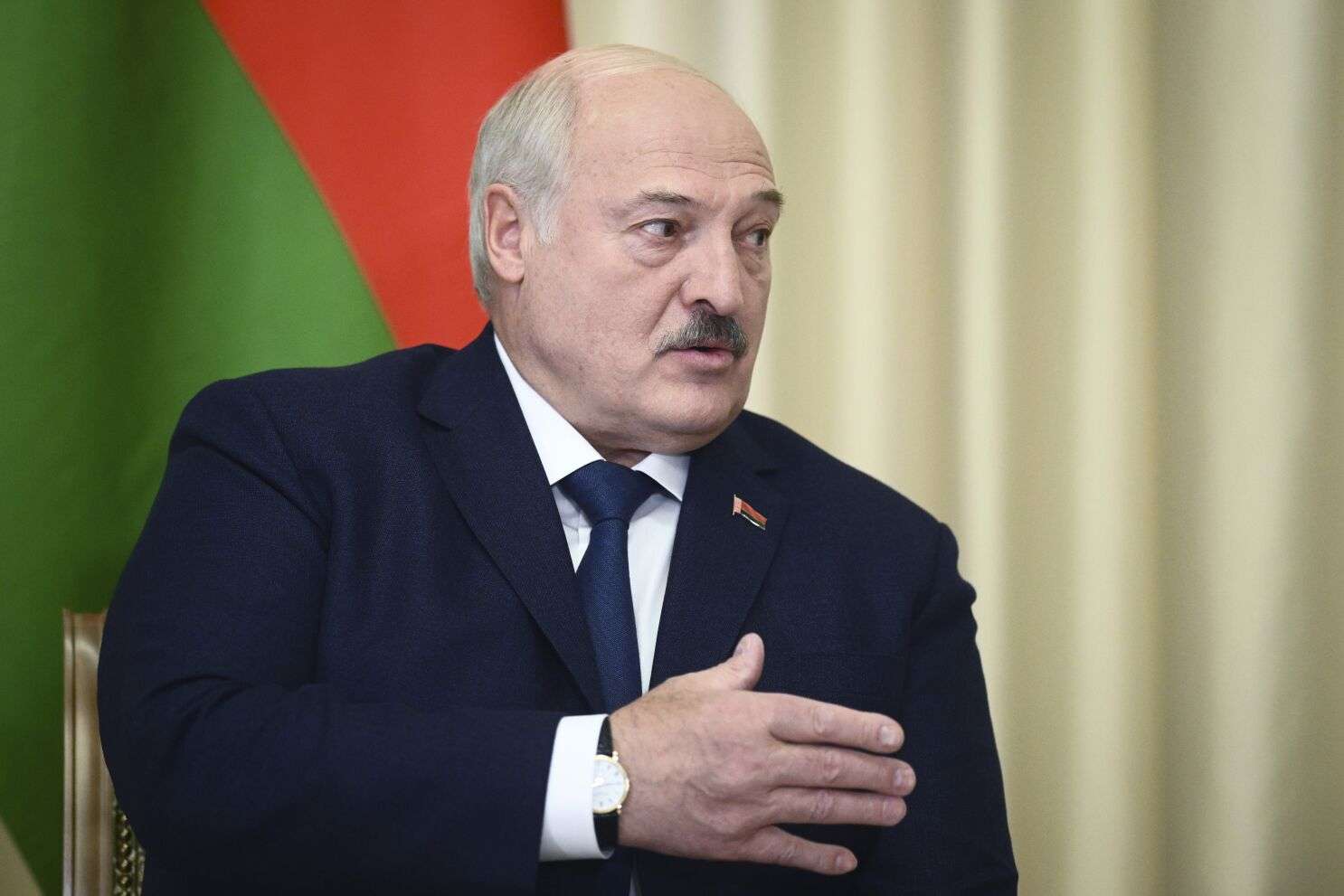
    Belarusian President, Alexander Lukashenko has warned against the total militarization of the world.

    Speaking at the second International Conference on Eurasian Security in Minsk, Lukashenko tagged the total militarization of the world as the “worst thing that can happen today.”

    He added that if it happens, everything will “quickly go up in flames and we all will have to face major consequences.”

    According to the Belarusian leader, now is the time to think about ways to drop “the weight of military contradictions and defense spending, find a new key to resolving the current issues and create effective mechanisms to ensure global security.”

    “As I have already said, such a key lies in Eurasia, which boasts thousands of years of experience of interaction between cultures and civilizations. This is where all the global axes cross. The future global situation depends on how things unfold here.

    “Countries still have to use military force to protect their sovereignty and domestic stability and prevent an escalation of tensions. The further expansion of the conflicts in Ukraine and the Middle East could have irreparable consequences on the global scale.”

    Alexander Lukashenko

    In his speech, Lukashenko announced a range of priority measures aiming to de-escalate global tension.

    He noted that in order to really defuse the situation and create conditions for dialogue, it is necessary to withdraw US nuclear weapons from the territory of the Eurasian countries. “This deadly arsenal is an anachronism of the Cold War. Then we won’t stay away either,” the Head of State stressed.

    He also said that it is necessary to eliminate the practice of “applying illegal sanctions without direct decisions of the UN Security Council” and create an effective mechanism of international legal guarantees that prevent the use of such a method of pressure.

    Lukashenko Says Ukraine, Russia Should Begin Peace Talks Without Preconditions                                                    

    Additionally, the Belarusian President, asserted that Ukraine and Russia must agree to negotiate without preliminary conditions.

    “I have always maintained that no conflict is solely the fault of one side. When two parties are involved, both share some responsibility. However, the current issue is not about assigning blame; we will address that later. What matters now is to begin resolving the problem at the negotiation table.”

    Alexander Lukashenko

    Lukashenko noted that once peace talks commence, it may be possible to achieve a ceasefire under certain conditions and subsequently withdraw troops from the front lines. “Anything can happen, but the key is that lives will be spared! We can discuss the reasons for the conflict later,” the Belarusian President stressed.

    He also emphasized that his country must participate in the discussions aimed at resolving the Ukrainian crisis. “For us, it is a matter of ensuring our own security,” he stated.

    According to Lukashenko, the West has realized that it is necessary to negotiate on Ukraine.

    “My last contacts with intelligent representatives of the “civilized West” indicate that we have a certain slant. The West has finally realized that it is necessary to negotiate on Ukraine. It is possible to be a draw if today. I speak like a sportsman.”

    Alexander Lukashenko

    At the same time, Lukashenko stated that the situation on earth is changing every day. He noted that as far as potential peace talks are concerned, everything rests on one person — Volodymyr Zelenskyy, “whose ambitions have soared, while the war is going on in his country.”

    “First of all, the military wants to end this massacre. Ukraine will not win on the battlefield. Ukrainians already understand this, and in the West. Well, we need to move, negotiate.”

    Alexander Lukashenko

    He added that thousands of innocent people are killed every day on both sides.

  • Zelenskyy Vows To Strive For Victory On War Anniversary

    Zelenskyy Vows To Strive For Victory On War Anniversary

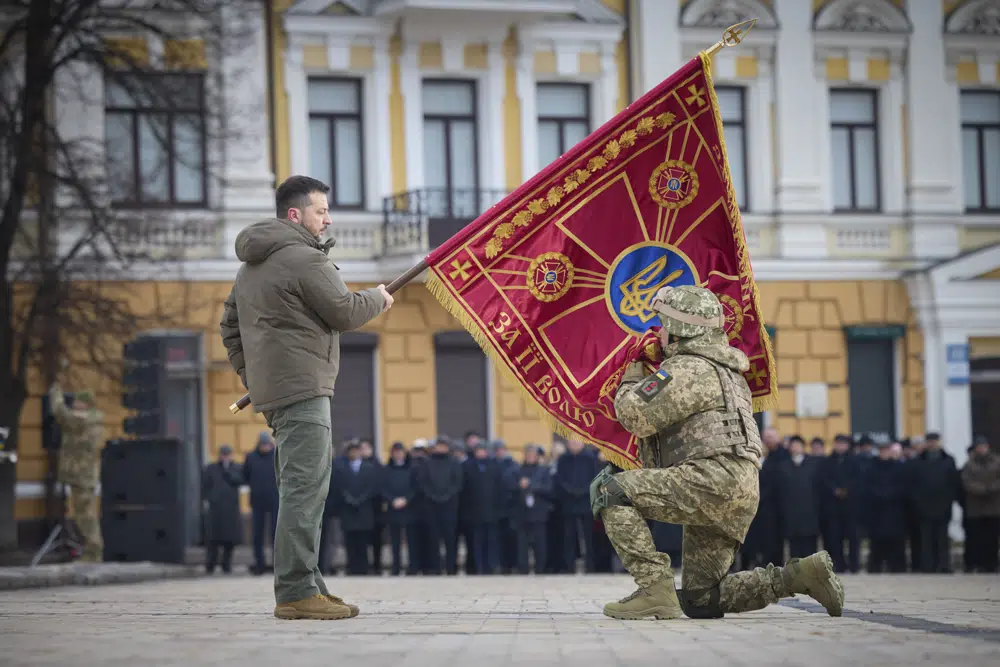
    Ukraine’s President, Volodymyr Zelenskyy pledged to push for victory in 2023 as he and other Ukrainians on Friday, February 24, 2023, marked the somber first anniversary of the Russian invasion that changed their lives.

    As dawn broke on a day of commemorations and defiance, the President tweeted that Ukrainians had proven themselves to be “invincible” in what he called “a year of pain, sorrow, faith and the unity.”

    “We know that 2023 will be the year of our victory!” the tweet read.

    Ukrainians attended memorials, candle vigils and other remembrances for their tens of thousands of dead — a toll growing all the time as fighting rages in eastern Ukraine in particular.

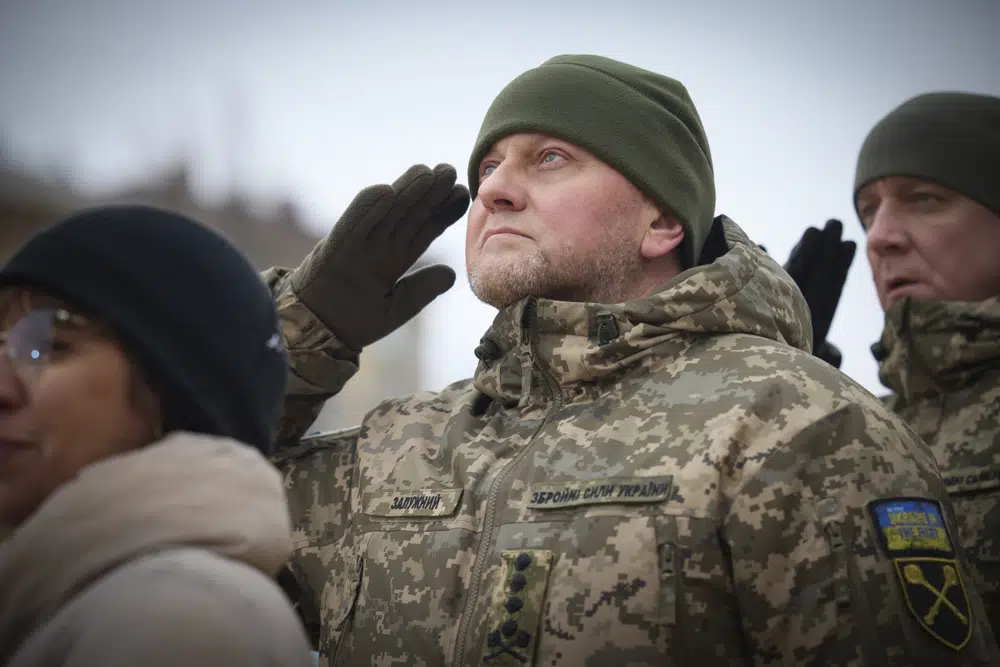
    Commander-in-Chief of Ukraine’s Armed Forces Valeriy Zaluzhny attends a commemorative event on the occasion of the Russia Ukraine war one year anniversary, in Kyiv, Ukraine, Friday, Feb. 24, 2023.

    There were concerns that Russia might unleash another barrage of missiles against Ukraine to pile yet more sadness on the day.

    Mercifully, air raid alarms did not sound overnight in the capital, Kyiv, and dawn broke quietly.

    Still, the government recommended that schools move classes online and office employees were asked to work from home.

    Tributes to Ukraine’s resilience flowed from overseas. The Eiffel Tower in Paris was among monuments illuminated in Ukraine’s colors — yellow and blue.

    New video footage of Bakhmut shot from the air with a drone shows how the longest battle of the year-long Russian invasion has turned the city in eastern Ukraine into a ghost town. 

    China Calls On Russia And Ukraine To Hold Peace Talks

    China has reiterated its calls for a political settlement to the Ukraine conflict on the one-year anniversary of Russia’s invasion, as Beijing comes under increasing pressure from the United States and its allies over its growing partnership with Moscow.

    In a newly released position paper today, February 24, 2023, China’s Foreign Ministry called for a resumption of peace talks, an end to unilateral sanctions, and stressed its opposition to the use of nuclear weapons.

    “Conflict and war benefit no one. All parties must stay rational and exercise restraint, avoid fanning the flames and aggravating tensions, and prevent the crisis from deteriorating further or even spiraling out of control,” the paper noted.

    The 12-point document is part of Beijing’s latest efforts to present itself as a neutral peace broker, as it struggles to balance its “no-limits” friendship with Moscow and fraying relations with the West as the war drags on.

    But Beijing’s claim to neutrality is severely undermined by its refusal to acknowledge the nature of the conflict – it has avoided calling it an “invasion.”

    Western officials have also raised concerns that China may be considering providing Russia with lethal military assistance, an accusation denied by Beijing.

    The position paper is mostly a reiteration of China’s existing position, which includes urging both sides to resume peace talks.

    Dialogue, The Only Viable Solution

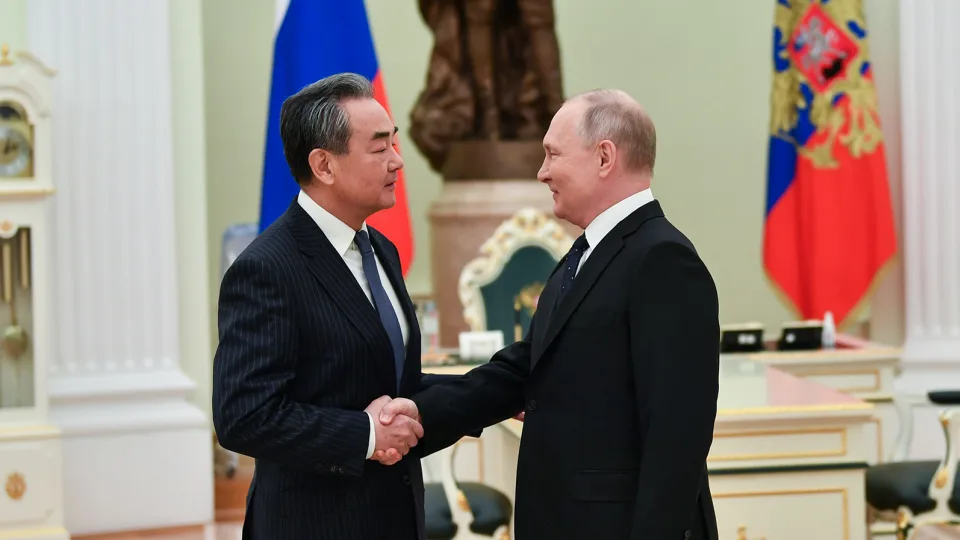
    Russian President Vladimir Putin meets Wang Yi, a member of the Political Bureau of the Communist Party of China, in Moscow on Wednesday, Feb. 22, 2023.

    “Dialogue and negotiation are the only viable solution to the Ukraine crisis,” it said, adding that China will play a “constructive role,” without offering details.

    The document also read, “the sovereignty, independence and territorial integrity of all countries must be effectively upheld,” but did not recognize Russia’s violation of Ukraine sovereignty, or even mention the word “invasion.”

    The statement also urged the world to abandon the “Cold War mentality” by ending “any unilateral sanctions not authorised by UN security council”. Various countries have imposed sanctions on Russia.

    The paper stresses China’s opposition to the use of nuclear weapons.

    “Nuclear weapons must not be used and nuclear wars must not be fought. The threat or use of nuclear weapons should be opposed. Nuclear proliferation must be prevented and nuclear crisis avoided,” it noted.

    Ukraine chargé d’affaires (a diplomat of a lower rank acting in place of an ambassador) in Beijing, Zhanna Leshchynska, said the paper showed China wants to be involved in the global effort to stop the war in Ukraine. But she added that China should talk to both countries – and said that, so far, it hasn’t been talking to Ukraine.

    READ ALSO: Eurojust To Support Probes Into Crime Of Aggression In Ukraine Invasion