Tag: REDD+

  • Deputy Lands Minister Engages World Bank On Future Projects In Forestry Sub-sector

    Deputy Lands Minister Engages World Bank On Future Projects In Forestry Sub-sector

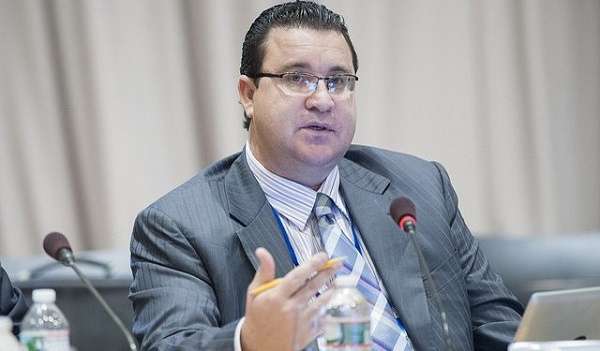
    The Deputy Minister for Lands and Natural Resources, responsible for Lands and Forestry, Benito Owusu-Bio, has on behalf of the Sector Minister, Hon Samuel A. Jinapor met a delegation from the World Bank focus on future projects for the Forestry Sub-sector.

    Mr Owusu-Bio in his welcome statement indicated that within the Forestry Sub-sector, the priorities of the Ministry are to Protect and conserve the forest and wildlife resources.

    He equally stated that the ministry intends to engage in aggressive reforestation and afforestation of degraded landscapes especially degraded forest reserves and Community engagement and participatory resources management including community resources management areas (CREMAS).

    Additionally, he indicated that significant achievements have been made in these areas through the Ghana Forest Investment Programme(GFIP) and other programmes being implemented.

    Furthermore, the deputy lands minister expressed gratitude to the World Bank for its continuous support to the Natural Resources and Environment Sector which includes the Ghana Investment Programme (GFIP), REDD+, the Ghana Landscape Restoration and Small-Scale Mining Project.

    World Bank assistance to management of forest development

    On his part, the Technical Director of Forestry, Mr Joseph Osiakwan, also acknowledged past support received from the World Bank which have contributed immensely to sustainable management of the forest estate and also the development of forest policy and Forestry Development Master Plan.

    He highlighted on some policy reforms that have been undertaken including the passing of the Wildlife Resources Management Bill which will be implemented soon.

    Moreover, Mr Osiakwan stated that one of the significant successes of the GFIP is the establishment of the Community Resource Management Areas (CREMAs) in the forest areas and these needs to be scaled up as a model for community engagement.

    Wading in on the discussion, Executive Director of the Forest Service Division, Mr. Hugh Brown, also spelt out some challenges faced by forest management such as illegal mining, illegal logging, and wildfires.

    On her part, the World Bank Practice Manager for West Africa covering Environment, Natural Resources and Blue Economy, Madam Lia Sieghart stated that the World Bank is shifting focus into supporting programmes which includes nature, forestry, biodiversity, water resources management and food security as part of measures to contribute to global efforts towards sustainability.

    She assured the Ministry of the World Bank’s readiness to partner the government on key focus areas highlighted to satisfy long- term interests to mitigate climate change.

    It will be recalled that last year, the Ministry of Lands and Natural Resources and the Ministry of Environment, Science, Technology, and Innovation (MESTI) with support from the World Bank, launched the Ghana Landscape Restoration and Small-Scale Mining Project (GLRSSMP).

    The project intends to strengthen the integration of the country’s natural resources and its management to increase the benefits to communities in targeted savannah and cocoa forest landscapes.

    It will also support sustainable land, water, and forest management initiatives in climate-vulnerable target landscapes and support the formalization of small-scale mining.

    The GLRSSMP geographically targets two landscapes: the Northern Savannah Zone (including the Guinea Savannah ecological zone, the Sudan Savannah ecological zone, and the upper portions of the Transitional ecological zone); the cocoa forest landscape (including parts of the Forest ecological zone and the Pra River Basin).

    The project will include a multi-sector approach to land management.

    In August 2021, the World Bank approved $103.4 million to implement GLRSSMP. The financing includes an International Development Association (IDA) credit of $75 million and $28.4 million in grants from the Global Environmental Facility (GEF), the Extractive Global Programmatic Support (EGPS), and the Global Partnership for Sustainable and Resilient Landscapes Multi-Donor Trust Fund (PROGREEN).

    READ ALSO: Israel-Hamas Conflict Abandons Developing Countries On An Oil Cliffhanger
  • Ghana Receives Payment For Low Carbon Emission From World Bank

    Ghana Receives Payment For Low Carbon Emission From World Bank

    With World Bank’s objective to reduce emissions from deforestation and forest degradation commonly known as REDD+, Ghana has become the second country in Africa after Mozambique to receive payments from the World Bank trust fund.

    The World Bank’s Forest Carbon Partnership Facility (FCPF)  has paid an amount of $4,862,280 to Ghana for reducing 972,456 tons of carbon emissions for the first monitoring period under the program (June to December 2019)

    “This payment is the first of four under the country’s Emission Reductions Payment Agreement (ERPA) with the World Bank to demonstrate potential for leveraging results-based payments for carbon credits.

    “Subject to showing results from actions taken to reduce deforestation, Ghana is eligible to receive up to $50 million for 10 million tons of CO2 emissions reduced by the end of 2024.”  

    Pierre Laporte, World Bank Country Director for Ghana, Liberia, and Sierra Leone
    Mr. Pierre Laporte, World Bank Country Director for Ghana, Liberia, and Sierra Leone.

    According to Mr. Pierre Laporte, these actions are within a six-million-hectare stretch of the West Africa Guinean Forest, where biodiversity and forests are under pressure from cocoa farming and unsustainable harvesting, along with small-scale mining.  “Ghana is one of 15 countries that have signed ERPAs with the World Bank,” he stated.

    Commenting on the money received, Mr. Samuel A. Jinapor, Minister for Lands and Natural Resources, divulged that the many years of dialogue, consultations, and negotiations with local communities, traditional authorities, government agencies, private sector, Civil Society Organizations (CSOs), and Non-Governmental Organizations (NGOs) have paid off.

    “This emission reductions’ payment will further promote confidence in Ghana’s REDD+ process for action to reduce deforestation and forest degradation while empowering local community livelihoods. The road to global 1.5 degrees cannot be achieved without healthy standing forests, and Ghana is committed to making it possible.”

    Mr. Samuel A. Jinapor, Minister for Lands and Natural Resources

    Ghana Cocoa Producers Participate In REDD+

    Just as some of the most important cocoa and chocolate companies in the world, including World Cocoa Foundation members like Mondelēz International, Olam, Touton and others have participated, Ghana’s Cocoa Board is participating in the REDD+ process with the focus on reducing emissions for the benefit of the country as a whole.

    The combined efforts of the participants, according to Ghana Cocoa Board, seeks not to only help bring change to the cocoa sector, but to also help Ghana meet its national emissions reductions commitments under the Paris Agreement.

    “This level of collaboration is also reflected in the benefit sharing plan underpinning Ghana’s’ ERPA with the World Bank. Prepared through extensive consultations with local stakeholders and civil society organizations throughout the country, the plan ensures all participating stakeholders are fairly recognized and rewarded for their role in reducing emissions.”

    Ghana Cocoa Board

    Ghana is the world’s second-largest cocoa producer. Cocoa drives the economy, but it is also one of the main causes of deforestation and forest degradation in the southeast and western regions of the country.

     Stakeholders are working to help some 140,000 Ghanaian farmers increase cocoa production using climate-smart agro-forestry approaches, rather than slash and burn land-clearing techniques that decimate forests. More sustainable cocoa farming helps avoid expansion of cocoa farms into forest lands and secures more predictable income streams for communities.

    The Forest Carbon Partnership Facility (FCPF) is a global partnership of governments, businesses, civil society, and Indigenous Peoples’ organizations focused on reducing emissions from deforestation and forest degradation, forest carbon stock conservation, the sustainable management of forests, and the enhancement of forest carbon stocks in developing countries.

    The FCPF, which was launched in 2008 has worked with 47 developing countries across Africa, Asia, Latin America, Caribbean, and the 17 donors that have made contributions and commitments totaling $1.3 billion.

    Read Also : Africa Needs to Position Itself to Optimise Investment- Yofi Grant


  • Deforestation In Ghana’s Shea Landscape To Be Reduced With $54.5m

    Deforestation In Ghana’s Shea Landscape To Be Reduced With $54.5m

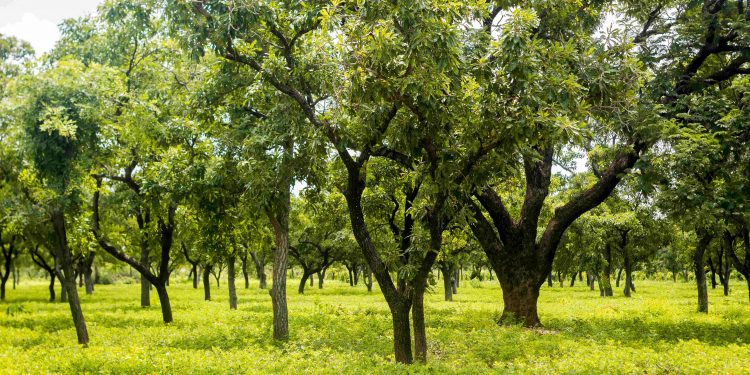
    The Green Climate Fund (GCF) has permitted the commencement of a project worth 54.5 million US dollars to tackle the alarming rate of deforestation and forest degradation challenges in the Northern Savannah Zone of Ghana.

    The project, themed ‘Ghana Shea Landscape Emission Reductions Project’, which was approved at the ongoing GCF’s 26th virtual Board Meeting, also seeks to promote investments in the shea value chain and women’s empowerment.

    It will be carried out by the Forestry Commission (FC) of Ghana with technical support from the United Nations Development Programme (UNDP), in partnership with multiple national and local institutions, civil society organizations and private sector actors.

    The project has cashed in vertical funds, with USD 30,100,000 grant from the GCF, about USD 15 million funding from the Government of Ghana and gathered about USD 9 million impact investments from the private sector in the shea value chain.

    The Chief Executive of the Forestry Commission (FC), Mr. John M. Allotey described the project as a milestone for the forestry sector.

    “I welcome this great milestone in Ghana’s Forestry Sector in the deployment of programmes and projects that reduce emissions from deforestation and forest degradation, build ecosystem resilience and also enhance the lives of communities that nurture the forests.”

    He elaborated on how the execution of the project would contribute strongly to Ghana’s achievement of its commitment to the Paris Agreement on Climate Change and the implementation of the Ghana National REDD+ Strategy.

    On behalf of his outfit, Mr. Allotey expressed gratitude to all the stakeholders involved and to the Ministry of Finance which is the National Designated Authority (NDA) for the GCF.

    The project’s interventions are expected to result in the restoration of 200,000 hectares of off-reserve savanna forests and 300,000 hectares of degraded shea parklands as well as the establishment of 25,500 hectares of forest plantations in severely degraded forest reserves.

    Director of Climate Change and National REDD+ Focal Point, Forestry Commission of Ghana, Roselyn Fosuah Adjei, indicated that the project will play a pivotal role in restoring degraded landscapes.

    “Shea landscapes are important sources of carbon storage and sequestration and these provide essential products and ecological services. GCF’s approval of this project is a welcoming news as this will help in restoring degraded landscapes and contribute to building a resilient economy that is capable of withstanding shocks without putting Ghana’s development agenda in jeopardy.”

    Ms. Adjei added that the project would have been a failure but for the support provided by the Italian Ministry of Environment, Land and Sea (IMELS) and the elaboration of the project proposal through the Global Italian initiative On REDD+ National Implementation (GIORNI).

    Among other benefits, the ‘Ghana Shea Landscape Emission Reductions Project’ will bring about a revolution in the shea sector by enhancing revenue generation for women and strengthen the livelihoods of over 500,000 people in Northern Ghana.

    The Global Shea Alliance (GSA), a non-profit industry association with 500 members from 35 countries, will be a key partner during the project implementation.

    “This is a historic and defining moment for the shea industry in Ghana. The newly approved project will not only contribute to protecting rural communities from climate change consequences. It will ensure that livelihoods of hundreds of thousands of Ghanaian families are improved, and that the shea industry is supported in its growth”.

    GSA President, Simballa Sylla

    “We are particularly happy with the approval from the GCF Board because of how critical this project is in reducing emissions, the expected value additions in the utilization of forest resources and contributions to livelihood improvement especially for women.”

    Silke Hollander, Deputy Resident Representative for UNDP in Ghana

    The project is aligned with the main climate change and forestry related policies, strategies and plans of Ghana and this was stated by President Akufo-Addo during the National REDD+ (Reducing Emissions from Deforestation and Forest Degradation) Forum which he stressed has the potential to transform the Northern Savanna ecosystem with the right implementation and enforcement structures.