Tag: Roza Otunbayeva

  • UN Records More Than 1,600 Human Rights Abuse Cases In Afghanistan

    UN Records More Than 1,600 Human Rights Abuse Cases In Afghanistan

    According to a report issued on Wednesday, September 20, 2023, the U.N. Assistance Mission in Afghanistan (UNAMA) has recorded more than 1,600 cases of human rights violations committed by authorities in Afghanistan during arrests and detentions of people.

    The report by UNAMA’s Human Rights Service covered 19 months; from January 2022 until the end of July 2023, with cases documented across 29 of Afghanistan’s 34 provinces.

    It noted that 11% of the cases involved women.

    Nearly 50% of the violations consisted of “torture and other cruel, inhuman and degrading treatment,” UNAMA disclosed.

    “In attempts to extract confessions or other information, detainees were subjected to severe pain and suffering, through physical beatings, electric shocks, asphyxiation, stress positions and forced ingestion of water, as well as blind-folding and threats.”

    U.N. Assistance Mission in Afghanistan

    The report emphasized the urgent need for the professionalisation of the de facto security and prison authorities in a number of areas, including their capacity to conduct investigations.

    In the report, the U.N. High Commissioner for Human Rights, Volker Türk, noted, “The personal accounts of beatings, electric shocks, water torture, and numerous other forms of cruel and degrading treatment, along with threats made against individuals and their families, are harrowing.”

    “This report suggests that torture is also used as a tool — in lieu of effective investigations. I urge all concerned de facto authorities to put in place concrete measures to halt these abuses and hold perpetrators accountable.

    “The prevalence of torture, coupled with the systemic violation of procedural safeguards in custody, such as lack of access to lawyers, must be comprehensively addressed by the de facto authorities.”

    Volker Türk

    The U.N. mission uses the term “de facto authorities” for the Taliban government.

    Meanwhile, UNAMA stated that it believes that ill-treatment of individuals in custody is widely underreported and that the figures in the report represent only a snapshot of violations of people in detention across Afghanistan.

    UNAMA Urges Taliban Leaders To Protect Detainees’ Rights

    More importantly, the UN mission urged the Taliban government to stop torture and protect the rights of detainees.

    “The de facto authorities must take steps to establish a stronger legal aid framework, and address blockages in the criminal justice process caused by high volumes of arbitrary arrests with no effective judicial oversight,” the report noted.

    It added that arbitrary and prolonged detention of individuals pending the completion of investigations exposes detainees to increased risk of abuse.

    Nonetheless, the report acknowledges some steps taken by government agencies to monitor places of detention and investigate allegations of abuse.

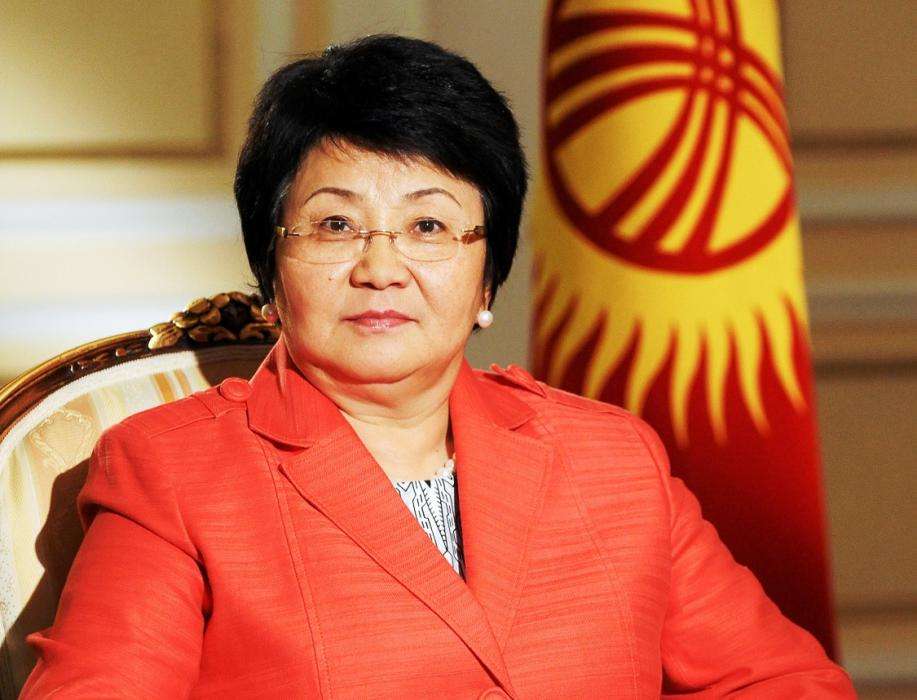
    Roza Otunbayeva, the U.N. Secretary-General’s Special Representative for Afghanistan and Head of the mission, said, “Although there have been some encouraging signs in terms of leadership directives as well as an openness among many de facto officials to engage constructively with UNAMA, and allow visits to prisons, these documented cases highlight the need for urgent, accelerated action by all.”

    “There is a pressing need to consider more engagement with the de facto authorities to end these practices, and I hope the report and its recommendations are seized upon as a matter of priority. We remain committed to the people of Afghanistan and our efforts to maintain constructive engagement, with impartiality and in good faith.”

    Roza Otunbayeva

    In a response that was included in the report, the Taliban-led Foreign Ministry said government agencies have taken steps to improve the human rights situation of detainees, and that Islamic law, or Shariah, prohibits torture.

    It also questioned some of the report’s data. The Ministry of Interior said it has identified only 21 cases of human rights violations.

    The Taliban pledged a more moderate rule than during their previous period in power in the 1990s.

    However, they have imposed harsh measures since seizing Afghanistan in mid-August 2021.

    READ ALSO: Zelenska Calls For The Return Of Ukrainian Children

  • Roza Otunbayeva Addresses UNSC On Taliban Recognition

    Roza Otunbayeva Addresses UNSC On Taliban Recognition

    According, to the United Nations envoy to Afghanistan and head of the UN Assistance Mission in Afghanistan (UNAMA), the international world would find it “nearly impossible” to recognize the Taliban administration, as long as limitations on women and girls continue to persist.

    The United Nations Security Council.

    Roza Otunbayeva addressed the United Nations Security Council that, the Taliban had demanded to be recognized by the United Nations and its member states, “but at the same time they act against the key values expressed in the United Nations Charter.”

    “In my regular discussions with the de facto authorities, I am blunt about the obstacles they have created for themselves by the decrees and restrictions they have enacted, in particular against women and girls. We have conveyed to them that as long as these decrees are in place, it is nearly impossible that their government will be recognized by members of the international community.”

    Roza Otunbayeva, UN Envoy To Afghanistan.
    The Taliban took over power by overthrowing the Afghan civilian government, after the U.S and NATO ended their two decades stay in the country.

    Since taking office in August 2021, when U.S and NATO forces withdrew their two-decade-long occupation in the country, the Afghanistan Taliban administration has not been formally recognized by any foreign state or international organization.

    The Taliban previously pledged a more progressive administration than their predecessors from 1996 to 2001, but has now begun to impose limitations on women and girls, including prohibiting women from most jobs and public venues. Girls are likewise barred from continuing their education past the sixth grade.

    The Taliban has also reinstated their rigorous application of Islamic law, which includes public flogging, stoning, and public executions.

    The Afghan Taliban administration instituted a ban on women that worked with the UN in April. It therefore called on the UN to substitute the women with men, which the UN declined.

    Otunbayeva claimed that, restrictions on women and girls had not changed, despite calls from the international world to review the ban. Also, the Taliban in April, instituted an embargo on Afghan women working for the UN. Otunbayeva stated that, the Taliban had provided her no reason for the prohibition and “no assurances that it will be lifted.”

    “It is also clear that these decrees are highly unpopular among the Afghan population. They cost the Taliban both domestic and international legitimacy while inflicting suffering on half of their population and damaging the economy.”

    Roza Otunbayeva, UN Envoy to Afghanistan.

    She again said that, the UN is “adamant” that, female local workers will not be substituted with male staff, “as some Taliban authorities have suggested.”

    The Taliban has also ban educating girls past sixth grade.

    However, restrictions imposed on Afghan women operating for the UN, was denounced as “unprecedented in the history of the United Nations” in a resolution that the Security Council unanimously adopted. The resolution also urged the Taliban to promptly lift the increasingly severe restrictions placed on women and girls.

    The UN official also informed council members that, the Taliban leadership “remains insular and autocratic,” with “an unaccountable central authority” and an all-male leadership based almost solely on Pashtun and rural support.

    In addition, extreme family poverty is a major problem in the country, as 58 percent of people “struggles to meet their basic needs.” Though, the country’s economy has now been stable pertaining to inflation and currency rates. The UN envoy claimed that, it was partly due to a decrease in corruption.

    Roza said the UN would be adamant to grant Taliban’s request unless it amends laws restricting women and girls education.

    In her closing remarks to the council, Otunbayeva stated that, the UN in Afghanistan has been negotiating with the Taliban leaders of the nation, but added that if limitations on women are abolished, much more could be accomplished.

    “We could do much more, however, if the Taliban rescinded its punishing restrictions on its female population,” she said.

    READ ALSO:EU Heaps Additional Sanctions On Russia

  • No Obstacles For UN Work In Afghanistan- Taliban

    No Obstacles For UN Work In Afghanistan- Taliban

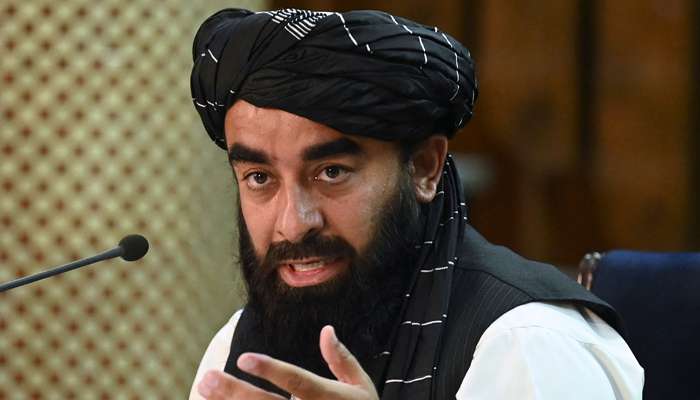
    The Taliban’s Chief Spokesman, Zabihullah Mujahid has disclosed that there are no obstacles for the U.N. to function in Afghanistan, after they barred Afghan women from working at the global body.

    Last week, Afghanistan’s Taliban rulers took a step further in the restrictive measures they have imposed on women and said that female Afghan staffers employed with the U.N. mission can no longer report for work.

    The ban is being actively enforced by the country’s intelligence agency, which reports to the Taliban’s leadership in Kandahar.

    The U.N. has stated that it cannot accept the decision, calling it unlawful and an unparalleled violation of women’s rights. It says women are crucial for the delivery of life-saving aid to millions of Afghans, and has instructed its national staff, male and female, to stay at home.

    Afghan women chant and hold signs of protest during a demonstration in Kabul, Afghanistan, March 26, 2022. 

    As part of the statement made on Wednesday, April 12, 2023, Mujahid, the Taliban-led government’s Chief Spokesman and part of the Supreme leader’s inner circle, denied the assertion that authorities were to be blamed for Afghanistan’s many crises.

    The decision to bar Afghan women from working at the U.N. was an internal matter and should be respected by all sides, Mujahid said, as he set out the Taliban’s position and demands to the international community.

    “This decision does not mean there is discrimination here, or that the activities of the United Nations are blocked. On the contrary, we are committed to all the rights of all our countrymen, taking into account their religious and cultural interests.

    “Considering the emergency situation in Afghanistan, it is necessary for the member countries of the United Nations to resolve the problem of frozen Afghan assets, banking, travel bans and other restrictions as soon as possible so that Afghanistan can progress in economic, political and security areas. Afghans have the capacity to stand on their own feet.”

    Zabihullah Mujahid

    Aid agencies have been providing food, education and health care support to Afghans in the wake of the Taliban takeover and the economic collapse that followed it.

    However, distribution has been severely affected by a Taliban decree banning women from working at non-governmental organizations and, now also at the U.N, allegedly because they were not wearing the hijab, or Islamic headscarf correctly, or following gender segregation.

    A Spokesman for the Ministry of Foreign Affairs, Abdul Qahar Balkhi, called the order barring Afghan women from NGO and U.N. work “an internal values-based issue” that is not harming others.

    U.N Initiates Operational Review Period

    According to a U.N. statement, the United Nations’ Head of mission in Afghanistan, Roza Otunbayeva, has “initiated an operational review period” lasting until May 5, 2023, in response to the ban.

    Roza Otunbayeva, United Nations’ Head of mission in Afghanistan.

    During this time, the U.N. will “conduct the necessary consultations, make required operational adjustments, and accelerate contingency planning for all possible outcomes,” a veiled suggestion that it could move to suspend its mission and operations in the embattled country.

    The U.N. has warned that its Afghan operations are also under threat because of a severe funding crisis, putting millions of lives at risk.

    “Already, the food basket has had to be cut to half due to insufficient resources. If funding is not urgently secured, millions of Afghans will be staring down the barrel of famine, disease & death,” its office for humanitarian affairs noted in a tweet on Wednesday, April 12, 2023.

    No country has recognized the Taliban as the legitimate government of Afghanistan and the country’s seat at the U.N. is held by the former government of President Ashraf Ghani.

    READ ALSO: Taiwan’s Ruling Party Selects Vice President As Presidential Candidate