Tag: Security Council reform

  • Mahama’s Brilliant UN Speech Draws Wide Praise

    Mahama’s Brilliant UN Speech Draws Wide Praise

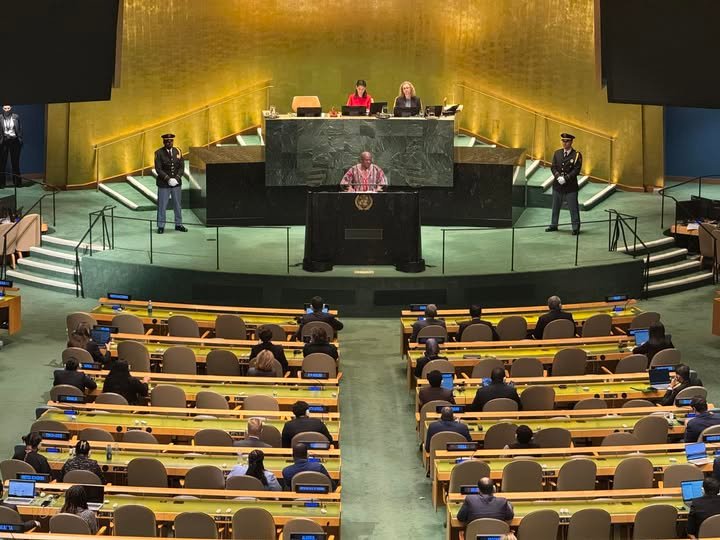
    President John Dramani Mahama’s address at the 80th United Nations General Assembly (UNGA) in New York has won widespread acclaim from political figures, legal minds, civil society actors, and ordinary citizens, who have described the speech as bold, brilliant, and reflective of the kind of leadership Africa needs on the global stage.

    The President’s intervention touched on critical global issues such as climate change, financing for development, immigration, and the protracted conflicts in the Middle East, while also calling for Africa’s rightful place in the United Nations Security Council. His delivery and the substance of his message struck a chord with audiences at home and abroad, triggering a wave of positive commentary.

    Richard Dela Sky, a renowned broadcaster and Legal Practitioner, was among the first to share his admiration for the President’s performance. “JM wrote and delivered a truly beautiful speech that puts Ghana on the international map for all the good reasons,” he wrote. “As an African, I felt proud watching him do the dooo. Let’s do this again…

    Legal practitioner Timothy Donkor was equally impressed, describing the address in a single word: “Brilliant.” His view was echoed by Osagyefo Oliver Mawuse Barker-Vormawor, a prominent activist, who wrote, “JM spoiled their time with that UN speech. Good job. Aka Galamsey.” His remark underscored the President’s readiness to speak frankly on issues of exploitation and global inequality that continue to disadvantage Africa.
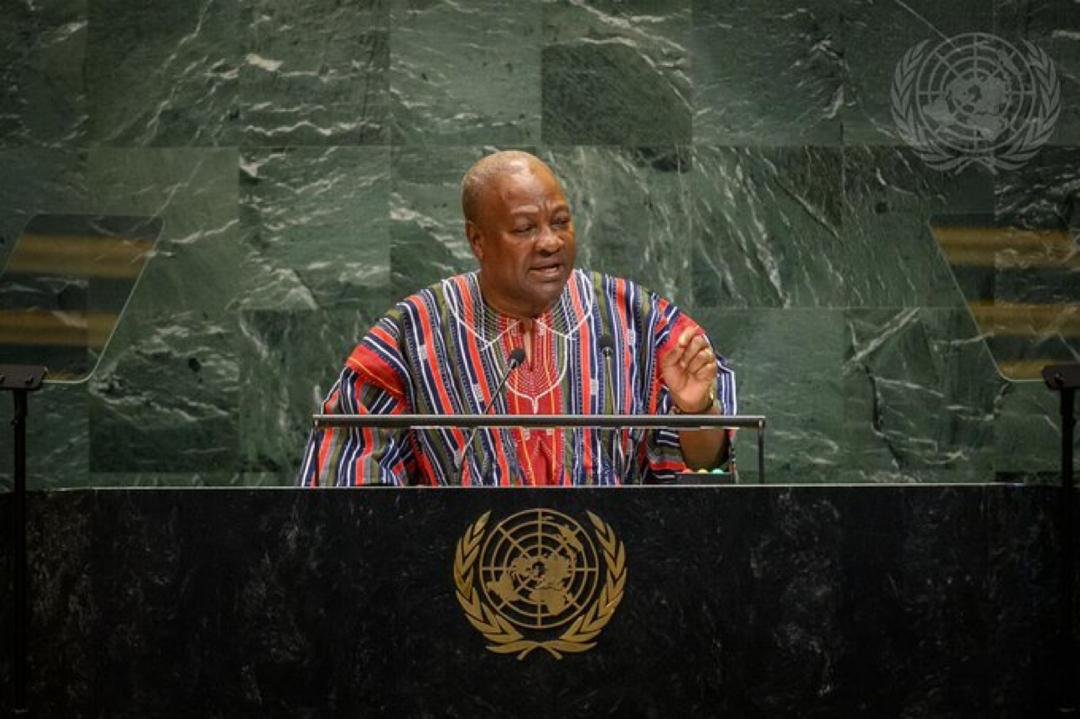
    President John Dramani Mahama

    Opposition’s Praise

    Notably, even voices from the opposition party joined in acknowledging the strength of the President’s delivery. Salam Mustapha, the National Youth Organizer of the New Patriotic Party (NPP), commended Mahama while situating the address within the broader conversation about Africa’s place in global governance.

    “On UNGA@80. I have watched President John Dramani Mahama’s speech this evening. I’ve also watched the speech of Kenya’s Ruto, and I admire both for taking on the UN. Africa must begin to boycott the UN and its agencies if they can’t show respect to the continent.

    “Africa deserves a permanent seat at the Security Council with veto powers. If the UN cannot respect the 54 countries, then there’s no point sponsoring huge delegations to the General Assembly every year.”

    Salam Mustapha, the National Youth Organizer of the New Patriotic Party (NPP)

    His remarks reflect a growing consensus that Africa’s underrepresentation on the Security Council undermines the principles of equity and justice that the UN was built to uphold, and that Mahama’s words were a timely reminder of the continent’s demand for reform.
    President John Dramani Mahama

    Dr. Mohammed Amin Adam, Member of Parliament for Karaga and a former Minister for Finance, also acknowledged the speech as a strong contribution to global debates, stating that “President Mahama’s address at the 80th United Nations General Assembly was truly commendable”.

    He expressed excitement over the President’s insights on pressing global issues such as immigration, financing for development, the Middle East conflict, and climate change, asserting that President Mahama’s eloquent delivery and thought-provoking perspectives showcased his leadership capabilities on the international stage.

    Calls for Local Translation of Results

    While praising the speech, Dr. Adam also called for a translation of such global vision into local results.

    “It’s important how such a well-articulated vision and approach to international development translates to national development in Ghana, particularly as the reset economy is not resetting, whilst galamsey is out of control and free speech is being murdered. Let’s hope his leadership principles and global perspectives inform his decision-making for the benefit of Ghana’s development. Best wishes to you, Mr. President.”

    Dr Mohammed Aamin Adams

    The chorus of voices in response to Mahama’s address illustrates the resonance his message carried across political lines and professional backgrounds. For many, the speech was not only an assertion of Ghana’s leadership on the international stage but also a rallying call for Africa to demand respect, fairness, and equity in multilateral systems that too often leave the continent marginalized.

    Many social media activists say the speech stands out not just for its rhetoric but for its timing. With geopolitical instability rising, global inequality widening, and Africa increasingly positioned as a central player in resource supply and demographic growth, Mahama’s call for reform and dignity in Africa’s international engagements resonated beyond the Assembly hall.
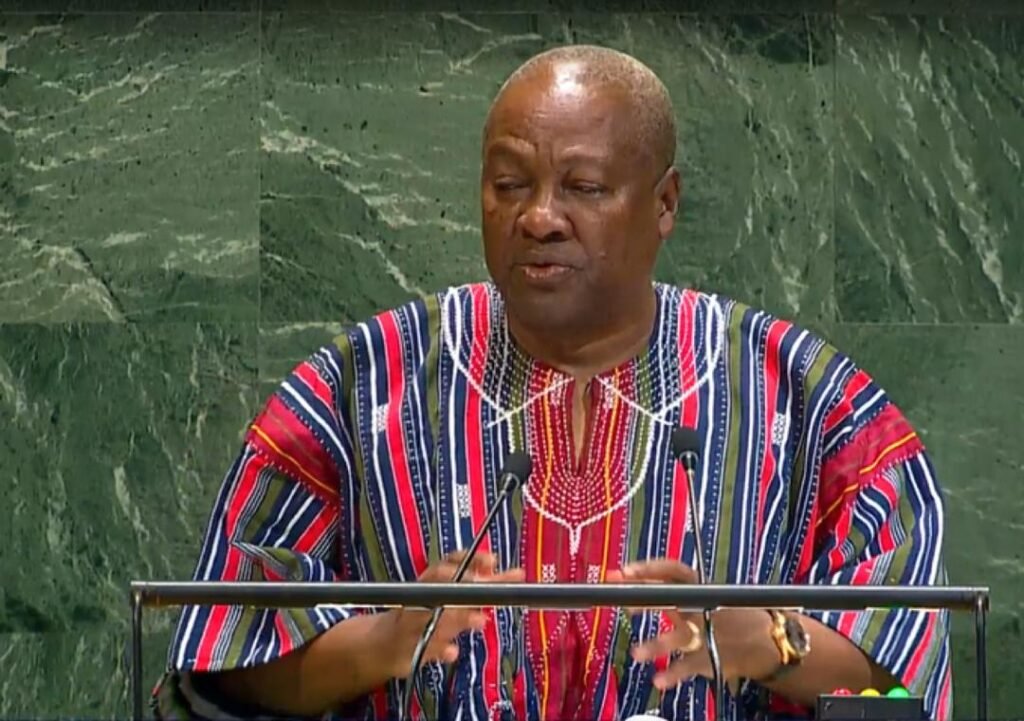
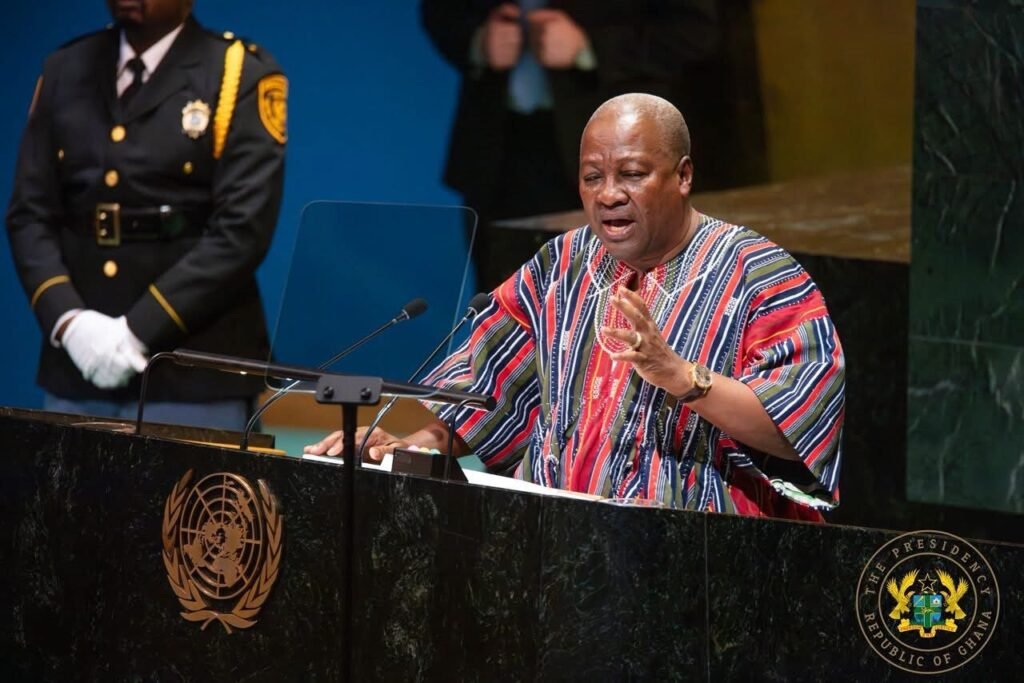
    Ghana’s President John Dramani Mahama
    Ghana’s President John Dramani Mahama

    The President’s performance at UNGA80, therefore, has not only stirred pride among Ghanaians but also sparked fresh discussions about how Ghana and Africa should approach the global stage going forward.

    From the eloquence of his words to the urgency of his themes, President Mahama’s address has been hailed as one of the defining moments of his international leadership—a speech that, as Richard Dela Sky put it, “puts Ghana on the international map for all the good reasons.

  • Security Council Urged To Reform Global Governance

    Security Council Urged To Reform Global Governance

    The need to strengthen international cooperation and implement reforms in global governance took center stage during a ministerial-level debate at the United Nations Security Council. Convened by China, which holds the Council presidency this month, the meeting comes as the UN prepares to mark its 80th anniversary later this year.

    UN Secretary-General António Guterres opened the session, stressing the urgency of global collaboration to address escalating crises, from climate change to deepening economic inequalities. “Global solidarity and solutions are needed more than ever,” he said, highlighting the increasing threats posed by violent extremism, geopolitical conflicts, and the evolving dangers of artificial intelligence (AI).

    With conflicts persisting in Ukraine, Sudan, the Democratic Republic of the Congo, and the Occupied Palestinian Territories, Guterres warned that peace is becoming increasingly elusive. He emphasized that “terrorism and violent extremism remain persistent scourges” and raised concerns over nuclear threats, calling them a “clear and present danger.”

    The Secretary-General urged member states to rally behind the Pact for the Future, an agreement adopted by UN member states last September. Designed to modernize global governance, the Pact proposes strengthening coordination with regional organizations, increasing participation of marginalized groups in peace efforts, and overhauling international financial structures to better serve the modern world.

    Among its provisions, the Pact calls for an AI governance body that allows developing nations to contribute to decision-making—a first-of-its-kind initiative. Guterres also stressed the importance of Security Council reform, stating that the body “must reflect the world of today, not the world of 80 years ago.”

    Shaping a More Inclusive Security Council

    The debate emphasized the necessity of expanding Security Council membership to mirror contemporary geopolitical realities. Calls for making the Council more inclusive, transparent, and democratic have been ongoing in the UN General Assembly for over a decade.

    “Now is the time to build on the momentum provided by the Pact for the Future,” Guterres urged, calling on member states, including the permanent five members of the Council, to work towards a consensus on much-needed reforms. He reminded attendees that even during the Cold War, the Council managed to function effectively through “collective decision-making and vigorous dialogue.”

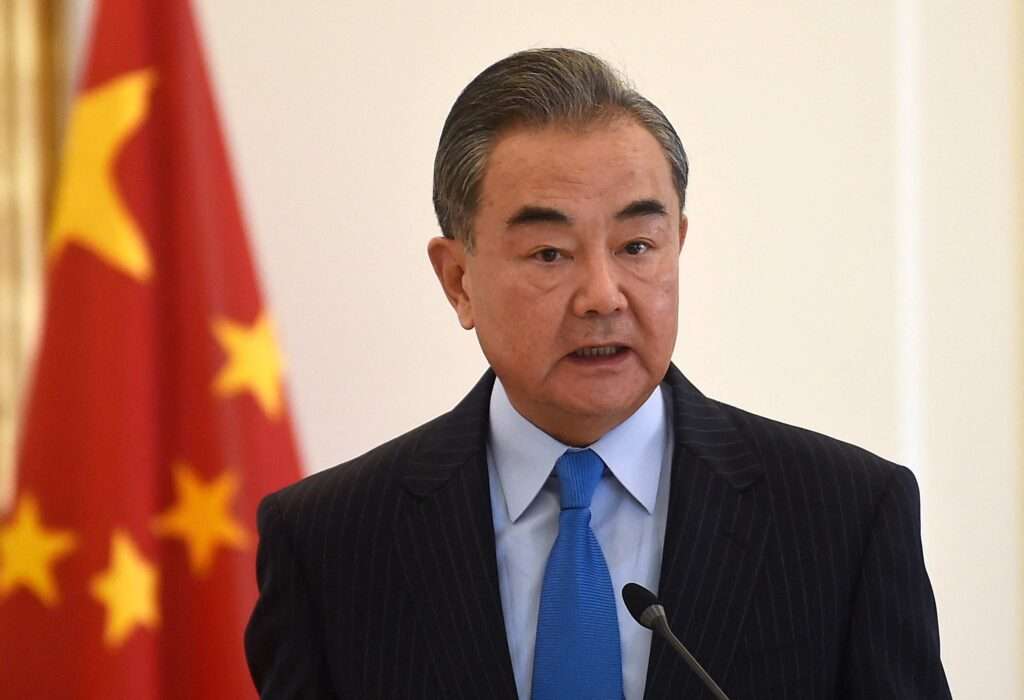
    China’s Foreign Minister, Wang Yi, who chaired the meeting, reinforced the need for a more just international order, upholding sovereign equality, and respecting national choices. 

    “We must respect the development acts chosen independently by people of all countries, uphold the principle of non-interference in internal affairs, and not impose one’s will upon others.”

    Wang Yi
    Security Council Urged To Reform Global Governance
    Chinese Foreign Minister Wang Yi

    Wang stressed that all nations must uphold the authority of the UN Security Council, ensuring that its resolutions are binding. He condemned unilateral sanctions imposed without UN authorization, labeling them as “lacking legal basis, defying justification, and contradicting common sense.”

    Furthermore, Wang called for the fair representation of developing nations, particularly African countries, in international decision-making. He argued that “international affairs should no longer be monopolized by a small number of countries,” and that developing nations have a right to advocate for their interests on the global stage.

    Western countries undermining UN authority: Russia

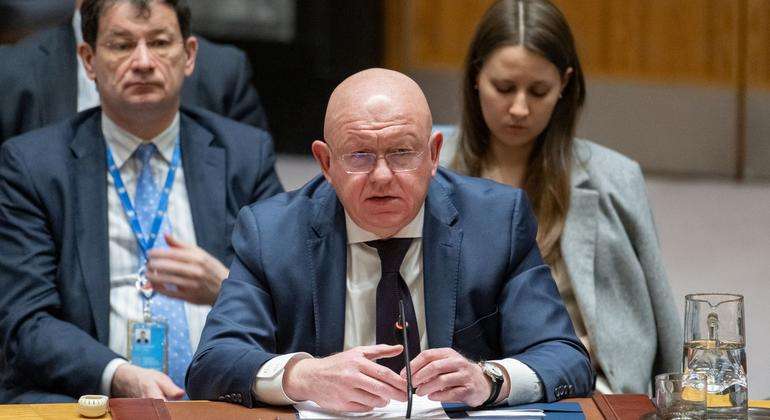
    Despite its strengths and weakness, the UN has fulfilled its founding purpose of preventing a new World War, Russian Ambassador Vasily Nebenzya told the meeting.

    He warned, however, that the world is “teetering on the brink of a direct military confrontation between nuclear powers” as western countries undermine UN authority and the primacy of international law.

    “We are witnessing a broad application of the practice of unilateral coercive measures being imposed whenever supporters of methods of force in global politics do not manage to push through their desired outcome at the Security Council.

    “Failure to abide by the UN Charter and a reckless approach to Security Council resolutions on a number of acute international issues has now become the hallmark of the West.” 

    Vasily Nebenzya
    Russian Ambassador Vasily Nebenzya

    Regarding efforts to resolve the crisis in Ukraine, he said “it is becoming clear who genuinely advocates a more fair, more equal world, and who are living in the past and are striving at any cost to make their geopolitical agendas a reality.”

    As the UN approaches its 80th anniversary, the Security Council faces mounting pressure to adapt to a rapidly changing world. Leaders at the debate agreed that strengthening multilateralism and reforming outdated structures is essential to ensuring global peace and security in the 21st century.