Tag: SSA-UoG

  • Government Approves Revised Allowance Structure for Public Universities Senior Staff

    Government Approves Revised Allowance Structure for Public Universities Senior Staff

    The Government of Ghana, through the Minister for Finance, Dr Cassiel Ato Forson, has formally approved the implementation of revised allowances for eligible members of three senior staff across public universities in the country.

    They include Senior Staff Association of the University of Ghana (SSA-UoG), the Federation of Universities Senior Staff Association of Ghana (FUSSAG), and the Technical University Administrators’ Association of Ghana (TUAAG), bringing to an end months of negotiations and industrial action that disrupted administrative operations across many public universities in the country.

    “Following the conclusion of negotiations between the Government and the Senior Staff Association – University of Ghana (SSA-UoG). Federation of Senior Staff Association of Ghana (FUSSAG) and Technical University Administrators’ Association of Ghana (TUAAG), approval is, hereby granted for the payment of revised rates of allowances payable to eligible staff of the above-stated Unions per the attached schedule marked as ‘Appendix A’”.

    Dr Cassiel Ato Forson, Ghana’s Minister for Finance

    According to the Ministry, the revised allowances will take retrospective effect from November 1, 2024.

    In a letter signed by the Minister for Finance, Dr. Cassiel Ato Forson, addressed to key government agencies including the Controller and Accountant-General, the Ghana Tertiary Education Commission (GTEC), and the FWSC, the Finance Ministry explicitly granted approval for the payment of the new rates. 

    The implementation of this agreement is expected to significantly improve the working conditions and morale of non-teaching staff in Ghana’s public universities.
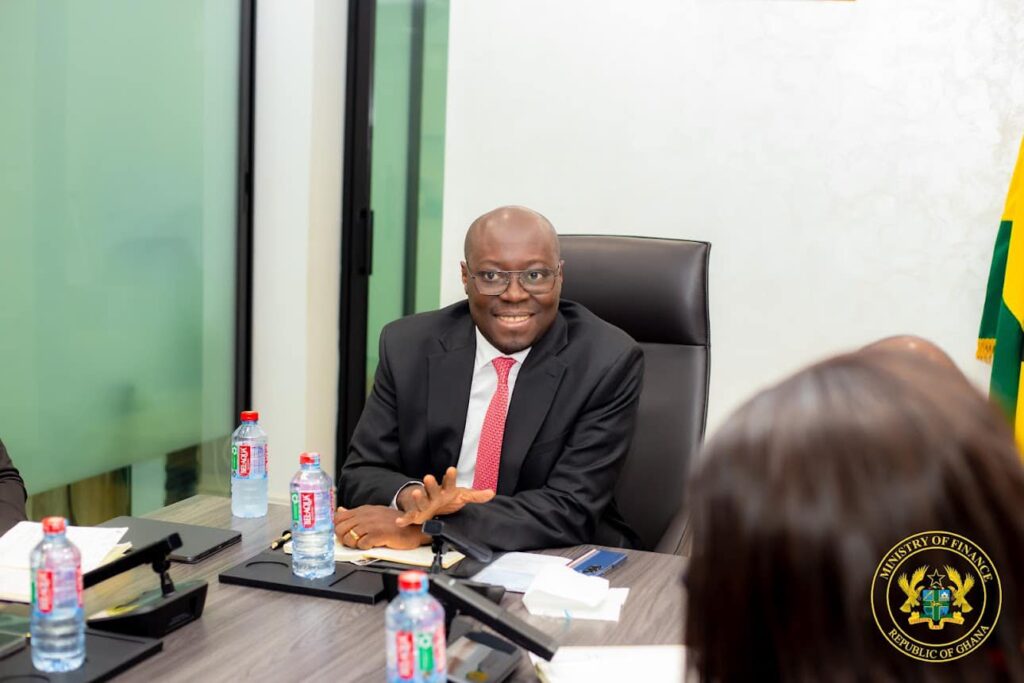
    Ghana's Minister for Finance, Dr. Cassiel Ato Forson
    Ghana’s Minister for Finance, Dr. Cassiel Ato Forson

    Approved Allowance Structure

    The approved allowance structure, detailed in an attached appendix to the Ministry’s directive, includes new rates for various categories of entitlements. 

    For instance, the kilometric allowance for senior staff who use personal vehicles for official assignments has been pegged at GH¢3.50 per kilometre for cars and GH¢1.40 per kilometre for motorcycles. 

    Similarly, the rent allowance has been set at 20% of the monthly basic salary, while owner-occupier staff are entitled to 25% of their monthly salary under the university’s housing policy.

    Other allowances include tools allowance fixed at GH¢7.00 per day, travelling expenses based on a seven-tonne load at prevailing STC rates or equivalent, and tiered height/depth allowances ranging from GH¢2.80 to GH¢5.60 per day, depending on the nature of exposure. 

    For permanent transfers, eligible staff will now receive an amount equivalent to three months’ basic salary, while temporary transfers attract full hotel accommodation for three months, coupled with 20% of the staff’s monthly salary over the same period.

    In a significant shift toward addressing cost-of-living challenges, the government also approved GH¢300 per month for sanitation duties and GH¢400 per month for security roles undertaken by senior staff. 

    Additionally, a utility allowance of GH¢400 per month has been approved for all senior staff, underscoring the government’s recognition of the increasing burden of utility costs on public sector workers.

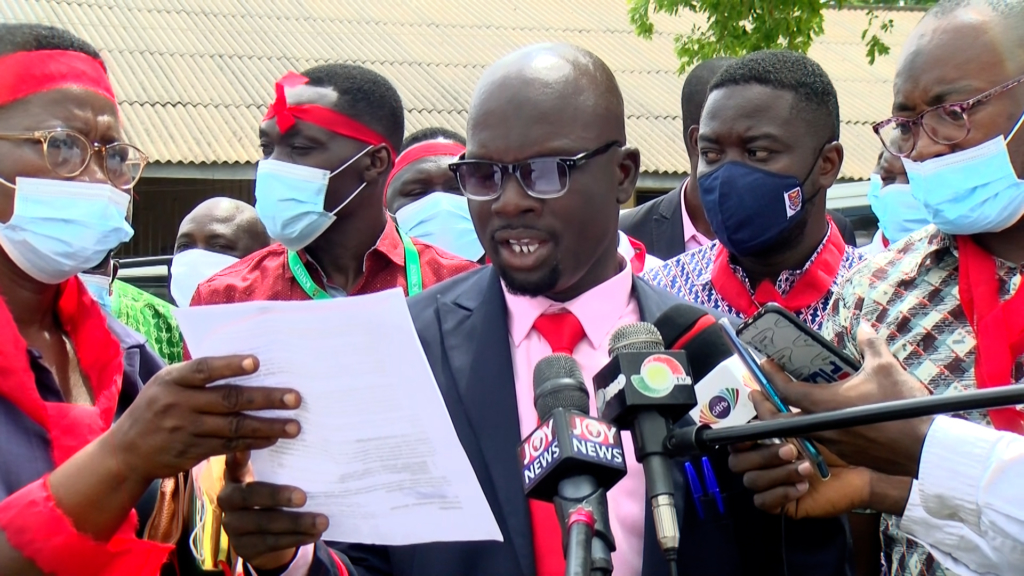
    Leadership of Senior Staff of Public Universities at an earlier press conference

    Other key allowances retained at existing or government-approved rates include acting allowance, funeral grants, warm clothing support, salary advance options (not exceeding three months’ salary), and daily subsistence for day trips now valued at GH¢145 per day.

    Notably, the acting allowance now comes with a guaranteed minimum: eligible acting staff will receive either the difference between their current salary and the minimum salary point of the acting post, or 20% of their basic salary, whichever is higher. 

    In addition, a non-basic allowance of 8% of monthly salary has been approved across the board for all qualifying senior staff.

    Significant Milestone

    The implementation of these revised allowances marks a significant milestone in public sector labour relations, particularly within Ghana’s tertiary education landscape. 

    The move comes on the back of sustained industrial agitation by the three unions—SSA-UoG, FUSSAG, and TUAAG—who jointly declared industrial action recently to press home their demands for improved conditions of service.

    Following the Minister of Finance’s approval of the revised allowance, the unions have directed their members to resume work on Friday, May 23, 2025.

    The Fair Wages and Salaries Commission played a key mediating role in securing consensus, with the Ministry of Education and the Ghana Tertiary Education Commission also heavily involved in ensuring that the demands of the unions were aligned with national fiscal priorities.

    With the new structure now approved and implementation directives issued, attention is expected to shift toward compliance and monitoring to ensure timely and accurate disbursement of the allowances. 

    University administrations across the country will be under pressure to update their payroll systems to reflect the revised entitlements, with oversight from the Controller and Accountant-General’s Department as well as the Auditor-General’s Office.

    Dr. Forson, in approving the new framework, emphasised the government’s commitment to improving the welfare of all public sector employees within the limits of fiscal sustainability. 

    He reiterated that the payment of all allowances must align with government-approved rates and called for immediate implementation of the directive by all relevant institutions.

    Dr Cassiel Ato Forson, Ghana's Finance Minister
    Dr Cassiel Ato Forson, Ghana’s Finance Minister

    The letter was copied to the Deputy and the Minister of Education, the Auditor-General, Audit Service, the Chief Director, the Coordinating Director, and the Director of Budget, all at the Ministry of Finance and finally the Chief Executive of the Fiar Wages and Slaries Commission, underscoring the inter-ministerial and department engagement in addressing the issue.

    The successful resolution of the dispute and the subsequent government approval for implementation signal a broader willingness by the new administration to engage constructively with organised labour, especially within the critical education sector. 

    For the unions involved, the approval represents a vindication of their collective resolve and the strategic importance of industrial action in achieving labour justice.

  • Union Leaders Express Doubts Ahead of Crucial Education Strike Meeting

    Union Leaders Express Doubts Ahead of Crucial Education Strike Meeting

    Several labor unions leaders have expressed doubts, indicating that unless their longstanding demands are fully addressed, the strike that has paralyzed many educational institutions across the country will continue.

    As Many unions within the education sector prepare for a critical meeting with the Minister of Education on Tuesday, October 1, growing skepticism surrounds the potential for meaningful outcomes.

    George Ansong, National Chairman of the Senior Staff Association of Universities of Ghana (SSA-UoG), voiced his doubts about the effectiveness of the meeting in an interview. He expressed frustration over the slow response from the relevant authorities.

    “I don’t expect anything substantial to come out of this meeting because the Ministry of Finance, which is crucial to addressing our concerns, is not directly involved.

    “It has taken three weeks of strike action for the Ministry of Education to finally invite us to a meeting, which is concerning.”

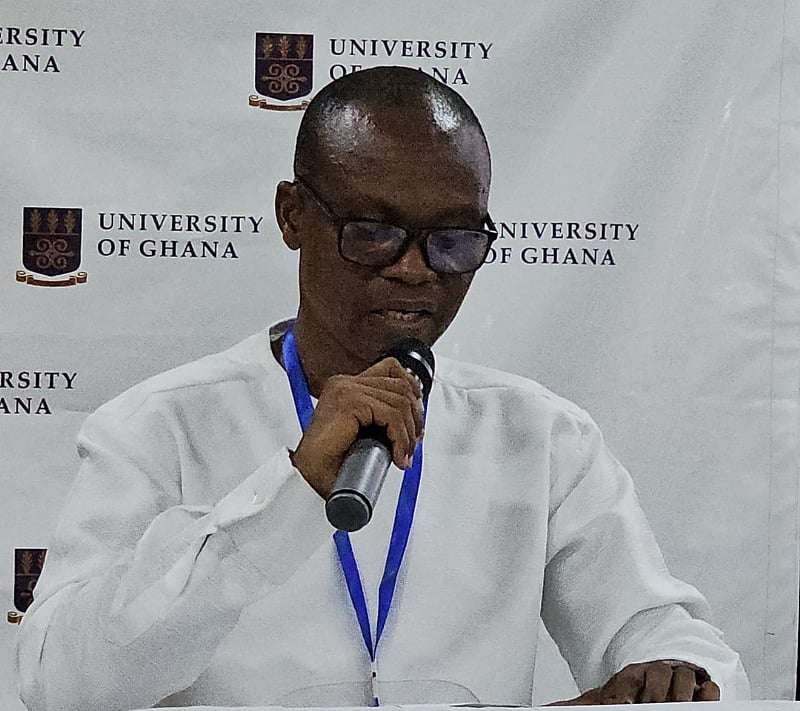
    George Ansong, National Chairman of the Senior Staff Association of Universities of Ghana (SSA-UoG)

    Mr. Ansong further expressed frustration with the slow response from government officials, underscoring the unions’ demands for more transparency and swift action. He stressed that without clear communication from the Ministry of Finance, he did not foresee any major resolutions.

    “This is not the first time we are seeing some of these things. We often attend meetings, and are promised action, but then nothing changes,” he added.

    The skepticism from union leaders stems from a history of unfulfilled government commitments, particularly on issues surrounding salary arrears, pension payments, and other financial allowances.

    This frustration was echoed by Salamatu Briamah, National Chairperson of the Teachers and Educational Workers Union (TEWU).

    Mr. Briamah highlighted that the unions were expecting not just verbal assurances, but a formal Memorandum of Understanding (MOU) that would outline a clear timeline for implementing the agreed-upon measures.

    “We have already negotiated, and the government agreed to pay us, but they have not fulfilled their commitments,” Mr. Briamah said.

    “We expect an MOU that specifies that by the end of October, our allowances will be paid. Furthermore, they need to release our Tier Two pension payments by early October.”

    Salamatu Briamah, National Chairperson of the Teachers and Educational Workers Union (TEWU)

    The Tier Two pension system has been a long-standing point of contention between the unions and the government. Payments under this scheme have reportedly been delayed, aggravating financial stress among staff and union members.

    The unions argued that these financial delays undermine trust in the government’s willingness and ability to address their concerns.

    Growing Frustration Over Government’s Approach

    Michael Owusu Ansah, National President of the Ghana Association of University Administrators (GAUA), also criticized the government’s approach to resolving the crisis.

    He argued that large meetings involving multiple unions with differing demands were not an effective way to address the issues at hand.

    We don’t believe one meeting can solve everyone’s issues or end the strike. We will attend the meeting, but will discuss what happens with our leaders afterwards,” Mr. Owusu Ansah explained.

    “We’ve been through this before, and then the government failed to honor its part of the agreement. So, we don’t think tomorrow is going to be just one of those meetings where the Minister will appeal and say we understand you, we have heard your concerns, so call off the strike, and then we will engage.”

    Michael Owusu Ansah, National President of the Ghana Association of University Administrators (GAUA)

    The ongoing strike, involving several key unions such as TEWU, GAUA, the Colleges of Education Teachers Association of Ghana (CETAG), and SSA-UoG, has already had a significant impact on the country’s education system.

    Classes have been disrupted, research and administrative work stalled, and the overall academic calendar for many universities and educational institutions has been thrown into disarray. This widespread disruption has sparked concern among stakeholders, including parents, students, and labor experts.

    The growing distrust between the unions and the government presents a significant obstacle to resolving the crisis. With the Ministry of Finance absent from the meeting, skepticism continues to grow about whether any meaningful outcomes can be achieved.

  • University Staff Unions Call Off Strike Following Government Concessions

    University Staff Unions Call Off Strike Following Government Concessions

    The Senior Staff Association-Universities of Ghana (SSA-UoG), the Federation of Universities Senior Staff Associations of Ghana (FUSSAG), and the Teachers and Educational Workers Union of the Trade Union Congress (TEWU-TUC) have called off their planned industrial action scheduled for August 9th, 2024.

    The leadership of the three tertiary workers unions, in a joint statement, pointed out that the decision follows the government’s intervention to extend the upward adjustment in the Vehicle Maintenance Allowance (VMA) to their members.

    “We believe that this action is a step in the right direction towards fairness and equity in line with our agreed conditions of service”, the statment read.

    The leadership of the three unions expressed their satisfaction with the government’s move, describing it as a significant step towards fairness and equity in their conditions of service.

    The unions had previously indicated their intention to strike in response to grievances over the Vehicle Maintenance Allowance, which they argued was inadequate and unfairly distributed.

    The unions thus indicated that the government’s decision to restore the VMA to the affected members was the result of extensive negotiations between the unions and the relevant authorities.

    The unions praised the Government for this intervention, acknowledging it as a positive development that demonstrates a genuine commitment to addressing their concerns.

    “We are satisfied that the VMA has been restored to our members, and we believe that this decision demonstrates a willingness to work with us to resolve all outstanding issues”.

    George Ansong, National Chairman SSA-UoG; Ken Puoticre Yelibe, National Chairman -FUSSAC and King James Azurtibalı, General Secretary TEWU -TUC

    However, while the unions welcomed the government’s move, they also appealed for a further extension of the adjustment to all categories of Senior Staff in Public Universities across Ghana, without any eligibility restrictions.

    The unions argued that all members, regardless of rank, contribute significantly to the operations and advancement of public universities and should equally benefit from the allowance adjustment.

    “It is only fair that all members benefit from this adjustment, regardless of their rank. We believe that all members of our esteemed Association commute to work to perform their official duties for the collective advancement of Public Universities in Ghana”.

    George Ansong, National Chairman SSA-UoG; Ken Puoticre Yelibe, National Chairman -FUSSAC and King James Azurtibalı, General Secretary TEWU -TUC
    George Ansong, National Chairman SSA-UoG;

    Commitment to Further Engagement

    The three unions reaffirmed their commitment to ongoing dialogue with the government and other stakeholders to resolve any remaining issues affecting their working conditions.

    They assured their members of continued advocacy and engagement to ensure that their concerns are adequately addressed.

    “We would like to assure our members that we will continue to engage with the Government and other stakeholders to address all outstanding issues that affect our working conditions. We are committed to working together to build a better future for Public Universities in Ghana”.

    George Ansong, National Chairman SSA-UoG; Ken Puoticre Yelibe, National Chairman -FUSSAC and King James Azurtibalı, General Secretary TEWU -TUC

    The leadership of SSA-UoG, FUSSAG, and TEWU-TUC also expressed gratitude to their members for their understanding and support throughout the negotiation process.

    They called on members to meet the decision with enthusiasm and to remain united as they continue their efforts to improve working conditions within public universities.

    In addition, the unions extended their appreciation to the media for their professionalism in covering the unions’ activities and ensuring that their message was effectively communicated to the public.

    The statement was signed by George Ansong, National Chairman of SSA-UoG; Ken Puoticre Yelibe, National Chairman of FUSSAG; and King James Azurtibali, General Secretary of TEWU-TUC.

    With the industrial action averted, the leadership of three unions emphasized that they are keen to ensure that the government’s commitments are fulfilled and that all categories of senior staff in public universities receive the support and allowances they rightfully deserve.

  • Nationwide Teacher Unions’ Strike Looms Over Unpaid Allowances

    Nationwide Teacher Unions’ Strike Looms Over Unpaid Allowances

    Three major teacher unions, the Senior Staff Association-Universities of Ghana (SSA-UoG), the Federation of Senior Staff Associations of Ghana (FUSSAG), and the Teachers and Educational Workers Union of the Trade Union Congress (TEWU-TUC), have declared their intention to embark on a nationwide strike on August 9, 2024. 

    This action is contingent upon the Ministry of Finance authorizing the payment of their agreed allowances by August 8, 2024.

    In a strongly worded statement, the unions expressed their growing frustration with the Ministry of Finance over delays in issuing a letter necessary to effect the payment of the Vehicle Maintenance Allowance (VMA) and other related allowances. 

    “Failure to do so will result in the unions being forced to take industrial action on the 9th of August 2024. The SSA-UoG, FUSSAG, and TEWU (TUC) are committed to fighting for the rights of their members and will not rest until justice is served.”

    George Ansong, National Chairman of SSA-UoG, Ken Puotiere Yelibo; National Chairman of FUSSAG and King James Azortibah, General Secretary of TEWU-TUC

    The unions accused the government of using deceptive tactics to delay payments and deny them their rightful dues. This accusation underscores a deep-seated mistrust and a history of unfulfilled promises. 

    “Our patience has worn thin,” the unions declared, emphasizing their readiness to take whatever action necessary to ensure their members receive their entitled allowances.

    The unions highlighted the urgency of the situation, urging the government to act swiftly to avoid widespread disruption in the education sector. 

    Potential Impact on the Education Sector

    A strike by these unions would have a significant impact on the education sector in Ghana. The SSA-UoG, FUSSAG, and TEWU-TUC represent a substantial number of senior staff and educational workers across the country’s universities and schools. 

    The absence of these would disrupt academic activities, administration, and essential services within educational institutions.

    The unions further reiterated their commitment to protecting the rights and welfare of their members and called on the Ministry of Finance to honor its commitments.

    “The Fair Wages and Salaries Commission has done what is needed by writing to the Ministry of Finance for payment to be effected. We have tried to engage the Ministry on several occasions to release a letter to that effect so our members could be paid, but the Ministry has refused”

    George Ansong, National Chairman of SSA-UoG, Ken Puotiere Yelibo; National Chairman of FUSSAG and King James Azortibah, General Secretary of TEWU-TUC

    This potential strike is not just a matter of unpaid allowances; it reflects broader issues within the education sector, including the government’s commitment to honoring agreements and the general treatment of educational workers. 

    The unions’ ultimatum brings to light the critical need for dialogue and resolution to prevent a crisis that could affect thousands of students and staff.

    For the sake of the students, staff, and the broader education sector, swift and decisive action is necessary. The resolution of this issue requires not only the fulfillment of financial obligations but also a commitment to fostering trust and cooperation between the government and educational unions.

  • Senior University Staff Threaten Strike Over Unpaid Tier-2 Contributions

    Senior University Staff Threaten Strike Over Unpaid Tier-2 Contributions

    The Senior Staff Association of Universities of Ghana (SSA-UoG) has issued a stern warning, declaring a potential strike if the government does not fulfill its obligation to clear the long-standing Tier-2 contributions by January 15, 2024.

    The association revealed that these payments, pending since February 2023, have yet to be settled by the government, despite an initial agreement.

    During the SSA-UoG’s National Executive Council (NEC) meeting at CKT-UTAS in Navrongo, it was disclosed that the government’s failure to pay contributions persisted despite previous agreements.

    The association expressed disappointment, citing historical instances where the government deliberately delayed payments and even refused to pay Tier-2 contributions between 2010 and 2016.

    “Historically, the Government on several occasions has failed to pay contributions on time to the Board of Trustees for effective management. It will be recalled that between 2010 and 2016, the Government deliberately refused to pay members’ Tier-2 contributions.

    “When the leadership of SSA-UoG requested that the Government pay the three percent penalty (by the Pensions Act) on the amount which could have given us over Two Hundred Million Ghana Cedis, they refused and instead used simple interest rates to calculate which gave us Fifty-One million Ghana Cedis.”

    SSA-UoG

    The statement issued by SSA-UoG demanded the government urgently pays all outstanding debt and contributions.

    “Government as a matter of urgency pay all outstanding debt/contributions together with the appropriate interest from February to December 2023 using the three percent penalty rates as stipulated by the Pension’s Act, Act 766 section 64.”

    SSA-UoG

    The NEC meeting highlighted the government’s refusal to comply with pension laws, raising concerns about the financial welfare of its members. The government’s failure to apply the mandated three percent penalty interest led to the intervention of the National Labour Commission (NLC), currently reviewing the matter.

    The association emphasized the detrimental impact on retirees from 2020 to 2023, who were denied their rightful lump sums, and faced financial hardship in their retirement. The SSA-UoG accused the government of disregarding the welfare of university senior staff and pensioners.

    Adding to their grievances, the SSA-UoG expressed dissatisfaction with directives from the Fair Wages and Salaries Commission (FWSC) and the Ghana Tertiary Education Commission (GTEC) instructing university management to cut overtime allowances for weekend and holiday work. These directives were deemed contrary to the Labour Act and agreed-upon Conditions of Service.

    The association urged university management to resist the directives from FWSC and GTEC, emphasizing the need to uphold existing collective agreements. The SSA-UoG has set a deadline, warning that if the government fails to address its concerns by January 15, 2024, it will be compelled to withdraw its services across all university campuses.

    Geldex Invest Set to Train 300 Undergraduates In A Digital Finance Programme To Mark 1st Year Anniversary
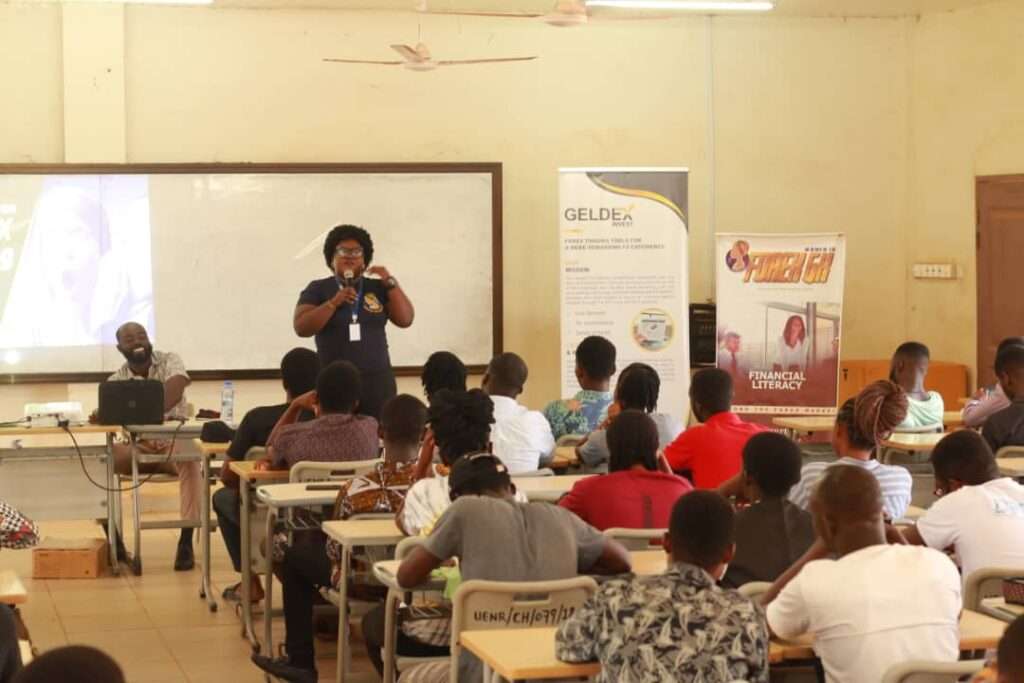
    Students at University of Energy and National Resource

    The looming strike threat by the Senior Staff Association of Universities of Ghana (SSA-UoG) over unpaid Tier-2 contributions could have far-reaching consequences for both university staff and the broader academic landscape. If the government fails to meet the January 15, 2024 deadline, it risks disrupting essential university services, hindering the normal functioning of academic institutions.

    Such strikes not only jeopardize the financial stability of university staff, including those already in retirement, but also compromise the quality of education. Faculty members, key to academic excellence, may find their morale dampened, affecting their commitment to teaching and research. The potential withdrawal of services across all university campuses could lead to the suspension of critical academic activities, creating a ripple effect on students’ academic progress.

    Moreover, the strike threat highlights systemic issues within the pension system, pointing to a recurring problem that demands a comprehensive solution. The government must address these concerns promptly to avert the negative consequences of a strike, ensuring the stability of both university staff and the education sector as a whole. Effective communication and resolution are crucial to maintaining a conducive academic environment.

    READ ALSO: ET Mensah Goes Home

  • Four Labour Unions Go On Strike

    Four Labour Unions Go On Strike

    The leaderships of four labour unions have announced a strike action which takes effect from today, Monday, October 17, 2022.

    The strike is to protest for improved conditions of service, especially with regards to their vehicle maintenance, fuel and off-campus allowances.

    The four labor unions are the University Teachers Association of Ghana (UTAG), the Ghana Association of University Administrators (GAUA), the Senior Staff Association of Universities of Ghana (SSA-UoG) and the Tertiary Education Workers Union of Ghana (TEWU-GH).

    “The National leaders of UTAG, GAUA, SSA-UoG and TEWU-GH have made several efforts since April, 2022 to address some issues related to their fuel, vehicle maintenance and off-campus allowances.”

    Presidents, Labour Unions

    The labour unions, which had suspended an initial suspension threat due to deliberations with the National Labour Commission (NLC), resolved to embark on the suspension after talks with their Employer, the Government of Ghana, ended in a stalemate.

    Meeting with labour unions

    On October 12th, 2022, the NLC ruled that there was going to be a meeting between the Labour Unions and their Employer where “the parties [can] engage within one week on the terms of payment and other related matters.”

    The Fair Wages and Salaries Commission (FWSC), representing the Employer, called such a meeting on Friday, 13th October, 2022 at the Ministry of Education Conference Room.

    The Labour Unions heeded the directives of the NLC by responding to the invitation.

    Even though in a press release by the Labour Unions, they stated categorically that “up until the NLC hearing, the employer had not responded to any of the letters of the Labour Unions or the request of the Commission for the Employer to respond to the complaints of the Labour Unions.”

    The meeting, which was meant to bring finality to the issues, ended in a stalemate.

    The Labour Unions claimed “the Employer failed to present the terms of payment for vehicle maintenance and off-campus allowances which are the main issues in contentions.”

    In essence, the two parties could not reach any meaningful consensus.

    According to the Labour Unions, the Government only suggested the formation of a 10-member committee to address the off-campus allowances.

    The representatives of the Labour Unions rejected the suggestion “and rather pushed for the enforcement of the 2022 adjusted ex-pump rate of GHC10.99.”

    “As a result of the development, we write to communicate that the intended strike action of the Labour Unions in the public universities in Ghana is to commence on Monday, 17th October, 2022 as the Employer has, once again failed to adhere to the directive of the NLC.”

    Presidents, Labour Unions

    At the 13th October, 2022 meeting, the Government of Ghana was represented by the Minister for Education, Dr. Yaw Osei Adutwum, Minister for Employment and Labour Relations and his deputy, Mr. Ignatius Baffour-Awuah and Mr. Bright Wireko-Brobbey, Deputy Minister for Finance, Abena Osei Asare, the CEO of Fair Wages and Salaries Commission, Ing. Benjamin Arthur, the Director General of Tertiary Education Commission (GTEC) amongst others.

    READ ALSO: Reducing Poverty At Scale Is Possible, New MPI Shows

  • We will resume strike if our demands are not met- Zakaria Mohammed

    We will resume strike if our demands are not met- Zakaria Mohammed

    The National Chairman of Senior Staff Association of Universities of Ghana (SSA-UoG), Mr Zakaria Mohammed, has revealed that lecturers will resume strike if their demands from government are not met.

    According to him, if any of the parties are “seen to be dragging its feet”, or found “violating the directive” the Association will equally resort to the NLC for redress.

    His comments follow the suspension of strike by university lecturers over unmet demands from government.

    Mr Mohammed explained that out of the “two options” available to them, they have the right per directives to report the matter to the NLC. As a consequence, an action will be taken “against the party involved”.

    “…We had reminded them of the 28th January ruling that directed government of Ghana to use three months to address the concerns. We had indicated to the Commission that no known punitive action was taken against government, a development that the Senior Staff Association weren’t happy about.

    “We also pointed out to the Commission a number of things. So, the options that are left for us if our demands are not met is to resume the strike. That’s why the strike has been suspended”.

    Zakaria Mohammed
    FWSC hybrid of non-basic allowance and market premium

    Touching on what necessitated the strike action, Mr. Mohammed explained that the Fair Wages and Salary Commission was awarding us market premium and non-basic allowance “in a different form”.

    The new form, he noted, sought to measure the two in one percentage which “we found very disgusting”.

    “Because the other union, our compatriots, were give one percentage that was a representation of the non-basic allowance, that same percentage was what Fair Wages and Salary Commission was giving to us as a hybrid of non-basic allowance and the market premium.

    “When we went to the National Labor Commission, they now decoupled the two. So, it means that the percentage that initially was given to us is supposed to be a representation on one of the allowances and not sought to fuse the two”.

    Zakaria Mohammed
    Tier two pension allowance

    Additionally, he revealed that the Association had written to the minister for employment and labor relation to help address their complaint of “tier two pension arrears”.

    However, since their petition on June 30, Mr Mohammed maintained that “no response” or acknowledgement has come from the minister.

    As a result, the Association’s retirees have not been able to receive their full benefits because the interests have not been paid.

    That notwithstanding, he indicated that Minister for Employment and Labor Relations has invited the Association along with the Minister for Finance, Controller and Accountant General and  their technical team to deliberate on the matter.

    “…The two technical teams will meet tomorrow and determine the modalities on how this tier-two pension interest is going to be calculated because the Fair Wages and Salary Commission has also decoupled the two. It is only right and proper that in law it is not possible whiles you’re on strike you engage with government. It’s not going to happen.

    “So, if the strike was not suspended, what it meant therefore is that, we would have had to forgo the negotiation”.

    Zakaria Mohammed

    Read Also: GNPC’s Aker asset-buy to create over 10,000 jobs