Tag: Traffic

  • Parliament’s LI Allowing MPs and Judges to Bypass Traffic Sparks Criticisms

    Parliament’s LI Allowing MPs and Judges to Bypass Traffic Sparks Criticisms

    A proposed Legislative Instrument (LI) that aims to grant Members of Parliament (MPs) and judges the ability to bypass road traffic has sparked widespread criticisms, with prominent voices from civil society and media calling for its immediate withdrawal.

    This controversial move, framed as a measure of efficiency, is being described by many as a blatant display of political privilege and detachment from the daily struggles of ordinary Ghanaians.

    Musa Danquah, Executive Director of Global InfoAnalytics, strongly criticized the move, arguing that the LI redefines emergency services to unjustifiably include politicians and judges.

     “This is twisted logic or symptoms of a failed state”, Mr Danquah asserted, further stating that the solution lies not in granting special privileges but in better journey planning and time management.

    He suggested that MPs should receive training on using modern tools like Google Maps to navigate traffic effectively.

    “Maybe we need to call the MPs out and demand each MP to show his/her position on the proposed amendment. They should vote it down or withdraw it. Any MP who supports this LI should be targeted for removal. We are tired of them.  If a judge is late to a court, no one will die. If a politician is late to work, no one will die”.

    Musa Danquah, Executive Director of Global InfoAnalytics

    Furthermore, Mr Danquah pointed out that one of the few things ordinary citizens share in common with the politicians are road traffic and bad roads, arguing that if political leaders succeed in passing such legislation, they will not make the effort to fix the problem because it will not affect them.

    Musa Danquah, Executive Director of Global InfoAnalytics

    Mr Danquah highlighted a key concern that such privileges would further diminish the impetus for infrastructural improvements.

    LI Missess Priorities

    Moreover, Saddick Adams, a renowned sports journalist and activist, echoed similar sentiments and criticized the ineffectiveness of past transport ministers and the persistent reliance on outdated infrastructure designs.

    Mr Adams highlighted the hypocrisy of MPs who are entrusted with policy-making yet choose to escape the very issues they are supposed to address.

    “Our cities are so choked. We’ve had Railway ministers for over a decade but only exhibition trains we see.  We have largely relied on Guggisberg transport design without any significant improvement in the area. 

    “People spend two hours commuting to jobs just 10km away. But the men & women paid to think of policies & clothed with power to create alternative transport are rather passing laws that will allow them to escape the traffic situation”.

    Saddick Adams, renowned Sports Journalist and Activist

    Mr Adams also pointed out the numerous advantages already enjoyed by MPs, such as free fuel coupons and immunity from rising transport costs, which further distance them from the realities faced by ordinary citizens.

    Saddick Adams, renowned Sports Journalist and Activist

    He compared the significant disparities in privileges public officials in Ghana enjoy to other public officials in different countries including Members of Parliaments and judges, adding that “Elsewhere your colleagues are joining public trains to parliament”.

    “When the whole nation was grappling with a financial crisis, it was a new comfortable chamber you wanted to build,” Mr Adams stated, drawing a stark contrast between Ghanaian MPs and their counterparts in other countries.

    The renowned Sports Journalist warned that MPs should not play the victim when the public’s patience runs out, questioning whether political leaders in the country are in leadership positions to serve themselves or the citizens.

    “You have tested our patience for far too long. Don’t play victim on that day because none will be spared”, Mr Adams concluded.

  • Grueling Traffic Calls For Urgent Rail Transport Substitution

    Grueling Traffic Calls For Urgent Rail Transport Substitution

    Accra, the bustling capital of Ghana, grapples with a traffic nightmare that chokes its streets and stifles productivity. 

    Picture this: a seemingly short 30-kilometer journey within the city can stretch into a grueling 3-hour ordeal. 

    For daily commuters, this translates to a staggering 6 hours lost in traffic each day. Multiply that by 5 workdays a week and 52 weeks a year, and the result is a jaw-dropping number of wasted man-hours. 

    But what are the real consequences of this traffic quagmire?

    The Toll on Economy, Family, and Health

    The lost productivity due to traffic congestion is a silent drain on Ghana’s economy. According to the World Bank, traffic congestion costs Accra an estimated $1.7 billion annually in lost productivity and fuel consumption. 

    Although insufficient data in developing countries makes it challenging to assess the precise economic impact of congestion, the World Bank’s research provides valuable insights into how traffic affects people’s health and economies.

    Additionally, other estimates highlight the severity of the problem. Approximately 58 million trips are made into and out of Accra each month, resulting in a staggering loss of about GH¢3 billion (Ghanaian cedis) due to traffic congestion. 

    This figure does not even account for the loss of productivity and fuel burned by transport service providers who spend extra hours navigating traffic.

    Furthermore, a senior lecturer at the Kwame Nkrumah University of Science and Technology (KNUST) School of Business revealed that road traffic congestion costs Ghana approximately 8.21% of its GDP annually. 

    Dr. Annan said, “When we have bad roads, [they] lead to congestion because the input capacity is greater than the output capacity.”

    Another effect is the strain on families. Families bear the brunt of this daily struggle. Parents miss precious moments with their children, and family time dwindles as they battle traffic. The stress and fatigue from long commutes impact relationships, mental health, and overall well-being. 

    Air pollution from idling vehicles also exacerbates respiratory illnesses, while stress-related ailments rise. Accidents increase due to road rage and fatigue. The toll on public health is undeniable. 

    In 2013, 17,524 Ghanaians lost their lives due to air pollution, marking a 107% increase from 1990.

    Traffic congestion in Accra

    The Solution: Train Travel in Accra

    Trains offer a beacon of hope. Imagine a reliable, efficient rail system crisscrossing Accra, whisking commuters from point A to B without the agony of traffic. Here’s why trains make sense:

    Trains can cover distances swiftly, bypassing congested roads. The average speed of a well-designed urban train system is around 50 km/h, compared to the snail’s pace of traffic.

    Also, electric or clean-fuel trains emit fewer pollutants than cars. A single train can replace hundreds of cars, significantly improving air quality.

    Trains can carry hundreds of passengers, easing road congestion. A hypothetical ‘Accra Metro’, for instance, could transport thousands daily, freeing up road space.

    Another benefit is predictability. Fixed schedules mean less uncertainty for commuters. Imagine knowing your train will arrive at 8:15 AM, regardless of traffic or weather.

    But how can Ghana fund such an ambitious project? Here are some creative ways:

    Public-Private Partnerships (PPPs) have proven to be a viable avenue for attracting private investors, offering concessions, or revenue-sharing models. 

    An example of this approach is the Tema Port Expansion project, which successfully utilized PPPs for funding. This demonstrates the potential for such partnerships to bolster infrastructure projects and drive development.

    Seeking foreign investment presents another avenue to secure crucial funding for infrastructure projects. 

    International partnerships, such as those facilitated by China’s Belt and Road Initiative, offer opportunities for financing that can significantly contribute to the realization of ambitious projects like a modern train system in Accra.

    Learning from the Best

    Ghana can draw inspiration from successful train systems worldwide to enhance the efficiency and effectiveness of its transportation network. Japan sets a prime example with its punctuality and reliability standards. 

    Emulating this commitment to timeliness is crucial for ensuring that Ghana’s trains run like clockwork, maximizing convenience and productivity for commuters.

    Germany’s approach to integration provides another valuable lesson. By establishing seamless connections between trains, buses, and trams, Germany has created intermodal transport hubs that streamline travel for passengers. 

    Implementing similar strategies in Ghana can enhance overall efficiency and accessibility within the transportation system, facilitating smooth transitions between different modes of travel.

    Additionally, Ghana can look to Hong Kong’s innovative Octopus Card system for inspiration. 

    This smart card enables seamless fare payment across various modes of transportation, offering convenience for passengers while also facilitating efficient revenue collection. 

    However, the success of a modern train system isn’t solely dependent on laying tracks; it’s about ensuring financial viability and preventing revenue leaks. 

    Implementing a robust digital payment system, regular audits, and strict governance become essential components to safeguard against corruption and mismanagement, ensuring that funds reach the right channels.

    Accra’s traffic woes need urgent attention. A modern train system isn’t just about tracks and locomotives; it’s about reclaiming lost time, boosting the economy, and improving lives. Let’s lay the tracks for a brighter, more efficient Accra—one where trains replace traffic jams and productivity thrives.

    READ ALSO: Hope ECOWAS Got What It Wants

  • NRSA Dissatisfied With State of Traffic Lights on Urban Roads

    NRSA Dissatisfied With State of Traffic Lights on Urban Roads

    The National Road Safety Authority (NRSA) has intimated that it is dissatisfied with the general state of traffic signal on some of the urban road networks across the country.

    In a statement, the NRSA indicated that this condition, coupled with the state of streetlights, increases the vulnerability of road users, especially pedestrians, to road traffic clashes and their associated injuries and deaths.

    “The National Road Safety Authority (NRSA) is dissatisfied with the general state of traffic signal on some of the urban road networks across the country”.

    NRSA

    According to the Road Safety Authority, its inspection shows that although there has been an improvement in visibility at night over the last twelve months, some high-risk locations in some regional capitals remain dark.

    This situation, the Authority indicated, is due to non-fictional or unavailable streetlights. The NRSA averred that in terms of traffic signals observed as non-functional, were either faulty or had broken down.

    “Out of the total of seventy-five (75) non-functional traffic lights identified across the country, Greater Accra (48%), Ashanti (19%), Central Region (9%) and Western (7%) accounts for 83% of all no functional traffic lights”.

    NRSA

    The NRSA indicated that the Northern and Upper West Regions have no cases of non-functional traffic signals. The Western North, Oti, Ahafo, Savannah and North East regions however, do not have traffic signals installed.

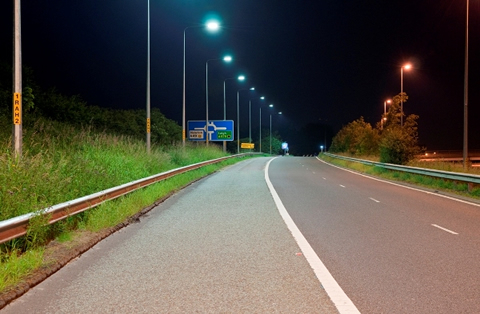
    Street lights
    Duty bearers called to fix street and traffic lights

    The National Road Safety Authority called on duty bearers to fix the damaged street and traffic lights in the country. The Authority noted that the non-functioning traffic lights pose a danger to motorists hence, the need to get them functioning immediately.

    It stated that the continues disregard of duty bearers to these faulty and nonfunctional street lights and traffic signals undermines the intent for their installations which include the desire to influence an efficient movement of vehicles and pedestrians to minimize the potential conflicts and possible crashes.

    “The authority considers the non-functionality of traffic signals and street lights as a road safety threat with the potential to increase the risk of road traffic crashes”.

    NRSA
    NSRA calls on ministries to take appropriate steps

    Given the threat and the duty imposed on the Authority to reduce toad traffic crashes, injuries and deaths, the Authority has directed that the Department of Urban Roads, the relevant Assemblies and the Ministry of Energy to take urgent and appropriate steps to ensure the functionality of streetlights and traffic signals.

    “The Authority may be compelled to exercise its mandate to enforce the standards against erring duty should the irresponsibility persist”.

    NRSA

    Ahead of the busy festive season, the NRSA advised the road users to be cautious when approaching intersections “otherwise signaled”. As an interim measure, the Authority also directed that the various district Assemblies should work with the Police personnel to deploy trained traffic wardens to help manage the gaps in the system.

    Read Also: SIC Insurance To Pay Ordinary Shareholders A Dividend Of GH¢0.0153 Per Share

  • Accra Mayor attributes some road accidents to unauthorized roadside parking

    Accra Mayor attributes some road accidents to unauthorized roadside parking

    The Mayor of Accra, Muhammed Nii Adjei Sowah, has intimated that some of the road accidents which occur on the various roads are as a result of unauthorized parking by some drivers.

    Speaking on another station, he stated that some cars park at unauthorized places on the various roads and this causes the problems.

    His comment comes on the back of some complaints by citizens that their cars are towed away by authorities without their knowledge.

    “The nation needs to broaden the conversation on the essence of car clamping and towing to instill discipline. People park at unauthorized places and at night sometimes, it leads to accidents in the city. It leads to accidents and all sort of things on the roads.”

    Mohammed Sowah

    He said the towing of cars is to get some of these vehicles off the roads to prevent these accidents. Mr. Sowah further said these parked cars also cause congestion and traffic in the city as well.

    “An enforcement of discipline in the city sometimes is met with a bit of resistance. When you have a citizen who is also not responsible enough and does not want to respect a uniformed officer,;unfortunately sometimes it degenerates into these altercations.

    “I went round at Makola and one thing I realized was that the traffic situation is not caused by traders. It is caused by these trotro drivers who park in the middle of the road just to get passengers on board. Sometimes they are aided by these officers as well.”

    Mohammed Sowah
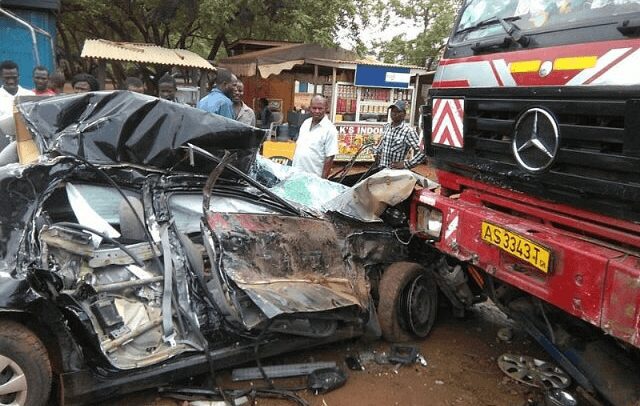
    A road accident involving a car and a truck
    Traffic situation causes people money

    Mr Adjei Sowah averred that the traffic situation causes a lot of people a lot of money as a result of fuel combustion. He said that there are lot of people who refuse to go into the city centre just because of these traffic situations.

    He averred that it is high time people appreciated the fact that riding a car does not imply they can park anywhere.

    “Individuals come into the city centre. There are many on-street and offstreet parking centres but they wont go and park there. They will park at the pavements on the roads and prevent pedestrians from walking on it. But they think that if traders are selling on it, it is wrong.”

    Mohammed Sowah

    He then urged that in case of some future developments,;planning should not only be on residents but the totality of the population.

    Speaking on the issue of road congestion on various city roads, he suggested that if more alternative roads are constructed it will ease these congestions.

    “I think that in future this will be considered. As you know we are still a developing country. In the city of Accra, there are many roads that are untarred, if we able to asphalt these roads then we are giving people these alternative routes.”

    Mohammed Sowah

    He said the President declaring this year as the ‘Year of Roads’ will bring the issues of congestion on our roads “to the front and centre of issues”.

    This, he said when accomplished, will get most of the roads to be motorable. He said the issue of traffic will also be reduced drastically in the city. unauthorized

    “The truth of the matter is that because we have fewer roads;everybody wants to drive on the same stretch and that is what creates the problem.”

    Mohammed Sowah
    Proper roads should be constructed

    Mr Adjei Sowah then urged that more and proper roads should be constructed to help with this issue of congestion and traffic. He further suggested that the city needs an effective transportation system.

    “Transporting is the life blood of the city. It is what brings about the social and economic change in the city. So, an effective transportation system is what we all need in the city.”

    Mohammed Sowah

    He noted that, if the nation focuses on the intracity rail system, it will also take away the congestion in the cities. 

    Read Also: Coal demand to bounce back, worsening climate risks a worry