• About
  • Advertise
  • Privacy Policy
  • Contact
Thursday, December 18, 2025
  • Login
The Vaultz News
  • Top Stories
  • News
    • General News
    • Education
    • Health
    • Opinions
  • Economics
    • Economy
    • Finance
      • Banking
      • Insurance
      • Pension
    • Securities/Markets
  • Business
    • Agribusiness
    • Vaultz Business
    • Extractives/Energy
    • Real Estate
  • World
    • Africa
    • America
    • Europe
    • UK
    • USA
    • Asia
    • Around the Globe
  • Innovation
    • Technology
    • Wheels
  • Entertainment
  • 20MOBPL2DNew
  • Jobs & Scholarships
    • Job Vacancies
    • Scholarships
No Result
View All Result
The Vaultz News
  • Top Stories
  • News
    • General News
    • Education
    • Health
    • Opinions
  • Economics
    • Economy
    • Finance
      • Banking
      • Insurance
      • Pension
    • Securities/Markets
  • Business
    • Agribusiness
    • Vaultz Business
    • Extractives/Energy
    • Real Estate
  • World
    • Africa
    • America
    • Europe
    • UK
    • USA
    • Asia
    • Around the Globe
  • Innovation
    • Technology
    • Wheels
  • Entertainment
  • 20MOBPL2DNew
  • Jobs & Scholarships
    • Job Vacancies
    • Scholarships
No Result
View All Result
The Vaultz News
No Result
View All Result

Will the gains from the AfCFTA agreement be distributed as fairly as possible among businesses?

M.Cby M.C
January 18, 2021
Reading Time: 3 mins read
AfCFTA Secretariat 1

It is unreservedly tagged as history’s largest free trade agreement, which has a market size in the region of $3 trillion and most people are intrigued at the development. Understandably, any economic policy that accelerates imports and exports among member countries – with reduced or no tariffs, free access to the market and market information, and the elimination of trade barriers, indeed offers numerous benefits to businesses.

 More glaring are skeptics who have pointed out the looming challenges, especially the ones which are likely to affect businesses. Invariably, these must be addressed if the AfCFTA is to achieve its objectives. But first, let’s look at who stands to gain.

Nigeria, one of Africa’s largest economies and the most populous, initially declined to sign the agreement.

RelatedPosts

Ghana’s Priority Sub-Sectors to Boost Growth in 2026

NPP Credits Labour Advocacy for SSNIT’s Hotel Sale U-Turn

VRA Assures Parliament on Preventive Measures Against Future Dam Spillages

Commenting on Twitter, Nigeria’s President Buhari said: “We will not agree to anything that will undermine local manufacturers and entrepreneurs, or that may lead to Nigeria becoming a dumping ground for finished goods”.

Ghana, the hosting nation of the AfCFTA secretariat has consistently remained hopeful, endearing its businesses to lay hold of the many opportunities and prospects offered by the free trade market.

Conversely, the Ghana Union of Traders Association (GUTA) have bemoaned the absence of enough education on the benefits of AfCFTA and has called for enlightenment on the single market to properly benefit from the free trade.

ADVERTISEMENT

Competing with equally formidable African countries on the single market platform offered by the African Continental Free Trade Area (AfCFTA) may likely be usurped by the issue on the cost of borrowing and scanty information on the trading Agreement.

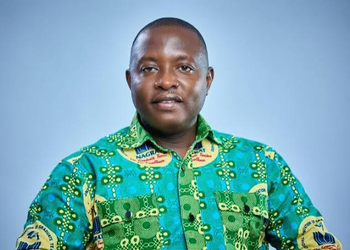
In light of this, President of the Ghana Union of Traders Association (GUTA), Dr. Joseph Obeng has expressed some misgivings on the level of preparedness of the country in fully harnessing its potential.

Realizing the AfCFTA prospects, he said the Free Trade would mean competition with businesses from other African countries who have access to credit facilities at lower rates than are currently being offered in Ghana.

A major potential challenge in harmonizing Africa’s heterogeneous economies under one agreement is the wide variation that exists in their levels of development. According to weforum, over 50% of Africa’s cumulative GDP is contributed by Egypt, Nigeria and South Africa, while Africa’s six sovereign island nations collectively contribute just 1%.

“The AfCFTA has the greatest levels of income disparity of any continental free trade agreement, and more than double the levels witnessed in blocs such as ASEAN and CARICOM”.

One of the economic areas billed to benefit from the trade deal is the manufacturing industry of ratified nations.

Manufactured goods, in the words of weforum, represented 43% of intra-Africa exports during 2012-2016, while only representing 20% of exports to the rest of the world. Medium and high technology manufactures represented 25.4% of intra-African trade in 2015, but only accounted for 14.1% of Africa’s exports to developed countries and 13.7% of the continent’s exports to the world (Figure 2).

“As such, countries with large manufacturing bases and enabling physical and industrial infrastructure, such as South Africa, Kenya, Egypt, Morocco, and Ethiopia are in a better position to gain the expected benefits of the CFTA”

Even though African exports to the world are undiversified and mostly composed of raw materials, Intra-Africa exports (exports between African countries) contain more value-added products.

Agriculture has also been tipped to benefit from the creation of a more viable African marketplace for food. Enhanced trade in agricultural products will also promote agro-processing and further sectoral linkages with manufacturing.

Even though the AfCFTA is a great step forward towards economic integration, there is still a long road ahead. African governments must commit to keep working so that the gains from the CFTA are distributed as fairly as possible, making sure no one is left behind, and ensuring that the CFTA becomes a catalyst for sustainable economic development for the continent as a whole.


Tags: AfCFTAbenefitsBusinessSMEs
Share2Tweet2ShareSendSend
Please login to join discussion
Previous Post

President’s Electricity for All Must Be Affordable- Energy Expert

Next Post

EPL Review: Liverpool, Manchester United ends in a stalemate

Related Posts

Sectors of the economy
Economy

Ghana’s Priority Sub-Sectors to Boost Growth in 2026

December 11, 2025
Richard Ahiagbah, the Director of Communications for NPP
Uncategorized

NPP Credits Labour Advocacy for SSNIT’s Hotel Sale U-Turn

July 13, 2024
Akosombo Dam
Uncategorized

VRA Assures Parliament on Preventive Measures Against Future Dam Spillages

July 10, 2024
Water producers Sachet water factory
Uncategorized

NASPAWAP Calls for Suspension of New 5% Excise Tax on Plastics

July 8, 2024
Mr. Francesco La Camera Director-General IRENA and Mr. Alain Ebobissé,  CEO Africa50
Extractives/Energy

Africa50 Pledges $100 Million To Renewable Energy Deployment

July 4, 2024
Speaker Bagbin and Hon. Sosu
Uncategorized

 Speaker Bagbin and Hon. Sosu to Receive Prestigious Awards

June 24, 2024
Hon. Frank Asiedu Bekoe, MP for Suhum
General News

Suhum Case: High Court Dismisses NDC’s “Frivolous” Election Petition

by Silas Kafui AssemDecember 18, 2025
African Development Bank Steps Up to Bridge Africa’s Trade Finance Gap with Bold New Sustainable Financing Push
Africa

African Development Bank Steps Up to Bridge Africa’s Trade Finance Gap with Bold New Sustainable Financing Push

by M.CDecember 18, 2025
Credit Risk Sharing Has Failed to Unlock Agric Financing – Prof. Quartey
Agribusiness

Credit Risk Sharing Has Failed to Unlock Agric Financing – Prof. Quartey

by M.CDecember 18, 2025
Conservative Party leader, Kemi Badenoch
UK

Badenoch Dismisses Government’s VAWG Strategy

by Comfort AmpomaaDecember 18, 2025
Oritsemeyiwa Eyesan
Extractives/Energy

Tinubu Names New Upstream Regulator Chief

by Prince AgyapongDecember 18, 2025
Brazil's President, Luiz Inacio Lula da Silva.
America

Lula Vows To Veto Bill To Reduce Bolsonaro’s Prison Term

by Comfort AmpomaaDecember 18, 2025
Hon. Frank Asiedu Bekoe, MP for Suhum
African Development Bank Steps Up to Bridge Africa’s Trade Finance Gap with Bold New Sustainable Financing Push
Credit Risk Sharing Has Failed to Unlock Agric Financing – Prof. Quartey
Conservative Party leader, Kemi Badenoch
Oritsemeyiwa Eyesan
Brazil's President, Luiz Inacio Lula da Silva.

Recent News

Hon. Frank Asiedu Bekoe, MP for Suhum

Suhum Case: High Court Dismisses NDC’s “Frivolous” Election Petition

December 18, 2025
African Development Bank Steps Up to Bridge Africa’s Trade Finance Gap with Bold New Sustainable Financing Push

African Development Bank Steps Up to Bridge Africa’s Trade Finance Gap with Bold New Sustainable Financing Push

December 18, 2025
Credit Risk Sharing Has Failed to Unlock Agric Financing – Prof. Quartey

Credit Risk Sharing Has Failed to Unlock Agric Financing – Prof. Quartey

December 18, 2025
Conservative Party leader, Kemi Badenoch

Badenoch Dismisses Government’s VAWG Strategy

December 18, 2025
Oritsemeyiwa Eyesan

Tinubu Names New Upstream Regulator Chief

December 18, 2025
The Vaultz News

Copyright © 2025 The Vaultz News. All rights reserved.

Navigate Site

  • About
  • Advertise
  • Privacy Policy
  • Contact

Follow Us

Welcome Back!

Login to your account below

Forgotten Password?

Retrieve your password

Please enter your username or email address to reset your password.

Log In
No Result
View All Result
  • Top Stories
  • News
    • General News
    • Education
    • Health
    • Opinions
  • Economics
    • Economy
    • Finance
      • Banking
      • Insurance
      • Pension
    • Securities/Markets
  • Business
    • Agribusiness
    • Vaultz Business
    • Extractives/Energy
    • Real Estate
  • World
    • Africa
    • America
    • Europe
    • UK
    • USA
    • Asia
    • Around the Globe
  • Innovation
    • Technology
    • Wheels
  • Entertainment
  • 20MOBPL2D
  • Jobs & Scholarships
    • Job Vacancies
    • Scholarships

Copyright © 2025 The Vaultz News. All rights reserved.

Discover the Details behind the story

Get an in-depth analysis of the news from our top editors

Enter your email address