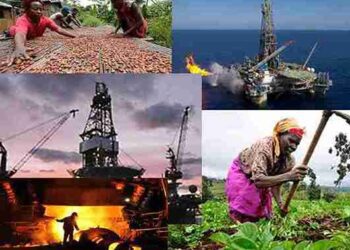
In recent years, Africa has captured the attention of multinational corporations seeking new markets and growth opportunities.
Drawn by promises of rapid economic expansion, youthful demographics, and burgeoning consumer markets, top players like Nestlé, Unilever, Bayer, and GSK made significant investments across the continent.
However, a recent trend reveals a stark reality: Africa’s allure is fading for these global giants, leading to the closure of operations, outsourcing of distribution, and a general reluctance to expand further.
The once-promising continent of Africa is now marred by a host of challenges that make conducting business increasingly difficult.



Factors such as volatile currencies, bureaucratic hurdles, unreliable infrastructure, and congested ports have significantly dampened the enthusiasm of multinational corporations.
As Kuseni Dlamini, former chairman of Walmart Inc.’s African unit, aptly puts it, the current environment “doesn’t justify the effort” required to sustain operations on the continent.
Consequences of Retreat
The repercussions of this multinational retreat are profound, particularly for the African economies where these companies had established their presence.
Countries like Kenya, South Africa, and Nigeria, which traditionally served as entry points for multinationals into the region, now face the brunt of this pullback.
These nations, which collectively represent a significant portion of sub-Saharan Africa’s economy and population, are witnessing a slowdown in job creation and wealth generation.
For African leaders grappling with high unemployment rates and a desire to diversify their economies away from commodity dependence, this retreat poses a significant setback.
In Kenya, President William Ruto’s vision of attaining middle-income status by 2030 through manufacturing-led growth is now under threat. Despite ambitious plans, the country’s poor infrastructure and increasing regulatory burdens have hindered its competitiveness and economic expansion.
Nestlé’s decision to scale back operations in Kenya serves as a poignant example of the challenges facing African nations in attracting and retaining multinational investments.
The Way Forward
The retreat of multinationals from Africa serves as a wake-up call for both African authorities and global corporations. African governments must prioritize creating a conducive business environment by addressing infrastructure deficiencies, streamlining bureaucracy, and fostering a culture of innovation and entrepreneurship.
Meanwhile, multinational corporations must recognize the long-term potential of the African market and work collaboratively with local stakeholders to navigate the challenges effectively.
In January, Neumann Gruppe GmbH, the world’s largest coffee trader, said it would close its Kenyan mill and a unit that offered finance and marketing assistance to small farmers, retaining only an operation that sources coffee beans for export.
The company said jobs will be lost, without giving a number, and blames a 2022 government decree barring companies from both marketing coffee and grinding the beans, forcing them to choose one or the other.
Companies in Kenya are also contending with higher taxes, notably a levy on imports of key raw materials such as cement, metals and paper. The Kenya Association of Manufacturers says that last September, 53% of members were operating at a quarter of capacity or less, and 42% anticipated job cuts within six months.
“All the numbers are negative,” said Anthony Mwangi, Chief Executive Officer of the Kenya Association of Manufacturers, which represents both domestic and foreign companies. “Those spaces that were used for production, now they are empty spaces. There are warehouses that are importing the same stuff,” he added.
Since 2016, major South African retailers such as Mr Price, Shoprite and Truworths have closed in Nigeria, a country they’ve long considered a priority for international growth.
Unilever last year stopped making Omo washing powder, Sunlight dishwashing liquid and Lux soap in Nigeria, now instead importing the products. And in March, Nestlé’s local unit announced its first nine-month loss in a dozen years after the local currency plunged.
In South Africa, which has the continent’s most developed economy, the once-admired infrastructure is in tatters. There are near-daily power cuts, and water outages are increasing, with 40% of water lost to leaks in some cities’ networks. And multinationals say a byzantine work permit system makes it hard to bring in foreign executives.
The South African-German Chamber of Commerce last year said delays threatened operations owned by German companies responsible for 100,000 jobs in the country. “The visa matter spans the entire hierarchy of German business in South Africa. This is of course not only a concern to German business but also to the country itself,” the group said in a statement.
The regular Interruptions to production and the pullback from manufacturing present a problem for local retailers. Shoprite Holdings Ltd., Africa’s biggest supermarket chain, says it’s had to increase its stockpiles of products to ensure it won’t have empty shelves, and it’s building additional distribution centers to hold more goods.
“This gives you an idea of how constrained the supply chain is. There’s very little investment in production capacity in South Africa amongst the manufacturers, and the multinationals have completely stopped,” said Shoprite CEO Pieter Engelbrecht.
Plunging Currencies
Plunging currencies, meanwhile, have made it harder for multinationals to repatriate any profits. In Nigeria the naira has lost 88% against the dollar over the past decade, while the Kenyan shilling is 34% weaker and the South African rand has depreciated 44%.
That means lower spending power for residents, particularly when it comes to imported goods or those with foreign components. To fill the void, local manufacturers are increasingly stepping in with cheaper replacements that mimic the global brands.
South Africa’s Bliss Brands (Pty) Ltd. Has long sold its MAQ washing powder in the poorer townships that surround big cities. These days, the brand is increasingly easy to find at Shoprite’s Checkers outlets and at Pick n Pay Stores in suburbs with manicured gardens and gated streets—at almost 30% below the price of Unilever’s Omo and Skip detergents.
While MAQ hasn’t always been cheaper than international competitors, it’s managed to keep a lid on price increases, said Moaz Shoaib Iqbal, a director at Bliss.
The retreat has helped lower-cost producers from other emerging nations challenge the big brands with their own plants in Africa. In Nigeria, diapers made locally by a Turkish producer are edging out Procter & Gamble Co.’s Pampers, and a Singapore company’s ramen is displacing Nestlé’s Maggi noodles.
The fading allure of Africa for multinationals underscores the urgent need for concerted efforts to revitalize business confidence and foster sustainable economic growth across the continent. Failure to do so risks leaving Africa behind in the global economic race, perpetuating cycles of poverty and hindering the realization of its full potential.
READ ALSO: Ghanaian Gospel Musician Passes On