• About
  • Advertise
  • Privacy Policy
  • Contact
Thursday, December 18, 2025
  • Login
The Vaultz News
  • Top Stories
  • News
    • General News
    • Education
    • Health
    • Opinions
  • Economics
    • Economy
    • Finance
      • Banking
      • Insurance
      • Pension
    • Securities/Markets
  • Business
    • Agribusiness
    • Vaultz Business
    • Extractives/Energy
    • Real Estate
  • World
    • Africa
    • America
    • Europe
    • UK
    • USA
    • Asia
    • Around the Globe
  • Innovation
    • Technology
    • Wheels
  • Entertainment
  • 20MOBPL2DNew
  • Jobs & Scholarships
    • Job Vacancies
    • Scholarships
No Result
View All Result
The Vaultz News
  • Top Stories
  • News
    • General News
    • Education
    • Health
    • Opinions
  • Economics
    • Economy
    • Finance
      • Banking
      • Insurance
      • Pension
    • Securities/Markets
  • Business
    • Agribusiness
    • Vaultz Business
    • Extractives/Energy
    • Real Estate
  • World
    • Africa
    • America
    • Europe
    • UK
    • USA
    • Asia
    • Around the Globe
  • Innovation
    • Technology
    • Wheels
  • Entertainment
  • 20MOBPL2DNew
  • Jobs & Scholarships
    • Job Vacancies
    • Scholarships
No Result
View All Result
The Vaultz News
No Result
View All Result

Judicial Independence: Ekow Vincent’s Dissent on Chief Justice Challenged

Lilian Ahedorby Lilian Ahedor
May 24, 2025
Reading Time: 5 mins read
The Ghana judiciary, threatened by colonial arrogance

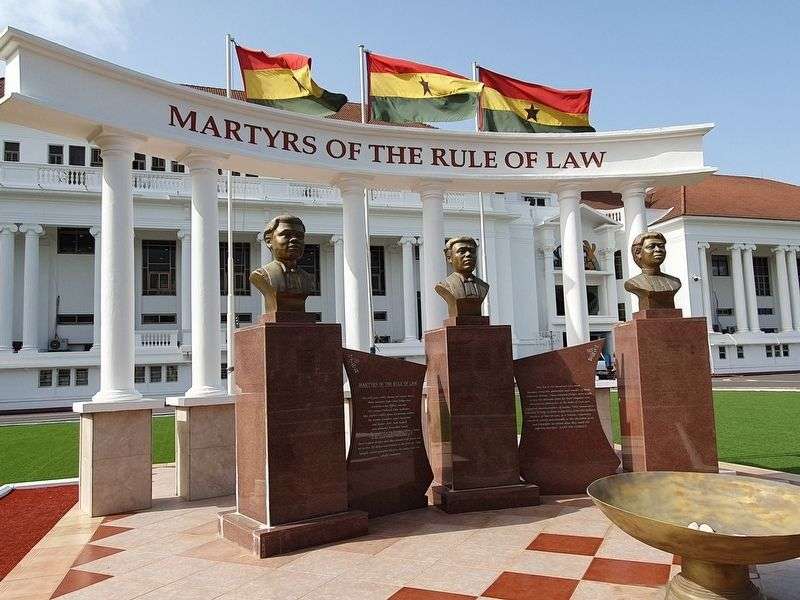
Martyrs of the Rule of Law Marker

The ongoing national conversation about judicial independence has taken a sharper turn following comments by Professor Stephen Kwaku Asare, a prominent legal scholar and Democracy and Development Fellow at CDD-Ghana. 

He weighed in on the recent Supreme Court case Vincent Ekow Assafuah v. Attorney-General, specifically criticizing the dissenting opinion, which argued that the President is constitutionally obligated to notify and seek the Chief Justice’s input before initiating any consultations with the Council of State on removal proceedings.

At the heart of the dispute lies a constitutional question: When exactly does the right to be heard kick in during the removal process for a sitting Chief Justice?

RelatedPosts

Foreign Minister Defends Ghana’s Humanitarian Deployment to Jamaica

EOCO Recovers GHS337m, Smashes 2025 Target

EOCO Strikes at Chinese-Malaysian Cybercrime Syndicate, Recovers $15m

Professor Asare, widely regarded for his legal clarity, made it clear that the Constitution leaves no room for ambiguity on this point. 

“The right to be heard is explicitly stated in Article 146(8), which says: ‘All proceedings under this article shall be held in camera, and the Justice or Chairman against whom the petition is made is entitled to be heard in his defence by himself or by a lawyer or other expert of his choice.’

“This is not vague or discretionary. It clearly guarantees a hearing before the committee of inquiry—not at the preliminary stages before the President or the Council of State assess the petition.”

Professor Stephen Kwaku Asare

In his analysis, Professor Asare dismissed the dissenting view that the President is obligated to inform the Chief Justice and request a response before beginning consultations. 

Prof. Asare weighs in on
judicial independence and chief justice
Professor Stephen Kwaku (Azar) Asare

He explained that Article 146(6) outlines the President’s role in appointing a committee in consultation with the Council of State when a petition for the Chief Justice’s removal is received. 

ADVERTISEMENT

According to him, this provision does not require that the Chief Justice be notified or heard before a preliminary assessment is made. 

Imposing such a requirement, he argued, would amount to creating new constitutional obligations through judicial interpretation.

Timing Of Hearing, Constitutionally Defined

Referencing the 2016 case Agyei Twum, Professor Asare further explained that although the court acknowledged a prima facie review by the President, it did not mandate that the subject of the petition be heard beforehand. 

He warned that reading such a requirement into the Constitution is tantamount to creating new law: “That is a judicial rewrite that is neither authorized by the text nor warranted by precedent.”

He went on to criticize the dissent for effectively rewriting Article 146(6) into an imagined version that would require the President to first inform the Chief Justice, obtain a response, assess whether there is a prima facie case, and only then consult the Council of State to appoint a committee. 
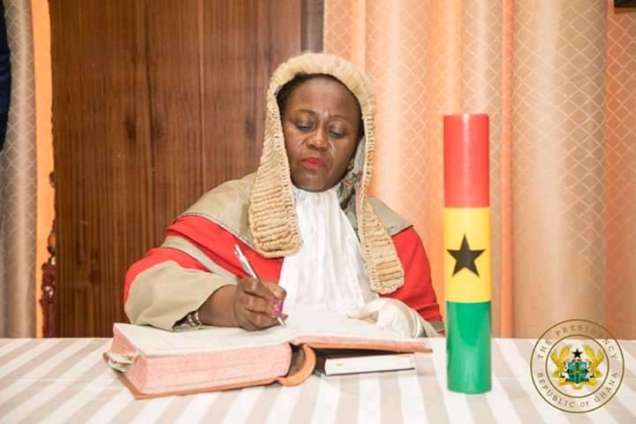
parties to protest Chief Justice's suspension
Justice Gertrude Torkornoo, Chief Justice – Ghana.

In Professor Asare’s view, this interpretation significantly misrepresents the actual constitutional procedure.

In dissecting the dissent’s reasoning, Asare tackled the use of purposive interpretation, which suggests that constitutional clauses should be read in light of broader values like fairness and transparency. 

While acknowledging the importance of purpose in legal interpretation, he cautioned that “purposive interpretation does not mean rewriting provisions to satisfy subjective fairness.”

The dissent’s approach, he said, undermines the filtering purpose of the prima facie stage, which is designed to weed out frivolous petitions without unnecessarily burdening the person named in the petition.

Dissent Risks Judicial Independence

Additionally, Professor Stephen Asare cautioned that requiring the Chief Justice to respond too early in the process could be more damaging than beneficial. 

He explained that presenting a defense prematurely might restrict her to specific arguments, creating strategic difficulties if those arguments need to be adjusted or contradicted during a later formal inquiry. “This is not due process. It is premature entrapment.”

Professor Asare went on to emphasize that Article 146 already contains sufficient procedural safeguards: a prima facie filter, a right to be heard in camera, a judicial inquiry panel, and the assurance of confidentiality. 

He argued that adding more procedural steps under the guise of fairness risks disrupting this carefully structured balance.

due process in CJ removal petition; judicial independence in focus
Law

“There is no need to manufacture additional procedural rights that may weaken rather than strengthen fairness. The Constitution strikes a balance between judicial independence and judicial accountability; the dissent risks upsetting that balance.”

Professor Stephen Kwaku Asare

In a sharp rebuke, Professor Asare characterized elements of the dissenting opinion as rooted more in emotion than in legal merit. 

He contended that the dissent placed undue emphasis on public sentiment and media narratives without demonstrating any actual breach of constitutional procedure. 

He also highlighted a significant factual omission in the dissent’s reasoning—namely, that the President had already expressed an intention to obtain the Chief Justice’s input before making any decisions. 

Overlooking this key detail, he argued, undermines the dissent’s claim of unfair treatment.

Ultimately, Professor Asare called for fidelity to the Constitution’s text. 

“To sum up, no one is denying the Chief Justice her day in court. She will get a full hearing before the committee, in camera, with counsel if she so chooses as expressly guaranteed by Article 146(8).”

Professor Stephen Kwaku Asare

He concluded by firmly emphasizing that the Constitution should be upheld as written, without reinterpretation or embellishment beyond its clear provisions. “The law is the law! Let it speak where it has spoken.”


READ ALSO: Gyakie Reflects on Regrets in the Music Industry

Tags: Chief Justice RemovalConstitutional LawJudicial independenceStephen Kwaku AsareSupreme Court Ghana
Share2Tweet1ShareSendSend
Please login to join discussion
Previous Post

Labour Faces Major Revolt Over Welfare Cuts

Next Post

Russia, Ukraine Exchange More Prisoners

Related Posts

Hon. Samuel Okudzeto Ablakwa, Minister for Foreign Affairs and Regional Integration
General News

Foreign Minister Defends Ghana’s Humanitarian Deployment to Jamaica

December 18, 2025
Raymond Archer, Executive Director, EOCO
General News

EOCO Recovers GHS337m, Smashes 2025 Target

December 18, 2025
Raymond Archer, Executive Director for EOCO
General News

EOCO Strikes at Chinese-Malaysian Cybercrime Syndicate, Recovers $15m

December 18, 2025
Ghana's former Finance Minister, Kenneth Ofori-Atta
General News

AG Triggers Extradition of Ofori-Atta from US to Face 78 OSP Charges

December 18, 2025
Dr. Matthew Opoku Prempeh, Former Minister of Education
General News

Former Education Minister Defends Double-Track Legacy, Calls for “Hard Reset” on Allowances

December 18, 2025
Madam Daniella Mawusi Ntow Sarpong, Chief Fire Officer of GNFS
General News

GNFS Launches Dual Offensive on Domestic and Vehicular Safety

December 18, 2025
African Development Bank Steps Up to Bridge Africa’s Trade Finance Gap with Bold New Sustainable Financing Push
Africa

African Development Bank Steps Up to Bridge Africa’s Trade Finance Gap with Bold New Sustainable Financing Push

by M.CDecember 18, 2025
Credit Risk Sharing Has Failed to Unlock Agric Financing – Prof. Quartey
Agribusiness

Credit Risk Sharing Has Failed to Unlock Agric Financing – Prof. Quartey

by M.CDecember 18, 2025
Conservative Party leader, Kemi Badenoch
UK

Badenoch Dismisses Government’s VAWG Strategy

by Comfort AmpomaaDecember 18, 2025
Oritsemeyiwa Eyesan
Extractives/Energy

Tinubu Names New Upstream Regulator Chief

by Prince AgyapongDecember 18, 2025
Brazil's President, Luiz Inacio Lula da Silva.
America

Lula Vows To Veto Bill To Reduce Bolsonaro’s Prison Term

by Comfort AmpomaaDecember 18, 2025
Vice President Professor Jane Naana Opoku-Agyemang
Agribusiness

Vice President Hails MOTAI’s Offensive Against Import Dependency

by Silas Kafui AssemDecember 18, 2025
African Development Bank Steps Up to Bridge Africa’s Trade Finance Gap with Bold New Sustainable Financing Push
Credit Risk Sharing Has Failed to Unlock Agric Financing – Prof. Quartey
Conservative Party leader, Kemi Badenoch
Oritsemeyiwa Eyesan
Brazil's President, Luiz Inacio Lula da Silva.
Vice President Professor Jane Naana Opoku-Agyemang

Recent News

African Development Bank Steps Up to Bridge Africa’s Trade Finance Gap with Bold New Sustainable Financing Push

African Development Bank Steps Up to Bridge Africa’s Trade Finance Gap with Bold New Sustainable Financing Push

December 18, 2025
Credit Risk Sharing Has Failed to Unlock Agric Financing – Prof. Quartey

Credit Risk Sharing Has Failed to Unlock Agric Financing – Prof. Quartey

December 18, 2025
Conservative Party leader, Kemi Badenoch

Badenoch Dismisses Government’s VAWG Strategy

December 18, 2025
Oritsemeyiwa Eyesan

Tinubu Names New Upstream Regulator Chief

December 18, 2025
Brazil's President, Luiz Inacio Lula da Silva.

Lula Vows To Veto Bill To Reduce Bolsonaro’s Prison Term

December 18, 2025
The Vaultz News

Copyright © 2025 The Vaultz News. All rights reserved.

Navigate Site

  • About
  • Advertise
  • Privacy Policy
  • Contact

Follow Us

Welcome Back!

Login to your account below

Forgotten Password?

Retrieve your password

Please enter your username or email address to reset your password.

Log In
No Result
View All Result
  • Top Stories
  • News
    • General News
    • Education
    • Health
    • Opinions
  • Economics
    • Economy
    • Finance
      • Banking
      • Insurance
      • Pension
    • Securities/Markets
  • Business
    • Agribusiness
    • Vaultz Business
    • Extractives/Energy
    • Real Estate
  • World
    • Africa
    • America
    • Europe
    • UK
    • USA
    • Asia
    • Around the Globe
  • Innovation
    • Technology
    • Wheels
  • Entertainment
  • 20MOBPL2D
  • Jobs & Scholarships
    • Job Vacancies
    • Scholarships

Copyright © 2025 The Vaultz News. All rights reserved.

Discover the Details behind the story

Get an in-depth analysis of the news from our top editors

Enter your email address