Investigative journalist Manasseh Azure Awuni has recognized Attorney General Dr. Dominic Ayine’s decision to explain the discontinuation of high-profile cases, a departure from the usual stance of the legal fraternity.
While Awuni disagreed with some of Dr. Ayine’s justifications, he acknowledged that this approach has earned his respect and that of many Ghanaians.
This, he indicated, marks a shift from past government practices, which often ignored public scrutiny of legal decisions.
“…and credit should also be given to President John Dramani Mahama. In my recent open letter to the president, I indicated that ‘the air of our national discourse since you took over two weeks ago appears to have been purified from the toxicity of oppression, nepotism and impunity with which our nation was polluted in the longest eight years of the Fourth Republic.’
“We have been used to the government acting with impunity and ignoring our concerns, but it seems the Mahama government is prepared to listen and engage, and this was a classical case.”
Manasseh Azure Awuni
Awuni further noted a shift in governance in the new administration, citing a recent exchange with Greater Accra Regional Minister Linda Ocloo.
He indicated that after criticizing her partnership with Jospong and Zoomlion, firms long criticized for inefficiency, he expected hostility.
However, Awuni revealed that he was surprised to receive a response acknowledging his concerns. “Taking notes and acting on them are different things, but it was heartwarming to know that our leaders are now prepared to listen,” Awuni remarked.



The journalist also reflected on the mixed reactions his article on case discontinuation had generated.
Some argued that the Attorney General owed no explanation, while National Democratic Congress (NDC) loyalists criticized him for associating Mahama with the “clearing agent” tag.
However, Awuni emphasized that many respected Ghanaians shared his concerns over the mass discontinuation of cases without proper justification.
One of the most notable counterarguments came from public intellectual Professor Stephen Kwaku Asare, who contended that the prolonged nature of these cases indicated weak evidence.
“If a case has been in court for nearly a decade without a conviction, it is reasonable to ask whether the evidence was ever strong enough to meet the legal threshold,” Kwaku Azar argued.
Awuni, however, dismissed this reasoning as flawed, clarifying that some of these cases had not even lasted eight years in court.
He argued that this reasoning is unconvincing, as Ghana’s legal system has seen cases stretch for over twenty years, making prolonged trials nothing new.
The Controversy Over Case Discontinuation
One of the most contested cases is the Saglemi Affordable Housing case, which involves former Minister Collins Dauda and others.
This group of people faced 52 charges, including Willfully Causing Financial Loss to the Republic, Issuing False Certificates, and Dishonestly Causing Loss to Public Property.
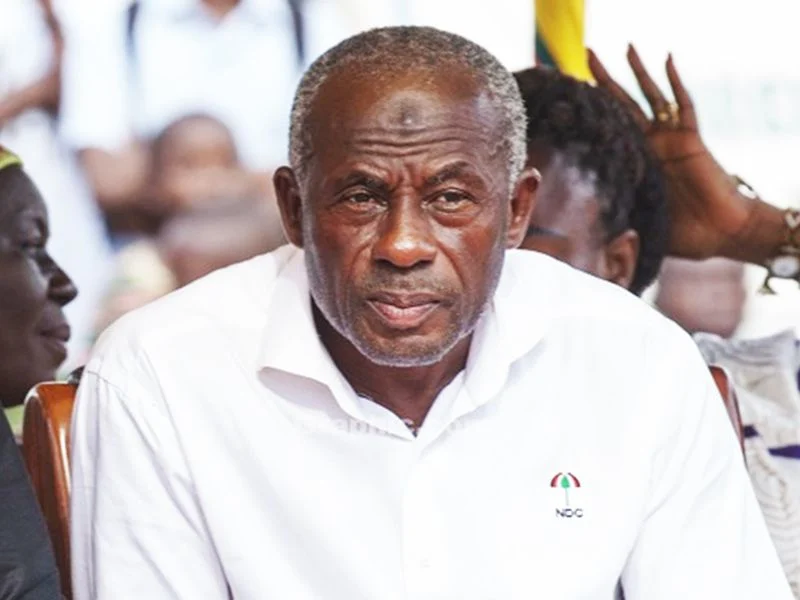
The case stemmed from the misapplication of a $200 million loan meant to construct 5,000 affordable housing units. Instead, only 1,506 units were built, and even those remained incomplete.
Accordingly, Manasseh Awuni expressed disagreement with the Attorney General’s rationale for dropping the case.
He argued that the misapplication of funds should not be dismissed simply because part of the money was used for construction.
“If Collins Dauda was wrongly charged, how about the other four accused persons? Why were they not allowed to answer for the charges against them?”
Manasseh Azure Awuni
Additionally, Awuni pointed out that rather than abandoning the prosecution altogether, charges could have been amended to reflect new findings.
“If we move on and allow the $200 million to go to waste without anybody answering for it, what message are we sending to others who occupy public office?”
Manasseh Azure Awuni
Calls for an Apology Rejected
Following the Attorney General’s assertion that the president had no influence over his decision, some NDC supporters demanded that Manasseh Awuni apologize to Mahama for the “clearing agent” label.
However, Awuni remained firm in his stance, arguing that just as Akufo-Addo was held accountable for legal exonerations during his tenure, Mahama should not be exempted.
“The buck stops with the president, so Mahama cannot take credit for the ultimate good in his administration and run away from the bad.”
Manasseh Azure Awuni
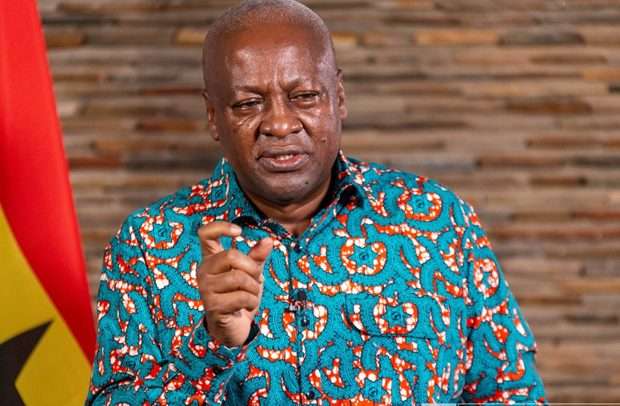
Responding to claims that he harbors animosity toward Mahama, Awuni clarified that he has long admired the former president but remains committed to holding him accountable.
He cited instances where he had praised Mahama’s leadership while still criticizing his governance.
“I love him as a person, but I will be critical of his administration. I will praise him when he’s praiseworthy and criticize him when I have to”.
Manasseh Azure Awuni
Accordingly, Awuni underscored the necessity of independent journalism in fostering accountability.
Drawing inspiration from the philosopher Socrates, he likened the role of journalists to that of a “gadfly”—an entity meant to stir the state into action.
Awuni emphasized the need for accountability, stating that the state and politicians must be occasionally challenged to remain responsive.
He added that their reaction to such scrutiny can either earn them public goodwill or diminish it.
While acknowledging Mahama’s efforts to reset Ghana, Awuni insisted that vigilance remains crucial in ensuring governance that truly serves the people.
READ ALSO: Sudan Finalizes Naval Base Deal With Russia