• About
  • Advertise
  • Privacy Policy
  • Contact
Tuesday, July 14, 2026
  • Login
The Vaultz News
  • Top Stories
  • News
    • General News
    • Education
    • Health
    • Opinions
  • Economics
    • Economy
    • Finance
      • Banking
      • Insurance
      • Pension
    • Securities/Markets
  • Business
    • Agribusiness
    • Vaultz Business
    • Extractives/Energy
    • Real Estate
  • World
    • Africa
    • America
    • Europe
    • UK
    • USA
    • Asia
    • Around the Globe
  • Innovation
    • Technology
    • Wheels
  • Entertainment
  • 20MOBPL2DNew
  • Jobs & Scholarships
    • Job Vacancies
    • Scholarships
No Result
View All Result
The Vaultz News
  • Top Stories
  • News
    • General News
    • Education
    • Health
    • Opinions
  • Economics
    • Economy
    • Finance
      • Banking
      • Insurance
      • Pension
    • Securities/Markets
  • Business
    • Agribusiness
    • Vaultz Business
    • Extractives/Energy
    • Real Estate
  • World
    • Africa
    • America
    • Europe
    • UK
    • USA
    • Asia
    • Around the Globe
  • Innovation
    • Technology
    • Wheels
  • Entertainment
  • 20MOBPL2DNew
  • Jobs & Scholarships
    • Job Vacancies
    • Scholarships
No Result
View All Result
The Vaultz News
No Result
View All Result
in Banking

Banking Sector Shakeup: Five Ghanaian Banks Under Intense BoG Scrutiny Over Capital Failures

Maynard Championby Maynard Champion
July 14, 2025
Reading Time: 3 mins read
Cedi Remains Anchor of Monetary System Amid Virtual Asset Boom- BoG

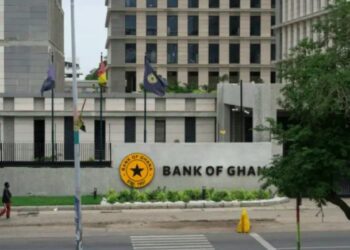
Ghana’s financial sector is once again under the microscope as the Bank of Ghana (BoG) intensifies its monitoring and corrective measures against five private and state-owned banks that have failed to meet recapitalization requirements.

The move, which follows revelations from the International Monetary Fund (IMF), underscores the persistent challenges faced by some local banks in the aftermath of the Domestic Debt Exchange (DDE) and broader economic stress.

According to the IMF’s latest Country Report, most of the 13 banks that faced capital shortfalls following the DDE have successfully met or exceeded their recapitalization targets as of end-2024. These gains were largely attributed to improved profitability and capital injections through the Ghana Financial Stability Fund (GFSF). The progress is a welcome development for the banking sector, which was severely tested by the restructuring of government debt instruments and a sharp deterioration in asset quality.

However, the report painted a less optimistic picture for a subset of local institutions—particularly five banks, including at least one state-owned entity—that are still materially behind on their recapitalization schedules. These banks have become the focus of heightened BoG supervision, as they risk falling short of the 13% Capital Adequacy Ratio (CAR) benchmark required by end-2025.

ADVERTISEMENT

Weak Capital Commitments and High NPLs to Blame

The banks under scrutiny are grappling with several compounding challenges. Chief among them are unmet shareholder capital commitments, a surge in Non-Performing Loans (NPLs), and delays in booking credit impairments identified during the BoG’s 2023 asset quality assessments.

“These factors have significantly weakened the financial buffers of affected banks, threatening not only their stability but also that of the broader financial system.”

BoG

The capital shortfalls have also been exacerbated by performance slippages and structural weaknesses that predate the DDE but were worsened by the macroeconomic shock it triggered. Despite capital support from the GFSF, these banks have not yet met the thresholds required for sustained access to further funding support, particularly from the World Bank-funded segment of the GFSF.

BoG Steps in With Intense Oversight and Remedial Plans

In response, the BoG has stepped up its regulatory oversight of the affected banks. This includes close monitoring of liquidity and capital positions, as well as implementation of remedial and corrective actions.

These banks are now required to adopt and implement updated recapitalization plans that address both historical weaknesses and new operational challenges. According to BoG, these plans must be credible, time-bound, and measurable to ensure that all banks meet the CAR requirement by the stipulated end-2025 deadline.

“Failure to meet this timeline could result in regulatory sanctions, including the potential withdrawal of banking licenses or forced mergers,” a senior official at the BoG disclosed.

ADVERTISEMENT

There is still hope for struggling banks. The IMF noted that if Parliament approves and fully implements the World Bank-funded component of the GFSF, it could help provide a capital buffer for some of the lagging institutions—provided they first meet certain eligibility conditions. Chief among these is securing sufficient capital injections to reach minimum levels required for fund access.

This added layer of support could offer a much-needed lifeline to otherwise viable banks that are merely experiencing a temporary setback.

Meanwhile, the mixed performance among Ghana’s banks signals a growing divergence in the resilience and governance structures of financial institutions. While many banks have rebounded impressively, the continued struggles of others highlight systemic risks that must be addressed to avoid contagion effects.

ADVERTISEMENT

For stakeholders—ranging from investors and depositors to regulators—the next 18 months will be crucial. The ability of the remaining banks to meet the CAR deadline will likely determine the strength and credibility of Ghana’s post-DDE financial recovery.

READ ALSO: Interest Rate Hike: A Short-Term Threat to Ghana’s Stock Market Performance – Analyst Warns

ADVERTISEMENT

Sign Up to Our Newsletter

Fresh updates, Straight to your inbox

Tags: Bank of Ghana (BoG)Banking sectorCapital Adequacy Ratio (CAR)Domestic Debt Exchange (DDE)IMFNon-Performing Loans (NPLs)Recapitalization
ShareTweetShareSendSend
Please login to join discussion
Previous Post

Zelenskyy Discusses “Path To Peace” With US Envoy

Next Post

Trump Tariffs Crush South Africa’s Car Exports

Related Posts

CalBank Profit Soars 25% to GHS353.6 Million in Strong First Half Performance CalBank PLC has delivered an impressive financial performance for the first half of 2026, posting a remarkable 25 percent increase in Profit Before Tax (PBT) to GHS353.6 million. The outstanding results highlight the bank's successful strategic transformation and underline its growing strength as one of Ghana's leading financial institutions. The latest figures show that Profit Before Tax climbed from GHS283.2 million in the corresponding period of 2025 to GHS353.6 million, driven by robust growth across the bank's core business operations. The performance reflects improvements in lending, customer deposits, fee based services, trading income, and overall operational efficiency. Unlike previous periods where earnings were significantly supported by impairment recoveries, CalBank's latest results demonstrate that its profitability is now being powered largely by the strength of its underlying banking business. Core Banking Business Drives Exceptional Earnings One of the biggest highlights of the first half performance was the remarkable growth in net interest income, which surged by 83 percent to GHS347.5 million. The increase came despite a relatively lower interest rate environment. Interest income rose from GHS399 million to GHS451.5 million as the bank continued expanding its earning assets. At the same time, funding costs fell sharply, with interest expenses dropping from GHS209 million to GHS104 million. This significant reduction in funding costs improved the bank's profitability and demonstrated stronger balance sheet management. CalBank also recorded exceptional growth from non interest income sources as it continued diversifying its revenue streams. Net fees, commissions, and trading income almost doubled, rising by 99 percent to GHS323.3 million from GHS162.7 million during the same period last year. The strong performance reflects increased customer activity across the bank's retail, commercial, and corporate banking segments. The diversified earnings profile places CalBank in a stronger position to withstand changing market conditions while maintaining sustainable profitability. Stronger Earnings Quality Boosts Investor Confidence Perhaps the most significant aspect of CalBank's results is the improved quality of its earnings. During the first half of 2025, impairment recoveries contributed approximately GHS154 million to profits. However, in the latest reporting period, impairment gains accounted for only GHS7 million. This means the overwhelming majority of profits were generated through normal banking operations rather than one off recoveries. The shift highlights the success of management's transformation strategy and provides greater confidence that future earnings will remain sustainable. Industry analysts often view recurring operating income as a stronger indicator of long term financial health than exceptional gains. Assets and Deposits Record Strong Expansion CalBank also recorded significant growth in its balance sheet during the period. Total assets expanded by 30 percent to GHS13.9 billion from GHS10.7 billion recorded at the end of June 2025. Customer deposits increased by the same margin, rising to GHS10.9 billion. The growth in deposits reflects increasing customer confidence in the bank's brand, improved service delivery, and expanding retail and commercial banking operations. Higher deposits also provide the bank with a stable funding base to support future lending and business expansion. The figures reinforce CalBank's growing position within Ghana's competitive banking industry. Bad Loans Decline Dramatically One of the most remarkable achievements during the first half of the year was the dramatic improvement in asset quality. The bank's Non Performing Loan ratio dropped sharply to 10.10 percent from an exceptionally high 51.60 percent recorded at the end of June 2025. The improvement reflects the successful execution of CalBank's balance sheet remediation programme and disciplined credit risk management practices. A healthier loan portfolio reduces future credit losses while creating additional room for prudent loan growth. The significant decline in bad loans also strengthens investor confidence and enhances the bank's overall financial stability. Capital Position Strengthens After Recapitalisation Following its successful recapitalisation in 2025, CalBank has continued strengthening its financial foundation. Its Capital Adequacy Ratio improved dramatically to 18.17 percent from a negative 7.6 percent recorded a year earlier. The turnaround highlights the success of the bank's recapitalisation efforts and demonstrates its renewed financial resilience. Strong liquidity levels further position the bank to support customers, finance new business opportunities, and meet future regulatory requirements with confidence. The improved capital position also creates greater flexibility for expansion while protecting shareholders against unexpected financial shocks. Management Confident of Even Better Results Commenting on the results, Managing Director Carl Selasi Asem described the first half performance as clear evidence that CalBank's transformation strategy is producing sustainable financial outcomes. He said the bank had achieved strong growth across its core businesses while improving funding efficiency, strengthening profitability, enhancing asset quality, reinforcing its capital base, and expanding its balance sheet. Mr. Asem stressed that the latest earnings were driven by the strength of the bank's underlying operations rather than one time recoveries, reinforcing the quality and sustainability of the results. Looking ahead, he expressed confidence that the momentum built during the first half would enable CalBank to deliver an even stronger performance during the remainder of 2026. Management says the bank remains committed to disciplined execution of its strategic priorities, strengthening customer relationships, maintaining prudent risk management, and creating sustainable long term value for shareholders. CalBank's Transformation Continues to Deliver CalBank's latest financial performance paints the picture of a bank that has successfully rebuilt its foundations and is entering a new phase of sustainable growth. With rising profits, stronger capital, expanding customer deposits, healthier assets, and significantly lower bad loans, the bank appears well positioned to compete aggressively within Ghana's banking sector. As economic conditions continue to improve, CalBank's focus on operational excellence and disciplined execution could make 2026 one of the strongest years in the institution's recent history. READ ALSO: GSE Opens Week with Explosive Trading Activity CalBank Profit Soars 25% to GHS353.6 Million in Strong First Half Performance
Banking

CalBank Profit Soars 25% to GHS353.6 Million in Strong First Half Performance

July 14, 2026
Ghana Banks Must Reinvent or Risk Profit Collapse
Banking

Ghana Banks Must Reinvent or Risk Profit Collapse

July 13, 2026
Farihan's Leadership Triumph Puts Ghana Banking in Spotlight
Banking

Farihan’s Leadership Triumph Puts Ghana Banking in Spotlight

July 12, 2026
Ecobank Makes History With $450 Million World's First Nature Bond
Banking

Ecobank Makes History With $450 Million World’s First Nature Bond

July 10, 2026
ADVERTISEMENT

Sign Up to Our Newsletter

Fresh updates, Straight to your inbox

ADVERTISEMENT

Recent News

Paul Awentami Afoko

NPP Must Rise Again Through Unity — Afoko Declares Chair Bid

July 14, 2026
WhatsApp Image 2026 07 14 at 11.45.06 2

ECOWAS Studies Ghana’s Fuel Quality Regulation

July 14, 2026
17840293485312965742176580104916

Manchester United Announce The Signing of Karl Darlow

July 14, 2026
President John Dramani Mahama, chairing a Cabinet meeting

Cabinet Finalizes Position Paper on Constitutional Review Proposals

July 14, 2026
President of the Paediatric Society of Ghana, Dr. Hilda Mantebea Boye

2.8M Ghanaians Live With Hepatitis B – Dr. Mantebea

July 14, 2026
ADVERTISEMENT
Next Post
Trump Tariffs Crush South Africa’s Car Exports

Trump Tariffs Crush South Africa’s Car Exports

The Vaultz News

Copyright © 2025 The Vaultz News. All rights reserved.

Navigate Site

  • About
  • Advertise
  • Privacy Policy
  • Contact

Follow Us

Welcome Back!

Login to your account below

Forgotten Password?

Retrieve your password

Please enter your username or email address to reset your password.

Log In
No Result
View All Result
  • Top Stories
  • News
    • General News
    • Education
    • Health
    • Opinions
  • Economics
    • Economy
    • Finance
      • Banking
      • Insurance
      • Pension
    • Securities/Markets
  • Business
    • Agribusiness
    • Vaultz Business
    • Extractives/Energy
    • Real Estate
  • World
    • Africa
    • America
    • Europe
    • UK
    • USA
    • Asia
    • Around the Globe
  • Innovation
    • Technology
    • Wheels
  • Entertainment
  • 20MOBPL2D
  • Jobs & Scholarships
    • Job Vacancies
    • Scholarships

Copyright © 2025 The Vaultz News. All rights reserved.

This website uses cookies. By continuing to use this website you are giving consent to cookies being used. Visit our Privacy and Cookie Policy.