Amid the recent helicopter crash, Bright Simons of IMANI Africa has argued that the failures in Search and Rescue operations in Ghana should not be dismissed as isolated incidents or inevitable occurrences.
He emphasized that the crash had exposed systemic weaknesses in Ghana’s emergency response framework, weaknesses that require urgent attention if the country is to fulfill its own safety obligations and international commitments.
For Simons, the shortcomings were not limited to a single agency or the military, but reflected deeper flaws in the way the Search and Rescue (SAR) system is organized and implemented. “The failures we all saw with our eyes… were failures of the NATIONAL SEARCH & RESCUE (SAR) system, not of the military alone.”
He argued that all responders — from the National Disaster Management Organization (NADMO) to the fire service — should have been trained in the investigative aspects of SAR. Allowing civilians to carry away crucial evidence from the crash site, he said, was unacceptable.
This, in his view, highlights a broader challenge in Ghana’s uneven adherence to established SAR protocols.
Simons stressed the need to follow operational manuals and align with global standards such as the International Aeronautical and Maritime Search and Rescue (IAMSAR) guidelines and the International Civil Aviation Organization’s (ICAO) Annexes 12 and 13.


He rejected the notion that such rules are merely theoretical or optional, pointing out that they have already been incorporated into Ghana’s own regulatory framework.
“All rules are bound to start as theory before being put into practice. Without knowing the theory well, we can’t refine the rules through experience.”
Bright Simons
Simons warned that ignoring these standards could carry far-reaching consequences. As an example, he noted that aviation security relies heavily on ICAO rules.
If Ghana were perceived as lax in meeting these obligations, some international airports could restrict flights from the country. “Sovereignty is thus not an excuse,” he stressed.
According to Bright Simons, the underlying message is that Search and Rescue operations cannot function effectively in isolation from wider governance systems.
He argued that the country must integrate multiple disciplines — from aviation law and procurement to spatial security and electronic telemetry — to understand why SAR responses fall short.
Explaining these failures, he said, requires knowledge across at least 20 different fields. While no single individual can be an expert in all areas, effective governance demands generalists who can pull together specialized knowledge to diagnose problems and suggest workable solutions.

He pointed out that even the leadership of institutions responsible for accident investigations often comes from unrelated professional backgrounds. In such cases, rigorous research and cross-disciplinary collaboration become even more critical.
“In fact, even if you do find someone who miraculously happens to be an expert in every related field, they still need to do their RESEARCH into how things have actually happened in order to comment sensibly on the governance lessons, especially to a general audience.”
Bright Simons
“Fidelity to facts is critical,” he remarked, adding that policy analysts must work to make complex systems understandable to the public so that citizens can hold leaders accountable.
Warning Against Aviation Complacency Amid Search and Rescue Failures
Bright Simons also drew attention to the risks of complacency. Ghana has seen at least three aviation accidents in the past decade where the aircraft’s black boxes yielded no useful information to investigators.
He suggested that if earlier incidents had been more widely publicized, authorities might have strengthened enforcement and improved investigative practices.
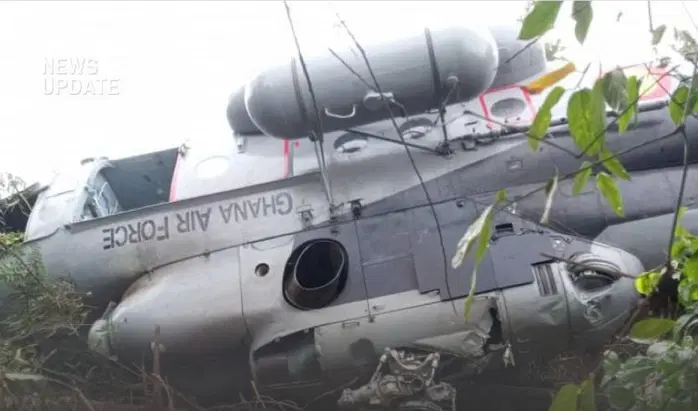
The pattern, he warned, risks creating what he called a “national learning disability” — an inability to absorb lessons from past failures and apply them to prevent future tragedies.
Such a condition, he said, undermines not just aviation safety but the country’s broader development goals.
“National learning is crucial. We need to IMPROVE how we do things. Do not make excuses for failings all the time. Saying that a forested terrain excuses the military from ensuring site containment can’t be good enough.
“Today, we expect much better. Let us remember that the principal premise of aviation safety is: no accidents at all. Very lofty, theoretical, standard, right? How do we strive to get there as a society, like every other society, is striving?”
Bright Simons
The call for reform is not only about technical improvements, but also about mindset. Simons cautioned against making excuses for operational failings, whether due to terrain, resource limitations, or institutional pride.
In his view, dismissing the value of electronic tracking or claiming that certain conditions make proper site containment impossible is an unacceptable lowering of standards.
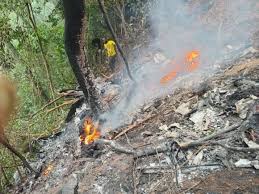
He reminded stakeholders of the 2002 crash of an Agusta Westland helicopter in the Atiwa forest, which took three days to locate in an era when mobile phones were rare.
Today’s technology, he argued, removes many of those limitations, making delays and disorganization harder to justify.
Ultimately, Simons called for a cultural shift toward transparency, accountability, and evidence-based governance in Search and Rescue operations.
He believes that constant, constructive scrutiny is essential to building resilience in national systems. “Every serious society needs some people to devote considerable time and effort to poking the system like gadflies.”
READ ALSO: Don’t Rush Back to Capital Markets Despite Debt Wins- Deloitte Warns Ghana